


- Start with 2–3 rings on your middle or index finger — add a 4th once you are comfortable
- Use the 3-texture formula: 1 smooth plain band + 1 hammered/textured + 1 embellished/gemstone
- Mixing metals is encouraged — follow the 70/30 rule (dominant metal for 70%, accent for 30%)
- For thin bands under 2mm: order your true size for up to 3 rings; go up ¼ size for 4+
- Rotate your stacks to extend gold plating life; store rings individually to prevent scratching
- Personalized birthstone or name rings make the strongest anchor for any meaningful stack
Ring stacking is the most personal way to wear jewelry — there are no wrong fingers, no wrong number of rings, and no single correct combination. But there are techniques that separate an intentional, polished stack from a pile of bands. This guide covers everything: how to start, which fingers to use, how to mix metals, how to size correctly, how to work in midi rings, how to build a meaningful personalized stack, and how to care for 925 sterling silver rings with 18K gold plating specifically. Ready to browse? Explore our stacking rings collection — personalized sterling silver bands starting at $24.99.
What Are Stackable Rings?
Stackable rings are slim bands — typically 1–4mm wide — designed to be worn in groups on one finger or spread across multiple fingers. Unlike statement rings built to be worn alone, stackable rings are intentionally minimal so they read as a cohesive look when layered together. The visual impact comes from the combination: the contrast between textures, the interplay of metals, the mix of stones and plain surfaces.
| Ring Type | Description | Best For |
|---|---|---|
| Plain Band | Smooth, polished metal with no stone or texture | Foundation piece; pairs with anything |
| Hammered / Textured | Matte, beaten, or etched surface finish | Texture contrast in a stack |
| Pave / CZ Band | Tiny cubic zirconia set along the band surface | Sparkle accent in the stack |
| Birthstone Solitaire | Single gemstone on a slim band | Personalization and meaning |
| Twisted / Rope Band | Wire twisted into a rope or braid pattern | Visual movement and interest |
| Midi / Knuckle Ring | Designed to sit above the knuckle joint | Above-knuckle dimension |

How to Start Building Your Ring Stack
Choose Your Anchor Ring
Every great stack starts with an anchor — the one ring that sets the tone for everything else. The anchor is typically your most meaningful, widest, or most decorative piece. It is what you build around, not what you add last.
For a meaningful stack, a birthstone ring, a name ring, or an initial band makes the strongest anchor because it gives the entire stack a narrative. For a style-first stack, a bold pave or hammered band works equally well. The anchor does not need to be in the center of the finger — it just needs to be the piece that drives your choices for the other rings.
Add Texture Contrast With the 3-Texture Formula
The most effective stacks follow what we call the 3-texture formula:
- Smooth and plain — a polished band in your dominant metal
- Hammered or textured — a matte, beaded, or twisted band for surface contrast
- Embellished — a pave band, birthstone solitaire, or gemstone accent for sparkle or color
Even when all three rings are the same metal — all gold, or all silver — this texture variation gives the stack visual depth and intentionality. Three identical smooth plain bands looks like you forgot to remove rings. Three rings with distinct textures looks curated. This formula maps directly to a 3-ring starter set: one anchor, one texture, one sparkle.
Balance Width
Pair one slightly wider statement band with two slim accent bands. Thin bands in the 1–2mm range are the ideal stacking workhorse — they let you wear three or four rings comfortably without the stack becoming bulky. Wide bands of 4mm or more are statement pieces; pair them with just one or two very slim rings to avoid overwhelming the finger.
Ring Stacking by Finger — A Complete Guide
Every finger has a different stacking capacity and a different set of practical considerations:
| Finger | Ideal Stack Size | Best Styles | Notes |
|---|---|---|---|
| Index | 1–3 rings | Bold bands, statement pieces | Most eye-catching position; great for showing off a curated stack |
| Middle | 1–4 rings | Statement anchor + thin accents | Longest finger = most stacking room; best for larger stacks |
| Ring | 1–3 rings | Dainty bands, birthstone, sentimental | Traditional; works alongside engagement or wedding rings |
| Pinky | 1–2 rings | Single slim band or tiny solitaire | Delicate; one ring usually looks better than two |
| Thumb | 1 ring | Bold signet or wide band | Physical separation makes bold metals look intentional |
General rule: spread rings across up to four fingers at once, but leave at least one finger bare per hand. That breathing room makes each stacked finger more noticeable — not less.
Lifestyle note: If you work hands-on (nursing, teaching, cooking, physical therapy), avoid index finger stacking — it makes the most contact with tools and surfaces. Stack on your middle or ring finger instead, where rings stay cleaner and get knocked less frequently.
How to Mix Metals When Stacking Rings
The old rule that you should never mix metals is officially gone. Modern stacking is built on intentional metal mixing, and it tends to look more sophisticated than a single-metal stack.
The 70/30 rule: Let one metal dominate at roughly 70% of the stack, with the accent metal making up the remaining 30%. If your anchor ring is yellow gold, gold is your dominant metal — add one or two silver accents, not the reverse.
Cluster, don't alternate: Group two or three rings of the same metal together, then switch. Gold-silver-gold-silver alternating reads as accidental. Gold-gold-silver reads as intentional contrast.
Rose gold as the universal bridge: Rose gold sits naturally between yellow gold and silver or white gold. It prevents the metals from visually clashing and works as the most flexible mixing option in any combination.
18K gold plated over 925 sterling silver — AJLuxe's standard — is particularly effective for mixed-metal stacks. The gold plating provides warm gold tones, and the sterling silver base adds a cool-metal dimension naturally as the piece ages. You are wearing both metals simultaneously in a single ring.
Skin tone guide: Warm skin tones (olive, golden, deep) are most flattered by yellow gold. Cool skin tones (pink undertones, very fair) look best with silver, white gold, or rose gold. Neutral skin tones can wear any metal comfortably — rose gold is especially universally flattering.
How to Size Stackable Rings
Sizing for stacking is where most new stackers go wrong. Here is the complete guide:
- Single ring: Order your true ring size
- 2 rings together (both under 2mm): True size — thin bands add minimal bulk
- 3 rings or any band over 2mm wide: Consider going up ¼ size
- 4+ rings or combined width over 6mm: Go up ¼ to ½ size for comfortable movement
- Midi / knuckle rings: Measure your upper finger with a ring sizer — typically 2–4 sizes smaller than your base ring size
AJLuxe stacking rings are 1–1.5mm bands. For 1–3 rings together, order your true size. For four or more, go up a quarter size. If you are ever between two sizes, choose the larger — fingers swell slightly in the evening and in warm weather, and a ring that fits at 9am can feel tight by 8pm.
Ready to find your size? Browse our stacking rings collection to explore all band styles.
How Many Rings Per Finger? A Style Guide by Level
- Beginner stack: 2–3 rings on one finger — the sweet spot for comfort and visual impact
- Intermediate stack: 3–4 rings across two or three fingers simultaneously
- Statement stack: 4–5 rings across multiple fingers, possibly including a midi ring on a non-adjacent finger
- Editorial / fashion stack: Rings on four fingers plus a thumb ring — this is a full fashion look, not typical everyday wear
For small hands or short fingers: fewer rings, thinner bands. Slim stacks actually elongate the visual appearance of fingers. Overcrowding a short finger with three thick bands makes hands appear smaller, not more decorated.
For larger hands: you have more flexibility — you can handle slightly wider bands and more rings per finger without the stack looking bulky.
Knuckle Rings and Midi Rings — Above-the-Knuckle Stacking
Midi rings sit between the first and second knuckle joint, adding an entirely different dimension to a hand look that most new stackers never explore. They are the most underused technique in ring stacking.
Sizing midi rings: Use a ring sizer on your upper finger — not your base knuckle. Midi rings are typically 2–4 sizes smaller than your regular ring size. Adjustable or open-band midi rings are the most practical option because you can fine-tune fit without needing your exact upper-finger measurement.
How to wear midi rings in a stack:
- Try 2 rings at the base knuckle on the middle finger, plus 1 midi ring on the index above the knuckle — this creates two visual focal points that draw the eye across the hand
- Limit yourself to 2 midi rings at a time, on non-adjacent fingers — midis on every finger looks crowded rather than intentional
- Midi rings show best against bare or neutral-polish nails, where the ring draws focus rather than competing with bold nail color
Which fingers work best: Long fingers handle midi rings most elegantly. For shorter fingers, limit to one midi ring on the middle or index finger. The visual "step" between a midi ring and your base-knuckle rings creates depth that actually lengthens the finger's appearance.

Personalizing Your Ring Stack — Birthstone and Name Rings
Most stacking ring guides are written for 14K fine jewelry starting at $400 per band. Nobody is writing for the customer who wants a meaningful personalized birthstone stack for under $40 per ring — which is exactly what 925 sterling silver with 18K gold plating makes possible.
The most memorable ring stacks tell a story. The story stack framework:
- Ring 1 (anchor): Your own birthstone — the foundation of the narrative
- Ring 2: A partner's, child's, or parent's birthstone — someone who matters
- Ring 3 (connector): A plain gold band that visually ties the two stones together and represents the relationship itself
This three-ring structure works for virtually any gifting occasion — Mother's Day, birthdays, anniversaries, Valentine's Day. A name ring or initial ring as the anchor adds a further layer of personalization. These stacks carry more meaning than a single expensive piece because every ring is chosen, not just purchased.
Browse our personalized jewelry collection for name rings, initial rings, and birthstone options that work as stack anchors. Starting at $24.99 per ring, a complete 3-ring personalized stack runs $75–$120 — comparable to a single fashion piece, with far more meaning.
How to Care for Your Stackable Rings
Care guidance written for 14K solid gold — which is what most competitors produce — is not the same as care guidance for 18K gold-plated 925 sterling silver. Here is the honest guide for the metals AJLuxe uses.
Daily Care
Remove rings before swimming, showering, working out, gardening, and cleaning with harsh products. The four biggest enemies of gold plating are chlorine, sweat, friction, and chemical exposure. Apply hand lotion, sunscreen, and perfume before putting rings on — not after. Let beauty products fully absorb first, then put your rings on.
Cleaning Your Stacking Rings
- Warm water + one drop of mild dish soap in a small bowl
- Soak rings for 1–2 minutes (not longer for gold-plated pieces — extended soaking can stress the plating bond)
- Soft toothbrush: gentle circular motions on sterling silver; linear strokes only on gold-plated surfaces — do not scrub the plating aggressively
- Rinse completely under cool running water
- Pat fully dry with a soft cloth; air dry 5 minutes before storing
- Use a sterling silver polishing cloth monthly on any silver-finish surfaces
Never use: toothpaste, baking soda, vinegar, bleach, acetone, nail polish remover, alcohol, or ultrasonic cleaners on gold-plated or sterling silver rings — all are too abrasive or chemically aggressive.
Storage
Store rings individually in soft pouches or fabric-lined compartments. Never leave stacking rings loose in a pile — rings scratch each other's surfaces and plating with every contact. Keep sterling silver rings with anti-tarnish strips in the pouch. The anti-tarnish pouch your AJLuxe piece ships in dramatically extends the time between needed cleanings.
A Note on Gold-Plated Rings Specifically
18K gold plating over 925 sterling silver is durable for everyday wear with proper care, but it is not permanent. The gold layer will gradually wear with friction — especially at the contact points where stacked rings touch each other.
Rotate your stack. Rather than wearing the same three rings every single day, alternate across two or three different ring combinations. This gives each ring recovery time and significantly extends the life of the plating.
Replating is an option. When you love a ring and the plating begins to show wear, most local jewelers offer replating for $15–$30 per piece. This restores the gold color completely. Most fine jewelry brands selling 14K solid gold never mention replating because it is irrelevant to them. For gold-plated rings, it is a practical, affordable way to extend the life of a piece you genuinely love.
Common Ring Stacking Mistakes to Avoid
- Over-stacking one finger with thick bands. Five thin bands can look intentional; five 3mm bands look uncomfortable and crowded. Match band width to quantity.
- Alternating metals in a perfect pattern. Gold-silver-gold-silver reads as accidental, not intentional. Cluster same-metal rings, then transition.
- Ignoring sizing. Rings that spin or pinch destroy both the look and comfort of the stack equally. Size correctly before committing to a combination.
- All the same texture. Three identical smooth bands look flat. Texture contrast is what makes a stack appear considered.
- No bare fingers. One bare finger per hand is the breathing room that makes every stacked finger more noticeable. Coverage on every finger cancels itself out visually.
- Stacking rings with high protruding settings. Raised gemstone settings snag on fabric and scratch adjacent rings. Use flush-set or bezel-set stones for stacking; save prong-set stones for solo wear.
- Wearing the exact same stack every single day. Rotation protects your rings and gives you more variation in your daily look. Build two or three stack combinations and alternate them.
Frequently Asked Questions About Stackable Rings
What are stackable rings?
Stackable rings are slim bands designed to be worn together — layered on one finger or spread across multiple fingers — to create a layered, personalized look. They range from 1–4mm wide and come in plain, textured, pave, birthstone, and twisted styles.
How many rings should I stack on one finger?
2–3 rings is the ideal starting point for comfort and style. Up to 4 rings is workable on your middle finger. Beyond 4, comfort and aesthetics typically decline — the stack becomes bulky and difficult to move naturally.
Should I size up for stacking rings?
For thin bands under 2mm (like most sterling silver stacking rings), order your true size for 1–3 rings. For 4+ rings or any band over 2mm wide, go up ¼ size for comfortable movement.
Can I mix gold and silver stacking rings?
Yes — metal mixing is the modern, preferred approach. Use the 70/30 rule (one dominant metal for 70% of the stack) and cluster same-metal rings rather than alternating them.
How do I clean stackable rings at home?
Warm water and a drop of mild dish soap with a soft toothbrush. Soak 1–2 minutes, scrub gently, rinse completely, and pat fully dry. Use a silver polishing cloth monthly for sterling silver. Avoid toothpaste, vinegar, and harsh chemicals.
What is a midi ring?
A midi ring sits between the first and second knuckle joint, above the knuckle. Midi rings are sized 2–4 sizes smaller than your regular ring size. Use a ring sizer on your upper finger for accuracy. Adjustable or open-band styles are the most practical option.
Are stackable ring sets a good gift?
Yes — personalized sets with birthstones or name rings are especially meaningful for birthdays, Mother's Day, and anniversaries. A curated 3-ring set (1 personalized anchor + 1 textured band + 1 plain band) makes a complete, thoughtful gift at an accessible price.
Which finger is best for stacking rings?
The middle and index fingers offer the most stacking space. The middle finger handles up to 4 rings comfortably; the index draws the most visual attention. The ring finger works for 1–3 sentimental pieces. The pinky and thumb are best for a single accent ring each.
Does stacking rings damage them?
Stacking creates friction between adjacent bands that gradually wears down gold plating at contact points. Rotating across multiple stacks — rather than wearing the same rings every day — significantly extends the life of each piece.
What is the best metal for stackable rings?
925 sterling silver with 18K gold plating offers the best combination of durability, appearance, and value. It provides genuine sterling silver strength with the look of gold and can be replated if the finish ever wears. Solid 14K gold is the most durable long-term option but costs significantly more per ring.
Ring stacking rewards thoughtfulness more than it rewards spending. Start with one anchor piece that means something to you, add one textured band, and add one plain band. Adjust from there — the best stack is the one you actually wear every day. Browse our curated stacking rings collection — personalized sterling silver with 18K gold plating starting at $24.99.
Written by the AJLuxe jewelry team. External reference: GIA 4Cs Ring Stacking Guide.
Last updated: June 2026
You Might Also Like

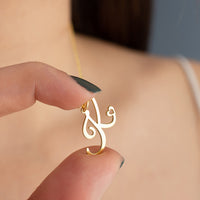
The piece they're describing → Heart Initial Necklace for Women — 18K Gold Plated, Personalized Letter + Heart Pendant
Personalize Yours

