


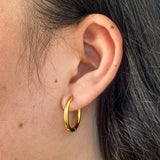
- Sleeper earrings are small, thin, close-fitting hoops built to stay in continuously, including overnight — the name describes the use case (safe to sleep in), not a specific brand or shape.
- What makes a hoop "sleeper-safe" is size and construction: small diameter (usually under 12mm), a thin band, and a closure that sits flush against the earlobe with no dangling parts to snag on a pillow.
- AJLuxe doesn't sell a hoop marketed or labeled as a "sleeper" — this is disclosed honestly below, not glossed over. The closest real match in the catalog is our small gold huggie hoop earrings, a 2.5mm-thick band available in 15mm, 17mm, and 21mm sizes, built for everyday wear rather than special occasions.
- Even a genuine sleeper hoop should still come out for showering, swimming, and workouts — comfortable enough to sleep in isn't the same as meant to never be removed.
"Sleeper earrings" is a specific, searched term for a specific kind of hoop: small, thin, and close enough to the ear that wearing them overnight doesn't feel like sleeping on a piece of jewelry. It's not a brand name and it's not a shape — it's a comfort-and-safety category built around size and construction. This guide covers what actually makes a hoop qualify as a sleeper, whether sleepers are really a better everyday choice than studs, how to put them in and take care of them, and — honestly — what AJLuxe carries that comes closest, since we don't currently sell a hoop marketed under the sleeper name.

What is the purpose of sleeper earrings?
The purpose of sleeper earrings is to keep a newly pierced or everyday piercing open and covered without anything large, sharp-edged, or dangling that could catch on hair, bedding, or clothing while you sleep. They're a small, low-profile hoop — usually a plain closed loop with no charms or drops — sized and shaped specifically so it lies flat against the earlobe instead of hanging away from it. The name comes directly from that job: a "sleeper" is an earring you can leave in overnight, as opposed to studs or hoops you'd normally take out before bed.
They're most commonly recommended right after a piercing, when the hole needs something in it around the clock while it heals, but plenty of people wear them well past healing simply because they're comfortable enough to stop thinking about. A hoop that's genuinely sleeper-sized doesn't require the daily on/off routine that bigger hoops or dangle earrings do.
Are sleepers better than studs?
Neither is universally "better" — sleepers and studs solve slightly different problems, and the right one depends on what you're prioritizing. Sleepers stay in the piercing as a continuous loop, which many people find keeps a hole open more reliably during healing and reduces the chance of the earring twisting or pulling out awkwardly during sleep. Studs sit flush against the earlobe from a single point and can feel less noticeable to some wearers, but they're also easier to lose overnight if a backing works loose.
For a fresh piercing, many piercers recommend a small hoop-style sleeper specifically because the closed-loop shape is harder to accidentally remove than a stud with a friction back. For an already-healed piercing worn long-term, it comes down to personal comfort — some people find a tiny hoop less noticeable against a pillow than a stud's flat back, others find the opposite. Either way, the metal matters more than the shape: a nickel-free or sterling-silver base is the bigger factor in whether an earring is safe to leave in for extended periods, sleeper hoop or stud alike.
How do you put in sleeper earrings?
Putting in a sleeper hoop means opening its hinge or captive closure, threading the open end through the piercing from the front, and closing it until it clicks or locks flush against the earlobe. Most sleeper-style hoops use one of two closures: a hinged segment that snaps shut, or a small captive bead/ball held in place by tension that you snap into a gap in the hoop. Wash your hands first, and if the piercing is new, use a clean cotton swab dipped in saline solution to clear away any dried discharge around the hole before inserting anything, so you're not forcing the closure through debris.
Go slowly and stop if you feel real resistance rather than just normal tightness — a fresh piercing channel can be narrow, and forcing a closure through it risks tearing tissue. If a hoop won't close smoothly after a few gentle attempts, it may be sized wrong for that particular piercing rather than something to push through.
What actually makes a hoop "sleeper-safe"?
Three things: small diameter, a thin band, and a closure with no moving parts that stick out. Most earrings marketed as sleepers run in the 8–12mm range, noticeably smaller than a standard hoop (typically 20–40mm) — small enough that the loop sits almost entirely within the outline of the earlobe rather than extending past it. A thin band (often under 2mm) keeps the earring light and low-profile against a pillow, and a smooth hinge or captive-bead closure avoids the small clasps, posts, or backs on other earring styles that can dig in or catch overnight.
| Style | Typical size | Closure | Good for sleeping in? |
|---|---|---|---|
| True sleeper hoop | 8–12mm | Hinged or captive-bead, flush | Yes — purpose-built for it |
| Small huggie hoop | 12–21mm | Hinged, hugs the lobe | Reasonably — closer to skin than a standard hoop, but larger than a true sleeper |
| Standard hoop | 20–40mm+ | Hinged or French wire, hangs away from lobe | Not recommended — too much hoop to catch on bedding |
| Stud with post-and-back | 4–8mm | Friction or screw back | Often yes, but backs can loosen overnight |
By that scale, a genuine sleeper is smaller than most of what's sold as a "huggie" hoop, which itself is a step down from a standard hoop. It's a spectrum, not a hard line — the closer a hoop's numbers are to that 8–12mm/thin-band range, the more it functions like a true sleeper.
Does AJLuxe sell sleeper earrings?
Not under that name, and not built to true sleeper dimensions (8–12mm) — we want to say that plainly rather than stretch the label onto something that isn't it. What we do carry is a genuinely close alternative: our small gold huggie hoop earrings, sold in 15mm, 17mm, and 21mm sizes with a consistent 2.5mm band, 18K gold plating over a 925 sterling silver base, and hypoallergenic construction (nickel-free, sensitive-ear safe). The 15mm option in particular sits in the same low-profile territory as a sleeper hoop — small enough to hug the lobe closely — even though it's marketed and sized as an everyday small huggie rather than a dedicated overnight sleeper.
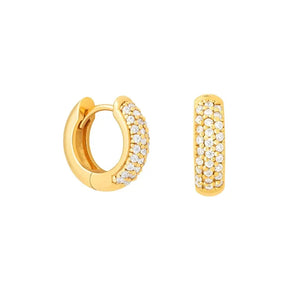
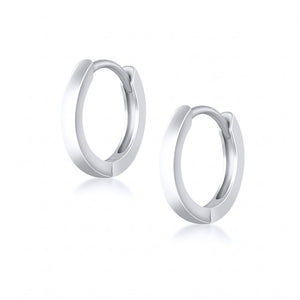
If you also want a diamond-cut finish rather than plain metal at a similarly compact size, our diamond-cut huggie hoops (available in gold or silver) are the same close-fitting huggie construction with a bit more sparkle, and our minimalist silver hoops cover the plain, no-shine option in silver. None of these are labeled sleepers on the product page, and we're not going to call them that here either — they're the closest real match in the current lineup, disclosed as exactly that.
Are sleeper-style hoops good for sensitive ears?
Yes, as long as the base metal is nickel-free — sterling silver, solid gold, or titanium are the safest choices, and the small size of a sleeper hoop doesn't change that requirement one way or the other. Because sleeper hoops are worn continuously rather than just during the day, the metal touching your skin matters more here than with earrings you take off every night — prolonged, uninterrupted contact is exactly the condition that triggers a nickel reaction fastest in sensitive ears. Check the stated base metal before buying any sleeper-style hoop, especially cheap ones sold only as "gold tone" or "silver tone" with no disclosed alloy underneath.
How do you take care of sleeper earrings?
Even though sleepers are designed to stay in, they should still come out for showering, swimming, and any activity involving lotion, perfume, or hairspray, since trapped moisture and chemical residue against the skin is a common cause of irritation with earrings worn continuously. Gently rotate a sleeper hoop occasionally, especially in a fresh piercing, so skin doesn't heal directly against the metal. Wipe the hoop with a soft, dry cloth periodically to remove buildup, and if it's plated rather than solid metal, expect the same 1–3 year plating lifespan as any other plated hoop worn this frequently — continuous wear puts more cumulative contact time on the finish than an earring taken off every night.
Frequently asked questions
What is the purpose of sleeper earrings?
Sleeper earrings are small, low-profile hoops designed to be worn continuously, including overnight, without anything large or dangling to catch on hair or bedding. They're most often used to keep a fresh piercing open during healing, but many people wear them long-term simply for the comfort of not having to take earrings out every day.
Are sleepers better than studs?
Neither is universally better — sleepers stay in as a closed loop that many piercers recommend for fresh piercings because it's harder to accidentally remove, while studs sit flush from a single point but can loosen at the back overnight. The base metal matters more than the shape for comfort and safety either way.
How do you put in sleeper earrings?
Open the hoop's hinge or captive-bead closure, thread the open end through the piercing from the front, and close it until it locks flush against the earlobe. Go slowly and stop if you feel real resistance rather than normal tightness, especially in a fresh piercing.
What size counts as a true sleeper hoop?
Most sleeper-style hoops run 8–12mm in diameter with a thin band, noticeably smaller than a standard 20–40mm hoop. A small huggie hoop in the 12–21mm range is close but generally a step up in size from a dedicated sleeper.
Does AJLuxe sell sleeper earrings?
Not under that name — our closest match is a small 15–21mm huggie hoop with a thin 2.5mm band, 18K gold plating over 925 sterling silver, disclosed here as a close alternative rather than a true sleeper.
Are sleeper-style hoops good for sensitive ears?
Yes, if the base metal is nickel-free — sterling silver, solid gold, or titanium. Continuous overnight wear makes the base metal more important than with earrings removed daily, since prolonged skin contact is what typically triggers a reaction.
Final thoughts
A "sleeper" earring is really just a hoop engineered for a specific job — small enough, thin enough, and closed enough to disappear against the ear overnight. Whether that's the right choice over a stud depends more on your piercing stage and personal comfort than any hard rule. AJLuxe doesn't currently carry a hoop built and labeled to true sleeper dimensions, but our small gold huggie hoop earrings come closest for everyday low-profile wear, with diamond-cut and minimalist silver options nearby if you want a different finish at a similarly compact size.
Written by the AJLuxe Team. Last updated: September 2026.
All third-party trademarks, brand names and product names are the property of their respective owners. AJLuxe is not affiliated with, endorsed by, sponsored by, or otherwise connected to any third-party brand referenced in this article. Brand names are used solely for accurate comparative reference, and material descriptions reflect each brand's own published product specifications at the time of writing.
You Might Also Like
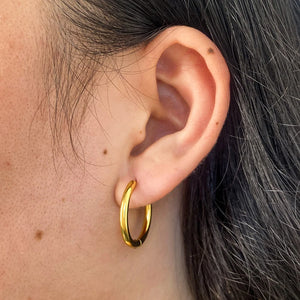

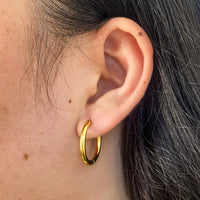
The piece they're describing → Small Gold Huggie Hoop Earrings for Women — 2.5mm 18K Gold Plated
Personalize Yours


