


AI Overview
Tourmaline is a boron silicate mineral that comes in more colors than any other gem on Earth — from neon Paraíba blue-green to striped watermelon pink-and-green. It rates 7–7.5 on the Mohs scale, making it suitable for most jewelry. Watermelon tourmaline earns its name from concentric color zones — pink center, white buffer, green rim — caused by shifting mineral chemistry during crystal growth. Paraíba tourmaline, colored by copper, is the most valuable variety and can exceed $50,000 per carat. This guide covers every major variety, quality factors, metaphysical meanings, and what to look for when buying.
At AJLuxe, we set genuine gemstones in 925 sterling silver — every stone is inspected for consistent colour and natural character before it goes into a piece.
TL;DR
- Tourmaline spans every color of the rainbow — no other gem comes close in variety.
- Watermelon tourmaline (pink core + green rim) is the most visually distinctive variety.
- Paraíba tourmaline is the rarest and most expensive, often surpassing ruby and emerald per carat.
- Mohs 7–7.5 means it's durable enough for daily wear with basic care.
- Always clean tourmaline with warm soapy water — skip the ultrasonic cleaner.
Tourmaline is one of the most color-rich gemstones in the world, and watermelon tourmaline — with its candy-stripe pink center and green rim — is just one reason gem lovers can't stop talking about it. Few minerals offer the sheer variety you get in a single species: from inky black Schorl to electric neon Paraíba, tourmaline covers every stop on the color wheel. Whether you're shopping for a statement pendant, researching birthstone alternatives, or just curious about what makes each variety unique, this guide covers everything you need to know.
Written by the AJLuxe team, specialists in gemstone and sterling silver jewelry. Last updated: June 2026.
What Is Tourmaline?
Tourmaline is a complex boron silicate mineral with the general formula (Ca,K,Na,[])(Al,Fe,Li,Mg,Mn)3(Al,Cr,Fe,V)6(BO3)3(Si,Al,B)6O18(OH,F)4. That chemical complexity is exactly why it shows up in so many colors — small changes in trace elements like iron, manganese, chromium, or copper shift the color dramatically. It belongs to a group of related minerals rather than a single compound, which is why gemologists speak of the "tourmaline group" rather than one stone.
On the Mohs hardness scale, tourmaline sits at 7 to 7.5 — harder than glass and most common materials that might scratch it during daily wear. It's found on every inhabited continent, with significant deposits in Brazil, Sri Lanka, Mozambique, Nigeria, Afghanistan, Pakistan, the United States (Maine and California), and Madagascar. The GIA's tourmaline guide is a trusted reference for gemological details and grading standards.
Tourmaline has been mined and traded for centuries, though ancient miners often confused it with ruby, sapphire, or emerald due to its overlapping color range. Today it's October's birthstone alongside opal, making it a popular choice for birthday gifts and anniversary pieces. No other gem species offers a comparable breadth of natural color.
Takeaway: Tourmaline's boron silicate chemistry and trace-element variability make it the most color-diverse gemstone group on the planet.
Types of Tourmaline: Every Color and Variety Explained
The tourmaline group includes over 30 recognized mineral species, but gemologists focus on about ten commercially significant varieties. Each gets its color from a different combination of trace elements formed during crystal growth. Here's every major variety you'll encounter.
| Variety | Color | Key Cause | Value Tier | Rarity |
|---|---|---|---|---|
| Paraíba | Neon blue-green | Copper + manganese | $1,000–$50,000+/ct | Extremely rare |
| Rubellite | Deep red to vivid pink | Manganese | $100–$1,500/ct | Moderately rare |
| Watermelon | Pink core + green rim | Shifting Mn/Fe during growth | $30–$500/ct | Moderately rare |
| Chrome | Vivid forest green | Chromium + vanadium | $200–$2,000/ct | Rare |
| Indicolite | Blue to blue-green | Iron | $50–$800/ct | Uncommon |
| Bi-color | Two distinct colors | Compositional shifts during growth | $30–$400/ct | Uncommon |
| Yellow / Golden | Yellow to golden honey | Iron + manganese | $20–$250/ct | Uncommon |
| Cat's Eye | Any color with chatoyancy | Parallel needle-like inclusions | $50–$600/ct | Uncommon |
| Schorl (Black) | Opaque black | High iron content | $1–$20/ct | Very common |
| Achroite (Colorless) | Colorless / white | Near-zero trace elements | $10–$100/ct | Rare (gem quality) |
Rubellite is the name for tourmalines with a saturated red to vivid pink color that holds its hue under both daylight and incandescent light. Stones that shift to brownish-pink under artificial light don't qualify. Fine rubellite from Brazil and Nigeria rivals ruby in intensity at a fraction of the price.
Indicolite describes blue to blue-green tourmalines colored by iron. It's one of the rarer color directions in the group — the prized color is a medium cornflower to teal blue with high transparency, and clean stones in that range are genuinely scarce.
Watermelon tourmaline grows with a pink or red center, a white buffer zone, and a green outer rim — mimicking a watermelon cross-section. The color banding is caused by shifts in the crystal's chemical environment during growth. It's covered in detail in its own section below.
Paraíba tourmaline produces a neon blue-green caused by copper and manganese impurities. First discovered in Brazil in 1987, it remains one of the world's most valuable gems by weight — with its own dedicated section below covering pricing and authentication.
Chrome tourmaline gets its vivid forest-green from chromium and vanadium — the same elements that color fine emerald and tsavorite garnet. Top stones from Tanzania and Kenya rival tsavorite in intensity and are significantly less well-known, making them a strong value pick for saturated green.
Bi-color tourmaline shows two distinct colors in a single stone — often green and pink or yellow and green — divided along the crystal's growth axis. The zones form naturally from chemistry shifts during crystal growth. Cutters orient the stone to show both colors clearly face-up.
Colorless tourmaline (Achroite) is rare because tourmaline almost always picks up some trace-element color. Eye-clean colorless specimens are collectors' curiosities, occasionally used as diamond alternatives in fine jewelry.
Black tourmaline (Schorl) is the most abundant tourmaline in nature — most of the world's tourmaline is black and opaque. It's widely used in crystal healing for protection and is available at very low price points as raw specimens, tumbled stones, and beaded bracelets.
Yellow and golden tourmalines span honey yellow to deep amber, colored by iron and manganese. Affordable compared to green and blue varieties, they're an underappreciated option for warm-toned jewelry designs.
Cat's eye tourmaline displays chatoyancy — a band of light that moves across the surface when cut as a cabochon. Parallel needle-like inclusions create the effect. A sharp, centered band in a saturated color commands collector prices.
Takeaway: With ten distinct varieties spanning every color of the spectrum, tourmaline gives jewelry designers more natural-color options than any other single gem group.

Watermelon Tourmaline: The Most Distinctive Variety
Watermelon tourmaline is the showstopper of the tourmaline world — a single crystal that naturally grows with concentric color zones matching the fruit it's named for. The inner core is pink to red, surrounded by a pale white or colorless buffer zone, then wrapped in green. When sliced perpendicular to the crystal's length and polished, that pattern is immediately visible and unmistakable.
The color zoning happens because tourmaline crystals grow slowly over thousands of years, and the chemical environment of the surrounding rock changes during that time. Early in growth, the crystal forms in manganese-rich conditions, creating the pink core. As growth continues and conditions shift toward iron-dominant chemistry, the outer zones turn green. The white buffer in between forms during the transition. This is entirely natural and cannot be replicated artificially without obvious tells.
Value in watermelon tourmaline depends heavily on how well-defined the color zones are. A stone where the pink and green meet sharply, with a narrow clean white boundary, is worth significantly more than one with muddy or blended zones. Color saturation matters too — pale pink with dull green is common; vivid cherry pink paired with rich forest green is rare and commands $300–$500 per carat or more in high-quality specimens. Stones under 5 carats are typical; well-patterned pieces above 10 carats are genuinely scarce.
Cutters have two main choices: slice the crystal crosswise (perpendicular cuts showing concentric rings) or cut elongated slabs showing the length of the color zones. Cross-sections are more popular because the watermelon pattern reads immediately. Rounds and ovals are harder to cut without losing the pattern — when you see watermelon tourmaline in round cuts, look carefully at whether the pattern is actually visible or just a hint at the edge.
| Feature | Genuine Watermelon Tourmaline | Dyed / Fake Stone |
|---|---|---|
| Color zoning | Distinct concentric rings: pink center → white buffer → green rim | Blotchy, uneven color; dye visible at cracks or fractures |
| Color under loupe | Gradual natural gradient within the crystal structure | Sharp unnatural lines; color appears to sit on the surface |
| Hardness | Mohs 7–7.5; will not scratch with a steel file | Softer glass fakes scratch easily with steel |
| Price range | $30–$500/ct depending on pattern clarity and saturation | Suspiciously cheap — $1–$5/ct for "watermelon" stones |
| Cut style | Often sold as flat cross-section slices that clearly show the pattern | Rounds and ovals often used to hide dye patterns or flaws |
Caring for watermelon tourmaline is straightforward. Clean it with warm water, a few drops of mild dish soap, and a soft brush — a toothbrush works fine. Rinse thoroughly and dry with a lint-free cloth. Never use ultrasonic cleaners, steam cleaning, or harsh chemicals like bleach or acetone. Store it away from harder gems (diamonds, sapphires, rubies) that could scratch its surface.
Takeaway: Genuine watermelon tourmaline has concentric, gradual color zones inside the crystal — any sharp surface color or rock-bottom price is a red flag.

Paraíba Tourmaline: The World's Most Valuable
In 1987, Brazilian prospector Heitor Dimas Barbosa spent years hand-digging a hillside in the state of Paraíba, convinced something extraordinary was buried there. He was right. The stones he found had a neon blue-green color gemologists had never seen — glowing with electric luminosity that seemed to exceed the available light, described as "swimming pool blue" or "neon mint."
The cause is copper. Most tourmalines are colored by iron or manganese, but Paraíba tourmaline contains significant copper, often alongside manganese, which shifts the hue toward violet or green-blue. Copper substituting into tourmaline's crystal structure is extraordinarily rare — it requires a unique set of geological conditions that haven't been replicated anywhere else in quite the same way.
Similar copper-bearing tourmalines appeared in Mozambique in the early 2000s and later in Nigeria. They share the same coloring mechanism and can rival Brazilian specimens in color. But Brazilian-origin stones carry a significant price premium — fine Brazilian Paraíba reaches $15,000–$50,000 per carat; comparable Mozambique stones typically bring $3,000–$12,000. A GIA, AGL, or Gübelin lab report confirming copper content and origin is essential before any major purchase. Without copper, it's just a blue-green tourmaline.
Supply is severely constrained. The original Brazilian mines are nearly exhausted, African production is limited, and global annual output of gem-quality Paraíba is a tiny fraction of other colored gems. Prices have climbed for 30 years and show no signs of reversing.
Takeaway: Paraíba tourmaline's neon glow comes from copper — a unique coloring agent that, combined with near-exhausted supply, pushes prices to levels that rival top ruby and emerald.
Tourmaline Meaning and Metaphysical Properties
Tourmaline has been used as a talisman, healing stone, and spiritual tool for centuries. Ancient Sri Lankan traders reportedly used it to "draw out" negative energy, and 18th-century Dutch sailors called it "aschentrekker" (ash puller) because of its pyroelectric properties — when heated, it develops a charge that attracts ash and dust particles. Today, crystal healers assign specific meanings to each color variety.
Black tourmaline (Schorl) is considered the premier protective stone in crystal healing traditions. It's thought to create an energetic shield against negative energy, electromagnetic radiation, and psychic attack. Many people keep a piece near electronics or carry it as a daily protective talisman. Black tourmaline is also said to help with grounding — connecting scattered or anxious energy to a stable foundation.
Pink tourmaline and rubellite are associated with the heart chakra, love, and emotional compassion. They're thought to dissolve old wounds, open the heart to new relationships, and encourage self-love. The deeper the pink or red, the more potent the emotional resonance is said to be — rubellite in particular is linked to passion, courage, and the strength to be vulnerable.
Green tourmaline connects to growth, vitality, and nature. Crystal healers associate it with the heart chakra (alongside pink) and use it for work related to abundance, physical health, and reconnecting with natural cycles. Chrome tourmaline's vivid green makes it a particularly popular choice for prosperity intentions.
Watermelon tourmaline is considered a balancing stone — the combination of pink (heart energy) and green (growth and nature) in a single crystal is seen as a symbol of wholeness. It's used in practices focused on emotional healing, self-acceptance, and integrating opposite energies. Some practitioners place it over the heart during meditation as a physical reminder of that balance.
Takeaway: Every tourmaline color carries its own metaphysical tradition — from black's protective grounding to watermelon's emotional balance — making it one of the most versatile crystals in spiritual practice.
What Determines Tourmaline Quality and Value
Tourmaline quality follows the same broad framework as other colored gems — color, clarity, cut, and carat weight — but with a few tourmaline-specific considerations that matter enormously in pricing.
Color is the single biggest value driver. Saturation is more important than hue — a deeply saturated indicolite blue commands more than a washed-out "better" color. The most valuable colors are Paraíba neon blue-green, vivid rubellite red, and chrome tourmaline's saturated forest green. Within each variety, stones that maintain their color under different light sources (both daylight and incandescent) are worth more. Color-shift or color-bleaching under artificial light drops value significantly.
Clarity standards depend on the variety. Eye-clean tourmalines are expected in colorless, blue, and green varieties — visible inclusions hurt value. Pink and red tourmalines (including rubellite) are naturally more included, and the trade accepts some inclusions as normal. Watermelon tourmaline is often somewhat included, and clarity is weighed against pattern quality — a stunning pattern in a slightly included stone is more desirable than a flawless but poorly patterned specimen.
Cut quality matters because tourmaline's pleochroism (showing different colors in different directions) requires careful orientation. A well-oriented cut shows the best color face-up; a poorly oriented stone looks pale or brownish when viewed from above even if the raw crystal had great color. Window-like stones with a pale, washed-out center are the most common sign of poor cut orientation.
Treatment is a critical consideration. Heating is the most common treatment and is widely accepted in the trade — it lightens overly dark stones and improves color. Irradiation is used to enhance pink and red colors and is more controversial; some buyers avoid irradiated stones, and the treatment is not always disclosed. Always ask the seller for treatment disclosure, and for significant purchases, request a lab report.
Origin premium applies mainly at the top of the market. Brazilian Paraíba commands 3–5x the price of Mozambique Paraíba for equivalent quality. For other varieties, Brazilian rubellite and Afghan indicolite carry modest premiums, but origin is less critical than quality for most buyers.
Takeaway: Color saturation is king in tourmaline — a deeply saturated stone with minor clarity issues almost always outperforms a flawless stone with weak color.
Tourmaline in Jewelry: What to Know Before You Buy
Tourmaline's Mohs rating of 7 to 7.5 puts it in solid territory for most jewelry types. It's harder than most everyday materials that might scratch it — knives, coins, glass — so it holds up well in rings, pendants, earrings, and bracelets with appropriate care. It's not as tough as sapphire (Mohs 9) or diamond (Mohs 10), but it's a practical, durable choice for regular wear.
| Property | Tourmaline | Amethyst | Garnet | Sapphire |
|---|---|---|---|---|
| Hardness (Mohs) | 7–7.5 | 7 | 6.5–7.5 | 9 |
| Color range | Widest of any gem — every color | Purple only | Red, orange, green, pink | Blue, pink, yellow, colorless |
| Price / ct | $20–$50,000+ | $5–$50 | $10–$1,000 | $100–$10,000+ |
| Durability | Good | Good | Good | Excellent |
| Care method | Warm soapy water only | Warm soapy water only | Warm soapy water only | Ultrasonic safe |
Setting choice matters for protecting a tourmaline stone. Bezel settings — where a metal rim wraps all the way around the stone's edge — offer the best protection for pendants and rings worn daily. Prong settings are fine for earrings and pendants that don't take hard impacts, but exposed prongs on rings can catch and chip the stone's edge over time. For an engagement ring or statement ring, choose a bezel or low-profile prong setting and be mindful of impact.
When shopping for a tourmaline pendant, focus on color saturation and face-up appearance. A 2-carat tourmaline with vivid, eye-catching color will always outperform a 4-carat stone with washed-out, pale color. For earrings, matched pairs are significantly harder to find and source — matching color, tone, and size in two stones adds to cost but makes a finished piece look far more polished. For rings, consider the setting depth: a deeper setting protects the stone better but can look bulky; a flatter setting sits elegantly but leaves the edges more exposed.
Care is simple: warm water, mild dish soap, and a soft brush. Rinse with clean water and dry with a lint-free cloth. Never expose tourmaline to ultrasonic cleaners (vibrations can worsen existing fractures), steam cleaners (thermal shock risk), or harsh chemicals. Remove tourmaline jewelry before swimming in chlorinated pools, before applying sunscreen or hairspray, and before any task involving hard manual labor or heavy machinery.
Takeaway: Tourmaline is a practical everyday gem — bezel settings, basic soapy-water cleaning, and a little common sense will keep it looking its best for decades.
Frequently Asked Questions
What is watermelon tourmaline?
Watermelon tourmaline grows with a pink or red center, a white buffer zone, and a green outer rim — mimicking a watermelon cross-section. The color zones form naturally as the crystal's surrounding chemistry shifts from manganese-rich to iron-rich conditions during growth. It's most often cut as flat slices to show the pattern clearly.
Is tourmaline a precious stone?
Tourmaline is technically semi-precious under the traditional classification, which reserves "precious" for diamond, ruby, emerald, and sapphire. That distinction is largely outdated — fine Paraíba tourmaline regularly fetches more per carat than average rubies. What matters is quality, rarity, and demand, and top tourmalines compete in all three.
What does tourmaline mean spiritually?
Black tourmaline is used for protection and grounding; rubellite connects to the heart chakra and emotional healing; green tourmaline to growth and vitality; blue indicolite to communication and calm; watermelon tourmaline to balance and wholeness. These meanings come from crystal healing traditions, not scientific research.
What is Paraíba tourmaline and why is it so expensive?
Paraíba tourmaline is a copper-bearing variety discovered in Brazil in 1987. Copper creates a neon blue-green glow unlike any other gem. The original Brazilian mines are nearly depleted, African sources (Mozambique, Nigeria) produce limited quantities, and collector demand is intense — pushing prices to $1,000–$50,000+ per carat.
Can tourmaline be worn every day?
Yes. At Mohs 7 to 7.5, tourmaline handles daily wear well in pendants, earrings, and bracelets. Rings need a protective bezel setting and some caution around impacts. Clean regularly with warm soapy water and avoid ultrasonic cleaners and harsh chemicals.
What is the difference between rubellite and pink tourmaline?
All rubellite is pink tourmaline, but not all pink tourmaline is rubellite. Rubellite must hold a saturated red to vivid pink under both daylight and incandescent light — stones that shift brownish under artificial light don't qualify. Rubellite commands a price premium over standard pink tourmaline.
How do you tell real tourmaline from glass or dyed stones?
Check hardness — real tourmaline (Mohs 7–7.5) won't scratch with a steel file; glass fakes will. Under a loupe, tourmaline shows needle-like inclusions or growth tubes; glass shows round bubbles. Dye on fake stones concentrates in fractures and looks like surface color rather than color inside the crystal. A GIA or AGL lab report is the most reliable confirmation.
What is the most valuable tourmaline color?
Paraíba neon blue-green — the most valuable by a wide margin — can reach $50,000/ct for fine Brazilian material. After Paraíba, vivid rubellite red, chrome tourmaline green, and clean indicolite blue are the next most valuable. Common green tourmalines without chromium are at the lower end of the market.
Is tourmaline the October birthstone?
Yes. Tourmaline is one of October's two birthstones alongside opal, recognized since 1912. Its exceptional color range means October birthdays can be celebrated with virtually any color — from neon blue-green to vivid red to watermelon-striped pink and green.
How should you clean tourmaline jewelry?
Use warm water, mild dish soap, and a soft brush. Scrub gently, rinse thoroughly, and dry with a lint-free cloth. Never use ultrasonic cleaners (vibration risk), steam cleaners (thermal shock), or chemicals like bleach, ammonia, or acetone. A quick clean every 2–4 weeks keeps tourmaline at its best.
What is indicolite tourmaline?
Indicolite is the name for blue to blue-green tourmalines colored by iron. The name comes from "indigo." Eye-clean stones in medium-to-saturated blue are scarce and collector-prized. Metaphysically it's linked to communication, clarity, and calm — and in the market it competes with aquamarine but with richer, more complex tones.
Does tourmaline scratch easily?
No. At Mohs 7 to 7.5 it resists most everyday hazards including steel and glass. It is softer than sapphire (Mohs 9) and diamond (Mohs 10), so store it separately from those stones. Fine quartz dust can gradually abrade the surface over years — rinse before wiping rather than dry-wiping to avoid micro-scratches.
Final Thoughts
Tourmaline earns its reputation as the most color-diverse gemstone on Earth. From the electric glow of Paraíba blue-green to the candy-stripe pattern of watermelon tourmaline, no other single gem group covers this much visual ground. It's durable enough for everyday jewelry, available across a wide price range, and backed by centuries of cultural and spiritual significance.
If you're looking for your next gemstone piece — whether a watermelon tourmaline pendant that stops conversations, an indicolite ring in moody ocean blue, or a chrome tourmaline that rivals emerald in saturation — AJLuxe carries a curated selection of tourmaline jewelry set in sterling silver. Explore the collection and find the color that speaks to you.
Shop AJLuxe Tourmaline Jewelry
Shopping for pink tourmaline jewelry? Browse our collection of rings, pendants, and earrings set with pink tourmaline, including the pink tourmaline teardrop pendant necklace.
Choosing between pink stones?
All third-party trademarks, brand names and product names are the property of their respective owners. AJLuxe is not affiliated with, endorsed by, sponsored by, or otherwise connected to any third-party brand referenced in this article. Brand names are used solely for accurate comparative reference, and material descriptions reflect each brand's own published product specifications at the time of writing.
You Might Also Like
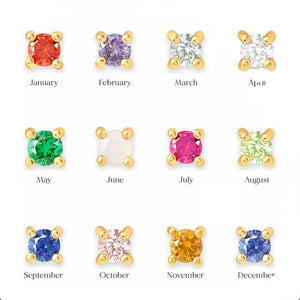
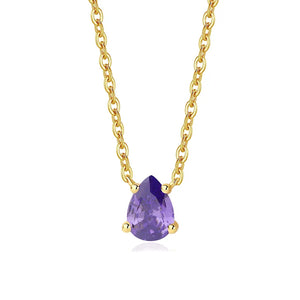


The piece they're describing → Pink Tourmaline Infinity Necklace for Women — 925 Sterling Silver, Pink CZ Pave
Personalize Yours


