


If regular earrings make your ears itch, burn, swell, or feel sore after a few hours, the problem is usually not the style. It is the metal touching the piercing channel. Huggies can be one of the easiest earring styles for sensitive ears, but only when the base metal is right.
Our earrings at AJLuxe use sterling silver posts throughout — hypoallergenic and comfortable for all-day wear, even for sensitive ears.
The live search results for "hypoallergenic huggie earrings" are crowded with collection pages and short product roundups. Most say "nickel-free" or "sensitive skin safe" without explaining what that actually means, which metals to avoid, or why the huggie closure matters. This guide fills that gap: material first, fit second, style third. See our best hypoallergenic earrings for sensitive ears for a complete materials comparison.
AJLuxe huggie earrings are built around the combination that works best for everyday fashion jewelry: a 925 sterling silver base with 18K gold plating or rhodium-style silver finish. That matters because even if the finish wears over time, the metal underneath is still sterling silver, not brass or nickel-heavy costume alloy.
Best Hypoallergenic Huggie Earrings: What to Look For
The safest huggie earrings have three things in common:
- Nickel-free base metal. The post and inner hoop surface should be 925 sterling silver, titanium, niobium, platinum, or solid gold. Avoid unlabeled alloy, brass, and "fashion metal."
- Smooth, close fit. Huggies should hug the lobe without squeezing it. Less swinging means less rubbing inside the piercing.
- Secure hinged closure. A clean click closure is easier on sensitive ears than a loose hook, heavy leverback, or rough butterfly back.
For most people with mild to moderate sensitivity, 925 sterling silver huggie earrings are the best balance of comfort, price, and everyday style. For confirmed severe nickel allergy or fresh piercings, implant-grade titanium is the safest medical-style option.
Why Huggie Earrings Are Good for Sensitive Ears
Huggies are small hoops that sit close to the earlobe. That close fit is not just a style choice; it changes how the earring interacts with the piercing.
Large hoops swing. Dangles pull. Heavy earrings stretch the lobe downward. Huggies do less of all three. The weight stays near the piercing, the hoop moves less during the day, and the closure usually sits flush against the ear.
For sensitive ears, that means fewer irritation triggers:
- Less movement friction inside the piercing channel
- Less downward pull on the lobe
- Less snagging on hair, scarves, towels, and clothing
- Less exposed post length behind the ear
- Better everyday wearability for work, errands, travel, and sleep-adjacent lounging
That does not mean every huggie is safe. A brass huggie with a mystery gold-tone coating can still irritate your ears. The shape helps, but the metal decides.

Hypoallergenic Huggie Metal Comparison
| Metal | Sensitive Ear Safety | Best For | Watch Out For |
|---|---|---|---|
| Implant-grade titanium | Safest | Fresh piercings, severe nickel allergy, all-day wear | Usually higher price, fewer fashion styles |
| Niobium | Safest | Very reactive ears, body jewelry-style hoops | Limited mainstream jewelry selection |
| 925 sterling silver | Very safe for most | Affordable everyday huggies, gold-plated silver huggies | Must be true 925 silver, not silver-plated alloy |
| 18K gold-plated 925 silver | Very safe for most | Gold huggie look without solid gold pricing | Needs plating care: avoid water, sweat, perfume |
| 14K or 18K solid gold | Very safe | Long-term investment huggies | White gold can contain nickel unless specified nickel-free |
| 316L surgical steel | Usually safe | Durable budget hoops | Still contains nickel; not ideal for severe nickel allergy |
| Gold-plated brass or alloy | Risky | Costume jewelry only | Base metal may irritate once plating thins |
The key question is not "Is it gold?" It is "What metal touches my ear if the finish wears?" With AJLuxe gold huggies, the answer is 925 sterling silver. With many cheaper gold-tone huggies, the answer is brass or unlabeled alloy.
AJLuxe Huggie Picks for Sensitive Ears
These are the best AJLuxe options to start with if your ears are sensitive and you want a huggie-style earring:
| Style | Best For | Why It Works for Sensitive Ears |
|---|---|---|
| Gold Huggie Earrings | Minimal everyday gold huggies | 925 sterling silver base, 18K gold plated finish, close-to-lobe shape |
| 2.5mm Gold Huggie Hoops | Slightly bolder everyday hoop | Thicker profile gives presence without the swing of a large hoop |
| Gold CZ Micro Pave Huggies | Small sparkle, dinners, gifting | Huggie silhouette keeps sparkle close to the lobe, reducing pull |
| Silver CZ Micro Pave Huggies | Sensitive ears that prefer silver tone | 925 sterling silver construction, compact profile, lightweight sparkle |
| Diamond-Cut Silver Huggies | No-fuss silver everyday pair | Hypoallergenic 925 sterling silver with texture that catches light without stones |
If you are building a full earring wardrobe, start with one smooth everyday pair, one sparkle pair, and one slightly thicker hoop. That gives you enough variety without repeatedly testing unknown metals.
Are Huggies or Hoops Better for Sensitive Ears?
Huggies are usually better for sensitive ears than large hoops because they move less and pull less. The smaller diameter keeps the weight close to the piercing, which reduces rubbing and stretching.
| Feature | Huggies | Large Hoops |
|---|---|---|
| Movement | Low | Medium to high |
| Pull on piercing | Low | Higher as diameter increases |
| Snag risk | Low | Higher with hair and clothing |
| Best for daily wear | Yes | Depends on weight and metal |
| Best sensitive-ear choice | Small 8-12mm 925 silver or titanium huggie | Lightweight 20-30mm hoop in safe metal |
That said, hoop size matters. A lightweight 20mm sterling silver hoop may be easier to wear than a heavy 10mm huggie made from mystery alloy. Material still comes first.
Huggie Size Guide for Sensitive Ears
For sensitive ears, choose the smallest size that still gives the look you want. Oversized huggies and thick hoops can feel secure visually but may press against the lobe if the inner diameter is too tight.
| Inner Diameter | Fit | Best Use | Sensitive Ear Note |
|---|---|---|---|
| 6-7 mm | Very snug | Second/third lobe, cartilage-style stacks | Avoid if your first lobe sits high or swells easily |
| 8-10 mm | Classic huggie | Everyday first or second lobe | Best starting range for most sensitive ears |
| 11-13 mm | Relaxed huggie | First lobe, slightly lower piercings | Good if 8mm feels tight or pinchy |
| 14-16 mm | Small hoop | More visible everyday hoop | Still comfortable if lightweight |
| 18mm+ | Hoop, not true huggie | Statement or face-framing look | Choose thin, lightweight designs only |
If your ear gets sore from pressure, do not buy the smallest diameter just because it looks neat in photos. You need a tiny air gap between the hoop and the lobe. A huggie should hug; it should not clamp.
Closure Guide: Why the Hinge Matters
For sensitive ears, closure design is almost as important as metal. A rough post, loose latch, or too-tight clicker can irritate even when the metal is safe.
- Hinged click closure: Best for most huggies. It closes securely, keeps the shape smooth, and avoids a long exposed post behind the ear.
- Endless hoop closure: Smooth once closed but harder to insert; not ideal if your piercings get irritated from too much handling.
- Butterfly back: Fine for studs but less ideal for sensitive ears because backs can trap moisture and press into the skin.
- Leverback: Secure for drops but often larger and more mobile than true huggies.
When testing a new pair, close the huggie slowly and make sure the post sits straight through the piercing. If you have to force it closed, the diameter is too small or the post angle does not match your piercing.
Why Are My Ears Suddenly Reacting to Earrings?
Sudden earring sensitivity is common. Your ears can tolerate a metal for years and then start reacting after repeated exposure, especially if nickel is involved. Nickel allergy develops over time; once your immune system is sensitized, even small contact can trigger itching, redness, or swelling.
Other reasons your ears may suddenly react:
- The plating wore down. The safe-looking top layer thinned and exposed a reactive base metal.
- Your skin barrier is irritated. Cold weather, eczema, fragrance, retinoids, or over-cleaning can make the piercing more reactive.
- The earring is too tight. Pressure plus sweat creates irritation even with safe metal.
- The closure traps moisture. Sweat and skincare under a tight back can inflame the area.
- You changed hair or skin products. Perfume, hairspray, sunscreen, and shampoo residue can sit around the piercing.
If your ears react, remove the earrings and let the skin calm down. Do not keep wearing a pair that burns or swells. Once healed, restart with a clean titanium or 925 sterling silver huggie and wear it for a short test window before committing to all-day wear.
How to Test New Huggies Without Irritating Your Ears
Do not test a new pair during a long workday, wedding, or trip. Sensitive ears need a controlled trial.
- Start with clean ears and clean earrings. Wipe the post with alcohol and let it dry fully before insertion.
- Wear for two hours first. If there is no itching or warmth, try four hours the next day.
- Check pressure marks. A red dent means the diameter is too small or closure too tight.
- Avoid perfume and hairspray that day. Test the metal, not your skincare routine.
- Remove before sleep for the first week. Even safe earrings can irritate if they press into the ear overnight.
Once a pair passes several short-wear tests, it becomes a reliable everyday pair. Keep that pair separate from costume earrings so you always have a safe fallback.
What to Avoid in Huggies for Sensitive Ears
- "Gold tone" with no base metal listed. This usually means plated alloy, not real gold or sterling silver.
- Brass base huggies. Brass can contain nickel and can expose copper as plating wears.
- Very tight huggies. Constant pressure causes redness even if the metal is safe.
- Heavy pavé huggies. Stones add weight. Choose micro pavé, not oversized crystal hoops, for sensitive ears.
- Unclear "hypoallergenic" claims. If the seller does not name the metal, the label is not enough.
- Damaged plating near the post. If the post is chipped, scratched, or discolored, stop wearing it.
How to Care for Hypoallergenic Huggie Earrings
Hypoallergenic does not mean maintenance-free. Clean huggies last longer and irritate less because the post is not carrying sweat, skincare, or hair product into the piercing.
| Care Step | How Often | Why It Matters |
|---|---|---|
| Wipe posts before wear | Every wear if ears are reactive | Removes oils, dust, and product residue |
| Dry after sweat or humidity | After workouts or hot days | Moisture worsens irritation and tarnish |
| Avoid perfume on earrings | Always | Fragrance can irritate skin and dull plating |
| Store in a dry pouch | After wear | Protects plating and prevents surface scratches |
| Inspect hinge and post | Monthly | Catches loose closures and worn plating early |
For a full material-safe cleaning routine, read our guide to how to clean jewelry at home. For gold-plated pieces specifically, use the softer method in our gold-plated jewelry cleaning guide.

Sensitive-Ear Huggie Shopping Checklist
Before buying huggie earrings, check this list:
- Does the product name or description state the base metal?
- Is the post 925 sterling silver, titanium, niobium, solid gold, or another safe metal?
- If gold plated, is the base metal sterling silver rather than brass?
- Is the inner diameter large enough for your lobe?
- Is the closure smooth and secure?
- Is the pair lightweight enough for all-day wear?
- Does the seller explain whether the earrings are nickel-free?
- Can you return or exchange if the fit is not right?
If the product page cannot answer those questions, skip it. Sensitive ears do not need guesswork.
For the complete earring reference — types, sizing, curated ear, face shape guide, and sensitive skin — read The Complete Earring Guide.
Sensitive-ear shopping path
Build your sensitive-ear setup around metal, fit, and closure
If your ears react easily, do not choose huggies by style alone. Start with safe metals, then choose the smallest comfortable diameter and a smooth closure.
- Best earrings for sensitive ears — compare studs, huggies, hoops, and backs
- Hypoallergenic jewelry guide — learn which metals are actually safe
- Shop hypoallergenic jewelry — sensitive-skin friendly styles across earrings, rings, and necklaces
Final Thoughts
Hypoallergenic huggie earrings work best when the metal and the shape support each other. The metal keeps the piercing from reacting; the huggie shape keeps the earring from moving, pulling, and catching. That is why small 925 sterling silver huggies, 18K gold-plated sterling silver huggies, and titanium huggies are the safest everyday choices.
Start with one clean, lightweight pair you can wear for a few hours without itching or pressure. Once you know your ears tolerate that metal and closure, build from there: a plain gold pair, a silver pair, and a small pavé pair cover almost every daily outfit without forcing your ears through repeated metal experiments.
Shop AJLuxe huggie earrings for 925 sterling silver and 18K gold-plated options, or browse the full hypoallergenic jewelry collection for sensitive-skin-friendly necklaces, earrings, and rings.
FAQs About Hypoallergenic Huggie Earrings
What are the most hypoallergenic earrings?
The most hypoallergenic earrings are implant-grade titanium, niobium, platinum, 18K+ solid gold, and quality 925 sterling silver. For affordable everyday fashion earrings, 925 sterling silver and 18K gold-plated 925 sterling silver are the best balance of sensitive-ear safety, style, and price.
Are huggies or hoops better for sensitive ears?
Huggies are usually better for sensitive ears because they sit close to the lobe, move less, and pull less than large hoops. The best choice is a small, lightweight huggie made from 925 sterling silver, titanium, or 18K gold-plated sterling silver.
Why are my ears suddenly reacting to earrings?
Your ears may suddenly react because plating has worn down, exposing a reactive base metal; your skin barrier is irritated; the earring is too tight; or you have developed a nickel sensitivity over time. Remove the earrings, let the skin calm down, then restart with clean titanium or 925 sterling silver.
What are the best hypoallergenic earrings for everyday wear?
The best hypoallergenic earrings for everyday wear are lightweight studs or huggies made from titanium, 925 sterling silver, or 18K gold-plated sterling silver. Huggies are especially practical because they stay close to the ear and do not swing or snag as much as larger hoops.
Are sterling silver huggie earrings good for sensitive ears?
Yes, quality 925 sterling silver huggie earrings are good for most sensitive ears because sterling silver is typically nickel-free and gentle against skin. Make sure the entire post and hoop are 925 silver, not just silver-plated over a mystery alloy.
Are gold-plated huggies safe for sensitive ears?
Gold-plated huggies are safe for sensitive ears when the base metal is also safe. Choose 18K gold plating over 925 sterling silver instead of gold plating over brass. If the plating wears over time, sterling silver remains a skin-safe base.
Can I sleep in huggie earrings if my ears are sensitive?
It is better not to sleep in new huggies until you know your ears tolerate them. Even hypoallergenic earrings can irritate if they press into the ear overnight. Once a pair has passed several all-day wear tests, small smooth huggies are usually more sleep-friendly than studs with sharp backs, but removal is still safest.
What size huggies are best for sensitive ears?
Most sensitive ears do best with 8-12mm huggies. This range sits close to the lobe without clamping for most first-lobe piercings. If your lobe is thicker or your piercing sits higher, choose 11-13mm so the hoop does not press into the skin.
Are surgical steel huggies hypoallergenic?
316L surgical steel huggies are safe for many people, but they are not the safest choice for severe nickel allergy because stainless steel still contains nickel bound inside the alloy. Titanium, niobium, 925 sterling silver, and solid gold are safer choices for highly reactive ears.
How do I know if huggies are nickel-free?
Check the product description for a named base metal such as 925 sterling silver, titanium, niobium, platinum, or solid gold. Avoid vague phrases like "gold tone," "fashion metal," or "hypoallergenic alloy" without a metal breakdown. If the seller does not name the metal, do not assume it is nickel-free.
Last updated: June 2026
You Might Also Like
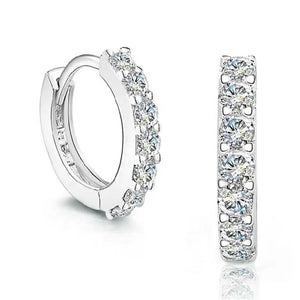
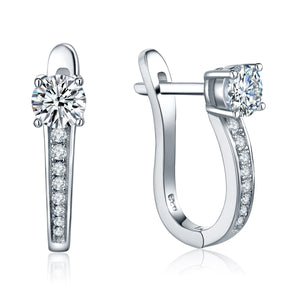
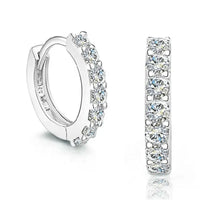
The piece they're describing → CZ Micro Pave Huggie Earrings for Women — 925 Sterling Silver, Hypoallergenic
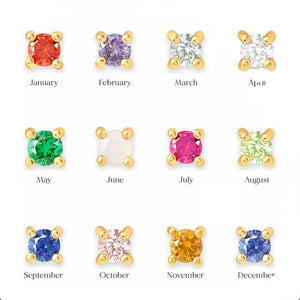
Personalize Yours

