


• Safest metals: Titanium (ASTM F136) · Platinum · Niobium · Solid 18K+ yellow gold
• Very safe: 925 sterling silver (copper-alloyed, nickel-free certified) · 18K gold over 925 sterling
• Use with caution: White gold (ask: palladium or nickel alloy?) · 316L surgical steel (contains 12% nickel)
• Avoid: Brass · Zinc alloy (zamak) · Fashion/costume jewelry · Unlabeled "silver-tone" metals
• Key fact: The EU sets a real standard — EN 1811 under REACH: less than 0.5 µg/cm²/week nickel release. The US has no equivalent law.
• Home test: A $15 DMG nickel test kit turns pink on contact with nickel — works on any piece in 60 seconds
Skin reactions from jewelry are far more common than most people realize. The American Academy of Dermatology estimates that nickel allergy affects up to 17% of women and 3% of men — making it one of the most widespread contact allergies in the world. For people with sensitive skin or metal allergies, the jewelry aisle can feel like a minefield.
But "hypoallergenic" is a marketing term with no legal definition in the jewelry industry. Anyone can call any piece "hypoallergenic" regardless of what metal it contains. This guide cuts through the label confusion and gives you the actual metal standards that make jewelry safe for sensitive skin — with a clear tier ranking, a comparison of gold-plated durability, and a home test method so you can verify any piece before it touches your skin.
What Hypoallergenic Actually Means (and Doesn't)
In medicine, "hypoallergenic" means a product is formulated to cause fewer allergic reactions than conventional alternatives. In jewelry, it means almost nothing. There are no federal standards in the US, no certification process, and no limit on which metals can be sold with a "hypoallergenic" label.
A brass ring with a thin rhodium coating can legally be called "hypoallergenic" — even though once that coating wears off, the brass base will contact your skin, and brass almost always contains nickel.
The European Union took a different approach. Under the EU REACH Regulation (Annex XVII, item 27, formerly the EU Nickel Directive), jewelry that comes into direct and prolonged skin contact must not release nickel at more than 0.5 micrograms per square centimeter per week, tested to the EN 1811:2023 standard using an artificial sweat solution. For piercing jewelry specifically, the limit is stricter: 0.2 µg/cm²/week. Brands that manufacture for the European market and carry EU compliance claims must meet this tested threshold — making "EU REACH compliant" one of the few meaningful safety claims in jewelry marketing.
The only reliable way to know if a piece is actually safe for sensitive skin: check the specific metal composition. The label tells you nothing. The base metal tells you everything.
What Actually Causes Jewelry Reactions
The overwhelming majority of jewelry-related skin reactions are caused by one metal: nickel.
Nickel allergy is a type IV delayed hypersensitivity reaction — meaning it doesn't happen on first contact but develops after repeated exposure over months or years. Once sensitized, even trace amounts of nickel cause an itchy, inflamed, sometimes blistering rash (allergic contact dermatitis) wherever the metal touches skin. Sensitization is permanent — the immune system doesn't forget.
Nickel is in more jewelry than most people realize:
- White gold below 18K — often uses nickel as the whitening alloy
- Gold-plated brass — brass frequently contains nickel; once plating wears through, brass contacts skin
- Costume / fashion jewelry — virtually all uses zinc-nickel alloys or other nickel-containing metals
- 316L surgical steel — contains approximately 12% nickel (tightly bound, but still present)
- "Silver-tone" and "silver-plated" fashion jewelry — the base is almost always nickel silver, a nickel alloy with no real silver content
- Watch cases, band hardware, jean rivets, belt buckles — common unsuspected nickel sources
Metal Safety Rankings for Sensitive Skin
| Metal | Safety | Nickel | Notes |
|---|---|---|---|
| Titanium (ASTM F136) | 🟢 Safest | Zero | Medical implant-grade; used in orthopedic implants. Near-zero allergy reports even in extreme sensitivity. |
| Niobium | 🟢 Safest | Zero | Extremely inert. Used in body piercing jewelry. Anodizes to produce colors without coatings. |
| Platinum | 🟢 Safest | Zero | 95%+ purity. Naturally white, non-reactive, never needs replating. Allergy essentially unheard of. |
| Solid 18K yellow gold | 🟢 Very safe | None | 75% gold + copper/silver alloy. Nickel-free in yellow variants. Industry standard for sensitive skin. |
| 925 Sterling silver (copper-alloyed) | 🟢 Very safe | None (if copper-alloyed) | 92.5% silver + 7.5% copper. EU REACH compliant. Always confirm "nickel-free" — some cheaper silver uses nickel in the 7.5% alloy. |
| 18K gold over 925 sterling | 🟢 Very safe | None | Safe at every wear stage — gold surface is inert; if plating wears, sterling base (also nickel-free) contacts skin. |
| 14K yellow gold | 🟡 Generally safe | Often none — confirm | Typically copper/silver alloyed. 14K white gold often uses nickel as whitener — different story. |
| White gold (palladium-alloyed) | 🟡 Safe (confirm) | None | Must ask specifically: "Is this palladium-white-gold or nickel-white-gold?" Palladium alloy is hypoallergenic. |
| 316L surgical steel | 🟠 Caution | ~12% (tightly bound) | Nickel is bound in the matrix and rarely releases. Most moderately sensitive people tolerate it. Severe cases still react. |
| White gold (nickel-alloyed) | 🟠 Caution | 5–20% | The most common cause of metal allergy in engagement rings. Rhodium plating protects while intact. |
| Brass / copper | 🔴 Risky | Often present | Common base metal in fashion jewelry. Nickel content varies; turns skin green from copper oxidation. |
| Zinc alloy (zamak) / costume jewelry | 🔴 Avoid | Usually present | Cheap base for fast-fashion jewelry. Brittle, frequently nickel-containing. Avoid entirely for sensitive skin. |
Gold-Plated Jewelry: Safe or Not? The Base Metal Is Everything
Gold-plated jewelry causes more allergy confusion than any other category. The gold layer itself is non-reactive — gold doesn't cause allergies. The problem is what's underneath. When the plating wears through, the base metal comes into direct skin contact. If that base is brass or zinc alloy (both common in cheap fashion jewelry), you'll react to the base, not the gold.
Plating thickness determines how quickly this happens — and the difference between product tiers is significant:
| Type | Gold layer | Typical lifespan (daily wear) | Safe for sensitive skin? |
|---|---|---|---|
| Flash-plated (fast fashion) | < 0.175 microns | Weeks to 3 months | Briefly — depends on base |
| Standard gold plated | 0.5–2.5 microns | 6–24 months | Yes, while intact — base matters |
| Gold vermeil (925 base required) | 2.5+ microns | 2–5 years | Yes — 925 base is safe too |
| Gold-filled | 5% by weight, bonded | 10–30 years | Yes — if base is nickel-free |
| Solid gold (14K–18K) | All the way through | Lifetime | Yes (yellow/rose, copper-alloyed) |
The question to ask any jeweler: "What is the base metal?" If the answer is 925 sterling silver or copper, you're safe at every stage of wear. If the answer is brass, zinc alloy, or they can't tell you — the plating is the only thing standing between your skin and a reactive metal, and it will wear through.
White Gold's Hidden Allergy Problem
White gold is yellow gold (which is naturally yellow) mixed with white alloy metals. The alloy used determines whether it's safe — and there are two very different options in widespread use:
Nickel-white-gold is the cheaper and more common formulation. Nickel (5–20% of the alloy) creates a hard, very white metal. It's the most common cause of metal allergy in engagement rings — rings worn constantly, daily, for years, with the metal in prolonged contact with a finger. Even with rhodium plating, once that plating wears (typically 12–18 months on rings), the nickel-alloy base contacts skin.
Palladium-white-gold is the hypoallergenic formulation. Palladium (a platinum-group metal) creates a similar white color without any nickel. It costs more but is genuinely safe for nickel-sensitive skin. EU regulations effectively require this approach in jewelry sold to the European market.
The challenge: US listings rarely specify which alloy was used. Ask directly: "Is this nickel-white-gold or palladium-white-gold?" A confident answer of "palladium" — or written metal specifications — is what you're looking for. If the jeweler doesn't know, assume it's nickel.
The Surgical Steel Myth
"Surgical grade" or "surgical steel" jewelry typically contains 10–14% nickel. 316L stainless steel (the standard for surgical steel jewelry) contains iron, chromium, molybdenum, and nickel. The nickel is in a stable alloy state and doesn't release readily — which is why surgical steel causes fewer reactions than cheap fashion steel. But it is not nickel-free.
Most nickel-sensitive people tolerate surgical steel. People with severe nickel allergy — those who react to belt buckles, watch backs, or jeans rivets — may still react to it. For piercing jewelry and earrings in highly sensitive ears, implant-grade titanium (ASTM F136) is the genuinely nickel-free option. See our best hypoallergenic earrings 2026 for a complete materials comparison.
How to Test Jewelry for Nickel at Home
A dimethylglyoxime (DMG) nickel spot test kit lets you test any piece of jewelry in 60 seconds. It costs $10–$20 online and contains two solutions that, when mixed and applied to metal with a cotton swab, turn pink or red in the presence of nickel. No color change means nickel-free at that point.
- Apply a few drops of Solution 1 to a cotton swab
- Add a few drops of Solution 2 to the same swab
- Rub the swab firmly on the metal surface for 30 seconds
- Pink or red color = nickel present. No color change = nickel-free at that location
Test every component separately: the pendant face, the clasp, the earring post, the back. Different parts of a piece are often made from different metal stock. A positive result anywhere matters — if the post is the problem, the beautiful face material is irrelevant.
Earrings and Sensitive Ears — The Highest-Risk Category
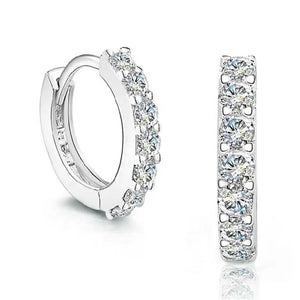
Earring reactions are the most common jewelry allergy scenario — and the most severe. The post sits inside the piercing channel where skin is thin, moisture accumulates, and metal contact is continuous. The post material is what matters most, not the visible decorative front. If you prefer a close-fitting hoop style, huggie earrings made from 925 sterling silver are a popular sensitive-ear alternative to standard hoops.
- For freshly pierced ears: Titanium ASTM F136 only, for the full healing period (6–12 weeks for lobes, up to a year for cartilage).
- For healed piercings with nickel sensitivity: Titanium, niobium, 925 sterling silver (nickel-free certified), or 18K gold on 925 sterling. The post contacts the piercing channel — both the gold surface and sterling base must be nickel-free.
- For everyday wear without sensitivity: Sterling silver and 18K gold on sterling silver are the standard. See our focused guide to hypoallergenic huggie earrings for hoop-specific guidance.
How to Buy Actually Hypoallergenic Jewelry
1. Check the metal stamp — not the label
Look for: 925 (sterling silver), 18K or 750 (18K gold), Ti (titanium), Nb (niobium), 950 Pt (platinum). These stamps have legal definitions behind them. "Hypoallergenic" on a tag has none.
2. Ask about the base metal specifically
Gold plated, rhodium-plated, and silver-plated finishes are only as safe as the metal underneath. Always ask: "What is the base metal?" If the answer is 925 sterling silver or copper, you're safe. If it's brass, zinc alloy, or unknown — avoid it.
3. Ask about white gold alloy composition
"Is this palladium-white-gold or nickel-white-gold?" If they don't know, assume nickel.
4. Use the DMG test on pieces you already own
If you've had past reactions to jewelry and want to understand which pieces are actually safe, the $15 DMG kit lets you test everything in your current collection in 20 minutes.
5. Look for EU REACH compliance
Brands that specifically state EU REACH or EN 1811 compliance must meet the 0.5 µg/cm²/week nickel release standard — the only tested threshold that exists for jewelry. It's not a US requirement, but it's a meaningful signal.
How to Maintain Your Hypoallergenic Jewelry
Even the safest metals need care to stay that way. The most common cause of reactions in previously-safe jewelry is plating wear exposing the base, accelerated by poor care.
- Remove before swimming, showering, and exercise. Chlorine, salt water, and sweat are the fastest ways to degrade gold plating.
- Remove before applying lotion, perfume, and hairspray. Chemical residues build up and accelerate surface wear.
- Store in a dry, airtight bag or box. Humidity oxidizes silver and weakens the plating bond.
- Wipe with a soft, dry cloth after each wear. Skin oils and sweat accumulate daily — a 10-second wipe extends plating life significantly.
- Avoid ultrasonic cleaners for plated jewelry. The vibration breaks down the plating layer. Use warm water + a drop of gentle soap + soft cloth instead.
- Replate when you see the base metal showing. A lighter patch or change in color indicates the plating is thin. Replating at a local jeweler costs $20–$60 and restores full protection.
AJLuxe Materials: Why 18K Over 925 Sterling Works for Sensitive Skin
All AJLuxe jewelry is built on a 925 sterling silver base, plated with 18K gold. Both elements of this combination are specifically chosen with sensitive skin in mind. Our sterling silver is copper-alloyed — the 7.5% alloy is copper, not nickel — and our pieces are explicitly nickel-free, meeting the EU EN 1811 standard for direct skin contact.
What this means practically: even at high-friction points where plating wears over time, the metal that contacts your skin is a nickel-free silver-copper alloy. There is no nickel layer waiting underneath the gold. This is the meaningful difference between "gold-plated over 925 sterling" and "gold-plated over brass" — and it's why we built our collection this way rather than using cheaper base metals.
Shop Hypoallergenic Jewelry at AJLuxe
AJLuxe — 18K Gold Plated Over 925 Sterling Silver · Nickel-Free · EU REACH Compliant
- Necklaces — nickel-free sterling silver
- Earrings — safe for sensitive ears
- Rings — hypoallergenic sterling silver
- Bracelets — nickel-free
Free US shipping · 30-day returns · Gift-ready box included
Looking specifically at sterling silver? Our dedicated guide on is sterling silver hypoallergenic covers exactly why 925 stamps matter, what the 7.5% alloy is, and why gold plated sterling silver is the safest combination for sensitive skin.
For gold jewelry specifically, see our guide: Is Gold Plated Jewelry Hypoallergenic? The Real Answer.
Frequently Asked Questions About Hypoallergenic Jewelry
What metals are truly hypoallergenic for jewelry?
The metals with essentially no allergy risk are titanium (ASTM F136), niobium, platinum, and 925 sterling silver (copper-alloyed). Solid 18K yellow gold is also very safe. For gold-plated jewelry, 18K gold on a 925 sterling silver base is hypoallergenic at every layer — the gold surface is inert, and the sterling base is nickel-free even after plating wears.
Is sterling silver hypoallergenic?
Yes — quality 925 sterling silver is nickel-free and considered hypoallergenic. It contains 92.5% silver and 7.5% copper. A very small number of people (under 0.1%) have genuine silver sensitivity, but for everyone else, sterling silver is one of the safest jewelry metals available. However: some manufacturers substitute nickel in the 7.5% alloy. The 925 stamp confirms silver purity, not the alloy composition. Look for pieces that are explicitly "nickel-free" in addition to 925-stamped.
Is gold-plated jewelry hypoallergenic?
It depends entirely on the base metal. 18K gold plated on 925 sterling silver is hypoallergenic — the gold surface is inert, and if it wears through, sterling silver (also nickel-free) contacts your skin. 18K gold plated on brass or zinc alloy is not reliably hypoallergenic — once the plating wears through, a potentially nickel-containing base metal contacts skin. Always ask what the base metal is.
What is the most hypoallergenic metal for earrings?
For freshly pierced ears: titanium ASTM F136, without exception. For healed piercings with sensitivity: titanium, niobium, 925 sterling silver, and 18K gold on sterling silver. The post material is more important than the decorative front — the post sits inside the piercing channel where the skin is thinnest and most reactive.
Is surgical steel hypoallergenic?
316L surgical-grade stainless steel contains about 12% nickel, tightly bound in the steel matrix so it rarely releases. Most nickel-sensitive people tolerate 316L steel. However, people with severe nickel allergy — those who also react to belt buckles or watch backs — may still react. For maximum safety, choose implant-grade titanium (ASTM F136) or 925 sterling silver.
How do I know if my jewelry has nickel in it?
A DMG (dimethylglyoxime) nickel spot test kit costs $10–$20 online and turns pink or red when rubbed on metal that contains nickel. Apply the solution to a cotton swab, rub on the metal for 30 seconds, and check the color. Test all components separately — clasp, post, and decorative face — since different parts can use different metals. No color change means nickel-free at that location.
Can you be allergic to sterling silver?
True silver allergy is extremely rare — it affects under 0.1% of the population. If you react to "silver" jewelry, the more likely cause is that the piece wasn't real sterling silver: costume jewelry labeled "silver-plated" or "silver-tone" is almost always made on a nickel-alloy base called nickel silver, which contains no actual silver. A reaction to a piece stamped "925" or "Sterling" is rare enough that a dermatologist patch test is worth doing to confirm the actual allergen.
Can I become allergic to jewelry I've worn for years without problems?
Yes. Nickel sensitization builds with repeated exposure — it's not always immediate. Years of contact with nickel-containing jewelry gradually prime the immune system. Once sensitized, even small amounts trigger a reaction. This is why people "suddenly" develop reactions to pieces worn comfortably for years. Once sensitized, switch to genuinely nickel-free metals; the sensitivity is typically permanent.
What's the difference between hypoallergenic and nickel-free jewelry?
"Nickel-free" is the more specific and useful claim — it means the piece contains no nickel, the primary jewelry allergen. "Hypoallergenic" is broader and legally unregulated in the US — it means "less likely to cause an allergy" but doesn't specify what allergens were removed. A piece can be labeled hypoallergenic but still contain nickel if the manufacturer is using the term loosely. "Nickel-free + 925 sterling silver" is a more trustworthy combination than "hypoallergenic" alone.
Is rose gold hypoallergenic?
It depends on the karat and the specific alloy. Rose gold gets its color from copper. 18K rose gold (75% gold + 22.5% copper + 2.5% silver) is nickel-free and hypoallergenic. 14K rose gold alloys vary — some use nickel as part of the mix. Always confirm the full composition for any gold below 18K if you have nickel sensitivity.
Is 14k gold hypoallergenic?
For most people, yes. Solid 14K gold is 58.3% pure gold, and the other 41.7% is alloy metal. If that alloy contains nickel, someone with a nickel allergy can still react — so it depends on the specific alloy. Nickel-free 14K gold (mixed with copper, silver, zinc, or palladium) is safe for sensitive skin, and higher karats like 18K contain more pure gold and even less alloy. If you have a confirmed nickel allergy, ask for nickel-free 14K, choose 18K gold, or pick a 925 sterling silver base with gold plating.
Final Thoughts
Hypoallergenic jewelry isn't a special category — it's simply jewelry made from metals that don't release allergens at levels that trigger the immune system. The metals that genuinely meet this standard are well known: titanium, niobium, 925 sterling silver (copper-alloyed), 18K+ yellow gold, and platinum. Everything else requires checking the actual base metal, not just the label. The EU's EN 1811 standard under REACH represents what "hypoallergenic" should mean everywhere — a tested threshold for nickel release, not a marketing word. Until the US adopts a similar standard, the $15 DMG test kit and the question "what is the base metal?" are the most useful tools a sensitive-skin shopper has.
Written by Vaishakhi Ajmera — founder and jewelry specialist at AJLuxe. Last updated: May 2026.
Sources:
• American Academy of Dermatology — Contact Dermatitis and Nickel Allergy
• Wikipedia: EU Nickel Directive (REACH Regulation Annex XVII)
• EN 1811:2023 Nickel Release Testing Standard
• GIA — Metal and Alloy Standards
You Might Also Like
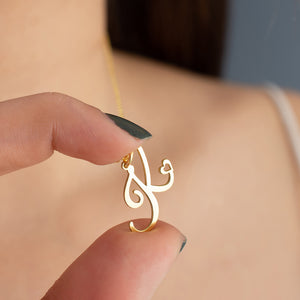
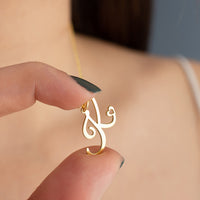
The piece they're describing → Heart Initial Necklace for Women — 18K Gold Plated, Personalized Letter + Heart Pendant
Personalize Yours

