


- A trustworthy gold store is licensed, publicly reviewed (online review sites and the BBB), and tests purity openly in front of you.
- Compare at least 2-3 local options before buying or selling — quotes vary widely between pawn shops, jewelers, and dedicated gold buyers.
- Pawn shops typically offer the lowest payout when you sell gold; dedicated gold buyers and independent jewelers usually pay more.
- The “cheapest” place to buy depends on what you want: bullion dealers for investment gold, independent or online jewelers for lower markups on gold jewelry.
- Always get a written receipt listing karat, weight, and price breakdown for any gold transaction.
- Want the gold look without fine-gold pricing? Gold-plated sterling silver jewelry costs a fraction of solid gold.
Searching “gold store near me” usually means one of two things: you want to buy gold jewelry (or bullion), or you want to sell gold you already own for cash. The right store — and the right price — depends entirely on which of those you're doing, plus a handful of trust signals most shoppers skip checking. Here's how to find and vet a gold store near you in 2026, whether you're buying, selling, or just want the gold look without the gold price tag.
What Makes a Gold Store Trustworthy?
A trustworthy gold store is licensed to do business in your state, has a track record of public reviews you can actually verify, tests gold purity openly instead of eyeballing it, and quotes prices tied to the current spot price of gold rather than a number it won't explain. Beyond that baseline, look for a few specific signals before you hand over cash or jewelry:
- Transparent testing. Reputable stores test in front of you — acid test, electronic tester, or XRF machine — and will tell you the result before naming a price.
- A real business license. Many states require precious-metals dealers to register; a quick call to your state's consumer affairs office can confirm a store is registered.
- Public reviews with history. A handful of five-star reviews from the same week is a bigger red flag than a mix of 4- and 5-star reviews spread over years.
- Written quotes. Any store worth using will put a price, karat, and weight in writing before you decide.
How to Find a Reputable Gold Store Near You
Start with a simple search — “gold buyer near me” or “jewelry store near me” — then filter by rating, distance, and whether the listing shows recent reviews rather than just a star average. From there:
- Check the store's online business listing and BBB rating, and read the 1-star reviews specifically — they usually reveal pricing or pressure-tactic complaints faster than the 5-star ones.
- Call ahead and ask how they test purity and what benchmark price they use, before you walk in.
- Ask whether they buy as well as sell — some jewelry stores only sell and don't buy back gold at all.
- Bring government ID; most states legally require it for gold purchases and sales.
- Get a second quote somewhere else before finalizing, even if the first store seems fine.
Buying vs. Selling Gold: Which Type of Store Do You Need?
The store that's right for buying gold jewelry is often the wrong one for selling it — each type is built around a different business model, so payouts and markups swing widely between them.

| Store Type | Best For | Typical Payout When Selling | What to Watch For |
|---|---|---|---|
| Independent local jeweler | Buying pieces + getting appraisals | Mid-range, varies by shop | Ask if they buy back at all — many only sell |
| Pawn shop | Fast cash, no appointment | Usually the lowest of the group | Negotiate, and get a second quote first |
| Dedicated gold buyer / refiner | Selling scrap or broken gold | Often closest to spot price | Confirm they test purity on-site before quoting |
| Big-box jewelry chain | Buying new pieces with a warranty | Rarely buys back at all | Check the buyback policy before you assume one exists |
| Online jewelry retailer (e.g., AJLuxe) | Affordable gold-look fashion jewelry, gifting | Not applicable — fashion jewelry, not scrap gold | Not a substitute for investment-grade or resale gold |
Red Flags That Signal a Gold Store to Avoid
The biggest red flag is a store that won't show you the testing process or explain how it arrived at a price — reputable buyers test openly and can walk you through their math in under a minute. Other warning signs worth walking away from:
- No willingness to give a written quote before you agree to anything.
- Heavy pressure to sell or buy the same day, with no time to get a second opinion.
- No findable business license or BBB profile when you search the name.
- A quote dramatically below every other store you've checked, with no explanation for the gap.
- Refusal to itemize karat, weight, and price separately on the receipt.
Buying Fine Gold Locally vs. Choosing Gold-Plated Jewelry Online — Which Is Right for You?
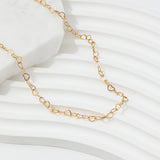
If you're shopping for investment-grade fine gold, or you need to sell gold for cash, your best bet is a local, licensed jeweler or dedicated gold buyer who tests purity in front of you and prices against spot. But if what you actually want is the gold look for everyday style or a gift — without paying solid-gold prices or dealing with resale value at all — an online option built around gold-plated sterling silver gets you there for a fraction of the cost. AJLuxe's Heart Choker Necklace, 18K Gold Plated, Hollow Heart Tennis Chain ($28.99) is a good example: 925 sterling silver with genuine 18K gold plating, hypoallergenic, and gift-ready out of the box — it's fashion jewelry, not an investment, and it's priced accordingly.
For how gold and gold-plated jewelry must be marked and disclosed to shoppers in the US, see the Federal Trade Commission's guidance for jewelry sellers: https://www.ftc.gov.
Frequently Asked Questions
Is it better to sell gold to a jeweler or pawn shop?
In most cases, an independent jeweler or a dedicated gold buyer pays more than a pawn shop, because pawn shops typically price in the risk and cost of resale and often lead with a lowball first offer. Get quotes from at least one of each before deciding, and don't accept the first number without comparing it.
Where is the cheapest place to get real gold?
There's no single nationwide answer — the “cheapest” place is whichever seller charges the smallest premium over the live spot price for that day. For bullion or coins, that's usually an accredited bullion dealer rather than a retail jewelry store, since jewelry stores build craftsmanship and design markup into the price.
Which is the cheapest place to buy gold?
It depends on whether you're buying bullion or gold jewelry. For bullion, compare accredited dealers against the day's spot price; for gold jewelry, mall and big-box jewelers tend to carry the highest markups, while independent jewelers and direct-to-consumer brands are typically cheaper because they skip extra layers of retail markup.
Where do you get the most money for your gold?
Dedicated gold buyers and refiners that test purity on-site typically pay the most, since their offer sits closest to spot price minus a small refining fee. Pawn shops generally pay the least, and independent jewelers usually land somewhere in between — always compare at least two before selling.
All third-party trademarks, brand names and product names are the property of their respective owners. AJLuxe is not affiliated with, endorsed by, sponsored by, or otherwise connected to any third-party brand referenced in this article. Brand names are used solely for accurate comparative reference, and material descriptions reflect each brand's own published product specifications at the time of writing.
You Might Also Like
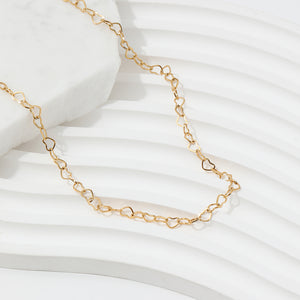

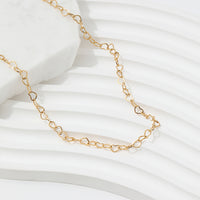
The piece they're describing → Heart Choker Necklace for Women — 18K Gold Plated Heart-Link Chain
Personalize Yours


