


Garnet (Mohs 6.5–7.5, $30–$300) is more affordable and actually tougher day-to-day than emerald, despite emerald ranking harder at 7.5–8. Nearly 90% of natural emeralds are treated with oil or resin, making care tricky. Green garnets — tsavorite and demantoid — offer vivid emerald-like color with zero treatment needed.
TL;DR:
• Emerald is harder but more fragile — internal inclusions (jardin) make it chip-prone; avoid ultrasonic cleaners
• Green garnets (tsavorite, demantoid) rival emerald's color at a fraction of the price with no treatments
• January birthday? Choose garnet. May birthday? Emerald or lab-grown emerald for budget-conscious shoppers
When it comes to picking between garnet or emerald, most people assume emerald wins on every front — richer color, higher prestige, bigger price tag. But the real story is more interesting. Emerald is harder on the Mohs scale, yet garnet holds up better in everyday wear. Emerald carries deep symbolism tied to hope and renewal, but garnet brings its own fire and emotional weight. And then there are the green garnets — tsavorite and demantoid — that can look just as vivid as an emerald for far less money with none of the treatment concerns. This guide breaks down everything so you can choose the right gemstone for your jewelry. For a deeper look at what makes this stone special, see our complete guide to emerald meaning.
In This Guide
- At a Glance
- Price: Why Emerald Costs So Much More
- The Emerald Treatment Problem
- Durability: Which Is Really Tougher?
- Green Garnets: Tsavorite and Demantoid
- January vs May Gift Guide
- Which to Choose?
- Frequently Asked Questions
- Final Thoughts
At a Glance
Here's a quick side-by-side so you can see the key differences right away. Both are beautiful gems with long histories, but they differ a lot in price, durability, and care requirements.
| Feature | Garnet | Emerald |
|---|---|---|
| Colors | Red, orange, green, purple, colorless | Green (bluish to yellowish) |
| Mohs Hardness | 6.5–7.5 | 7.5–8 |
| Toughness | Good | Poor (due to inclusions) |
| Price Range | $30–$300/ct (red); up to $3,000/ct (green) | $100–$5,000+/ct natural |
| Treatment | Usually none | ~90% oiled or resin-filled |
| Birthstone | January | May |
| Meaning | Passion, protection, love | Hope, growth, renewal |
| Safe for Ultrasonic? | Generally yes | No — can remove oil treatment |
One thing stands out immediately: emerald is harder on paper, but its toughness rating is poor. That matters more in real life. We'll dig into why below.
Price: Why Emerald Costs So Much More
Natural emerald is one of the most expensive colored gemstones on the market. A fine, untreated 1-carat Colombian emerald can fetch $5,000 or more — sometimes far more. Even commercial-grade stones with visible inclusions run $100–$500 per carat. Garnet, by contrast, is one of the most accessible colored gems. Classic red almandine and pyrope garnets start under $50 per carat in jewelry-grade quality. You can find beautiful pieces for $30–$300 per carat depending on color saturation and origin.
Why the gap? Emerald forms under very specific geological conditions, and gem-quality material is genuinely rare. The finest stones come from Colombia (Muzo and Chivor mines), Zambia, and Brazil. Fine-quality emeralds are rarer than diamonds of equivalent size. Add the treatment factor — more on that in the next section — and prices for untreated stones shoot even higher because they're the minority of what's mined.
Lab-grown emerald is changing the equation fast. Hydrothermal and flux-grown lab emeralds share the exact same chemical composition as natural stones (beryllium aluminum silicate with chromium/vanadium coloring). They're optically identical, often cleaner, and typically 80% cheaper than comparable naturals. A 1-carat lab emerald might run $100–$300. This market shift is significant — if you love the color but not the price or treatment concerns, lab-grown is worth serious consideration.
Garnet's pricing is more democratic. Most people can afford a quality garnet piece as everyday jewelry without stretching their budget. The exception is the green varieties: fine tsavorite and demantoid garnets can reach $3,000–$5,000 per carat, bringing them into emerald territory — but you're often getting a cleaner, brighter stone without any treatment.
The Emerald Treatment Problem
Here's the fact that surprises most shoppers: roughly 90% of natural emeralds on the market have been treated with cedar oil, synthetic resin (like Opticon), or a combination of both. This isn't a scandal — it's been standard practice for centuries. Emerald's jardin (French for "garden," describing the web of inclusions inside) creates tiny fissures that reach the surface. Oiling fills those fractures, improves clarity, and deepens the color. Sellers are supposed to disclose this, and the GIA grades emerald treatments on a scale from "none" to "faint," "moderate," and "significant."
The catch is maintenance. Oil can dry out over time, especially if the stone is exposed to heat, harsh chemicals, or ultrasonic cleaners. An ultrasonic machine — the kind jewelers use to clean most gems in seconds — can actually pull the oil out of an emerald, leaving it looking hazy or making previously hidden fractures visible. If you own an emerald, clean it only with warm water, mild soap, and a soft brush. Re-oiling is possible (a jeweler can do it), but it's an ongoing care consideration that garnet doesn't require.
Garnet is almost never treated. No heat enhancement, no filling, no coatings. The color you see is natural. This makes garnet a lower-maintenance choice for everyday wear and gives buyers confidence about what they're purchasing. GIA confirms that most garnets require no treatment to display their color, which is a real advantage in the colored stone market where treatment disclosure can be inconsistent.
If you want a natural untreated emerald, expect to pay a significant premium — sometimes 50–100% more than a treated stone of similar appearance. Certificates from the GIA or GÜBELIN that specify "no indications of clarity enhancement" are the gold standard. Lab-grown emeralds sidestep this entirely: they're typically untreated and eye-clean by default.
Durability: Which Is Really Tougher?
This is the biggest surprise in the garnet vs emerald debate. Emerald scores 7.5–8 on the Mohs hardness scale, which measures scratch resistance. Garnet sits at 6.5–7.5 depending on the variety. On paper, emerald should be the more durable gem. But hardness and toughness are two different things — and toughness is what actually matters for wearability.
Toughness describes how well a gem resists chipping, cracking, and breaking under impact. Emerald's jardin — those internal inclusions and fractures — creates natural weak points throughout the stone. A knock against a hard surface, a sharp drop, or even thermal shock can cause an emerald to crack along those planes. Gemologists rate emerald's toughness as "poor." Garnet, despite being slightly softer, has much better toughness. It lacks emerald's internal fracture network, so it handles bumps and knocks better in practice.
For rings, especially engagement rings or rings worn daily, this matters a lot. Emerald is a risky choice for a ring worn every day without a protective bezel setting. Many jewelers recommend emerald earrings or pendants over rings for this reason. Garnet, especially in harder varieties like tsavorite (Mohs 7–7.5), holds up well in rings with appropriate settings. The Jewelers of America recommends evaluating both hardness and toughness when choosing gems for everyday wear.
The bottom line: for a piece you'll wear every day — especially a ring — garnet is the more practical choice. For a pendant or earrings worn occasionally, emerald's toughness drawback matters less. If you love emerald and want a ring, go with a bezel or halo setting that protects the stone's edges, and avoid wearing it during activities where it could take a hit.
Green Garnets: Tsavorite and Demantoid as Emerald Alternatives
Most people picture deep red when they think of garnet — but garnet is actually a family of related minerals, and two of its members produce vivid greens that rival emerald. If you love the look of emerald but want something cleaner, tougher, and treatment-free, tsavorite and demantoid are worth knowing about.
| Feature | Tsavorite | Demantoid | Emerald |
|---|---|---|---|
| Type | Grossular garnet | Andradite garnet | Beryl |
| Color | Vivid green to blue-green | Green with fiery rainbow flashes | Green (bluish to yellowish) |
| Mohs Hardness | 7–7.5 | 6.5–7 | 7.5–8 |
| Dispersion | Moderate | Highest of any non-diamond gem | Low |
| Treatment | None | None | ~90% oiled/resin-filled |
| Price per Carat | $200–$3,000 | $500–$5,000+ | $100–$5,000+ |
| Origin | Kenya, Tanzania | Russia, Namibia, Italy | Colombia, Zambia, Brazil |
Tsavorite is a vivid green grossular garnet first discovered in 1967 near Kenya's Tsavo National Park. Gemologists describe its color as "electric" — the chromium and vanadium that create its green are the same elements responsible for the finest emeralds. But tsavorite tends to be cleaner (fewer inclusions visible to the naked eye) and requires zero treatment. A 1-carat fine tsavorite runs $200–$3,000, overlapping with mid-grade emeralds but offering better clarity and easier care.
Demantoid is rarer and more spectacular. It has the highest dispersion of any non-diamond gemstone — meaning it throws off more rainbow fire than even diamond. Fine Russian demantoids often show a distinctive "horsetail" inclusion (curved chrysotile fibers) that gemologists actually use to confirm origin and authenticity. Demantoid is softer than tsavorite at 6.5–7 Mohs, so it's better suited for earrings and pendants than everyday rings. Top-grade demantoid from Russia can match emerald in price, but you're getting something truly unique — the gem that Victorian jewelers treasured above all others for its fire.
January vs May Gift Guide
The birthstone connection is often the deciding factor when choosing between these two gems. Garnet is the January birthstone, and emerald is the official May birthstone according to the American Gem Society and Jewelers of America. If you're shopping for someone's birthday, that alone might settle the question.
For a January birthday, garnet is the traditional and modern choice. Classic red garnet jewelry — a pendant, stud earrings, or a ring — makes a meaningful, personal gift. The symbolism of passion, protection, and enduring love makes garnet especially popular for romantic gifts. Garnet is also a great choice for someone who wants a colored gem they can wear every day without worrying about it. See our full garnet birthstone guide for more detail on varieties and what to look for.
For a May birthday, emerald is the classic pick, and it carries real emotional weight — hope, growth, renewal, and connection to spring. The rich green is immediately recognizable and feels celebratory. If budget is a concern, lab-grown emerald delivers the same color and chemistry at a fraction of the cost of natural stones. Alternatively, a tsavorite garnet can be a beautiful "May-adjacent" gift: it has emerald's color without emerald's fragility or treatment concerns, though it won't carry the birthstone significance for May.
Both garnet and emerald are also associated with love and devotion — garnet through its deep red symbolism of the heart, emerald through its ancient connections to Venus and fidelity. Either makes a meaningful anniversary gift, not just a birthday one. The 2nd anniversary traditionally calls for garnet; the 55th anniversary is celebrated with emerald.
Which to Choose?
The right gem depends on your priorities — budget, use case, and personal meaning. Here's a quick decision table.
| Your Priority | Best Choice |
|---|---|
| Budget under $200 | Red garnet or lab-grown emerald |
| Everyday ring wear | Garnet (tougher in practice) |
| January birthday gift | Garnet (traditional birthstone) |
| May birthday gift | Emerald or lab-grown emerald |
| Vivid green color, no treatment | Tsavorite garnet |
| Maximum fire and sparkle | Demantoid garnet |
| Prestige and recognition | Natural emerald |
| Emerald look, lower price | Lab-grown emerald or tsavorite |
| Low maintenance care | Garnet (any variety) |
| Collector's piece or investment | Fine natural emerald or demantoid |
If you're still torn, consider what the piece will be used for. Earrings and pendants are forgiving — either gem works well in those settings. For a ring you'll wear every day, garnet's practical toughness advantage is real. If you want the color and prestige of emerald without the treatment baggage, tsavorite garnet is genuinely worth exploring before you commit.
Frequently Asked Questions
Is garnet more durable than emerald?
In everyday use, yes. Emerald ranks higher on the Mohs hardness scale (7.5–8 vs garnet's 6.5–7.5), but hardness only measures scratch resistance. Emerald's toughness — its resistance to chipping and breaking — is rated poor because of internal inclusions called jardin that create weak points. Garnet has good toughness and holds up better in rings and daily-wear pieces.

Are most emeralds treated?
Yes. Approximately 90% of natural emeralds are treated with cedar oil, synthetic resin, or a combination to fill surface-reaching fractures and improve clarity and color. This is industry-standard and should be disclosed by sellers. Lab-grown emeralds are typically untreated. Always ask for disclosure and a reputable certificate when buying a natural emerald.
What is a tsavorite garnet?
Tsavorite is a vivid green variety of grossular garnet discovered in Kenya in 1967. It gets its green from chromium and vanadium — the same elements that color fine emeralds. Tsavorite is typically untreated, often cleaner than emerald, and ranges from $200 to $3,000 per carat. It's one of the best emerald alternatives on the market.
What makes demantoid garnet special?
Demantoid has the highest dispersion of any non-diamond gemstone, meaning it produces more rainbow fire and brilliance than even diamond. Fine Russian demantoids often contain distinctive "horsetail" inclusions of chrysotile fibers that confirm origin. Top-quality demantoid is rarer and more expensive than most emeralds, making it a true collector's gem.
Can I clean emerald in an ultrasonic cleaner?
No. Ultrasonic cleaners can remove the oil or resin used to treat most natural emeralds, revealing or worsening fractures and leaving the stone cloudy. Clean emerald with warm water, mild soap, and a soft brush only. For garnet (including green garnets), ultrasonic cleaning is generally safe unless the stone has visible fractures.
Is garnet always red?
No — garnet is a family of minerals that comes in almost every color. The most common varieties are red (almandine, pyrope), but garnet also occurs in orange (spessartine, hessonite), green (tsavorite, demantoid), yellow, purple, and even colorless. Each variety has its own pricing and properties.
Which gemstone is the January birthstone?
Garnet is the official January birthstone. It's been associated with January since the early standardization of birthstones in the early 20th century. Emerald is the May birthstone. If you're choosing a gift for a specific birthday month, the birthstone connection adds personal meaning.
How does garnet compare to ruby?
Both are red gems, but they're different minerals with different properties. Ruby (Mohs 9) is significantly harder and tougher than garnet, and typically much more expensive. Fine rubies can fetch tens of thousands per carat. Garnet offers a similar color range at a fraction of the cost. See our garnet vs ruby comparison for a full breakdown.
Is lab-grown emerald worth buying?
For most buyers, yes. Lab-grown emerald has the exact same chemical composition, crystal structure, and optical properties as natural emerald. It's typically untreated, often cleaner (fewer inclusions), and 80% cheaper than comparable naturals. The only trade-off is no geological origin story — but you gain peace of mind on treatments and cost.
What does emerald symbolize?
Emerald has long symbolized hope, renewal, growth, and fidelity. Ancient Egyptians associated it with fertility and rebirth. Romans linked it to Venus, goddess of love. Today it's often chosen for anniversary gifts and given to mark new beginnings. It's also the traditional 55th anniversary gemstone.
What does garnet symbolize?
Garnet traditionally represents passion, protection, and enduring love. It's been used as a talisman for travelers and warriors throughout history. In modern gifting, garnet carries meaning around loyalty and commitment. Red garnet in particular is strongly associated with the heart and romantic love.
Which is better for an engagement ring — garnet or emerald?
Neither is the most practical choice for a daily-wear engagement ring compared to sapphire or ruby, but garnet edges out emerald for durability in that use case. If you choose emerald, use a protective bezel setting and avoid wearing the ring during physical activities. Tsavorite garnet is a beautiful and more durable alternative if you want a green engagement ring.
Shop Garnet Jewelry at AJLuxe
Our garnet water drop pendant necklace in 925 sterling silver keeps this stone close every day. Ready to shop? Browse all garnet necklaces and birthstone jewelry — every piece hypoallergenic, gift-ready, and backed by our 30-day returns.
Final Thoughts
The garnet vs emerald question doesn't have one right answer — it depends on your priorities. Emerald wins on prestige, deep history, and that unmistakable rich green that's been prized for thousands of years. Garnet wins on everyday durability, honest pricing, and zero treatment concerns. And if you want the best of both worlds — vivid green color, garnet toughness, no treatments — tsavorite and demantoid are genuinely exciting alternatives that most buyers don't even know exist.
Whatever you choose, the most meaningful gemstone is the one that connects to who's wearing it — their birth month, their values, or simply the color that makes them light up. Both garnet and emerald have centuries of that kind of meaning behind them.
Shop our birthstone necklace collection in sterling silver.
Related reading: see how to spot real jade green jewelry vs. dyed stones.
All third-party trademarks, brand names and product names are the property of their respective owners. AJLuxe is not affiliated with, endorsed by, sponsored by, or otherwise connected to any third-party brand referenced in this article. Brand names are used solely for accurate comparative reference, and material descriptions reflect each brand's own published product specifications at the time of writing.
You Might Also Like
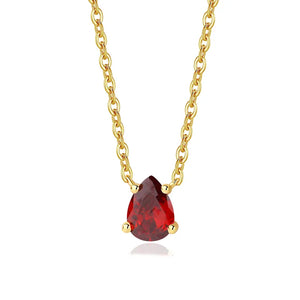
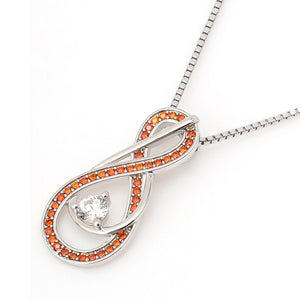
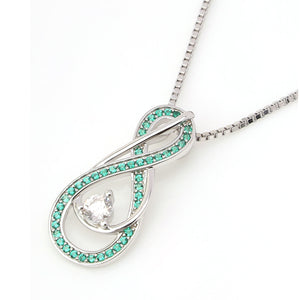
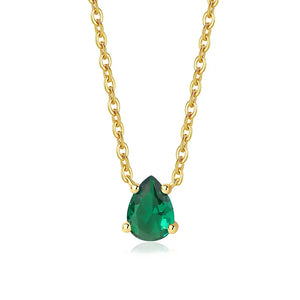
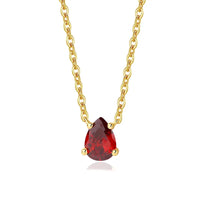
The piece they're describing → Garnet Pendant Necklace for Women — Red Garnet Teardrop, 925 Sterling Silver
Personalize Yours


