


Red garnet and red spinel look nearly identical but differ in hardness, price, and history. Spinel rates Mohs 8 vs garnet's 7–7.5, has no cleavage making it tougher for daily wear, and costs $100–$5,000/ct vs garnet's $50–$400/ct. The British Crown Jewels' "Black Prince Ruby" is actually a 170ct red spinel.
TL;DR:
• Red spinel is harder (Mohs 8) and tougher than garnet — better for rings worn daily
• Garnet is far more affordable at $50–$400/ct vs spinel's $100–$5,000/ct
• Both gems are almost always untreated — a huge advantage over ruby and sapphire
Red garnet vs red spinel — two gems so similar in appearance that they fooled royal gem experts for centuries. The confusion is so famous that it has its own name: the "spinel misnomer." If you're shopping for a deep red gemstone, understanding these two is essential. This guide breaks down every real difference between red garnet and red spinel so you can choose with confidence.
In This Guide
- What Are They?
- The Famous Mix-Up: Spinel Mistaken for Ruby Throughout History
- Color Comparison Side by Side
- Durability: Which Is Better for Rings?
- Price at Each Quality Level
- Which to Choose?
- Frequently Asked Questions
- Final Thoughts
What Are They?
Red garnet and red spinel are both natural gemstones that produce a rich, deep red color — but they're entirely different minerals with different chemical makeups, crystal structures, and physical properties.
Red garnet is actually a family of minerals rather than a single stone. The most common red variety is pyrope garnet (magnesium aluminum silicate) or almandine garnet (iron aluminum silicate). Garnets form in metamorphic rocks and have been prized since ancient Egypt. The deep red color comes from iron and chromium in the crystal structure. Garnet rates 7–7.5 on the Mohs hardness scale and has no cleavage but can fracture, which means it's reasonably tough but not the hardest gem you'd want on a ring you wear every single day.
Red spinel is magnesium aluminum oxide — a completely separate mineral species. Its striking red color comes primarily from chromium, the same element responsible for ruby's red. Spinel rates 8 on the Mohs scale and has no cleavage at all, making it genuinely tough. For centuries, spinel was mistaken for ruby because the two gems occur in the same deposits in Burma (now Myanmar) and look nearly identical without modern testing equipment.
Here's a quick side-by-side of the key specs:
| Property | Red Garnet | Red Spinel |
|---|---|---|
| Chemical Formula | Mg₃Al₂(SiO₄)₃ (pyrope) | MgAl₂O₄ |
| Mohs Hardness | 7–7.5 | 8 |
| Cleavage | None (conchoidal fracture) | None (very tough) |
| Color Cause | Iron, chromium | Chromium |
| Refractive Index | 1.714–1.742 | 1.712–1.762 |
| Birthstone | January | August (added 2016) |
| UV Fluorescence | Typically inert | Some fluoresce red |
| Typical Price Range | $50–$400/ct | $100–$5,000/ct |
| Heat Treatment | Rarely treated | Almost never treated |
The Famous Mix-Up: Spinel Mistaken for Ruby Throughout History
The story of red spinel might be the greatest case of mistaken gem identity in history. For centuries — literally from ancient times through the 1800s — gem traders, jewelers, and even royalty called red spinel "balas ruby." The confusion was so widespread and so persistent that it shaped crown jewels across Europe.
The most famous example sits in the British Imperial State Crown right now: the Black Prince Ruby. This roughly 170-carat deep red stone has been part of the English crown jewels since the 14th century. It was long celebrated as one of the greatest rubies in the world. The Black Prince (Edward of Woodstock) received it as a gift from Pedro the Cruel of Castile in 1367. It was later worn in Henry V's helmet at the Battle of Agincourt in 1415. For over 500 years, it was THE ruby of English royalty. When gemologists finally tested it in the 19th century using modern methods, they confirmed it's actually a red spinel. The same fate met the Timur Ruby (361 carats, now in a necklace owned by the British Royal Family) — also a spinel.
Why did this happen? Red spinel and ruby occur together in the same gem gravels in Myanmar's Mogok Valley. Before spectroscopy and refractive index testing, both gems looked identical to the naked eye and to early magnification. They share nearly the same color range, similar crystal habits, and the same chromium-based red hue. The only reliable way to tell them apart before modern testing was specific gravity — and that required specialized equipment few gem traders had in the field.
The GIA (Gemological Institute of America) now notes that spinel's misidentification as ruby is "one of the most common and consequential errors in gem history." Today, a reputable lab certificate (GIA, AGL, Gübelin) will clearly distinguish red spinel from ruby — but it took modern gemology to finally settle centuries of confusion. You can read more about gem identification on the GIA's spinel resource pages.
For modern buyers, this history matters for one important reason: red spinel's reputation was suppressed for decades after its true identity was revealed. Collectors who knew ruby were paying more simply because of the name. That misidentification hangover kept spinel prices low for much of the 20th century — which is part of why it remains relatively accessible even today compared to fine ruby.
Color Comparison Side by Side
Both red garnet and red spinel produce a deep red hue, but the quality and character of that red differs in ways that matter to gem buyers.
Red garnet's color tends toward a darker, more purplish or brownish red — sometimes described as "wine red" or "blood red." Pyrope garnets can show a vivid pure red in good specimens, but almandine (the most common red garnet) often has a slight brown or violet undertone that becomes more visible in lower-quality stones. In dim incandescent light, garnet's color can look particularly rich and saturated. The term "anthill garnet" (small pyrope garnets from the American Southwest) describes some of the finest pure-red garnets available at accessible prices.
Red spinel's color is generally considered superior by most gemologists. The chromium-driven red in fine Burmese spinel is a pure, vivid red without the brownish or purplish cast common in garnet. At its best — in what the trade calls "flame spinel" from Myanmar's Mogok Valley — red spinel approaches the color quality of fine ruby. The red is described as "electric" or "neon" by some collectors. Vietnamese and Tajik spinels also produce excellent red specimens with slightly different character.
One optical difference worth knowing: red garnet shows no double refraction (it's singly refractive), while red spinel is also singly refractive — both are isotropic. This makes them harder to distinguish from each other optically than from other gems like ruby (which is doubly refractive). Some red spinels show a distinctive red fluorescence under ultraviolet light, while garnets are typically inert — a useful quick test at gem shows.
In terms of visible light performance, fine red spinel has excellent brilliance due to its high refractive index. Garnet also shows good brilliance, and some collectors prefer garnet's slightly warmer, more intimate glow in incandescent light compared to spinel's cooler, brighter flash in daylight.
Durability: Which Is Better for Rings?
This is where spinel has a clear, measurable advantage over garnet for everyday jewelry — especially rings.
Mohs hardness is a gem's resistance to scratching. Spinel at 8 is meaningfully harder than garnet at 7–7.5. Since household dust contains quartz particles rated 7 on the Mohs scale, any gem below 7 will scratch from everyday exposure. Garnet sits right at the danger zone — it won't scratch easily from most daily wear, but it's more vulnerable than spinel to fine abrasion over time. Spinel at 8 stays above quartz particles and shows better long-term polish retention on worn rings.
But hardness isn't the whole story. Toughness — resistance to breaking and chipping — depends on cleavage planes. Cleavage is a gem's tendency to split cleanly along crystal planes when struck. Neither garnet nor spinel has true cleavage, but spinel's isometric crystal structure and lack of any cleavage direction makes it exceptionally tough. Garnet, while also lacking true cleavage, can show conchoidal fracture under impact. In practical terms, both gems handle daily wear reasonably well, but spinel holds up better in active lifestyles.
The Jewelers of America guide on hardness vs. toughness explains this distinction clearly if you want to dig deeper into gem durability science.
For ring settings specifically:
- Spinel (Mohs 8, no cleavage): excellent for daily-wear rings, engagement rings, and active wearers
- Garnet (Mohs 7–7.5, no cleavage): good for earrings, pendants, and occasional-wear rings; fine for rings if you're careful and remove them during physical work
For a necklace or earrings, both gems are equally practical. The durability difference becomes meaningful only when a stone faces repeated impact and abrasion — which rings do far more than other jewelry pieces.
Price at Each Quality Level
Red garnet and red spinel occupy very different price tiers, which often drives the buying decision as much as any physical property.
Red garnet pricing is one of the most accessible in the gemstone world. Commercial-quality red garnets — clean to the eye, decent color — run $10–$50 per carat for pyrope or almandine. Fine-quality pyrope or rhodolite garnet (a pyrope-almandine hybrid with a brighter, more vivid red-pink) runs $50–$200/ct in calibrated sizes. Exceptional specimens — vivid red, clean, well-cut — might reach $300–$400/ct, but that's the ceiling for most red garnet varieties. Demantoid garnet (green) and tsavorite are far more expensive, but pure red garnets remain very accessible.
Red spinel pricing spans a much wider range. Small commercial-quality red spinels from Vietnam or Tanzania start around $100–$300/ct. Better-quality stones with vivid red color and good clarity hit $500–$1,000/ct. Fine Burmese red spinel — the benchmark for the species — commands $2,000–$5,000 per carat for clean stones in the 1–3 carat range. Exceptional large Burmese spinels have sold at auction for significantly more. Even with these premiums, fine red spinel is typically a fraction of the price of comparable-quality Burmese ruby.
| Quality Tier | Red Garnet (per ct) | Red Spinel (per ct) |
|---|---|---|
| Commercial / Entry | $10–$50 | $100–$300 |
| Good Quality | $50–$150 | $300–$800 |
| Fine Quality | $150–$400 | $800–$2,000 |
| Top / Burmese Origin | $400+ | $2,000–$5,000+ |
One important shared selling point for both gems: they're almost always untreated. Ruby and sapphire are routinely heated at high temperatures to improve color — a practice so universal that untreated rubies and sapphires command significant premiums. Red garnet and red spinel are typically sold in their natural state with no heat treatment or other enhancements. For buyers who value natural, untreated gemstones, this is a significant advantage over the more famous red gems.
Which to Choose?
The right choice depends entirely on what you're making and what matters most to you. Here's how to think through it:
If budget is your primary concern, red garnet wins easily. You get a beautiful, natural, untreated red gemstone with genuine history at a fraction of spinel's price. For a pendant, earrings, or a ring you'll wear occasionally, garnet is a smart, practical choice. It's also January's birthstone, making it meaningful for anyone born that month. Learn more in our garnet birthstone guide.
If you're building an engagement ring or a piece you plan to wear every single day without removing it, spinel's extra hardness and toughness tip the balance. The premium is real, but so is the durability advantage. Spinel became August's alternate birthstone in 2016 when the American Gem Trade Association added it alongside peridot and sardonyx — recognition of a gem that's been historically undervalued.
If you want the best possible red color and can stretch the budget, fine Burmese red spinel is genuinely exceptional — a step up from even the best red garnet in terms of pure color vibrancy. If you've read our garnet vs ruby comparison, you'll know that chromium-driven reds (like spinel and ruby) have a different character than iron-driven reds (like most garnet).
| Use Case | Best Choice | Why |
|---|---|---|
| Budget red gemstone | Red Garnet | Beautiful at $50–$150/ct |
| January birthday gift | Red Garnet | Official January birthstone |
| August birthday gift | Red Spinel | August alternate birthstone since 2016 |
| Daily-wear ring | Red Spinel | Mohs 8, no cleavage = better durability |
| Pendant or earrings | Either | Both work well; choose on budget/color |
| Best red color possible | Red Spinel (Burmese) | Pure chromium red, comparable to ruby |
| Ruby alternative (budget) | Red Spinel | Same chromium hue, far less than ruby |
| Untreated natural gemstone | Either | Both are almost always untreated |
Buying Red Garnet Jewelry: Best Types to Choose and How to Care for It
Red garnet jewelry performs best in earrings, pendants, and occasional-wear rings, since garnet's Mohs 7–7.5 hardness handles normal daily knocks but rewards a bit more care than harder gems like spinel or sapphire once it's set in a piece you actually wear (2026). Unlike the loose-stone pricing above, what you pay for finished red garnet jewelry depends as much on the metal and setting as the stone itself — so shopping for a piece is a different decision than shopping for a certificate.
| Jewelry Type | How Well Garnet Suits It | What to Watch For |
|---|---|---|
| Earrings | Excellent — minimal impact exposure | Prong depth on dangle styles |
| Pendants & necklaces | Excellent — stone rarely contacts hard surfaces | Bezel vs. prong setting for security |
| Bracelets | Good — fine for regular wear | Remove before workouts or manual chores |
| Rings | Fine for occasional wear | Not ideal as an everyday-removed-never ring; see the durability section above |
Two things matter more for finished jewelry than for loose stones:
- Setting security. A low or bezel setting protects garnet's edges far better than an exposed high-prong mount, since the risk with garnet is edge chipping under a direct knock rather than everyday scratching.
- Metal and base-metal honesty. Garnet is commonly set in sterling silver or gold-plated silver rather than solid gold, which keeps a piece affordable without changing how the stone itself performs — just confirm what the listing actually says the band is made of before you buy.
Caring for red garnet jewelry: clean it with warm water, a mild soap, and a soft brush, then dry it fully before storing — store it separately from harder gems and metal jewelry so nothing in the box scratches the garnet's surface over time. Take rings and bracelets off before swimming, cleaning, or exercise, since chemical exposure and impact are a bigger risk to a set garnet than everyday wear alone.
AJLuxe's own garnet pieces are built on this logic: 925 sterling silver with 18K gold plating (never solid gold, and we say so), priced $24.99–$79.99, hypoallergenic for sensitive ears and skin, and gift-boxed and ready to give — the kind of everyday-affordable garnet jewelry more than 40,000 customers have already bought from us.
Frequently Asked Questions
Is red spinel more valuable than red garnet?
Yes, in most cases red spinel costs significantly more than red garnet. Fine red garnet runs $50–$400 per carat while red spinel ranges from $100 to $5,000+ per carat depending on origin and quality. Burmese red spinel commands the highest premiums.

How do you tell red garnet from red spinel at home?
It's very difficult without lab equipment. One quick test: hold the stone under a UV lamp (blacklight). Some red spinels fluoresce a vivid red, while red garnets are typically inert (no fluorescence). A jeweler with a refractometer or spectroscope can make a definitive identification. For certified stones, a GIA or AGL lab report will confirm the species.
Was the Black Prince Ruby really a spinel?
Yes. The 170-carat "Black Prince Ruby" in the British Imperial State Crown is a red spinel. It's one of the most famous cases of gem misidentification in history. The stone was called a ruby for over 500 years before 19th-century gemological testing confirmed it's actually spinel.
Is red spinel a good substitute for ruby?
Yes — many gem experts consider fine red spinel the best ruby alternative available. It shares ruby's chromium-driven red color (the finest Burmese spinel looks nearly identical to fine ruby), its untreated status, and its durability, but costs a fraction of the price. It's also singly refractive like ruby, which adds to the visual similarity.
Which is the January birthstone — garnet or spinel?
Garnet is the traditional and modern birthstone for January. Red spinel is an alternate birthstone for August (added to the official list in 2016). See our January birthstone guide for more on garnet's history and varieties.
Are red garnets treated or enhanced?
Red garnets are almost never treated. Unlike rubies and sapphires, which are routinely heat-treated to improve color and clarity, red garnets are sold in their natural state with no enhancements. This makes them particularly appealing to buyers who want a 100% natural gemstone.
Are red spinels treated?
Red spinels are almost never treated either. This is one of their biggest selling points compared to ruby. When you buy a red spinel, you're almost certainly getting a completely natural, unenhanced gemstone. Always ask for a lab certificate from GIA, AGL, or Gübelin to confirm.
How hard is red spinel compared to garnet?
Red spinel rates Mohs 8, while red garnet rates 7–7.5. That difference might sound small but it's meaningful: at 8, spinel sits above household dust and quartz particles (Mohs 7), so it resists everyday scratching better. Spinel also has no cleavage, making it tougher against chipping and impact.
Can red garnet look like ruby?
Yes — fine pyrope garnet and rhodolite garnet can look similar to ruby at first glance. However, ruby's color is typically more vivid and saturated (pure chromium-driven red) while garnet usually shows more brown or violet undertones. Under a loupe, ruby is doubly refractive (you see doubled facet edges) while garnet is singly refractive. Read our garnet vs ruby guide for a full breakdown.
What's the difference in fluorescence between red garnet and red spinel?
Fluorescence is one of the quickest field tests. Many red spinels fluoresce a bright red or orange-red under long-wave UV light (a blacklight). Red garnets are almost always inert — they show no fluorescence under UV. This test isn't 100% reliable (some spinels don't fluoresce and some garnets do very faintly), but it's a useful quick check.
Which gem has better brilliance — garnet or spinel?
Both gems have similar refractive indices (garnet 1.714–1.742, spinel 1.712–1.762) and produce good brilliance when well-cut. Fine spinel cut to ideal proportions often shows exceptional brightness. Garnet tends to look warmer and richer in incandescent light, while spinel can appear more vivid and electric in daylight. Neither is dramatically superior — cut quality matters more than species in this comparison.
Is red spinel rare?
Fine red spinel — particularly Burmese origin with vivid color and clean clarity — is genuinely rare and increasingly collectible. More common grades of red spinel from Vietnam and Tanzania are reasonably available. Compared to ruby, spinel of any quality is far more accessible, which is why it offers good value for collectors who want a chromium-red gem.
Final Thoughts
Red garnet and red spinel are both outstanding choices for anyone who loves deep red gemstones — and both have one crucial advantage over ruby and sapphire: they're almost always completely untreated. That matters whether you're buying for beauty, meaning, or long-term value.
If you want the most beautiful red color possible and durability for daily wear, red spinel is worth the premium. If you want a natural red gem that's accessible, meaningful (hello, January birthday), and beautiful enough to draw compliments at any price point, red garnet delivers. And now that you know the Black Prince Ruby's secret, you've got a better gem story than most royal jewelers did for five centuries.
Shop our garnet birthstone necklace in sterling silver.
All third-party trademarks, brand names and product names are the property of their respective owners. AJLuxe is not affiliated with, endorsed by, sponsored by, or otherwise connected to any third-party brand referenced in this article. Brand names are used solely for accurate comparative reference, and material descriptions reflect each brand's own published product specifications at the time of writing.
You Might Also Like
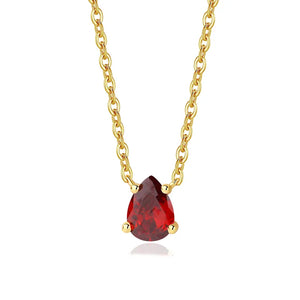

The piece they're describing → Garnet Pendant Necklace for Women — Red Garnet Teardrop, 925 Sterling Silver
Personalize Yours


