


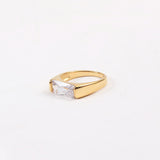
- Titanium doesn't tarnish — its oxide layer is permanent and self-forming, unlike silver's reaction to sulfur in air.
- Any dulling after years of daily wear comes from scratching, not oxidation, and polishes out.
- Titanium is one of the most hypoallergenic metals sold, including for confirmed nickel allergies.
- It's fully water-safe — showering, swimming, and sweat don't damage it.
- Its real drawbacks are that most titanium rings can't be resized and the color/finish options are limited compared to silver or gold.
- 925 sterling silver with 18K gold plating is also nickel-free and hypoallergenic, but it does tarnish over time and needs occasional polishing — the trade-off is upkeep versus the classic silver/gold look and resizing options titanium doesn't offer.
Titanium's reputation as the metal that "never tarnishes" is one of the few jewelry claims that's actually true, but it gets oversimplified. The full picture involves a genuine chemical explanation, a real limit on what titanium can and can't do over years of wear, and an honest trade-off against other hypoallergenic metals like sterling silver. Here's what's actually happening at a chemical level, and how to decide if it's the right metal for you.
Does Titanium Tarnish?
No — titanium does not tarnish under normal wear conditions, including exposure to air, sweat, water, and most household chemicals. The moment titanium is exposed to oxygen, it instantly forms a microscopically thin layer of titanium dioxide (TiO2) on its surface. Unlike the tarnish reaction that darkens sterling silver, this oxide layer doesn't continue reacting or building up into a visible film — it stays put, stays clear, and actually protects the metal underneath from further reaction. That's why titanium jewelry can be worn in the shower, at the gym, and in humid climates for years without developing the yellow, gray, or black discoloration that tarnish-prone metals show.
Why Doesn't Titanium Tarnish, Rust, or Corrode?
Titanium doesn't tarnish, rust, or corrode because its oxide layer is chemically stable and self-healing, not because it's coated or treated. Tarnish on silver happens when sulfur compounds in the air (from pollution, skin, or even wool and rubber) react with the silver to form silver sulfide — a visible dark film sitting on the surface. Titanium's oxide layer forms differently: it bonds directly with the titanium atoms at the surface, is only a few nanometers thick, and doesn't have anything left over to react with sulfur, moisture, or oxygen. If the layer is scratched, titanium reoxidizes almost instantly and reseals itself — which is the opposite of corrosion, where damage compounds over time.
What Actually Happens to Titanium Jewelry Over Time?
What changes on titanium jewelry over years of wear is the surface finish, not the metal's chemistry — fine scratches from daily contact with skin, clothing, and other jewelry gradually turn a polished finish satin, and a brushed finish can pick up light scuffing. That's mechanical wear, identical to what happens to stainless steel or platinum, and it's cosmetic rather than corrosive. A jeweler can re-polish or re-brush titanium to restore the original finish, though because titanium is harder to work than silver or gold, not every local jeweler stocks the tooling for it — it's worth asking before buying a piece you'll want resurfaced later.
How Long Does Titanium Take to Show Wear?
Titanium never tarnishes, so there's no tarnish timeline to speak of — but the surface-scratching described above is gradual, and most wearers notice a shift from high polish to a softer satin look only after several years of regular daily wear, not months. How fast that happens depends entirely on lifestyle: a titanium ring worn during manual work, gym sessions, or frequent hand-washing will pick up visible micro-scratching faster than a pendant or a pair of earrings that see less friction. Either way, it's a finish change you can reverse with polishing, not permanent damage.
What Is Better, Sterling Silver or Titanium?
Neither metal is universally "better" — titanium wins on zero-maintenance durability and water resistance, while sterling silver wins on look, resizability, and styling versatility, so the right answer depends on what you're optimizing for. Sterling silver (particularly 925 silver with 18K gold plating) gives you the warm, classic finish most people picture as "real" jewelry, and rings can be resized as your finger size changes. Titanium is lighter, harder to scratch or dent, and never needs polishing to stay bright — but it can't be resized in most cases, and its finish options are limited to a handful of grays rather than the warm gold and bright silver tones sterling silver offers.

| Factor | Titanium | 925 Sterling Silver (18K gold plated) |
|---|---|---|
| Tarnishes? | Never | Yes, gradually — needs occasional polishing |
| Hypoallergenic | Yes, one of the most inert metals available | Yes, when nickel-free like AJLuxe's 925 silver |
| Water/sweat safe | Fully safe, no damage | Safe, but speeds up tarnish if not dried |
| Resizable | Rarely — most jewelers can't resize it | Yes, standard jeweler service |
| Color/finish range | Limited — gray tones, some anodized color | Wide — bright silver or warm 18K gold plating |
| Typical price range | Varies by retailer | $24.99–$79.99 (AJLuxe) |
Does Titanium Trigger Sensitivity in Jewelry?
No — titanium very rarely triggers a skin reaction, which is why it's one of the standard metals used in body piercings, medical implants, and jewelry for people with known metal allergies. It contains no nickel, the most common trigger for jewelry-related contact dermatitis, and its oxide surface layer means almost nothing leaches out to react with skin. That said, "rarely" isn't "never" — a small number of people report sensitivity to titanium, usually linked to trace alloy metals in lower-grade titanium rather than the titanium itself, which is why implant-grade (Grade 23) titanium is the standard for piercings and sensitive-skin jewelry.
Can Titanium Jewelry Get Wet?
Yes — titanium jewelry can get wet without any risk of tarnish, rust, or corrosion, including in the shower, pool, ocean, or during workouts. This is a real practical advantage over tarnish-prone metals: you don't need to remove titanium jewelry before swimming or showering the way you might with untreated sterling silver. The only water-related caution is chlorine and saltwater residue building up in textured or grooved designs, which is a cleaning issue, not a metal-safety one — a rinse with warm water and a soft cloth handles it.
What Are the Disadvantages of Titanium Jewelry?
Titanium's main disadvantages are limited resizing, a narrower style range, and a colder, more industrial look compared to precious metals. Because it's extremely hard, most titanium rings can't be cut and resized the way gold or silver rings can, so getting the fit right at purchase matters more. Its color range is also limited — mostly grays, with some anodized color options that can wear off over time — so if you want the warm tone of gold or the bright shine of polished silver, titanium won't deliver it. It's also less "formal" looking to many buyers, since its association with industrial and medical use gives it a more utilitarian feel than a faceted gemstone or gold-plated piece.
18K gold plating option
Nickel-free, safe for daily wear
Boxed, no extra charge
Insured shipping, easy returns
Which Metal Is Right for You: Titanium or Hypoallergenic Sterling Silver?
Choose titanium if you want a piece you can wear in the shower, pool, and gym with zero maintenance and never plan to resize; choose hypoallergenic sterling silver if you want the classic bright-silver or warm-gold look, want a ring you can resize as your finger changes, or want more color and style options than titanium's grays. Both are genuinely safe choices for sensitive skin — the difference is upkeep and style, not safety. AJLuxe doesn't currently carry titanium pieces; our collections are built in 925 sterling silver with 18K gold plating, which is nickel-free and hypoallergenic like titanium but gives you the resizing, layering, and finish variety titanium can't. If tarnish-free durability is your top priority, expect to clean sterling silver occasionally with a polishing cloth — a small trade-off for the look and flexibility titanium doesn't offer.
For more on metal safety standards in piercing and sensitive-skin jewelry, the Association of Professional Piercers publishes consumer education on implant-grade materials: safepiercing.org.
For pieces that hold up to that, browse AJLuxe's waterproof jewelry collection.
Frequently Asked Questions
How long does titanium tarnish?
Titanium never tarnishes, regardless of how long it's worn — its oxide layer is chemically permanent, so there's no tarnish timeline to track, only the gradual, purely cosmetic scratching that comes from years of daily wear.
What is better, sterling silver or titanium?
Titanium is better for zero-maintenance, water-safe daily wear, while sterling silver is better for style range, resizing, and the classic silver or gold look — the right choice depends on whether you prioritize upkeep-free durability or styling flexibility.
Can titanium jewelry get wet?
Yes, titanium jewelry can get wet in the shower, pool, ocean, or during exercise with no risk of tarnish, rust, or corrosion, making it one of the few metals you don't need to remove before water activities.
What are the disadvantages of titanium jewelry?
Titanium's main disadvantages are that most rings can't be resized, its color options are limited mostly to gray tones, and its industrial look reads less formal than gold or silver to some wearers.
Is titanium jewelry hypoallergenic?
Yes, titanium is considered one of the most hypoallergenic metals available because it contains no nickel and its oxide surface layer barely reacts with skin, which is why it's a standard choice for piercings and sensitive-skin jewelry.
Does titanium jewelry need special cleaning?
No special cleaning is required — a rinse with warm water and a soft cloth after swimming or sweating is enough, since titanium won't tarnish or corrode regardless of how it's cleaned.
All third-party trademarks, brand names and product names are the property of their respective owners. AJLuxe is not affiliated with, endorsed by, sponsored by, or otherwise connected to any third-party brand referenced in this article. Brand names are used solely for accurate comparative reference, and material descriptions reflect each brand's own published product specifications at the time of writing.
You Might Also Like
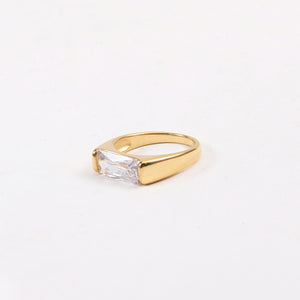
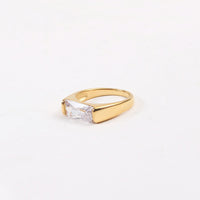
The piece they're describing → 18K Gold Plated Statement Ring — Tarnish-Resistant CZ
Personalize Yours


