


The short answer
Whether a nurse can wear jewelry on shift depends on the facility, the unit, and the piece, but the pattern across US hospitals is consistent: minimal, flat, easy-to-clean jewelry is tolerated in general patient care, and hand/wrist jewelry comes off entirely in operating rooms, ICUs, and other high-risk sterile settings.

What the CDC Actually Says About Rings and Jewelry
The CDC's hand hygiene guidance for healthcare workers does not issue a blanket ban on rings in routine patient care, it lists the question as an unresolved issue. The agency's clinical hand-hygiene guidance notes that "some studies have shown that skin underneath rings contain more germs than fingers without rings," but adds that further study is needed to determine whether wearing rings actually increases the spread of pathogens in practice.
Where CDC guidance is unambiguous is surgical hand hygiene: before a surgical hand scrub, providers are directed to remove rings, watches, and bracelets entirely. Artificial fingernails are also flagged specifically, since research cited in the guidance found that microorganisms can persist underneath them even after using an alcohol-based hand sanitizer or handwashing, and CDC guidance calls for natural nails to be kept short enough that they don't extend past the fingertip.
In short: CDC treats routine-ward rings as an open question, but is specific and firm about surgical and high-risk settings. That gap is exactly why individual hospitals fill in their own, often stricter, policies for general patient-care areas, described below.
Why Hospitals Restrict Jewelry Anyway
Hospitals restrict jewelry beyond what the CDC formally mandates because rings and other pieces can act as a reservoir for bacteria even when they don't necessarily raise the bacterial count on the skin underneath them. A 2024 study in Scientific Reports that combined an observational survey of 133 nursing staff with lab testing on 60 volunteers found no statistically significant difference in hand bacterial load between people wearing a plain ring and people wearing none, once hands were deliberately contaminated and then washed. But the same study found that the rings themselves retained meaningful contamination after hygiene procedures, concluding that a ring functions as a "potential source of bacterial contamination" independent of what it does to the hand wearing it.
That distinction, a plain band not necessarily making your hands dirtier, but the ring itself staying dirty, is a big part of why textured, stoned, or engraved jewelry gets targeted specifically in dress-code language: crevices and settings are harder to clean than a smooth surface, whether or not that jewelry sits on a hand at all. It's also why dangling earrings, loose bracelets, and long necklaces show up in policies for a completely different reason than infection control, they're a physical safety issue: they can be grabbed by a confused, combative, or pediatric patient, or catch on equipment during a transfer or procedure.
Typical Hospital Dress-Code Categories
Most general-ward hospital dress codes sort jewelry into the same handful of categories, though the exact line varies facility to facility. Use this as a starting map, not a substitute for your own employer's written policy.
| Item | Typical general-ward rule | Why |
|---|---|---|
| Rings | Single plain band only, no raised stones | Smooth surface is easier to clean; stones/settings retain bacteria and can tear gloves |
| Earrings | Small flat studs; dangling/hoops usually restricted | No snag or grab risk, sits close to the earlobe |
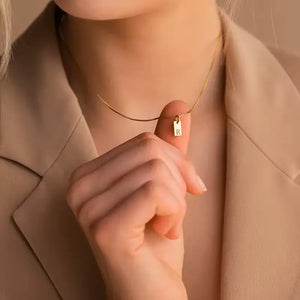
| Necklaces | Short, tucked under the scrub top | Prevents swinging forward or being grabbed during patient care |
| Bracelets | Usually restricted outright | Loose chains and charms are the hardest jewelry category to clean and the easiest to catch on equipment |
| Watches | Plain, wipeable watch often allowed on general wards | Removed entirely in bare-below-the-elbow units |
| Artificial nails | Prohibited in most direct-patient-care roles | CDC guidance: microorganisms can persist underneath even after hand hygiene |
Watches are the one item that splits hardest by role: many general-ward nurses can wear a plain, wipeable watch, while staff in bare-below-the-elbow units (below) remove them along with every other piece of wrist and hand jewelry before any patient contact.
High-Risk Units: OR, ICU, and Bare-Below-the-Elbow Policies
In operating rooms, ICUs, NICUs, and other high-risk or sterile-procedure units, the general-ward rules above typically don't apply at all, most facilities move to a "bare below the elbow" standard: no rings, no wrist jewelry, no wristwatch, and sleeves pushed above the elbow before hand hygiene and any patient contact. This is the setting where CDC's surgical-hand-hygiene guidance, remove rings, watches, and bracelets before the scrub, applies most literally, and it's typically enforced regardless of what a nurse is allowed to wear on a general medical-surgical floor down the hall.
If you're floating between units or rotating through a new one, don't assume your usual floor's rules travel with you. Ask what applies to the specific unit you're walking into that day.
What This Means If You're Starting a New Job or Unit
The single most reliable move is asking your unit educator or manager for the written dress-code policy before your first shift, since facility policies aren't standardized nationally and can change between a general floor and a specialty unit in the same building. If you're between offers, it's also a reasonable interview question, and asking it signals that you already think about infection control and patient safety on the job, not a red flag.
Until you know the specific policy, the safest default is the minimal end of what's described above: no rings beyond a plain band, flat studs instead of hoops or drops, and nothing on a chain long enough to dangle forward when you lean over a bed rail.
Jewelry That Fits the Minimal End of Most Policies
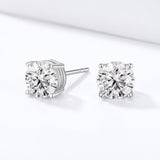
If you want something to wear on shift once you've confirmed your own facility allows it, small, flat stud earrings are the piece most consistently permitted across the policies described above, they sit close to the earlobe, present nothing to grab, and don't interfere with hand hygiene the way rings and bracelets can.
Shop This Guide
Flat, close-set stud earrings like these are one of the pieces most hospital dress codes actually allow, hypoallergenic 925 sterling silver, no dangle, easy to clean.
Shop the Round CZ Stud EarringsSave anything with texture, stones set in a way that's hard to wipe clean, dangling drops, or an open bracelet chain for off-shift wear. If gifting a nurse in your life, our nurse gift jewelry guide and jewelry for nurses guide cover pieces sorted the same way, on-shift practical versus off-shift personal.
Frequently Asked Questions
What can nurses not wear on shift?
Most general-ward hospital policies prohibit dangling or hoop earrings, bracelets with loose charms or chain links, rings with raised stones or intricate settings, artificial fingernails, and any necklace long or loose enough to be grabbed or to swing forward during patient care. Bare-below-the-elbow units (OR, ICU, and similar) go further and prohibit all hand and wrist jewelry, including plain rings and watches, before any patient contact.
What jewelry can be worn in healthcare settings?
On a typical general medical-surgical floor, the pieces most consistently allowed are small, flat stud earrings, a single plain band ring with no raised stones, and a short necklace tucked under the scrub top so it can't dangle or swing forward. Exact rules vary by employer and unit, so confirm with your own facility rather than assuming these apply everywhere.
Is a necklace allowed in nursing?
Often yes, if it's short enough to stay tucked under a scrub top and doesn't have a pendant that could catch on equipment or be grabbed by a patient. Long or loose necklaces worn outside the collar are more commonly restricted, since they present the same snag and grab risk that rules out dangling earrings and bracelets.
Why do hospitals restrict rings specifically?
Partly infection control, research has found that ring settings and crevices can retain bacteria even after hand hygiene, functioning as a reservoir independent of whether the ring itself raises bacterial counts on the skin underneath it. It's also a safety and practical issue, stones and raised settings can tear gloves, and CDC's surgical-hand-hygiene guidance specifically calls for removing rings, along with watches and bracelets, before a surgical scrub.
Do all hospitals have the same jewelry policy?
No. There's no single national jewelry standard for nurses, CDC guidance addresses hand hygiene rather than a full dress code, and individual facilities, and sometimes individual units within the same facility, set their own rules on top of it. Always check your specific employer's written policy rather than relying on general guidance like this article.
Can nurses wear watches at work?
In many general patient-care settings, a plain, easily wiped watch is allowed. In operating rooms, ICUs, and other bare-below-the-elbow units, watches typically come off along with rings and bracelets before hand hygiene and patient contact, following the same logic as CDC's surgical hand-scrub guidance.
Related Reading
Shopping for a nurse rather than working one? See our jewelry for nurses guide for on-shift versus off-shift picks, or our nurse gift jewelry guide for gifting occasions.
All third-party trademarks, brand names and product names are the property of their respective owners. AJLuxe is not affiliated with, endorsed by, sponsored by, or otherwise connected to any third-party brand referenced in this article. Brand names are used solely for accurate comparative reference, and material descriptions reflect each brand's own published product specifications at the time of writing.
You Might Also Like



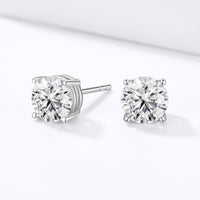
The piece they're describing → Round CZ Stud Earrings for Women — 925 Sterling Silver, Hypoallergenic, Gift-Ready
Personalize Yours


