



Selenite is one of the most common crystals people accidentally ruin, and water is the reason. Unlike most crystal care mistakes that cause cosmetic damage, putting selenite in water causes irreversible structural harm. The crystal doesn't just get scratched or cloudy. It literally dissolves.
This guide explains exactly why water destroys selenite, what safe alternatives look like, and how to get the most from a crystal that, uniquely, cleanses itself.
Can Selenite Go in Water? No, Here's Why
The direct answer is no. Selenite cannot go in water, not for cleansing, not for brief soaking, not as a display piece near running water.
The reason is chemical, not aesthetic. Selenite is the transparent crystalline form of gypsum, a hydrated calcium sulfate mineral with the formula CaSO₄·2H₂O. The "hydrated" part of that name is critical: gypsum already contains water molecules bound into its crystal structure, and when you add more water, it begins to dissolve.
Selenite also rates just 2 on the hardness scale: softer than a copper penny. The general rule in crystal care is that stones below 5 on the hardness scale should not go in water. At 2, selenite is in a category of its own: it's so soft you can scratch it with a fingernail, and water accelerates that softness into disintegration.
This isn't a gradual degradation you can walk back. Once the surface begins to dissolve, the process is irreversible.
What Happens When Selenite Gets Wet
The progression of water damage on selenite happens in stages:
- Immediate contact: The surface loses its translucent sheen and turns dull or chalky. This is the early sign of surface dissolution.
- Short exposure (minutes to an hour): A white powdery residue forms on the surface as calcium sulfate begins to leach away. The crystal loses definition.
- Extended exposure (hours): The crystal softens noticeably. Edges become rounded, texture becomes chalky, and the structure starts to crumble.
- Prolonged soaking: The selenite deteriorates visibly, shrinking, flaking, and ultimately disintegrating.
Salt water is no safer: gypsum actually dissolves somewhat more readily in salty water than in fresh, so a sea-salt soak is the worst case.
Can You Wipe Selenite with a Damp Cloth?
A very brief wipe with a barely damp cloth, not wet, barely damp, is technically survivable if the crystal is dried immediately and thoroughly afterward. This is sometimes necessary to remove surface dust from large raw selenite pieces where dry cloth alone isn't enough.
However, this carries risk. If the cloth is too wet, if you wipe too many times, or if the crystal isn't dried quickly, surface damage begins. Best practice:
- Use a dry soft cloth first, this removes most surface dust without any water contact
- If you must use moisture: barely damp, one or two passes, then immediately dry with a clean cloth
- Never rinse under a faucet, never submerge, never leave damp
- Store away from humid environments like bathrooms, ambient humidity can cause slow surface degradation over time
The honest recommendation: avoid even the damp cloth unless you truly need it. Dry care is always safer.
Why You Never Need to Cleanse Selenite
Selenite doesn't need cleansing. That is the quiet irony of the water concern: the one crystal that water destroys is the one crystal that never asks for it.
Selenite is one of only a handful of crystals, alongside citrine and kyanite, that is widely held in crystal practice to be self-cleansing. It doesn't absorb negative energy in the way most crystals do; instead, it continuously clears and resets its own energy field.
More practically: selenite is commonly used as a charging plate for other crystals. Place amethyst, rose quartz, black tourmaline, or any other stone directly on a selenite plate overnight, and the selenite is believed to clear and recharge them. The selenite itself doesn't pick up the energy being cleared, it transmutes it.
This makes water cleansing not just dangerous for selenite, but entirely unnecessary. You don't need to cleanse it. It already takes care of itself.
What About Selenite and Moon Water?
Selenite should stay out of the water in a moon water ritual. The ritual charges water under a full moon and then uses it to cleanse crystals, and that water is exactly what selenite cannot tolerate.
The lunar connection runs deep with selenite (its name literally comes from Selene, the Greek moon goddess), so the temptation to combine selenite and moon water is understandable. But the water is still water. Selenite still dissolves in it.
What you can do instead:
- Place selenite beside the bowl of moon water during the full moon ritual, it charges by proximity to the moonlight, not by contact with the water
- Use a selenite plate outdoors under the full moon: place your other crystals on the plate to charge them with both moonlight and selenite's energy simultaneously
- Never submerge selenite in moon water: not even briefly, not even symbolically
Safe Ways to Cleanse Selenite
The safe ways to cleanse selenite are all water-free: smoke, moonlight, brief sunlight and sound. If you feel called to clear its energy, use one of these:
| Method | Safe? | Notes |
|---|---|---|
| Smoke / sage smudging | ✅ Yes | Most popular method, pass through smoke briefly |
| Moonlight | ✅ Yes | Place on windowsill overnight, no outdoor dew risk |
| Sunlight (brief) | ✅ Yes (short only) | 30 min max, extended sun can fade pale selenite |
| Sound bath | ✅ Yes | Singing bowl or tuning fork, vibration-based clearing |
| Selenite (self-cleansing) | ✅ N/A | Doesn't need it, one of the few self-cleansing crystals |
| Burying in earth | ⚠️ Dry earth only | Damp soil will cause the same damage as water |
| Water / submersion | ❌ No | Will dissolve, irreversible damage |
| Salt water | ❌ No | Even more damaging than fresh water, avoid entirely |
How to Use Selenite as a Crystal Charging Plate
The best use for selenite is as a charging plate: set other crystals on it overnight. Here is how it works:
- Place other crystals directly on the selenite plate: amethyst, rose quartz, black tourmaline, citrine, moonstone, or any stone you want cleared and recharged
- Leave overnight: four to six hours is generally considered sufficient for a full clearing and charge
- No setup required: unlike most cleansing methods, selenite charging requires no ritual, no moonlight timing, no smoke. Just place and wait.
- The selenite plate does not need to be recharged afterward: because selenite self-cleanses, the plate is ready for the next use without any additional care
This makes selenite plates one of the most practical tools in any crystal collection, constant availability, zero maintenance, and safe for virtually any stone you place on it.
We don't sell selenite jewelry, and there is a good reason: a stone this soft that dissolves in water is a poor match for something worn every day. If you want crystal energy you can actually wear, our Stone Charm Necklace carries one raw natural gemstone chip on a fine chain, in 15 stones, from $24.99.

Frequently Asked Questions
Can selenite go in water?
No. Selenite is a form of gypsum (CaSO₄·2H₂O), a water-soluble mineral. Contact with water causes the surface to dissolve, dulling and eventually disintegrating the crystal. Never submerge selenite in water for any reason.
What happens if selenite gets wet?
The surface immediately begins to dull and turn chalky as the gypsum dissolves. Brief exposure causes white powdery residue and surface damage. Extended exposure softens the structure and can cause the crystal to crumble. This damage is not reversible.
Can selenite go in salt water?
No. Salt water is no safer, and gypsum dissolves somewhat more readily in salty water than in fresh. Never place selenite in salt water.
Can selenite go in moon water?
No. Despite selenite's deep connection to the moon (its name comes from Selene, the Greek moon goddess), moon water is still water, and selenite dissolves in it. Place selenite beside the moon water bowl instead of in it during full moon rituals.
Can I wipe selenite with a damp cloth?
A very brief wipe with a barely damp (not wet) cloth is survivable if the crystal is dried immediately. However, it's best avoided when possible, use a dry soft cloth first. Never rinse selenite under a faucet or leave it damp.
Does selenite dissolve in water?
Yes. Gypsum, the mineral selenite is made of, is water-soluble. The rate of dissolution depends on water temperature and exposure time, but even brief contact causes measurable surface damage. In extended soaking, selenite crystals visibly shrink and disintegrate.
How do you cleanse selenite without water?
Safe methods include smoke cleansing (sage, palo santo), moonlight, brief sunlight (30 min max), sound bath with a singing bowl, or simply leaving it as-is, selenite is self-cleansing and doesn't require active cleansing the way other crystals do.
Does selenite need to be cleansed?
No, this is one of selenite's most distinctive properties. Along with citrine and kyanite, selenite is considered self-cleansing in crystal practice, meaning it doesn't absorb and hold negative energy. You don't need to cleanse it at all.
Can selenite get wet from rain?
Yes, rain will damage selenite. Keep outdoor selenite displays away from any moisture exposure. If a selenite piece gets rained on, dry it off immediately and thoroughly with a soft cloth.
How do you charge selenite?
Selenite doesn't require charging, it's self-cleansing and maintains its energetic properties without intervention. If you feel called to honor it, place it in moonlight overnight. But functionally, selenite is always ready to use as-is.
Is selenite self-cleansing?
Yes. Selenite is one of a small group of crystals, along with citrine and kyanite, that is widely considered self-cleansing in crystal practice. This makes it uniquely useful as a charging plate for other crystals, which it clears and recharges without needing to be reset itself.
What crystals can go in water?
Generally, crystals rated 6 or above on the hardness scale are considered water-safe for brief rinsing: clear quartz, amethyst, rose quartz, citrine, obsidian, tiger's eye, and carnelian are commonly considered safer options. Avoid water entirely with selenite, malachite, pyrite, hematite, lepidolite, and fluorite. Always research the specific stone before water contact.
Shop AJLuxe Crystal Jewelry
Stone Charm Necklace · one raw natural gemstone chip · 15 stones · from $24.99
Shop the Stone Charm Necklace →Final Thoughts
Selenite is exceptional, one of the most energy-active and low-maintenance crystals you can own. It never needs cleansing. It charges other crystals while they rest on it. The one thing it cannot tolerate is the one thing many crystal guides tell you to use on crystals: water.
The rule is simple: keep selenite dry. No rinsing, no soaking, no moon water baths, no humid bathrooms for storage. A dry home, a dry cloth for cleaning, and moonlight for ritual, that's all this crystal needs to stay in perfect condition for years.
Other stones that need to stay dry include pyrite and malachite. If you're drawn to crystal energy in wearable form, the Stone Charm Necklace uses raw gemstone chips, a better fit for wearing than selenite.
Written by the AJLuxe team, specialists in personalized sterling silver and gemstone jewelry. Last updated: October 2026.
Explore more: Crystal Jewelry: Meanings & Guides
All third-party trademarks, brand names and product names are the property of their respective owners. AJLuxe is not affiliated with, endorsed by, sponsored by, or otherwise connected to any third-party brand referenced in this article. Brand names are used solely for accurate comparative reference, and material descriptions reflect each brand's own published product specifications at the time of writing.
You Might Also Like


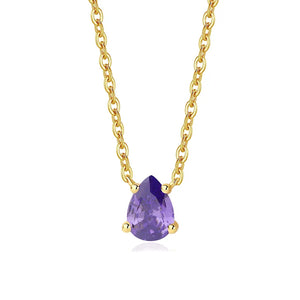


The piece they're describing → Stone Charm Necklace for Women — Raw Natural Gemstone Pendant
Personalize Yours


