


- Comfort test: a bracelet should shift slightly on your wrist without sliding over your hand. A snug chain can sit as little as 0.25 inch longer than your wrist, a standard fit about 0.5 inch.
- Take it off if you get numbness, tingling, a blue or pale hand, or swelling. A tight band can act like a tourniquet.
- Loosening options are limited: chains can often get an extender, cuffs may flex a little, rigid bangles and stretch cord usually mean replacing the piece.
- General information only, not medical advice. See the last section for when to see a doctor.
Tight bracelets are usually a sizing mistake, but not always: your wrist can swell with heat, salt, a long day on your feet or an injury, and a bracelet that fit in the morning can pinch by night. This page covers how to tell, what to do now, and how to fix it. For the sizing numbers (wrist measurement to bracelet length), use our bracelet size chart, and for small wrists see bracelet sizes for a small wrist.
Signs a Bracelet Is Too Tight
- A groove or marks that last. Faint pressure marks that fade in a few minutes are common. Deep marks that stay, or skin that bulges around the band, mean it is pressing too much.
- It will not move. A bracelet that cannot turn or slide at all is tighter than the standard fit in our size chart.
- It is hard to get on a bangle. A jeweler's page notes that a rigid bangle that is difficult to slide on is a sign it is too small for your hand.
- Irritation. The same page says a snug fit may cause irritation, especially for people with metal sensitivities. See jewelry for sensitive skin.
- Tingling, numbness or a color change in the hand. These are the signs to act on straight away (see below).
How Much Room Should a Bracelet Have?
In our bracelet size chart, which compares published jeweler and medical-ID size guides, a bracelet should be about 0.25 to 1.25 inches longer than your wrist depending on the fit you want, and 0.5 inch is the most common allowance for a standard fit. A snug fit is 0.25 to 0.5 inch. Anything much tighter than that has almost no room, so the bracelet cannot cope with normal swelling during the day.
A simple home test is that you should be able to slide a fingertip under the bracelet, or two fingers if you like a loose fit. This is a common rule of thumb, not a published standard, so use it together with the measurements above.
What to Do Right Now If It Feels Too Tight
- Take it off. If you can, remove it as soon as you notice. Swelling makes jewelry harder to remove, and a compressed nerve or restricted blood flow are the serious problems a stuck band can cause.
- Check your hand. Look for color, warmth and feeling. A pale, blue, cold or numb hand needs urgent care.
- Rest and elevate. If the wrist is puffy, raise your hand above your heart for a while. This is the same approach that sources suggest for a ring stuck on a swollen finger, where elevating the hand helps fluid move away.
- Do not force it. Pulling hard on a stuck piece can injure skin and increase swelling. A small amount of lotion or soap can help it slide, as with a stuck ring.
- If it will not come off, get help promptly. A jeweler, fire station or emergency room can cut a band off, and a health site says to seek emergency care if the finger or hand is swollen, discolored or numb.
A bracelet that reaches this point should not be worn again until it fits. A tight band worn for a long time can interfere with circulation: in a news report about children's bracelets, a doctor quoted in the story warned that bands worn too tight for too long can act like a tourniquet, and one child's hand swelled and turned blue after sleeping in tight bands. Never wear a tight band overnight, and check children's jewelry often.
How to Loosen or Fix a Tight Bracelet
| Bracelet type | What you can do | Notes |
|---|---|---|
| Chain or link with a clasp | Add an extender chain, or ask a jeweler to add links | An extender adds length at the clasp. Choose a similar metal and finish so it matches. |
| Open cuff | Gently open it a little, or choose an adjustable cuff | A jeweler's page says cuffs can generally be stretched, but repeated bending can weaken the metal or crack plating, so do it once, slowly, and only a little. |
| Rigid bangle | Replace with a larger size, or a stretch or hinged style | A solid bangle has no give. Do not force it over the hand. |
| Stretch or elastic bracelet | Replace with a larger one, or restring if it is a bead bracelet | Elastic can loosen with wear, so a bracelet that was snug may stretch slightly. See stretch bracelets for women. |
| Tennis or fixed chain | Return or exchange for a longer size, or have a jeweler lengthen it | Tennis styles are cut to length, so there is little room to adjust. |
If you are shopping again, measure your wrist at the end of the day, add the allowance you want, and compare with the chart. Our guide to wearing a bangle and cuff bracelets guide explain how those styles fit.
Why Your Wrist May Swell
If a bracelet that normally fits has started to feel tight, the wrist may have changed. Health sources list several general causes of hand and finger swelling: an injury, a band that is too small, wearing jewelry for a long time while the size changes, and fluid retention from diet or from other conditions. Heat and activity also make hands swell, so a bracelet worn to a hot, busy day can feel tighter in the evening. If the swelling is new, lasting or one-sided, see a doctor; we cannot tell you why it is happening.
When to See a Doctor
This is general information, not a diagnosis. Go to emergency care or urgent care if your hand or wrist is swollen, discolored or numb, if you cannot remove a tight bracelet, or if you have severe pain. A university orthopedics page lists warmth, redness or tenderness, or a fever above 100 degrees Fahrenheit (37.8 degrees Celsius), as possible signs of infection, and says to see an orthopedic doctor if wrist or hand symptoms are still present after seven to 10 days of home care. It also lists loss of feeling in the hand or fingers as a common symptom of wrist and hand problems. If you are unsure, ask a doctor or pharmacist.
Adjustable Options at AJLuxe
AJLuxe does not resize bracelets. If you want a style with built-in give, the cable chain cuff bracelet in 18K gold plating is an open cuff designed to fit most wrists, and the gold elastic bangle on a 925 sterling silver frame slips on and stretches slightly. Neither is a substitute for a correct fit, and neither is a medical product. Browse all bracelets.
More in this guide
Related reading: bracelet rash, ring marks on the finger, the average ring size for women, and necklace rash.
Frequently Asked Questions
How do you know if a bracelet is too tight?
It leaves deep or lasting marks, cannot move at all, is hard to put on, causes irritation, or leaves your hand numb, tingling, swollen or discolored. The last group are reasons to remove it immediately.
What is the two-finger rule for bracelets?
It is a rule of thumb, not a standard: you should be able to slide about one or two fingers between the bracelet and your wrist. For measured allowances, our size chart suggests 0.25 to 0.5 inch over wrist size for a snug fit and about 0.5 inch for a standard fit.
What should I do if my bracelet will not come off?
Do not force it. Elevate the hand, try a little lotion or soap, and if it still will not move, or the hand is swollen, discolored or numb, get emergency care. Jewelers, fire stations and emergency rooms can cut a band off.
Can a tight bracelet cut off circulation?
Yes, a band that is too tight for too long can restrict blood flow, which is why a doctor quoted in a news report compared tight bands to a tourniquet. Remove any band that causes color change, numbness or swelling.
How can I stretch or loosen a bracelet that is too tight?
A chain bracelet can usually take an extender, and an open cuff may be gently opened a little. Rigid bangles and fixed tennis styles do not stretch, so exchange or ask a jeweler.
Why does my bracelet feel tighter in the evening or in hot weather?
Hands and wrists swell with heat, activity and fluid retention, so a bracelet that fit in the morning can feel tighter later. Leave a little extra allowance if this happens to you.
Can a tight bracelet cause a rash?
A snug fit may cause irritation, especially for people with metal sensitivities, according to a jeweler's page. If a rash or lasting redness appears, take the bracelet off and see a clinician if it does not settle.
Sources
Read for this page on 9 October 2026: a jeweler's page on bracelet fit by style (bangle, cuff, stretch, irritation), a health information site on removing a ring from a swollen finger (causes of swelling, tourniquet risk, emergency signs), a university orthopedics page on when to see a doctor for wrist and hand symptoms (seven to 10 days, infection signs), and a local news report on children's bracelets (tourniquet effect). Fit allowances come from our own bracelet size chart. The fingertip test is a common rule of thumb and our judgment. Product details come from ajluxe.com product pages.
Written by AJLuxe Team. Last updated: October 2026
All third-party trademarks, brand names and product names are the property of their respective owners. AJLuxe is not affiliated with, endorsed by, sponsored by, or otherwise connected to any third-party brand referenced in this article. Brand names are used solely for accurate comparative reference, and material descriptions reflect each brand's own published product specifications at the time of writing.
You Might Also Like
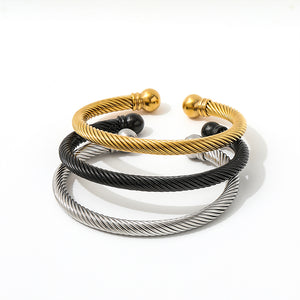
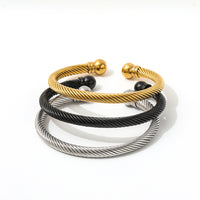
The piece they're describing → Cable Chain Cuff Bracelet — 18K Gold Plated, Open Cuff, Adjustable
Personalize Yours


