


The short answer
Moissanite earrings give you diamond-level durability (9.25 vs. 10 on the Mohs scale) and more sparkle than an actual diamond, at roughly 5–10% of the price. Choose a D-E-F near-colorless grade in a 6.5mm stud (about 1-carat diamond equivalent) for the most diamond-like look, set in 925 sterling silver or 18K gold with a hypoallergenic post. Cubic zirconia looks similar in photos but is a full 1.25 points softer on the Mohs scale and clouds with wear — moissanite is the better long-term buy if you can stretch the budget slightly.
Moissanite earrings sit in an odd spot in the diamond-alternative conversation: harder and sparklier than cubic zirconia, dramatically cheaper than a lab or natural diamond, yet most buying guides either lump it in with "diamond simulants" as an afterthought or turn into a thinly-disguised product catalog. Neither approach answers the actual question people have before they buy: is moissanite good enough to wear every day, and if so, which cut, color grade, size, and setting actually look like a diamond instead of a cheap substitute?
This guide covers exactly that — how moissanite compares to diamond and cubic zirconia on hardness, brilliance, and price; how to translate "carat weight" into a moissanite millimeter size; which settings and metals hold up best; and two things almost no seller tells you upfront about how moissanite behaves once it leaves the store lighting. We'll also cover moissanite stud earrings specifically, since studs are the setting most people are shopping for when they search for the "best" option, alongside hoops and drop styles.

What is moissanite, and why does it out-sparkle diamond?
Moissanite is naturally occurring silicon carbide, first identified by French chemist Henri Moissan in 1893 after he found microscopic crystals of it inside a meteor crater in Arizona — for years, he mistook the tiny stones for diamond. Natural moissanite is far too rare to mine at any scale, so virtually every moissanite earring on the market today uses lab-created silicon carbide, grown under controlled heat and pressure to produce a gem-quality stone that's chemically and optically consistent from batch to batch.
The reason moissanite reads as "sparklier" than diamond in person comes down to one number: refractive index. Diamond has a refractive index of 2.42. Moissanite's is 2.65–2.69 — noticeably higher, which means light bends and splits into more spectral color as it passes through the stone. In practice, that means moissanite throws more visible rainbow "fire" than a diamond of the same cut and size, especially in direct or colored light. Some buyers love this extra flash; others find it reads as less "quiet luxury" than a diamond's whiter, more restrained sparkle. It's worth seeing both in person if you can, because photos rarely capture the difference accurately.
Moissanite vs. diamond vs. cubic zirconia: the real comparison
These three stones get compared constantly, but most comparisons only mention price. Hardness and brilliance matter just as much for earrings specifically, since studs and hoops take more incidental knocks — against pillows, scarves, phone screens, hairbrushes — than a ring protected by a finger.
| Property | Moissanite | Diamond (lab or natural) | Cubic zirconia (CZ) |
|---|---|---|---|
| Mohs hardness | 9.25 | 10 | 8–8.5 |
| Refractive index (brilliance) | 2.65–2.69 (highest fire of the three) | 2.42 | 2.15–2.18 (least fire) |
| Typical price per carat | $300–$600 | $800–$1,800 lab / $4,500–$8,000+ natural | Under $50 |
| Clouds or scratches with wear? | No — holds clarity for years | No | Often, within 1–2 years of daily wear |
| Chemical makeup | Silicon carbide (SiC) | Pure carbon | Zirconium dioxide (ZrO₂) |
For a deeper breakdown of lab-grown vs. natural diamond specifically — origin, price, and resale value — see our full lab diamond vs. natural diamond guide. If your budget points toward the most affordable option instead, our complete guide to CZ stud earrings covers how to get the longest life out of a cubic zirconia pair.
Carat-equivalent sizing: what millimeter size actually means
Moissanite is sold by millimeter diameter rather than carat weight, which trips up a lot of first-time buyers coming from diamond shopping. Because moissanite is less dense than diamond, a moissanite stone that's the same millimeter size as a diamond actually weighs slightly less in carats — but visually, size is what matters, so millimeter is the number to shop by. This is one of the genuine gaps in most moissanite retailer sites, which show mm sizing on the product page but rarely explain what it means relative to a diamond carat weight shoppers already understand.
| Moissanite diameter | Approx. diamond carat equivalent | Best for |
|---|---|---|
| 4.0mm | ~0.25 carat | Subtle everyday studs, second piercings |
| 5.0mm | ~0.5 carat | Everyday wear with a bit more presence |
| 6.5mm | ~1 carat | The most popular size — reads as a classic "1-carat" diamond stud |
| 8.0mm | ~2 carat | Statement studs, special occasions |
For hoop and drop styles rather than single studs, the "carat equivalent" framing matters less than overall stone placement — pavé hoops use many small moissanite melee stones rather than one large center stone, which is worth knowing if you were expecting a single big-stone look in a hoop silhouette.
Settings and metal options: which pairing lasts longest
Moissanite earrings come in three main settings, and the setting matters as much as the stone for how long the piece looks good.
- Prong-set studs — the classic choice, maximizes light entry to the stone for the most brilliance. Four-prong settings show slightly more stone; six-prong settings hold it more securely for daily wear.
- Bezel-set studs — a metal rim fully surrounds the stone. Slightly less sparkle than prong settings since more of the stone edge is covered, but the most secure option and the best pick if you're rough on earrings or travel often.
- Pavé hoops and huggies — small moissanite stones set along a hoop or huggie band. This is where moissanite hoop earrings live, and it's a genuinely different look from a single-stone stud: more consistent sparkle around the whole ear rather than one focal point.
On metal: 925 sterling silver with rhodium or 18K gold plating — what most shoppers mean by gold plated earrings — is the most common budget-friendly base for moissanite earrings, and it's a good choice as long as the post itself — not just the visible metal — is nickel-free. Solid 14K gold hoop earrings or studs cost more upfront but never need re-plating, which matters more for a piece you're wearing daily. If sensitive ears are a concern regardless of stone choice, our gold earrings and hypoallergenic guide breaks down exactly which metals are actually safe for reactive skin, and our gold stud earrings guide covers plated vs. solid gold in more depth if you're weighing that decision independent of stone type.

The gap most sellers skip: how moissanite's color shifts in different light
This is the one honest caveat that most moissanite retail sites underplay, because it's a mild negative. Moissanite can show a faint warm, yellow, or even greenish cast in strong incandescent or outdoor sunlight — a side effect of how the stone's higher dispersion interacts with certain light wavelengths. It's subtle and most people never notice it in everyday indoor lighting, but if you've compared moissanite to diamond side by side outdoors, this is usually the difference you're picking up on, not a flaw in the stone itself.
Two things reduce it: buying a higher (whiter) color grade — D-E-F, sometimes labeled "colorless" — rather than the more affordable G-H-I "near-colorless" range, and choosing a setting with a white metal (platinum-look rhodium plating or white gold) rather than yellow gold, since yellow settings can amplify any warm cast the stone already has. If you want the most diamond-like look under all lighting conditions, this is the detail worth spending the extra few dollars on — most buying guides don't mention that color grade selection matters for moissanite the same way it does for diamond.
The gap most sellers skip: screw backs vs. push backs for moissanite studs
Because moissanite studs read as more valuable than CZ, the earring back matters more than most guides acknowledge. Standard friction push backs are fine for hoops and huggies, but for moissanite stud earrings specifically — especially anything 6mm or larger — a screw back or a secure locking back is worth the tiny bit of extra hassle. It's the difference between a stud that survives being caught on a scarf or a child's hand and one that's gone in an instant. If you travel with moissanite studs, screw backs also reduce the chance of losing one in a hotel bathroom sink or gym bag, which is a more common way people lose expensive stud earrings than almost any other cause.
How to choose the right moissanite earrings for you
- Decide on setting first, not size. Studs for a diamond-like focal point, pavé hoops or huggies for all-day sparkle without a single "look at this" stone.
- Pick 6.5mm as your default stud size unless you specifically want something more subtle (5mm) or more dramatic (8mm+).
- Choose D-E-F color grade if diamond-matching realism matters to you; G-H-I is a reasonable budget trade-off with a barely noticeable difference indoors.
- Match your metal to your skin sensitivity, not just your color preference — 925 sterling silver base with plating covers most people safely; check our hypoallergenic guide above if you've reacted to earrings before.
- Choose secure backs for studs — screw backs for anything 6mm and up, especially if you're active or travel frequently.
Moissanite vs diamond earrings: which should you actually buy?
A moissanite vs diamond earrings decision usually comes down to three honest questions: do you need resale value, does the extra fire and flash of moissanite appeal to you or feel like "too much," and how much of the price gap actually matters to your budget. Moissanite earrings deliver comparable — arguably superior — visual brilliance to diamond at 5–10% of the cost, with no meaningful difference in day-to-day durability for earring wear specifically. What you give up is diamond's resale and trade-in value, along with the cultural weight some people still attach to "it's a real diamond." For earrings worn for personal enjoyment rather than as a store of value, moissanite is a genuinely strong choice, not just a "budget" fallback — which is exactly why it out-ranks cubic zirconia rather than sitting alongside it as another cheap alternative.
Related reading: Moissanite meaning.
Related reading: How to clean moissanite jewelry.
Related reading: Moissanite vs white sapphire.
Related reading: Best cartilage earrings.
Frequently asked questions
Are moissanite earrings worth it?
Yes, for most buyers. Moissanite scores 9.25 on the Mohs hardness scale (versus diamond's 10), so it resists scratching through years of daily wear, and its higher refractive index actually gives it more fire and sparkle than a diamond of the same size — all at roughly 5–10% of diamond's price per carat.
How do moissanite earrings compare to diamonds in durability?
Very closely. At 9.25 on the Mohs scale, moissanite is only slightly softer than diamond's 10 and is still hard enough to resist scratching from everyday contact with clothing, hair, and most surfaces. The practical difference in earring durability between moissanite and diamond is negligible for normal wear.
Will moissanite earrings look fake or too sparkly?
Not at typical viewing distance or in everyday indoor lighting. Moissanite's extra fire is most noticeable up close or under strong direct/colored light, where it throws more rainbow flash than diamond. Choosing a D-E-F color grade and a white metal setting keeps the look closest to a natural diamond if that's your goal.
Can you wear moissanite earrings every day, including sleeping and showering?
Yes. Moissanite's hardness makes it safe for daily wear, sleeping, and showering — it won't scratch or cloud the way cubic zirconia can. The setting and metal matter more here than the stone; check that posts and backs are secure and that the metal itself is tarnish- and water-resistant.
How do moissanite and diamond prices compare?
Moissanite runs roughly $300–$600 per carat versus $800–$1,800 for a comparable lab-grown diamond and $4,500–$8,000+ for a natural diamond. Moissanite vs. diamond price is the widest, most consistent gap in the diamond-alternative category.
What metal pairs best with moissanite earrings?
925 sterling silver with rhodium or 18K gold plating is the most popular budget-friendly pairing, while solid 14K gold hoop earrings or studs cost more but never need re-plating. White metals (rhodium-plated silver, white gold) also minimize any warm color cast moissanite can show in strong light.
Which color grade should I choose for moissanite earrings?
D-E-F ("colorless") grades look the most diamond-like and resist showing a warm or greenish cast in bright or outdoor light. G-H-I ("near-colorless") grades are a reasonable, more affordable choice if the piece will mostly be worn indoors.
Should I choose screw backs or push backs for moissanite stud earrings?
Screw backs or another secure locking back are worth it for moissanite studs 6mm and larger, or if you're active or travel often — they significantly reduce the risk of losing an earring compared to standard friction push backs.
Can you tell the difference between moissanite and diamond earrings at normal viewing distance?
Most people cannot reliably tell the difference at arm's length or in typical social settings. The differences that do exist — moissanite's extra fire and occasional warm cast in certain light — are most visible up close or side by side, not from across a room.
Do moissanite earrings hold resale value the way diamonds do?
No. Moissanite has little to no meaningful resale market compared to diamond, particularly natural diamond. If resale or trade-in value is a priority, that's the strongest argument for choosing diamond over moissanite; if you're buying purely to wear and enjoy, resale value is less relevant.
Is moissanite a real gemstone, or just a diamond simulant?
Moissanite is a real, naturally occurring mineral (silicon carbide) first discovered in a meteor crater by chemist Henri Moissan in 1893 — it's not synthetic in the sense of being artificial or fake, though nearly all moissanite sold today is lab-grown rather than mined, since natural deposits are extremely rare.
How does moissanite compare to cubic zirconia in earrings specifically?
Moissanite is harder (9.25 vs. 8–8.5 Mohs), holds its clarity and shine far longer without clouding or scratching, and throws noticeably more fire than cubic zirconia. CZ is significantly cheaper up front but tends to look visibly duller within a year or two of regular wear, especially in earrings that see more incidental contact than a protected ring stone. See our guide on how long CZ earrings actually last for the full wear-and-tear timeline.
What's the most trusted way to shop for moissanite earrings?
Buy from a retailer that discloses the stone's color grade and cut, uses a hypoallergenic setting (925 sterling silver or solid gold, nickel-free posts), and is transparent about millimeter sizing rather than vague "carat equivalent" marketing claims. Avoid listings that don't specify color grade at all — that's usually where lower-quality, more yellow-tinted stones get sold at inflated prices.
Final thoughts
Moissanite earrings are one of the rare cases in fine jewelry where the "budget alternative" genuinely outperforms the original on one key metric — brilliance — while still holding up to daily wear the way cubic zirconia can't. The best moissanite earrings pair a D-E-F color grade with a hypoallergenic 925 sterling silver or solid gold setting, sized around 6.5mm for studs if you want the classic 1-carat diamond look, with secure screw backs if you're wearing them daily or traveling. If you're still weighing moissanite against the real thing, our lab diamond vs. natural diamond guide covers that comparison in full, and our CZ stud styling guide is a useful reference if you decide the lower price point of cubic zirconia matters more to you than moissanite's extra durability and sparkle.
Shop This Guide
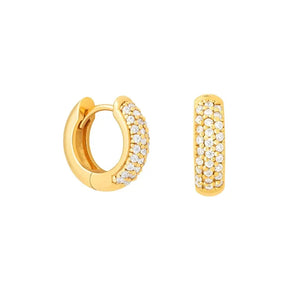
Our Moissanite Hoop Earrings — 925 sterling silver with brilliant-cut moissanite pavé and a hypoallergenic, nickel-free post, built for the everyday sparkle this guide covers.
Shop Moissanite Hoop EarringsLooking for more options? Browse the full earrings collection for studs, hoops, and huggies in sterling silver and gold.
Written by the AJLuxe Team — specialists in personalized 925 sterling silver jewelry. Last updated: July 2026. According to Jewelers of America consumer guidance on gemstone simulants, understanding a stone's hardness and optical properties — not just its price — is the most reliable way to judge how a diamond alternative like moissanite will actually perform over years of everyday wear.
All third-party trademarks, brand names and product names are the property of their respective owners. AJLuxe is not affiliated with, endorsed by, sponsored by, or otherwise connected to any third-party brand referenced in this article. Brand names are used solely for accurate comparative reference, and material descriptions reflect each brand's own published product specifications at the time of writing.
You Might Also Like
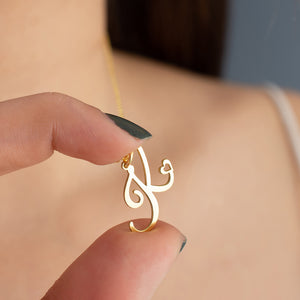
The piece they're describing → Heart Initial Necklace for Women — 18K Gold Plated, Personalized Letter + Heart Pendant
Personalize Yours


