


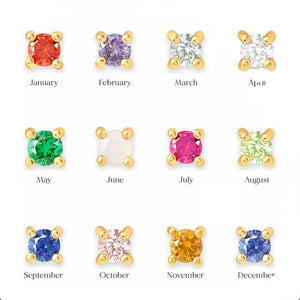
Each month has one or more birthstones with distinct colors, meanings, and hardness levels. January = Garnet, February = Amethyst, March = Aquamarine, April = Diamond, May = Emerald, June = Pearl/Alexandrite, July = Ruby, August = Peridot/Spinel, September = Sapphire, October = Opal/Tourmaline, November = Citrine/Topaz, December = Blue Topaz/Tanzanite. For everyday wear, choose stones rated 7+ on the Mohs scale. For gifts, birthstone necklaces in 925 sterling silver or 18K gold plated are the most versatile choice. Prefer a ring? See our best birthstone rings guide for durability-by-stone and stacking tips.
Every birth month has a gemstone associated with it — and that connection goes back over 2,000 years. Birthstone jewelry is one of the most personal gifts you can give or wear, because it ties a piece of jewelry directly to someone's identity. See our best birthstone jewelry gift guide for picks in every metal and style.
This guide covers everything: the complete 12-month birthstone chart, the difference between modern and traditional stones, how to choose the right jewelry type for each stone, and how to care for each gemstone so it lasts. You'll also find links to our in-depth guide for every single birth month.
The Complete 12-Month Birthstone Chart
Here's your quick reference for every birth month — primary stone, alternative options, color, and Mohs hardness (the scale that tells you how durable a stone is for everyday wear).
| Month | Primary Stone | Alternative(s) | Color | Mohs Hardness | Best For |
|---|---|---|---|---|---|
| January | Garnet | — | Deep red | 6.5–7.5 | Necklaces, earrings |
| February | Amethyst | — | Purple | 7 | All styles |
| March | Aquamarine | Bloodstone | Sky blue | 7.5–8 | All styles |
| April | Diamond | White sapphire | Clear/white | 10 | All styles |
| May | Emerald | Chrysoprase | Vivid green | 7.5–8 | Necklaces, rings |
| June | Pearl | Alexandrite, Moonstone | White / color-shift | 2.5–8.5 | Necklaces, earrings |
| July | Ruby | — | Red | 9 | All styles |
| August | Peridot | Spinel, Sardonyx | Lime green | 6.5–7 | Necklaces, earrings |
| September | Sapphire | — | Deep blue | 9 | All styles |
| October | Opal | Tourmaline | Multi-color / pink-green | 5.5–7.5 | Earrings, pendants |
| November | Citrine | Topaz | Golden yellow | 7 | All styles |
| December | Blue Topaz | Tanzanite, Turquoise | Blue | 6–8 | Necklaces, earrings |
The "Mohs hardness" column matters more than most people realize. We'll cover exactly what it means for daily wear in the care section below.
Where Birthstones Come From
The idea of a stone for each birth month traces back to the biblical Book of Exodus. The breastplate of Aaron — a Jewish high priest — held 12 gemstones, one for each of the twelve tribes of Israel. First-century historians Josephus and St. Jerome later connected those 12 stones to the 12 months of the year.
For centuries, people believed wearing your birth month stone during that month brought good luck and healing. The practice of wearing your own birthstone year-round only became common in 18th-century Poland.
The official modern birthstone list was standardized by the American National Retail Jewelers Association (now Jewelers of America) in 1912. A few updates have been made since — alexandrite was added for June in 1952, tanzanite joined December in 2002, and spinel joined August in 2016.
Traditional vs. Modern Birthstones
Some months have two lists: the "traditional" stones used for centuries, and the "modern" stones standardized in 1912 and updated since. Here's where they differ:
| Month | Traditional Stone | Modern Stone | Key Difference |
|---|---|---|---|
| March | Bloodstone | Aquamarine | Bloodstone is deep green with red flecks; aquamarine is sky blue and more popular today |
| June | Pearl | Alexandrite / Moonstone | Alexandrite changes color in different light; rare and more valuable than pearl |
| August | Sardonyx | Peridot / Spinel | Spinel was added in 2016; peridot is the most widely recognized modern stone |
| October | Opal | Tourmaline | Both are accepted; tourmaline covers a wide color range including pink, green, and watermelon |
| November | Topaz (yellow) | Citrine | Citrine is more affordable; both are yellow-to-orange in color |
| December | Turquoise / Lapis Lazuli | Blue Topaz / Tanzanite | Tanzanite was added in 2002; December has the most alternative stones of any month |
For most modern birthstone jewelry — especially personalized necklaces and pendants — the modern stone list is what jewelers follow. When someone says "my birthstone is aquamarine," they mean March's modern stone.
Each Month's Birthstone: Meanings & Symbolism
Each month has its own birthstone, each carrying distinct meanings: garnet for protection, amethyst for clarity, aquamarine for courage, diamond for eternal love, emerald for rebirth, and sapphire for loyalty. Click any month for our complete guide, including healing properties, historical lore, and which jewelry styles look best with each stone.
January — Garnet
January's birthstone is garnet, which symbolizes protection, love, and commitment. Ancient warriors carried garnet into battle believing it kept them safe. It comes primarily in deep red, though rare varieties include green (tsavorite) and orange (spessartine). At 6.5–7.5 Mohs, garnet is durable enough for daily wear in necklaces and earrings. Garnet meaning & healing properties → · Full January birthstone guide →
February — Amethyst
February's birthstone is amethyst, which represents clarity, calm, and protection from negative energy. Ancient Greeks believed it prevented intoxication — they literally carved drinking vessels from amethyst. Its rich purple color makes it one of the most wearable birthstones across all jewelry types. At Mohs 7, it's suitable for rings and everyday necklaces. Full February birthstone guide →
March — Aquamarine
March's birthstone is aquamarine, which symbolizes courage, health, and serenity. Its name comes from the Latin aqua marina — "sea water" — and it was historically a talisman for sailors. The sky-blue color pairs beautifully with both silver and gold settings. At 7.5–8 Mohs, it's one of the more durable birthstones. Full March birthstone guide →
April — Diamond
April's birthstone is diamond, which represents eternal love, strength, and clarity. At Mohs 10 — the hardest natural substance on earth — diamond is suitable for all jewelry types including rings. April birthstone jewelry in sterling silver with a cubic zirconia (the affordable diamond alternative) is a popular modern choice. Full April birthstone guide →
May — Emerald
May's birthstone is emerald, which symbolizes rebirth, fertility, and good fortune. Cleopatra famously adored emeralds and claimed Egypt's mines as her own. Its vivid green is one of the most striking of any gemstone. Note: emerald has a Mohs hardness of 7.5–8, but it's more brittle than sapphire or ruby due to natural inclusions. Choose pendants and earrings over rings for longevity. Emerald meaning & symbolism → · Full May birthstone guide →
June — Pearl, Alexandrite & Moonstone
June's birthstones are pearl, alexandrite, and moonstone, making it the only month with three widely recognized birthstones. Pearl represents purity and wisdom. Alexandrite — one of the rarest gems in the world — shifts from green in daylight to red under incandescent light, symbolizing duality and balance. Moonstone represents intuition and new beginnings with its characteristic blue-white glow (adularescence). Full June birthstone guide →
July — Ruby
Ruby is the king of colored stones — representing passion, courage, and protection. Ancient Sanskrit texts called ruby ratnaraj, "king of precious stones." At Mohs 9 (second only to diamond), ruby is one of the most durable birthstones for everyday jewelry. Ruby meaning & symbolism → · Full July birthstone guide →
August — Peridot
Peridot is one of the few gemstones that forms in only one color — olive green — though the intensity varies from pale yellow-green to deep bottle green. It symbolizes strength and protection. Ancient Egyptians called it "the gem of the sun." At 6.5–7 Mohs, peridot is best suited to pendants and earrings rather than rings. Peridot meaning & symbolism → · Full August birthstone guide →
September — Sapphire
September's birthstone is sapphire, which represents loyalty, wisdom, and nobility. Princess Diana's famous engagement ring — now worn by Kate Middleton — is a 12-carat blue sapphire. At Mohs 9, sapphire is the second hardest gemstone after diamond and is excellent for all jewelry types. Sapphire meaning & symbolism → · Full September birthstone guide →
October — Opal & Tourmaline
Opal's play of color — flashes of every rainbow color in a single stone — makes it one of the most visually spectacular gems. It symbolizes creativity, hope, and spontaneity. At 5.5–6.5 Mohs, opal is softer and needs more care than most stones — pendants and earrings are safer than rings. Tourmaline covers the widest color range of any birthstone, from pink to green to "watermelon" (pink and green in the same crystal). Opal meaning & symbolism → · Full October birthstone guide →
November — Citrine & Topaz
Citrine's warm golden-yellow color symbolizes joy, abundance, and energy. It's sometimes called the "merchant's stone" for its association with prosperity. Topaz — in its traditional yellow form — shares similar symbolism. Both are at Mohs 7–8, making them excellent choices for everyday birthstone jewelry. Citrine meaning & symbolism → · Full November birthstone guide →
December — Blue Topaz, Tanzanite & Turquoise
December has the most alternative stones of any month. Blue topaz is the most popular: affordable, widely available, and stunning in silver settings. Tanzanite — discovered in Tanzania in 1967 — is the rarest modern birthstone, with deposits found in only one location worldwide. Turquoise has the oldest history, valued by ancient Egyptians, Aztecs, and Native American cultures. Blue topaz meaning & symbolism → · Full December birthstone guide →
How to Choose Birthstone Jewelry
The stone is only half the decision. The jewelry type, metal, and setting all affect how the piece looks, lasts, and feels to wear.
Choose by Hardness (Durability Guide)
This is the rule most people don't know: if a stone is below Mohs 7, avoid wearing it in rings. Rings take constant impact and abrasion. Pendants, earrings, and bracelets are safer for softer stones.
| Mohs Range | Stones | Rings | Necklaces | Earrings | Care Level |
|---|---|---|---|---|---|
| 9–10 | Diamond, Ruby, Sapphire | ✅ Excellent | ✅ Excellent | ✅ Excellent | Low |
| 7.5–8 | Aquamarine, Emerald, Spinel | ⚠️ OK (avoid emerald) | ✅ Excellent | ✅ Excellent | Low–Medium |
| 7–7.5 | Amethyst, Citrine, Tourmaline, Garnet | ⚠️ OK with care | ✅ Excellent | ✅ Excellent | Medium |
| 6–7 | Peridot, Tanzanite, Opal (lower) | ❌ Avoid | ✅ Good | ✅ Good | Medium–High |
| Under 6 | Pearl, Turquoise, Opal (very soft) | ❌ Avoid | ⚠️ Careful | ✅ Best choice | High |
Choose by Metal
The metal you pair with a birthstone changes everything about how it looks.
- 925 sterling silver — best with cool-toned stones (aquamarine, sapphire, tanzanite, opal, amethyst). Affordable, hypoallergenic when rhodium-plated, and lets the stone be the star.
- 18K gold plated over sterling silver — best with warm-toned stones (garnet, citrine, peridot, ruby). Looks luxurious without a fine jewelry price tag. Our birthstone necklaces use 18K gold plated 925 sterling silver for exactly this reason.
- Rose gold — universally flattering, especially with pink tourmaline, garnet, and ruby. Warm and romantic.
Choose by Jewelry Type
For birthstone gifts, necklaces and pendants are the most popular choice — and for good reason. A pendant sits close to the heart, is visible to the wearer and others, and works with almost every outfit. Birthstone stud earrings are the lowest-maintenance option. Birthstone rings look beautiful but require more care for softer stones (see hardness table above).
Browse AJLuxe's birthstone necklace collection — all pieces are made from 925 sterling silver with an 18K gold plated option, and come gift-boxed.
How to Care for Birthstone Jewelry
Different stones need different care. The two biggest risks for birthstone jewelry are chemical exposure (perfume, lotions, chlorine) and physical impact. Here's what each stone needs:
- Diamond, Ruby, Sapphire — the most durable. Clean with warm soapy water and a soft brush. Avoid ultrasonic cleaners for heavily included rubies.
- Emerald — porous and often treated with oil. Never use ultrasonic cleaners or steam. Wipe with a damp cloth only. Remove before swimming or washing up.
- Aquamarine — safe for ultrasonic cleaners. Sensitive to heat; avoid prolonged sunlight which can fade color.
- Garnet — clean with mild soapy water. Most garnets are untreated and stable. Avoid sudden temperature changes.
- Amethyst — fades in prolonged sunlight. Store away from direct light. Clean with mild soapy water.
- Opal — never use ultrasonic cleaners, steam, or harsh chemicals. Opal can crack if dried out. Store away from heat and very dry conditions. Wipe only with a damp soft cloth.
- Pearl — put pearls on last (after perfume, hairspray). Wipe after every wear with a soft cloth. Never soak. The rule: "last on, first off."
- Peridot — avoid acids (including vinegar and citrus) which can damage the surface. Clean with mild soapy water only.
- Tanzanite — sensitive to thermal shock. Never use ultrasonic or steam cleaners. Clean with a mild soap solution and soft cloth.
- Turquoise — porous and easily stained. Keep away from all chemicals, oils, and water. Wipe only when needed.
- Citrine & Topaz — both are relatively stable. Topaz can chip along its cleavage planes; store carefully. Clean with soapy water.
Universal rule for gold plated birthstone jewelry: Remove before swimming, showering, and applying skincare. The stone is fine with water — it's the plating you're protecting. With this habit, 18K gold plated birthstone necklaces stay bright for 2–3 years of daily wear.
Birthstone Jewelry as a Gift
Birthstone jewelry is the most reliably meaningful gift in fine jewelry. It shows you know the person well enough to get something specific to them — not just "jewelry" but their jewelry.
By Occasion
- Birthday — the obvious choice. A birthstone necklace personalized with the recipient's birth month stone is always right.
- Mother's Day / Mother's jewelry — birthstone pendants featuring the birth months of her children are among the most sentimental gifts possible. You can stack multiple stones. See our birthstone necklace for mom guide.
- Anniversary — each partner's birthstone, combined in a single piece, represents both people.
- New baby — a birthstone necklace for a new mother featuring the baby's birth month stone.
- Graduation — a durable stone like sapphire or amethyst in a classic setting works beautifully.
By Relationship
- For a girlfriend — a delicate birthstone necklace in 18K gold plated sterling silver. See our birthstone necklace for girlfriend guide.
- For Mom — multi-stone pieces featuring children's birth months, or Mom's own stone in a classic pendant. Guide here.
- For a daughter — her own birthstone in a dainty pendant she can wear every day.
- For a friend — birthstone stud earrings are an affordable, universally loved gift.
Birthstones by Zodiac Sign
Zodiac birthstones are different from monthly birthstones — and many people are surprised to learn their zodiac stone isn't the same as their birth month stone.
Monthly birthstones are based on calendar month. Zodiac birthstones are based on astrological sign (which spans parts of two calendar months). For example, an Aquarius born in February has amethyst as their monthly birthstone — but their traditional zodiac stone is garnet.
Here's a quick reference — click any sign for the full guide:
- Aquarius (Jan 20–Feb 18) — Garnet
- Pisces (Feb 19–Mar 20) — Amethyst
- Aries (Mar 21–Apr 19) — Diamond / Bloodstone
- Taurus (Apr 20–May 20) — Sapphire / Emerald
- Gemini (May 21–Jun 20) — Agate / Pearl
- Cancer (Jun 21–Jul 22) — Ruby / Moonstone
- Leo (Jul 23–Aug 22) — Peridot / Onyx
- Virgo (Aug 23–Sep 22) — Sapphire / Carnelian
- Libra (Sep 23–Oct 22) — Opal / Tourmaline
- Scorpio (Oct 23–Nov 21) — Topaz / Citrine
- Sagittarius (Nov 22–Dec 21) — Turquoise / Tanzanite
- Capricorn (Dec 22–Jan 19) — Garnet / Ruby
Want to dig into the symbolism? Our birthstone symbolism guide covers the deeper meaning behind wearing your stone.
If you're exploring wearing your birth constellation as jewelry alongside your birthstone, read our guide to constellation necklace meaning next.
Related reading: Types of earrings.
Related reading: Garnet birthstone guide.
Related reading: How to care for birthstone jewelry.
Related reading: Peridot birthstone.
Frequently Asked Questions
What are the 12 birthstones by month?
January = Garnet, February = Amethyst, March = Aquamarine, April = Diamond, May = Emerald, June = Pearl (also Alexandrite and Moonstone), July = Ruby, August = Peridot (also Spinel), September = Sapphire, October = Opal (also Tourmaline), November = Citrine (also Topaz), December = Blue Topaz (also Tanzanite and Turquoise).
Which months have more than one birthstone?
June, August, October, November, and December all have multiple recognized birthstones. June has three (Pearl, Alexandrite, and Moonstone). December also has three (Blue Topaz, Tanzanite, and Turquoise). This gives people born in those months more choice in stone color and price range.
What is the rarest birthstone?
Alexandrite — one of June's birthstones — is considered the rarest modern birthstone. High-quality alexandrite that shows a strong color change (green in daylight, red in incandescent light) commands prices comparable to fine rubies and sapphires. Red beryl (sometimes called bixbite) is even rarer, but it's not an official modern birthstone.
What is the most expensive birthstone?
Diamond (April) is the most commercially valuable. Among colored stones, fine ruby (July) and alexandrite (June) are the most expensive per carat. Tanzanite (December) is rarer than diamond but more affordable because it lacks diamond's global marketing infrastructure.
Can I wear a birthstone that isn't mine?
Yes, completely. There's no rule — traditional or modern — that says you can only wear your own birthstone. Many people wear the birthstone of a loved one to feel connected to them. Others choose a stone purely for its color or meaning. Wearing someone else's birthstone is a common and meaningful practice.
What is the difference between modern and traditional birthstones?
Traditional birthstones come from historical lists used for centuries before modern standardization. Modern birthstones were standardized by the American National Retail Jewelers Association in 1912 and updated three times since (1952, 2002, 2016). The main differences are in March (bloodstone vs. aquamarine), June (pearl vs. alexandrite), August (sardonyx vs. peridot/spinel), October (both are now official), and December (turquoise vs. tanzanite).
Do birthstones have healing properties?
No scientific evidence supports physical healing properties in gemstones, per the American Gemological Society. The therapeutic value is psychological: wearing a stone you associate with protection, calm, or love can influence how you feel in the same way a meaningful piece of jewelry carries emotional weight. Many people find comfort and intention in their birthstone — that's real, even if the mechanism isn't mineralogical.
What birthstone is best for a necklace?
Nearly all birthstones work well in necklace settings because they're not subject to the same impact stress as rings. The best all-round necklace birthstones for daily wear are sapphire, ruby, aquamarine, amethyst, and citrine — all Mohs 7+, vibrant in color, and available in sterling silver or gold plated settings at accessible price points. For softer stones like opal or pearl, choose a bezel setting (which wraps around the stone) over a prong setting for better protection.
Are birthstone and zodiac stone the same?
No. Monthly birthstones are assigned by calendar month (January = Garnet). Zodiac stones are assigned by astrological sign, which straddles two calendar months (Aquarius spans late January to mid-February — its traditional zodiac stone is garnet, not amethyst). Some overlap, but the lists are different in origin and assignment.
What metal is best for birthstone jewelry?
For cool-toned stones (aquamarine, sapphire, tanzanite, amethyst, opal), sterling silver enhances the color. For warm-toned stones (garnet, citrine, peridot, ruby), yellow or rose gold tones complement the warmth. For versatility across stone colors, 18K gold plated sterling silver works with almost every birthstone and gives a fine jewelry look at a more accessible price.
How do I choose birthstone jewelry for a gift?
Start with the recipient's birth month stone, then choose a style that fits their everyday aesthetic — dainty pendant necklace for minimalists, a statement ring for bold dressers, stud earrings for practicality. If you don't know their birth month, a personalized piece (like a name necklace with a birthstone accent) lets you add the stone once you know. Our guide to choosing birthstone jewelry walks through every decision.
The Bottom Line
Birthstone jewelry works because it's specific. Unlike a generic necklace, a birthstone piece says something exact about the person wearing it — it's tied to when they were born, what they value, and who they are.
The 12-month chart, the traditional vs. modern table, and the hardness guide above give you everything you need to choose well — whether you're buying for yourself or for someone you care about.
If you're looking for a birthstone necklace that's made from real 925 sterling silver (with an 18K gold plating option), hypoallergenic, and arrives gift-boxed, browse our full birthstone necklace collection at AJLuxe.
Written by the AJLuxe team — specialists in personalized sterling silver jewelry. Last updated: June 2026.
For a complete overview of crystals by intention, visit our Healing Crystals Guide — the full beginner's resource covering all 20 crystal intentions, chakras, cleansing methods, and how to use crystals daily.
Looking for the best birthstone necklace? See our best birthstone necklace buying guide — top picks by month, price range, and occasion.
Looking for necklace-specific guidance? See our Birthstone Necklace Guide for chain length recommendations, setting styles, and gift occasion tables.
When choosing a birthstone as a gift, see our personalized jewelry guide — covers initials, engravings, coordinates, and gift occasion tables for every budget.
Ready to shop? Browse our full range of gemstone birthstone necklaces — natural stone pendants in sterling silver and gold-plated settings for every month.
Explore more: Birthstone Jewelry by Month
All third-party trademarks, brand names and product names are the property of their respective owners. AJLuxe is not affiliated with, endorsed by, sponsored by, or otherwise connected to any third-party brand referenced in this article. Brand names are used solely for accurate comparative reference, and material descriptions reflect each brand's own published product specifications at the time of writing.
You Might Also Like
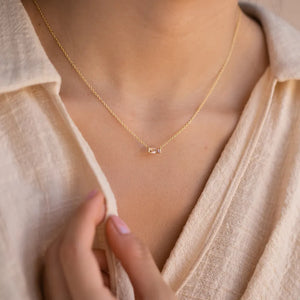
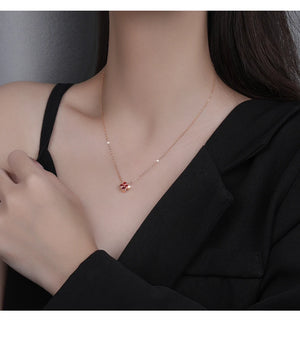
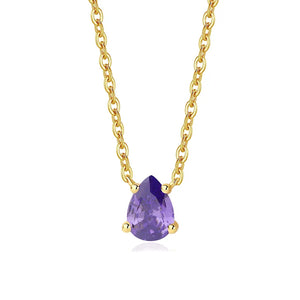

The piece they're describing → Birthstone Charm Necklace for Women — Baguette CZ Pendant, 925 Sterling Silver
Personalize Yours


