


If your birthday falls in February, you've got one of the most beloved gemstones of all time: amethyst. This violet quartz has been treasured for thousands of years, showing up in Egyptian amulets, medieval crowns, and modern fine jewelry. Whether you're shopping for yourself or finding a gift for a February baby, this guide covers everything you need to know about the february birthstone — color, meaning, quality, and value.
Amethyst is the primary birthstone for February, a purple quartz mineral with a Mohs hardness of 7. Its color ranges from pale lavender to deep violet, with the most prized specimens coming from Brazil, Uruguay, and Zambia. The name derives from the Ancient Greek "amethystos," meaning "not intoxicated." In crystal healing traditions, amethyst is associated with calm, clarity, and spiritual protection. It is the gemstone for the 6th and 17th wedding anniversaries and the zodiac stone for Pisces and Aquarius.
What Is the February Birthstone?
Amethyst is the official birthstone for February. It's a member of the quartz family — the same mineral family as citrine, rose quartz, and smoky quartz — but it gets its purple color from iron impurities and natural irradiation inside the crystal structure. The color can range from the palest lilac to deep, saturated violet.
Amethyst forms inside volcanic rock cavities called geodes. Some of the largest amethyst geodes in the world come from Brazil and Uruguay, where hollow boulders open up to reveal walls lined with glittering purple crystals. The stone has been mined for over 2,000 years, and it was once as valuable as ruby or emerald before large deposits were discovered in South America in the 19th century.
The Mohs hardness of 7 makes amethyst durable enough for everyday jewelry — rings, necklaces, earrings, and bracelets all hold up well with proper care. It's harder than most semi-precious stones, which makes it a practical choice as well as a beautiful one.
Amethyst Colors and Grades
Not all amethyst looks the same. Color is the most important factor in determining quality and value. The finest amethyst has a deep, saturated purple with red or blue secondary hues — often called "Deep Siberian" or "Royal Amethyst" in the trade. According to the GIA, the most prized amethyst shows strong to vivid purple, sometimes with flashes of blue or red depending on the light.
Here's how the main grades stack up:
| Grade | Color Description | Origin Examples | Approximate Retail Price (per carat) |
|---|---|---|---|
| Deep Siberian / Royal | Rich violet-purple, 75–80% tone, red/blue flash | Russia (Siberia), Uruguay | $20–$50+ |
| Rose de France | Pale lavender-pink, 15–30% tone | Brazil, South Africa | $5–$15 |
| Bahia / Commercial | Medium purple, 40–60% tone, even saturation | Brazil (Bahia state) | $8–$20 |
| Zambian | Deep blue-purple, high saturation, smaller crystals | Zambia (Kariba area) | $15–$40 |
| Pale / Low grade | Washed-out lavender, under 15% tone | Various | $1–$5 |
Clarity matters too. Most faceted amethyst is eye-clean — meaning you won't see inclusions without magnification. If a stone has visible cracks or cloudiness, that's a sign of lower quality. Cut also affects how the color appears: a well-cut amethyst reflects light evenly and looks vivid from multiple angles.
February Birthstone Meaning and Symbolism
Amethyst has carried deep symbolism for millennia. The ancient Greeks wore amethyst amulets and carved drinking vessels from it because they believed it prevented drunkenness — that's where the name comes from (Greek "amethystos" = "not intoxicated"). Roman soldiers wore amethyst into battle for courage and clear thinking.
In the Middle Ages, Catholic clergy wore amethyst rings as symbols of piety and celibacy — purple was a royal and religious color reserved for bishops and cardinals. The stone appears in the British Crown Jewels and was a favorite of Catherine the Great of Russia.
Today, amethyst symbolizes:
- Calm and clarity — it's associated with a peaceful mind and clear decision-making
- Protection — historically used as a talisman against harm and negative energy
- Wisdom — linked to the third eye chakra in spiritual traditions
- Sobriety and self-control — its ancient anti-intoxication meaning still resonates
- Spiritual connection — used in meditation and prayer across many traditions
Amethyst is the gift stone for 6th and 17th wedding anniversaries. It's also the zodiac gemstone for both Aquarius (January 20 – February 18) and Pisces (February 19 – March 20), making it a perfect fit for nearly all February birthdays.
Amethyst Healing Properties
In crystal healing and metaphysical traditions, amethyst is one of the most versatile stones. Practitioners use it for:
- Stress relief and sleep — placing amethyst near the bed or under a pillow is said to promote restful sleep and reduce anxiety. Many people keep an amethyst cluster on their nightstand for this purpose.
- Mental clarity — it's thought to help with focus, decision-making, and cutting through mental fog. Students and creatives often work near amethyst for this reason.
- Emotional balance — amethyst is said to calm anger, fear, and grief, helping you process emotions without being overwhelmed.
- Spiritual protection — many traditions use amethyst to create a protective energy field around the aura, warding off negative influences.
- Addiction support — continuing the ancient Greek tradition, amethyst is still used as a supportive stone in sobriety work, representing willpower and self-discipline.
- Third eye and crown chakra activation — its violet color aligns with the higher chakras in Vedic and Western esoteric systems, making it a popular meditation stone.
Important note: crystal healing is a complementary practice, not a substitute for medical care. These are traditional and cultural beliefs, not clinical treatments. That said, the ritual of working with a beautiful stone can be genuinely grounding and meaningful.

The Hidden Risk Most Guides Don't Mention: Sun Fading
Here's something most February birthstone guides skip entirely: amethyst can lose its color. Prolonged exposure to strong sunlight or heat can cause amethyst to fade toward a pale yellow — the same heat-treatment process that turns amethyst into citrine happens naturally, just slower, on a windowsill. If you wear amethyst jewelry daily, this isn't a dealbreaker, but it does mean you should store fine amethyst pieces away from direct sun when not being worn, and never leave a ring on a sunny windowsill "to dry" after cleaning.
The other detail generic articles gloss over: amethyst is genuinely semi-precious, not precious — the four precious gems are diamond, ruby, sapphire, and emerald. That doesn't make it less valuable as a birthstone; deep "Siberian" purple amethyst with red flashes commands real prices per carat. But if a seller markets amethyst as a "precious gem," that's a marketing claim, not a gemological one.
Alternative February Birthstone: Bloodstone
Amethyst isn't February's only birthstone. The older, traditional birthstone list (Gregorian poem, 1870) assigned bloodstone as February's stone — and some jewelry traditions still honor that.
Bloodstone is a dark green chalcedony with red spots (caused by iron oxide inclusions). It's a 6.5–7 on the Mohs scale, so also quite durable. In ancient times, soldiers carried bloodstone for courage and to stop bleeding on the battlefield.
The American Gem Society added amethyst as the modern February birthstone, and it's now far more popular and widely recognized. But if you prefer green tones or a more unusual birthstone gift, bloodstone is a legitimate and historically significant choice.
How to Choose Quality Amethyst
When shopping for amethyst jewelry, focus on these four factors:
1. Color first. The richest purple with slight red or blue flashes is the most valuable. Avoid stones that look too brownish or so pale they could be mistaken for rose quartz. A medium-deep purple is the sweet spot for most budgets.
2. Clarity. Look for eye-clean stones — no visible cracks, bubbles, or cloudiness. Small inclusions deep inside the stone are normal and don't affect durability, but surface cracks can make the stone vulnerable to chipping.
3. Cut quality. A well-cut amethyst will show even color distribution and good brilliance. Watch out for "windowing" — when you can see straight through the stone rather than seeing reflected light. That's a sign of a poor cut.
4. Setting and metal. Amethyst looks stunning in sterling silver (925), which complements its cool purple tones. It also pairs beautifully with yellow gold for a richer, warmer contrast. White gold and platinum keep the look modern and bright.
For jewelry worn every day — especially rings — make sure the setting protects the stone. Bezel settings (where the metal wraps around the stone) offer more protection than prong settings.
As for price, genuine amethyst is surprisingly affordable. A quality sterling silver amethyst pendant can cost $30–$80; fine jewelry with larger, high-grade stones runs $200–$500+. Anything labeled "amethyst" for $5–$10 in sterling silver is likely real — amethyst is abundant enough that very cheap prices don't necessarily signal a fake.
Amethyst Care and Cleaning
Amethyst is a 7 on the Mohs hardness scale, which means it's harder than most common scratching agents but softer than quartz sand and some other gems. Here's how to keep it looking great:
- Clean with warm soapy water. A soft toothbrush, a drop of dish soap, and warm (not hot) water is all you need. Scrub gently, rinse well, dry with a soft cloth.
- Avoid ultrasonic cleaners if the stone has fractures or inclusions — vibrations can worsen any existing cracks. Clean stones are generally fine, but when in doubt, use the manual method.
- Keep it out of prolonged sunlight. This is important: amethyst can fade with long UV exposure. Don't leave amethyst jewelry on a sunny windowsill for extended periods. Normal daily wear in sunlight is fine.
- Avoid heat. Sudden temperature changes and sustained heat can cause fractures or color change. Don't wear amethyst in hot tubs or saunas.
- Store it separately. Harder gems like diamonds and sapphires can scratch amethyst. Keep it in a soft pouch or separate compartment in your jewelry box.
- Safe for water (short-term). Amethyst won't dissolve in water. It's fine to wash your hands while wearing it. Just avoid prolonged soaking.
February Birthday Gift Ideas
Looking for a gift that goes beyond "purple stone"? Here are ideas that work for different styles and budgets:
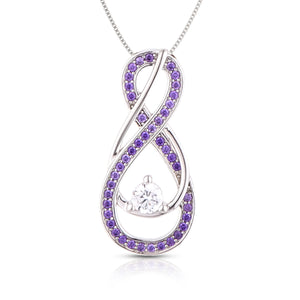
- Amethyst pendant necklace in sterling silver — the classic choice. A water-drop or teardrop shape is elegant and versatile. Works for everyday wear and special occasions.
- Amethyst stud earrings — simple, wearable, always appropriate. Round or oval cuts are most flattering.
- Raw amethyst crystal cluster — a desk or home decor piece for people who appreciate crystals. Large Uruguay or Brazil geodes make stunning gifts.
- Amethyst birthstone ring — go for a bezel setting in sterling silver for a modern look, or a prong setting in yellow gold for something more classic.
- Amethyst bracelet — beaded amethyst bracelets work great as everyday wear and are popular in both jewelry and crystal communities.
- Personalized birthstone jewelry — initial pendants or name necklaces with an amethyst accent are meaningful, personal gifts.
Shop Amethyst Jewelry at AJLuxe
Our amethyst water drop pendant necklace in 925 sterling silver keeps this February stone close every day. Browse all February birthstone jewelry — hypoallergenic, gift-ready, 30-day returns.
Frequently Asked Questions
- What is the February birthstone?
- The February birthstone is amethyst — a purple variety of quartz. It's been the modern birthstone for February since the American Gem Society standardized the birthstone list in 1912. Bloodstone is the older, traditional February birthstone from 19th-century lists.
- What color is the February birthstone?
- Amethyst ranges from pale lavender to deep violet-purple. The most prized color is a rich, saturated purple with slight red or blue secondary hues — sometimes called "Deep Siberian" or "Royal Amethyst." Rose de France is the paler, more affordable variety with a lilac-pink tone.
- Is amethyst only the February birthstone?
- Amethyst is primarily associated with February, but it's also the zodiac stone for Aquarius and Pisces, the anniversary gift for the 6th and 17th years of marriage, and the stone for Thursday in traditional gemstone-day associations. It's widely used regardless of birth month.
- What does the February birthstone mean?
- Amethyst symbolizes calm, clarity, wisdom, and protection. The ancient Greeks linked it to sobriety (the name means "not drunk" in Greek). Medieval clergy used it to represent piety. Today it's most often associated with mental clarity, emotional balance, and spiritual protection.
- Is amethyst expensive?
- Amethyst is one of the most affordable purple gemstones. Large deposits in Brazil and Uruguay keep prices reasonable. Quality amethyst jewelry in sterling silver typically runs $30–$150. Fine jewelry with high-grade stones in gold can reach $300–$800+. Lab-created amethyst is even cheaper, though it lacks the natural origin.
- What karat gold works best with amethyst?
- Both 14K and 18K yellow gold complement amethyst beautifully — the warm gold enhances the cool purple with contrast. Sterling silver (925) is the most popular choice because it's affordable, hypoallergenic, and the cool tones match amethyst naturally. White gold and platinum also work well for a modern look.
- Can amethyst go in water?
- Yes, amethyst is safe in water for short periods. It won't dissolve or corrode. Washing hands or brief rinsing is fine. Avoid prolonged soaking and don't submerge amethyst in salt water, chlorinated pools, or hot tubs — these can damage the finish or setting over time.
- How do you clean amethyst?
- Clean amethyst with warm water, a drop of mild dish soap, and a soft toothbrush. Gently scrub around the stone and setting, rinse thoroughly, and dry with a soft cloth. Avoid ultrasonic cleaners if the stone has inclusions. Don't use harsh chemicals like bleach or acetone — they can damage the metal setting.
- What zodiac sign is amethyst associated with?
- Amethyst is the zodiac stone for both Aquarius (January 20 – February 18) and Pisces (February 19 – March 20). This makes it relevant to virtually all February birthdays. Some traditions also associate it with Virgo and Sagittarius as a secondary stone.
- Is bloodstone also a February birthstone?
- Yes. Bloodstone is the traditional (pre-modern) birthstone for February, based on older birthstone lists from the 1800s. It's a dark green chalcedony with red spots and was associated with courage and strength. Amethyst replaced it as the primary modern February birthstone after 1912.
- What is the rarest amethyst color?
- The rarest and most valuable amethyst color is "Deep Siberian" — a rich purple with 75–80% color saturation and strong red and blue secondary flashes. Originally from Siberia, this quality now comes mainly from Uruguay and Zambia. Rose de France (pale lavender-pink) is attractive but far more common and less expensive.
- How do you tell real amethyst from fake?
- Real amethyst is cool to the touch and warms slowly in your hand. It should have slight natural color zoning — perfectly uniform color throughout a stone is a sign of glass or synthetic material. Check for natural inclusions with a loupe (10x magnification). Glass fakes feel lighter and show bubbles; synthetics are usually flawless. Buy from reputable sellers who can provide origin information.
- Does amethyst fade in sunlight?
- Yes, amethyst can fade with prolonged UV exposure. Brief time in sunlight during normal daily wear isn't a problem, but don't leave amethyst jewelry on a sunny windowsill for weeks. Extended UV and heat exposure can cause the purple to lighten. Store amethyst away from direct sunlight when you're not wearing it.
- What does amethyst symbolize?
- Amethyst symbolizes calm, clarity, wisdom, sobriety, and spiritual protection. It's been used across cultures as a talisman against negative energy, a stone of mental focus, and a symbol of royalty and piety. In modern crystal healing, it represents the third eye and crown chakras — centers of intuition and higher consciousness.
Final Thoughts
Amethyst has been the world's favorite purple gemstone for over 2,000 years — and for good reason. It's beautiful, durable, affordable, and loaded with history. Whether you're drawn to its deep symbolism, its stunning violet color, or simply the fact that it's your birthday stone, amethyst delivers real value at every price point.
For February birthdays, an amethyst piece in 925 sterling silver is the kind of gift that lasts. It won't tarnish easily, it won't chip with everyday wear, and it stays meaningful long after the birthday is over.
You Might Also Like
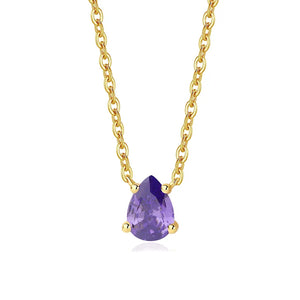
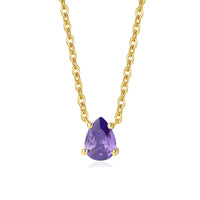
The piece they're describing → Amethyst Pendant Necklace for Women — Teardrop Amethyst Stone, 925 Sterling Silver
Personalize Yours

