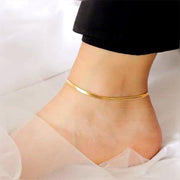
A bracelet is the jewelry piece closest to your hands — it catches light as you gesture, types, and reach. The right bracelet is one you forget you're wearing because it sits so naturally on your wri…
A bracelet is the jewelry piece closest to your hands — it catches light as you gesture, types, and reach. The right bracelet is one you forget you're wearing because it sits so naturally on your wrist. AJLuxe bracelets are crafted from 925 sterling silver with 18K gold plating, combining the durability of real sterling with a warm gold finish that works in every setting from a desk to a dinner table.
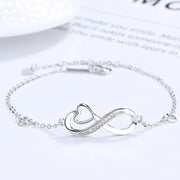
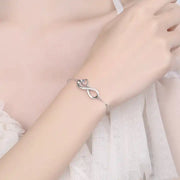
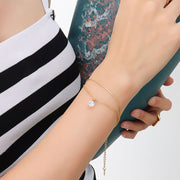
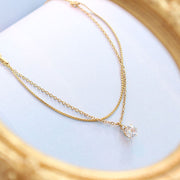
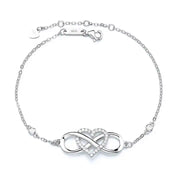
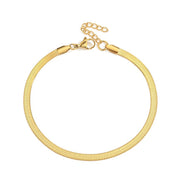
The bracelet category is broader than most people realize. Chain bracelets — the most versatile type — are adjustable links that sit close to the wrist. A delicate chain bracelet in 1–2mm width is barely visible but adds a finished quality to bare wrists. Charm bracelets are chain bracelets with attached pendants: initials, symbols, birthstones, or meaningful shapes. Each charm turns the bracelet into a wearable record of what matters to you. Cuff bracelets are rigid open-ended bands worn by sliding over the wrist — no clasp, instant on and off. Bangles are fully closed rings that slip over the hand. Tennis bracelets are a classic setting where small crystals or stones run the full circumference of the bracelet in a continuous line. Anklets are the same construction as chain bracelets, worn on the ankle rather than the wrist.
Fit determines everything in bracelet wearability. A bracelet that's too tight cuts circulation and marks the skin; too loose and it slides down to the knuckle or snags on everything. Standard women's bracelet sizing runs 6" to 8" with 7" being the most common. To find your size: measure the circumference of your wrist just above the wrist bone with a soft tape measure or a strip of paper. For a snug fit (similar to a watch), add 0.5" to your wrist measurement. For a standard comfortable fit with room to move, add 1". For a loose, stacked look, add 1.5". Most AJLuxe chain bracelets are adjustable within a 1–2" range, covering the majority of wrist sizes.
Bracelet stacking is one of the most searched bracelet topics, and for good reason — a well-curated stack tells a richer story than any single piece. The rules for successful stacking: keep all pieces in the same metal tone (mixing gold and silver reads as unintentional unless you're deliberately doing it as a design choice). Vary the width and texture — combine a thin delicate chain with a slightly wider link and a charm-style piece for visual interest without competition. Odd numbers stack better than even numbers visually (3 or 5 bracelets looks more intentional than 2 or 4). Leave one wrist stack-free if you wear watches or need wrist mobility for your work.
Gifting bracelets is a reliable strategy because bracelets are low-risk in terms of fit (adjustable chain bracelets accommodate most wrist sizes), personal but not overly intimate, and meaningful when personalized. The most gifted bracelet occasions: birthdays (birthstone charm or initial bracelet), graduations (symbolic charm meaning new chapters), friendship (matching or complementary pieces), Mother's Day (children's initials as charms), and just-because gifts where the bracelet is chosen for aesthetic rather than occasion. A bracelet from a friend or partner is a daily physical reminder of that relationship — the right choice for a gift with staying power.
| Type | Closure | Best For | Stack Friendly |
|---|---|---|---|
| Chain bracelet | Lobster clasp / adjustable | Daily wear, versatile | Yes — the stack anchor piece |
| Charm bracelet | Lobster clasp | Personalized gifting, story-building | Yes — pairs with plain chains |
| Cuff | None (open ended) | Statement, quick on/off | Limited — one per wrist works best |
| Bangle | None (closed ring) | Stacking, minimalist | Yes — stack 3–5 bangles |
| Tennis bracelet | Box/lobster clasp | Dressier occasions, classic looks | Pairs well with a thin chain |
| Anklet | Lobster clasp / adjustable | Summer, beach, casual | Yes — stack 2 ankle chains |
More than any other jewelry category, bracelets spend time in contact with the full internal surface of your wrist — skin that's warmer, sweatier, and more sensitive than your earlobe. This matters because metals leach ions into skin under warmth and moisture. Brass bracelets (the most common base metal in affordable jewelry) contain zinc and often trace nickel. These leach into wrist skin, causing the green discoloration and contact dermatitis that many people experience with cheap bracelets. The green comes from copper in brass reacting with sweat to form copper salts — completely harmless but unsightly and avoidable.
925 sterling silver is the clean alternative. The 7.5% copper in sterling silver is alloyed in a way that doesn't leach the way brass copper does, and there's no nickel in sterling silver alloys. Gold-plated sterling adds a layer of real 18K gold over the sterling base — so the surface you see is gold, and the base the plating will eventually reveal is sterling, not brass. Stainless steel is a reasonable alternative (also nickel-safe in most modern alloys), but it's heavier, colder to the touch, and harder to work into delicate bracelet designs. For an everyday bracelet you wear from morning to night, 925 sterling silver is the material that wins on safety, comfort, and longevity.
Sterling silver and gold-plated sterling bracelets need minimal care but benefit from a few habits. Remove before swimming — chlorine from pools and salt water from the ocean both accelerate tarnishing of sterling silver and wear down gold plating faster. Remove before showering — soap, shampoo, and conditioner leave a dull film on sterling. Remove before applying perfume, lotion, or hairspray — these products contain alcohol and chemicals that attack the plating. Store dry in a closed box or pouch — air exposure causes oxidation (tarnish) in sterling silver. When tarnish does appear on sterling (a yellowish or dark patina), a soft jewelry polishing cloth restores the shine in under a minute.
Measure the circumference of your wrist just above the wrist bone using a soft tape measure or a strip of paper marked and then measured against a ruler. For a snug fit similar to a watch, add 0.5 inches to your wrist measurement. For standard comfortable fit with slight movement, add 1 inch. For a looser stacked look, add 1.5 inches. Most women's wrists measure 6–7 inches, making 7–8 inch bracelets the most common sizes. If you're purchasing an adjustable chain bracelet for a gift and don't know the recipient's wrist size, adjustable bracelets that span 6–8 inches cover the vast majority of women's wrists.
Chain bracelets — particularly delicate adjustable chain styles — are consistently the most purchased bracelet style for women because of their versatility. A thin chain bracelet in gold-tone sterling silver pairs with everything from formal outfits to casual looks and stacks seamlessly with other bracelets. Among personalized styles, charm bracelets with initial or birthstone charms are the top gifted bracelet. Tennis bracelets are the most popular special-occasion bracelet. For daily casual wear, simple chain and dainty bangle styles dominate most women's bracelet rotation.
Yes — bracelet stacking is one of the most popular jewelry styling techniques. The key rules: keep metals consistent (all gold-tone or all silver-tone), vary the textures and widths for visual interest, use odd numbers (3 or 5 reads more intentional than 2 or 4), and keep the thinnest piece closest to the wrist. A good starter stack is a thin chain bracelet + a charm bracelet + a slightly wider link chain. Avoid stacking more than 5–6 bracelets on one wrist unless you intend the full-arm look — anything beyond that tends to look costume-y rather than curated.
A tennis bracelet is a bracelet where small gemstones or crystals are set in a continuous line around the full circumference of the bracelet, creating an unbroken row of sparkle. The name comes from a 1987 US Open incident where tennis player Chris Evert's diamond bracelet broke and fell on the court, pausing the match — news coverage called it a "tennis bracelet" and the name stuck. Modern tennis bracelets use cubic zirconia (CZ), crystal, or genuine gemstones in a flexible setting. They're the dressiest bracelet style, suitable for formal occasions, and also the one most likely to require careful security clasp maintenance to prevent loss.
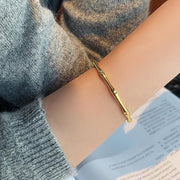
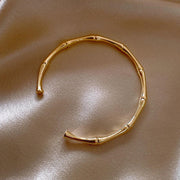
No — they're similar but distinct. A bangle is a fully closed circular ring with no opening. It slips on and off over the hand. Multiple bangles are often stacked together. A cuff is open-ended — it has a gap that allows it to slide over the wrist sideways without needing to fit over the hand. Cuffs can be adjusted slightly to the wrist width by gently bending. Both have no clasp, making them easy on-and-off pieces. Bangles typically come in sets designed to be stacked; cuffs are usually worn as single statement pieces. For hands that are wider than the wrist, cuffs are more practical than bangles.
Sterling silver bracelets stay bright longest with these habits: remove before swimming (chlorine and salt water accelerate tarnish and strip gold plating), remove before showering (soap films dull the surface), remove before applying perfume or lotion (chemicals attack the metal), and store in a dry closed pouch or box rather than left out in air. When tarnish appears — a yellow or dark dulling — use a soft jewelry polishing cloth to restore the shine in under a minute. Avoid abrasive cleaners, silver dips for gold-plated pieces, and ultrasonic cleaners with gemstone-set bracelets. For heavier tarnish on plain sterling, a small amount of non-gel toothpaste on a soft cloth, rubbed gently, then rinsed and dried, works well.
No metal bracelet is completely immune to surface changes, but some resist tarnishing much better than others. Gold-plated 925 sterling silver tarnishes very slowly because the gold plating protects the sterling beneath — and when the plating eventually wears, the sterling base tarnishes slowly and polishes easily. Stainless steel doesn't tarnish but can show surface scratches. Solid gold (14K+) essentially never tarnishes. Platinum doesn't tarnish. Brass tarnishes fastest of common bracelet metals and causes skin discoloration. The best everyday bracelet for minimal maintenance is gold-plated sterling silver: you get the gold appearance, the tarnish-resistant surface, and a sterling base if the plating ever wears.
Charm bracelets are among the best jewelry gifts because they're immediately personal and grow over time. An initial charm makes it uniquely hers from the first wear. A birthstone charm adds personal meaning. A symbol charm — a star, heart, moon, or meaningful motif — lets you communicate something about how you see her. Unlike most gifts, a charm bracelet invites future additions: each subsequent birthday, anniversary, or holiday can add a new charm that builds a wearable life story on a single chain. For gifting, start with the bracelet plus one meaningful charm — the initial or birthstone is the safest first choice — and leave room for future additions.