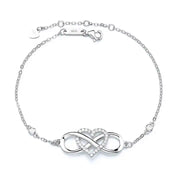
Chain Bracelets for Women
A chain bracelet is the most elemental form of jewelry: metal links, connected into a wearable loop. That simplicity is precisely its strength — a chain bracelet works in an…
Chain Bracelets for Women
A chain bracelet is the most elemental form of jewelry: metal links, connected into a wearable loop. That simplicity is precisely its strength — a chain bracelet works in any context, layers with anything, and lasts decades when made from the right material. At AJLuxe, all chain bracelets are made in 925 sterling silver, ensuring they're genuinely wearable every day.
Chain Bracelet Styles Explained
Cable chain — the most classic style. Oval or round links connected in a uniform line. Minimal, clean, works as both a solo piece and a layering bracelet. The first chain bracelet everyone should own.
Box chain — square links give a more geometric, modern feel. Stronger than cable chain and excellent for pendants or charms. The surface catches light differently, adding subtle texture.
Rope chain — twisted strands create a spiral effect that reflects light from every angle. Slightly more textured and bold than cable; reads a bit more luxurious.
Figaro chain — alternating long and short links in a classic Italian pattern. More visual interest than a pure cable chain while staying clean and minimal.
Tennis bracelet — a continuous line of stones (typically CZ or diamonds) set in a row. The most elegant chain bracelet style; formal enough for events, delicate enough for daily wear.
Paperclip chain — elongated rectangular links that have a modern, architectural feel. The dominant chain trend of 2022–2024; still popular and wearable in 2026.
Chain Bracelet Sizing Guide
Bracelet fit is personal — how it sits on your wrist changes the whole look:
Snug fit (standard sizing, petite): 6–6.5 inches. Sits close to the wrist with minimal movement.
Standard fit (most women): 7 inches. The most common women's bracelet length. Sits at the wrist with slight movement.
Relaxed/stacker fit: 7.5 inches. Sits looser and moves more freely — ideal for layering multiple bracelets.
Larger wrist or preference: 8 inches.
To measure: wrap a flexible tape measure or a strip of paper around the narrowest part of your wrist (just below the wrist bone). Add 0.5 inches for snug, 1 inch for standard, 1.5 inches for relaxed.
Chain Type Comparison
Chain Type
Visual Weight
Movement
Best Worn
Layering?
Cable
Light
Flowing
Solo or layered
Excellent base layer
Box
Medium
Structured
Solo statement
Good with thinner chains
Rope
Medium
Moderate movement
Solo or mixed
Good anchor layer
Figaro
Medium
Good movement
Solo or layered
Good with cable
Tennis
Heavy
Fluid
Formal, solo
Statement anchor
Paperclip
Medium
Architectural
Modern everyday
Pairs with minimalist chains
The Bracelet Layering Trend
Layering multiple bracelets on one wrist is the dominant bracelet aesthetic in 2026. The formula: mix textures and weights, keep metals consistent (or intentionally mixed), and vary the link size. A typical layered look might be: a thin cable chain + a beaded bracelet + a slightly chunkier rope chain + a charm bracelet. The key is variety — if every piece has the same visual weight, the stack looks monotonous.
Frequently Asked Questions
How do you measure your wrist for a bracelet?
Wrap a tape measure around the narrowest part of your wrist. Add 0.5 inches for snug, 1 inch for standard, 1.5 inches for relaxed/stacking fit.
What is the standard bracelet size for women?
The most common women's bracelet size is 7 inches, fitting the average wrist with slight movement. Smaller wrists: 6.5". Larger wrists or stacking preference: 7.5".
Can you stack chain bracelets?
Yes — vary chain types and visual weights. Mix thin cable (light) with box chain (medium) and a beaded bracelet for texture. Keep one metal dominant and use 2–4 bracelets for the most balanced look.
What is the most popular chain bracelet style?
The cable chain bracelet is the most classic and universally loved. Paperclip chains remain popular. Rope and box chains are strong favorites in 2026 for texture variety.
Are chain bracelets in style in 2026?
Yes — chain bracelets are a perennial staple. The stacking trend keeps demand for delicate chains high. In 2026 the focus is mixed-texture stacking rather than one dominant chain style.
How do you clean chain bracelets?
Wipe with a silver polishing cloth for tarnish. For deeper cleaning, soak briefly in warm water with mild soap, gently scrub with a soft toothbrush, rinse, and dry completely.
Can chain bracelets get wet?
Sterling silver handles occasional water exposure well. Avoid prolonged soaking in pool water or salt water. Gold-plated chains are more vulnerable to chlorine — remove before swimming.
Sterling Silver vs Gold-Plated Chain Bracelets
At AJLuxe, you'll find chain bracelets in both 925 sterling silver and 18K gold-plated over 925 sterling silver. Here's how to choose:
Sterling silver: the classic, cool-toned option. Naturally bright and reflective. May develop a warm patina over time (which many people love). Silver polishing cloths restore it to mirror-bright in seconds. Best if you predominantly wear silver jewelry.
18K gold-plated: warm yellow tone. Works with both gold and mixed-metal wardrobes. The plating on bracelets wears faster than on necklaces because bracelets experience more friction. Expect 1–3 years of daily wear before significant plating wear shows on high-friction areas.
Both options share the same 925 sterling silver base — hypoallergenic, nickel-free, and genuinely valuable. The difference is purely tonal: cool silver vs warm gold.
Chain Bracelets and Other Bracelet Types — How They Layer
The bracelet stack is most interesting when it mixes chain bracelets with other bracelet types. How to do this well:
Chain + beaded bracelet: the contrast between metal chain and natural stone beads is visually striking. The beaded bracelet adds organic texture; the chain brings refinement. Very popular pairing.
Chain + cuff bangle: a delicate chain bracelet next to a wide cuff bangle creates dramatic contrast in visual weight. The cuff becomes the statement; the chain adds delicacy.
Chain + leather or cord: mixing metal with natural materials is an increasingly popular aesthetic that bridges refined and casual styles.
Multiple chain types: a cable chain + a box chain + a paperclip chain on one wrist, all in gold, is a cohesive and sophisticated look that doesn't require mixing other bracelet types.
Chain Bracelet Clasp Types
The clasp on a chain bracelet affects both security and ease of use:
Lobster claw clasp: the most secure and common clasp. A spring-loaded claw that hooks into a jump ring. Slightly harder to put on solo (especially with one hand), but won't open accidentally.
Toggle clasp: a T-bar that passes through a ring and rests against it. Easier to put on solo. Not as secure as a lobster claw — avoid for bracelets with heavy pendants.
Box clasp: clicks shut with a satisfying snap. Secure and elegant. Common on higher-end bracelets.
Magnetic clasp: the easiest to put on solo (especially useful for people with limited hand dexterity). Not as secure as mechanical clasps — can open with magnetic interference or during vigorous activity.
AJLuxe chain bracelets predominantly use lobster claw clasps for maximum security and longevity.
Chain Bracelet Gifting Guide
A chain bracelet is one of the safest jewelry gifts because sizing anxiety is minimized — most chain bracelets are adjustable within a length range, or come in one standard length (7 inches) that fits most women comfortably. Pairing suggestions by recipient:
For her (any age): a classic cable chain bracelet in gold or silver. Universally wearable, universally appreciated.
For a teen: a dainty chain bracelet with an initial charm or birthstone drop. Personal and meaningful.
For a friend: matching chain bracelets (friendship bracelets grown up) in delicate sterling silver. A gesture that works at any age.
For a milestone (graduation, promotion): a bracelet with more visual weight — a box chain or a pavé tennis bracelet. The occasion warrants more presence.