



"Threaded vs. threadless" comes up in piercing-jewelry shopping more than general fashion-earring shopping, since the mechanism affects how easily and safely you can change jewelry in a healing or established piercing. The two systems aren't a style choice — they're genuinely different hardware, and this guide covers how each works, which one professional piercers tend to favor, and how to tell which you already own.
Not Just Earrings: Where Else This Matters
Threaded and threadless mechanisms show up beyond ear piercings too — nose studs, some navel jewelry, and other body piercings use the same two systems, and the same tradeoffs (security versus ease of changing, smooth-post friendliness for healing tissue) apply regardless of placement. If you're shopping jewelry for a piercing outside the ear specifically, the terminology and buying advice in this guide carries over directly; the mechanism, not the piercing location, determines which system you're dealing with.
How Each System Actually Works
- Threaded (internally or externally threaded) — the decorative top screws onto (or into) the post like a tiny bolt. Internally threaded means the threading is inside the post and the screw sits on the top piece — generally preferred, since the smooth post passes through the piercing without threading dragging against healing tissue. Externally threaded means the threading is on the post itself, which can be rougher on a fresh piercing during insertion.
- Threadless (push-pin) — the top has a bent pin that pushes into a hollow post and holds purely by friction/tension, no rotation needed. Popular for how flat it sits and how quickly it can be swapped.
Threaded vs. Threadless: Direct Comparison
| Threaded (Internal) | Threadless | |
|---|---|---|
| Security | Very secure once fully tightened | Secure with a snug-fitting pin; can loosen if the fit wears |
| Ease of changing | Slower — requires careful unscrewing | Faster — pulls out and pushes back in |
| Fresh-piercing friendliness | Good if internally threaded (smooth post) | Good — no threading to catch tissue at all |
| Failure mode | Cross-threading if forced or misaligned | Can fall out if the pin doesn't fit the post snugly |
Is Threadless Better Than Threaded?
Neither is universally better — professional piercers commonly use internally threaded or threadless jewelry for fresh piercings (both avoid the rougher external threading), and preference between the two often comes down to the specific piercer's technique and the placement. Threadless earns points for speed and how flat it sits, especially in cartilage placements where a low profile matters. Internally threaded jewelry earns points for holding fast once secured, with no reliance on a friction fit that can theoretically loosen over time.
Does Threadless Jewelry Fall Out Easily?
Not under normal conditions with a well-fitted pin — the friction hold is designed to withstand daily wear, sleeping, and normal contact. It's more likely to loosen than a properly tightened threaded piece if the specific pin-to-post fit is slightly off, which is why buying threadless jewelry from a consistent, quality source matters more than it does for threaded pieces, where a mismatch is more obvious immediately (it won't screw on cleanly at all).
How to Tell Which One You Already Have
Look at the post: if you can see a spiral thread pattern along it (or on the inside of a removable top), it's threaded. If the post is smooth with no visible threading and the top has a small bent pin visible when detached, it's threadless. When in doubt, a piercer can identify it in seconds — don't force a rotation on a piece you're unsure about, since forcing a threadless piece to "unscrew" can bend the pin.
Do Piercers Actually Pierce With Threadless Jewelry?
Yes — threadless has become a standard option at professional studios specifically because it avoids external threading dragging through fresh tissue during insertion, the same reason internally threaded jewelry is preferred over externally threaded. Ask your specific piercer which system they use before your appointment if you have a preference.
Why Threadless Became Popular
Threadless jewelry grew out of body-jewelry manufacturers looking for a system that sat flatter against the skin than a traditional externally threaded post, particularly for cartilage placements where a raised screw mechanism is more likely to catch on clothing, hair, or a pillow. Internally threaded jewelry solved part of that problem (smooth post, threading hidden in the top piece) but still required rotation to attach; the push-pin friction design removed that step entirely, which is why it spread quickly through professional piercing studios once the fit-reliability issue was solved with tighter manufacturing tolerances.
Mainstream fashion-jewelry brands picked up threadless hardware more slowly than piercing studios did, mostly because standard fashion earrings never needed the same fresh-piercing-friendliness that professional piercing jewelry does — a butterfly-back or screw-back post works fine once a piercing is fully healed. That's part of why threadless remains more associated with piercing-specific jewelry today than with general fashion earrings, even though nothing prevents a healed-piercing stud from using the same mechanism.
An Honest Note on What We Carry
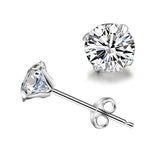
AJLuxe's stud and huggie earrings — like the CZ stud earrings — use standard friction or butterfly-back posts, not threaded or threadless piercing hardware, and they're built for healed, established piercings rather than initial or fresh ones. If you're specifically shopping threaded or threadless jewelry for a new or healing piercing, a body-jewelry or piercing-supply specialist is the right source; once your piercing is fully healed and you're ready for standard fashion studs, that's where AJLuxe's catalog fits.
Do You Need Special Tools to Change Either System?
Threadless jewelry typically needs no tool at all — most pieces are designed to be pulled and reinserted by hand, though a piece with a very stiff pin fit can benefit from an insertion tool that grips the top without your fingers slipping. Internally threaded jewelry also generally doesn't require a tool for a well-fitted piece, but a firmer initial fit (common right after a fresh piercing, before the mechanism has been worked a few times) can make hand-tightening awkward in a hard-to-reach placement like an upper cartilage piercing — some people find a small tool or simply asking a piercer to help with the first few changes easier than fighting an awkward angle alone.
Threaded vs. Threadless Jewelry: Common Questions
- Is threadless better than threaded?
- Neither is universally better — both internally threaded and threadless jewelry are commonly used by professional piercers for fresh piercings, and the better choice often comes down to the specific piercer's preferred technique and the piercing's placement.
- Does threadless jewelry fall out easily?
- Not with a properly fitted pin under normal wear, though it relies entirely on a snug friction fit — a mismatched or worn pin is more likely to loosen than a fully tightened threaded piece.
- Do piercers pierce with threadless jewelry?
- Yes, it's a standard option at professional studios, favored because the smooth post avoids dragging threading through fresh tissue during insertion.
- Why is internally threaded better?
- Internally threaded jewelry keeps the threading on the removable top rather than the post itself, so the post that actually passes through your piercing is smooth — gentler on fresh or healing tissue than externally threaded jewelry, where the threading is on the post.
- Can I switch from threaded to threadless jewelry in the same piercing?
- Only if the post sizes match — threaded and threadless posts aren't interchangeable between systems, so you'd need a threadless post in your existing gauge and length, not just a threadless top on a threaded post.
- Is threadless jewelry more expensive than threaded?
- Not inherently — pricing depends more on the metal and craftsmanship than the mechanism itself, though threadless systems are somewhat newer to mainstream fashion jewelry and can carry a premium in some retailers simply from being marketed as the newer option.
- What happens if I cross-thread a screw-back earring?
- The top won't seat properly and may feel loose or catch when you try to screw it further — stop, back it out fully, and realign rather than forcing it, since forcing a cross-threaded piece can damage the threading permanently.
- Which system is better for cartilage piercings specifically?
- Threadless is popular for cartilage because it sits flat with no protruding screw mechanism, but many cartilage pieces also use internally threaded jewelry successfully — this comes down to piercer and personal preference more than one system being definitively better for that placement.
Final Thoughts
Threaded and threadless jewelry solve the same problem — securing a decorative top to a post — with genuinely different hardware, and neither is a strictly better system across every situation. Threadless wins on speed and flat profile; internally threaded wins on secure hold once tightened. Know which one you're wearing before attempting to change it, and when in doubt, ask a piercer rather than forcing a mechanism you're not sure about.
Last updated: September 2026. Written by the AJLuxe team — specialists in personalized sterling silver jewelry.
All third-party trademarks, brand names and product names are the property of their respective owners. AJLuxe is not affiliated with, endorsed by, sponsored by, or otherwise connected to any third-party brand referenced in this article. Brand names are used solely for accurate comparative reference, and material descriptions reflect each brand's own published product specifications at the time of writing.
You Might Also Like
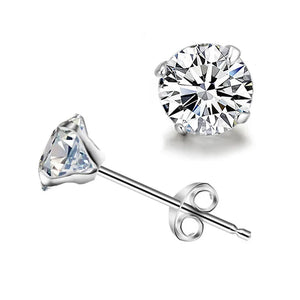
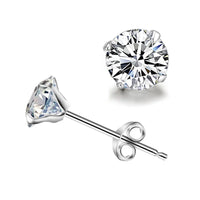
The piece they're describing → CZ Stud Earrings for Women — 925 Sterling Silver, Cubic Zirconia, Hypoallergenic
Personalize Yours


