


Quick Summary
- The left ring finger is the traditional engagement and wedding ring finger in most Western countries, linked to the ancient "vena amoris" (vein of love) belief.
- The right ring finger signals engagement or marriage in many Eastern European, Latin American, and Orthodox Christian cultures.
- Each finger carries its own symbolism: pinky (status/confidence), ring (commitment/love), middle (balance/personal expression), index (authority/ambition), thumb (willpower/independence).
- Which hand you choose matters too — left is often tied to personal life and emotions, right to action and public identity.
- Today, many people wear rings purely for aesthetics, and that's completely valid.
If you've ever wondered what finger do you wear rings on meaning — whether you're stacking a statement piece, searching for the "right" finger for a new ring, or just curious why traditions exist at all — you're in good company. Ring placement has carried deep symbolism for centuries, and while many of those rules have loosened considerably, understanding the meaning behind each finger (and each hand) helps you wear jewelry with more intention. This guide covers every finger on both hands, what wearing a ring there signals in English-speaking Western tradition, how other cultures differ, and what the norms actually look like in 2026.
A Brief History of Ring Symbolism
Rings are one of the oldest forms of human adornment. Ancient Egyptians wore rings as talismans and status markers. Romans used them as signet seals — essentially portable stamps of authority pressed into wax. Medieval Europeans codified which finger meant which thing, partly through the Church and partly through practical custom.
The idea that the left ring finger has a special connection to the heart comes from the Roman concept of the vena amoris — the "vein of love" — a vein believed to run directly from that finger to the heart. We now know that's anatomically false (all fingers share the same vascular structure), but the symbolism stuck so thoroughly it still shapes engagement ring traditions today.
For a detailed overview of ring history and gemstone lore, the Gemological Institute of America (GIA) is an excellent starting point.
Left Hand vs. Right Hand: What's the Difference?
In Western tradition, the left and right hands carry different symbolic weight. The left hand is generally associated with your personal, emotional inner life — love, commitment, private identity. The right hand tends to signal your public self — status, action, professional identity, and social belonging.
This maps loosely onto a broader cultural preference: in many English-speaking countries, the left hand is where you put rings that mean something deeply personal (like a wedding band), while the right hand is where you put rings that say something to the world (like a heritage signet or a bold cocktail ring).
That said, these aren't rigid rules. Plenty of people wear wedding rings on their right hand by choice, cultural background, or simply because it fits better or feels more comfortable.
Ring Finger Meaning: Every Finger Explained
Pinky Finger (Little Finger)
The pinky is the smallest finger but carries outsized symbolic history. In Victorian England and through much of the 20th century, a pinky ring was a classic signal of social class, professional status, or family lineage — signet rings engraved with family crests were (and still are) worn on the left pinky in British tradition.
More recently, pinky rings have signaled confidence, personality, and a willingness to stand out. They're popular in fashion-forward circles and have strong associations with certain professional communities (engineers in Canada wear an "iron ring" on the pinky as a mark of their profession, for example). In some older American mafia mythology, a pinky ring signals membership or loyalty.
Today, wearing a pinky ring most often just means: you like the look, you have a bold personal style, or you're nodding to a family tradition. There's no single dominant modern meaning.
Ring Finger (Fourth Finger)
In most English-speaking Western countries — the US, the UK, Canada, Australia — the left ring finger is the engagement and wedding ring finger. An engagement ring goes on the left ring finger when you're engaged, then the wedding band joins (or replaces) it after the ceremony. Some people wear the wedding band below the engagement ring; others stack them or wear them on separate hands. There's no single correct arrangement.
The right ring finger means something quite different in other parts of the world. In Germany, Austria, Norway, Spain, Greece, India, Colombia, and many Eastern European and Latin American countries, engagement and wedding rings are traditionally worn on the right ring finger. If you're from one of these backgrounds — or partnered with someone who is — right-hand ring placement doesn't signal anything other than cultural context.
Outside of engagement/marriage contexts, wearing a ring on your ring finger (either hand) can simply be an aesthetic choice with no relationship-status message attached.
Middle Finger
The middle finger is the least symbolically loaded of the five. Because it sits at the center of the hand, it's traditionally associated with balance, responsibility, and self-expression. It's also the least likely to be confused with a relationship-status signal, since rings on the middle finger don't carry any particular romantic or family meaning in Western tradition.
That makes it a great choice for statement rings — a bold cocktail ring or a wide band looks proportionally strong on the middle finger, and you don't have to worry about sending unintended messages. Many people who stack rings start with the middle finger as an anchor piece.
Index Finger (Pointer Finger)
Historically, the index finger was associated with authority, leadership, and ambition. Kings, rulers, and clergy wore rings on this finger as a sign of their position — you commanded with your pointing finger, so a ring there reinforced status. Signet rings were sometimes worn on the index finger for exactly this reason.
In modern Western culture, the index finger is somewhat underused for rings compared to the ring finger and pinky, which actually makes it a distinctive choice. Wearing a ring on your right index finger in particular reads as confident and intentional — it catches the eye without the connotations of relationship status.
Some Jewish traditions also involve placing a wedding ring on the right index finger during a ceremony before moving it to the left ring finger afterward.
Thumb
Thumb rings have a long and varied history. In ancient Greece and Rome, archers wore thumb rings as functional equipment (to draw the bowstring). In Renaissance Europe, a large ring on the thumb signaled wealth — thumbs were simply too wide for the delicate rings fashionable on other fingers, so only truly substantial, expensive rings worked there.
Today, thumb rings are associated with independence, willpower, and self-determination — the thumb is set apart from the other fingers, so a ring there often signals someone who charts their own course. They're popular in alternative and creative subcultures, and they're having a real fashion moment right now. Wide bands and architectural statement pieces work particularly well.
Quick Reference: Ring Placement at a Glance
| Finger | Left Hand Meaning | Right Hand Meaning | Best Ring Style |
|---|---|---|---|
| Thumb | Independence, willpower | Confidence, creative identity | Wide band, architectural piece |
| Index | Ambition, personal authority | Status, leadership, bold style | Signet, statement cocktail ring |
| Middle | Balance, self-expression | Balance, self-expression | Statement ring, wide band, stacking anchor |
| Ring | Engagement/marriage (Western) | Engagement/marriage (Eastern European, Latin American); fashion | Engagement ring, wedding band, delicate band |
| Pinky | Family heritage, social status | Personality, bold style, professional pride | Signet ring, slim band, stacking ring |
Cultural Variations Worth Knowing
If you're in an English-speaking Western country, it's easy to assume the left-ring-finger wedding convention is universal. It isn't. Here's a quick overview of how other major traditions differ:
- Germany, Austria, Netherlands, Norway: Wedding and engagement rings on the right ring finger. This is the dominant tradition, not an exception.
- Spain, Greece, Colombia, Venezuela, Peru: Engagement and wedding rings on the right hand.
- India: Traditionally, married Hindu women wear toe rings (bichiya), not finger rings, as a marital symbol — though modern urban Indians increasingly adopt Western ring traditions. The right hand is generally considered auspicious.
- Russia, Ukraine, Poland, Serbia: Right-hand ring finger for wedding bands, rooted in Orthodox Christian tradition.
- Jewish tradition: In many Ashkenazi ceremonies, the ring is placed on the right index finger during the ceremony; after the ceremony, it may be moved to the left ring finger.
- Brazil: Engagement rings are worn on the right hand until the wedding, then switched to the left.
The key takeaway: if you see someone wearing a ring on their right ring finger, don't assume anything. It might mean they're engaged, married, or it might simply be a style choice. Context — and asking — matters far more than the finger.
Stacking Rings and Modern Wear: Does Any of This Still Apply?
Honestly, in 2026, the old symbolism is more of a guide than a rulebook. Ring stacking — wearing multiple rings across several fingers and both hands — has become one of the most popular jewelry trends of the past decade, and it's largely divorced from traditional meaning. Someone might wear three rings on their right hand, two on their left, and a thumb ring, not because each one carries a specific message but because the combination looks beautiful.
That said, the traditional meanings haven't disappeared entirely. Most people still intuitively understand that a ring on the left ring finger signals "taken" — even if they don't know why. So if you're deliberately avoiding that signal (say, you're single and don't want to mislead anyone), it's worth keeping in mind.
For everyone else, the practical advice is: wear rings where they fit well and look good. A ring that fits your index finger but not your ring finger belongs on your index finger, symbolism aside.
Tips for Comfortable Ring Wearing Across Fingers
- Size varies by finger. Your ring finger, index finger, and middle finger are often close in size, but your dominant hand's fingers can run slightly larger. Measure both hands before buying.
- Adjustable rings are great for stacking. If you want to experiment across multiple fingers, adjustable sterling silver rings remove the sizing guesswork entirely.
- Proportion matters. A very delicate band can disappear on the thumb or middle finger; a very wide statement band can overwhelm the pinky. Match the ring's weight to the finger's width.
- Consider your dominant hand. Rings on your dominant hand take more wear and tear from daily tasks. Harder-wearing materials (solid sterling silver, 18K gold plated over 925 silver) hold up better than soft or plated-over-base-metal pieces.
Frequently Asked Questions
What does a ring on the left ring finger mean?
In most English-speaking Western countries (US, UK, Canada, Australia, New Zealand), a ring on the left ring finger traditionally signals engagement or marriage. An engagement ring is typically worn on this finger when someone is engaged, and a wedding band joins it after the ceremony. The tradition traces back to the Roman concept of the vena amoris — a "vein of love" believed to connect this finger directly to the heart. That's anatomically inaccurate, but the symbolism has persisted for over two thousand years. Outside of formal relationship contexts, people do wear non-engagement rings on the left ring finger, though it can sometimes prompt assumptions.
What does a ring on the right ring finger mean?
In Eastern European, Orthodox Christian, Latin American, and several other cultural traditions (Germany, Russia, Greece, Spain, Colombia, and more), the right ring finger is the standard location for engagement and wedding rings. In Western fashion contexts, a ring on the right ring finger often has no relationship-status connotation — it's simply a style choice. Some people also move rings from the left to the right after a divorce or separation, using the right hand as a way to continue wearing a meaningful ring without signaling current relationship status. Others wear a "right-hand ring" as a self-purchase statement of independence.
What does wearing a ring on your index finger mean?
The index finger has historically been associated with authority, leadership, and ambition — in many ancient cultures, rings worn on this finger belonged to people in positions of power, from royals to clergy. In some Jewish wedding traditions, the ring is placed on the right index finger during the ceremony itself before being moved afterward. In modern Western wear, there's no strong fixed meaning for an index finger ring; it reads as a confident, intentional style choice, especially on the right hand. It's actually a less "occupied" finger symbolically than the ring finger or pinky, which can make it a great canvas for a statement piece.
What does a ring on the middle finger mean?
The middle finger is the least symbolically loaded finger in Western tradition. Because it sits at the center of the hand, it's loosely associated with balance, responsibility, and self-expression, but it doesn't carry the romantic connotations of the ring finger or the status associations of the pinky or index finger. This makes it a popular choice for statement rings and stacking anchors — you can wear something bold there without sending any unintended message. Many ring-stacking enthusiasts use the middle finger as their starting point precisely because it's a "clean" canvas.
What does wearing a ring on your thumb mean?
Thumb rings have been associated with independence and willpower across many cultures — the thumb is the one finger that stands apart from the rest, so a ring there signals someone who doesn't follow the crowd. In ancient times, archer's rings worn on the thumb were functional tools for drawing bowstrings. In Renaissance Europe, only the wealthy could afford rings large enough to fit the thumb, so a thumb ring signaled financial success. Today, thumb rings are worn for aesthetic reasons and carry associations with creative, independent, or alternative personal styles. A wide band or architectural ring design tends to work especially well on the thumb.
What does wearing a ring on your pinky mean?
Pinky rings have a rich symbolic history. In British tradition, a signet ring engraved with a family crest worn on the left pinky signals lineage and social standing — it's a tradition that continues in aristocratic and upper-middle-class British circles. In some professional traditions (like the Canadian engineering "Iron Ring"), a pinky ring marks belonging to a specific community. In pop culture, pinky rings are associated with bold personality, confidence, and in certain older cultural mythologies, organized crime. Today, most people who wear pinky rings do so for the aesthetic — they're having a major fashion moment — or as a nod to family heritage.
Should I wear my ring on my left or right hand?
It depends entirely on your cultural background, personal meaning, and preference. In the US, UK, Canada, and Australia, the left hand is traditional for engagement and wedding rings, so if you want to follow Western convention for a romantic ring, the left hand is the default. If you come from a tradition where the right hand is standard, wear it there. For fashion rings with no relationship-status meaning attached, wear it wherever it feels comfortable and looks good to you — there's no rule that says otherwise. Many people also choose hands based on practicality: dominant-hand rings take more abuse, so some prefer keeping more delicate pieces on the non-dominant hand.
Can you wear rings on multiple fingers at once?
Absolutely — ring stacking across multiple fingers is one of the most popular jewelry trends right now and has been for the better part of a decade. The most common approaches are stacking two or three rings on the same finger (often the ring finger or middle finger), or distributing rings across several fingers on one or both hands. There's no etiquette rule limiting how many rings you can wear at once. The main practical considerations are proportion (match ring weight to finger width), comfort (rings on adjacent fingers shouldn't pinch), and cohesion (mixing metals and styles can work beautifully when done intentionally rather than randomly).
What finger do you wear a promise ring on?
A promise ring is typically worn on the left ring finger (in Western tradition) if it's a pre-engagement commitment ring — essentially a placeholder for a future engagement ring. Some people wear promise rings on the right ring finger specifically to distinguish them from an engagement ring and avoid confusion. Others wear them on the middle or index finger as a personal symbol with no specific romantic-status signal. There's no single fixed rule for promise rings, which is part of what makes them flexible — they can mean different things to different couples, and the finger choice often reflects that specific meaning.
Do men wear rings differently than women?
The underlying symbolism for each finger is broadly the same regardless of gender, but style norms have historically differed. Men in Western tradition more commonly wore rings only on the ring finger (for marriage) and sometimes the pinky (for signet/status purposes), while women wore rings more freely across multiple fingers. Those distinctions have largely broken down in contemporary fashion — men's ring stacking is very much a thing, and pinky, index, and thumb rings are all increasingly common across all genders. The one area where convention remains fairly consistent is the wedding band on the left ring finger, which is standard for all genders in most Western countries.
Find Your Perfect Ring at AJLuxe
Whether you're building a stacked look, buying a meaningful gift, or just treating yourself to something beautiful, the right ring starts with the right piece. AJLuxe carries a curated collection of sterling silver and 18K gold-plated rings — dainty bands, adjustable styles, and statement pieces — all made with 925 silver and priced between $20 and $80. Hypoallergenic, everyday-wearable, and designed to look intentional on any finger. Browse the full collection at AJLuxe All Rings and find the piece (or pieces) that speak to how you want to show up.
You Might Also Like

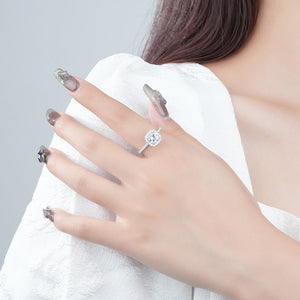
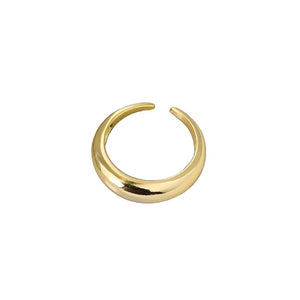
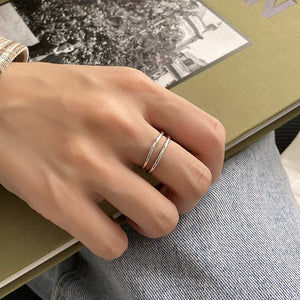
The piece they're describing → Dainty Stacking Rings for Women — 18K Gold Plated, Thin Band Set, Minimalist
Personalize Yours

