


Quick Summary
- A promise ring is a symbol of commitment between two people — it can mean pre-engagement, exclusivity, friendship, or a personal vow.
- There's no single rule for which finger it goes on, but the left ring finger and right ring finger are both common choices.
- Promise rings typically cost $20–$200, far less than engagement rings.
- The main difference from an engagement ring: a promise ring is a step toward a future together, not a formal proposal with a wedding date attached.
- Anyone can give one — romantic partners, best friends, or even yourself as a self-love commitment.
If you've ever wondered about promise ring meaning — what it actually signals, who gives them, and how they're different from engagement rings — you're not alone. Promise rings sit in a uniquely ambiguous space in modern relationships, and that ambiguity is exactly what makes them so personal. There's no single definition etched in stone. But there are clear patterns, common traditions, and practical answers to the questions people actually have. This guide covers all of it, honestly and specifically, so you can decide whether a promise ring makes sense for your situation.
What Is a Promise Ring?
A promise ring is a ring given as a symbol of a commitment or vow — most commonly between romantic partners, but sometimes between friends or worn as a personal commitment to oneself. The "promise" in question depends entirely on the relationship and the people involved. For some couples, it means "we're headed toward engagement." For others, it simply means "I'm committed to you right now, even if we're not ready for marriage."
Unlike engagement rings, promise rings don't come with a formal proposal structure or an expectation of a wedding date. That's the key distinction. They're intentionally open-ended, which is part of their appeal — especially for younger couples, long-distance relationships, or people who want to mark a milestone without the weight of a legal commitment.
The concept itself is genuinely old. Posy rings — bands engraved with romantic phrases — were popular in 16th and 17th century Europe. In the 1970s and 1980s, the "promise ring" language was revived in mainstream American culture, often tied to pre-engagement customs. Today, they've expanded well beyond romantic contexts entirely.
What Does a Promise Ring Mean? (The Real Answer)
The honest answer: it means whatever the giver and receiver agree it means. But here are the most common interpretations, ranked by how often they actually come up:
Pre-Engagement Commitment
This is the most traditional use. A couple is serious, they know they want to get married someday, but they're not ready to get engaged yet — maybe because of age, finances, school, or just wanting more time together first. The promise ring says "I'm serious about you and I see a future here" without triggering all the logistical pressure of a formal engagement.
Relationship Exclusivity
For couples who aren't thinking about marriage at all but want to mark the depth of their relationship, a promise ring can mean "we're exclusively each other's." This is common in younger relationships or situations where marriage genuinely isn't on the table but the commitment is real.
Long-Distance Relationships
When two people are physically separated — by school, work, military deployment — a promise ring serves as a tangible reminder of the relationship. It's something to hold onto. Many long-distance couples exchange them specifically to bridge that gap.
Friendship and Platonic Bonds
Best friend promise rings are a real thing and have been for decades. Two close friends exchange them as a symbol of their bond — no romantic overtones, just a recognition that this friendship matters and they're committed to it. These are sometimes called "friendship rings" but the gesture is identical.
Self-Love or Personal Vows
Increasingly, people buy promise rings for themselves — as a commitment to sobriety, personal growth, faith, or simply self-worth. Wearing something on your finger as a daily reminder of a promise you made to yourself has genuine psychological weight. It's not a trend; it's a meaningful ritual for a lot of people.
Promise Ring vs. Engagement Ring: Key Differences
The confusion between these two is completely understandable. Both go on fingers, both signal commitment, both often involve gemstones. But they're meaningfully different in several ways:
| Feature | Promise Ring | Engagement Ring |
|---|---|---|
| What it signals | Commitment, intention, or personal vow | Formal agreement to marry with a wedding date expected |
| Formal proposal? | Not required — often a conversation, not a grand gesture | Yes, typically involves a formal proposal |
| Typical cost | $20–$300 | $1,000–$7,500+ (US average ~$5,500) |
| Stone type | Birthstones, hearts, simple bands, meaningful symbols | Usually a diamond as the centerpiece |
| Which finger | Any finger — right hand or left hand | Left ring finger almost universally in Western tradition |
| Timeline tied to it? | No — open-ended by design | Yes — a wedding is expected to follow |
| Who gives it | Either partner, friends, or yourself | Typically one partner to the other during proposal |
One practical note: if someone has been wearing a promise ring on their left ring finger and they get engaged, it's common to move the promise ring to the right hand, or to stop wearing it entirely once an engagement ring takes its place.
Which Finger Does a Promise Ring Go On?
There's no official rule here — and that's actually one of the liberating things about promise rings. That said, a few patterns are worth knowing:
Left Ring Finger
The most romantic placement, and the most common for pre-engagement promise rings. It mirrors engagement ring tradition. The downside: it can confuse people who assume you're engaged. If that matters to you (or causes awkward conversations you'd rather avoid), the right hand is a cleaner choice.
Right Ring Finger
The most practical and versatile placement. Wearing a promise ring on the right hand sidesteps any confusion about engagement while still keeping it prominent. In many European countries, the right ring finger is actually the engagement finger — so context is everything.
Other Fingers
Middle finger, index finger, pinky — all fair game. A pinky promise ring has a playful, intentional quality to it. A middle finger ring tends to read more as fashion jewelry. There's no wrong answer here; wear it where it feels meaningful to you.
When Should You Give a Promise Ring?
Timing matters more than the ring itself, honestly. A promise ring given too early (a few weeks into dating) can feel presumptuous or pressure-heavy. Given at the right moment, it can be deeply meaningful without being overwhelming.
Common timing milestones where a promise ring makes sense:
- You've been together 6+ months and the relationship is clearly serious
- You're going to be physically separated (college, military, work) and want to mark the commitment before the distance
- One or both partners isn't financially ready for an engagement ring but the commitment is real
- You're in a long-term relationship and want to celebrate a significant anniversary without getting engaged
- You want to give something meaningful for a birthday, Valentine's Day, or holiday that goes beyond typical gift territory
A good gut check: would both people be comfortable explaining what this ring means to someone who asks? If yes, you're in good shape. If the explanation would feel awkward or unclear, it might be worth having the conversation about what it means before the ring is on the finger.
How Much Does a Promise Ring Cost?
Significantly less than an engagement ring — and that's completely appropriate. A promise ring is about the meaning, not the carat weight.
Here's a realistic breakdown:
| Budget Range | What You Can Expect |
|---|---|
| $20–$80 | Dainty sterling silver bands, heart or birthstone designs, hypoallergenic options — ideal for younger couples or casual promises |
| $80–$200 | 14K or 18K gold-plated over sterling silver, small gemstone accents, more detailed designs |
| $200–$500 | Solid gold or silver with genuine gemstones, more substantial heirloom-quality pieces |
| $500+ | Fine jewelry with diamonds or rare stones — at this point it's closer to a fashion piece or pre-engagement ring territory |
There's no unwritten rule that says spending more makes the promise more meaningful. A dainty sterling silver band at $35 given with genuine intention carries more weight than a $500 ring given without a real conversation behind it. The Jewelers of America notes that the symbolism of a piece — not its price point — is what makes jewelry meaningful in personal contexts.
What to Look for in a Promise Ring
Because promise rings tend to sit in the everyday-wear category, material quality matters more than you might expect. A ring that's worn daily needs to hold up.
Material
925 sterling silver is the most practical choice for most people — it's durable, hypoallergenic, and won't break the budget. 18K gold plated over sterling silver gives you the warm gold look without solid gold pricing, though it will need some care over time to maintain the plating. Avoid plated-over-brass rings if you have sensitive skin; the base metal can cause reactions as the plating wears.
Stone or No Stone
Simple bands are perfectly appropriate and often more wearable daily. If you want a stone, birthstones are a popular choice for promise rings specifically because they add personalization — his birthstone, her birthstone, or both. Heart motifs are classic and read clearly as romantic. For friendship promise rings, infinity symbols, knots, and interlocking designs work well.
Fit and Sizing
Make sure you know the recipient's ring size before buying. Resizing is possible for most bands but can be difficult for rings with stones or intricate settings. If you're buying as a surprise, there are tricks — borrowing a ring they already own and measuring it, or checking with a friend or family member who might know.
How to Give a Promise Ring
This doesn't need to be a production. In fact, the quieter, more personal approach often lands better than a grand gesture. Here's what tends to work:
Have the conversation first (or with it). The ring should clarify the promise, not create confusion about what's being asked. Be explicit about what you're giving it for — "I want you to know I'm serious about us" or "this is my way of saying I'm committed to you while we figure out the rest" goes a long way.
Pick a meaningful moment. An anniversary, a significant date, the night before a long separation — these give the ring a story. It doesn't need to be a surprise; some couples pick the ring out together, which removes any sizing or style guesswork.
Write something down. A handwritten note that articulates the promise is often more remembered than the ring itself. Keep it simple and specific.
Frequently Asked Questions
Is a promise ring the same as a purity ring?
Not exactly, though purity rings are a type of promise ring. A purity ring specifically symbolizes a commitment to abstinence — often religious in context — while a promise ring covers a much broader range of commitments including romantic intention, exclusivity, and friendship. The two terms get conflated, but they're not interchangeable. Most promise rings given today have nothing to do with purity vows.
What does it mean when a girl gives a guy a promise ring?
Exactly what it means when any person gives another a promise ring — a symbol of commitment or intent. There's nothing gendered about giving a promise ring; either partner can initiate. Men wearing promise rings is increasingly common, and a matching set of promise rings (both partners wearing one) is a popular choice for couples who want the gesture to be mutual from the start.
Can you wear a promise ring after getting engaged?
Yes, many people do. The most common approach is to move the promise ring to the right hand when the engagement ring arrives on the left. Some people continue wearing both; others retire the promise ring once the engagement makes it redundant. There's no rule — it's entirely personal. Some couples keep the promise ring as a sentimental piece and eventually wear it as a stacking ring on the right hand even after marriage.
What finger does a promise ring go on for a girl?
There's no single answer, and that's intentional. The left ring finger is traditional and romantic but can create confusion about engagement. The right ring finger is popular precisely because it avoids that confusion. Ultimately, the finger that feels most comfortable and meaningful to the wearer is the right one — some people choose based on which hand they're dominant with, others go purely by what the ring looks best on.
How is a promise ring different from a commitment ring?
They're almost identical in practice — both signal relationship commitment without being engagement rings. "Commitment ring" is sometimes preferred by couples (including same-sex couples) who want to clearly signal their commitment to each other but aren't planning to marry, or who live in places where marriage isn't yet legally available to them. Some people prefer "commitment ring" because it sounds more adult or serious than "promise ring," which has younger-skewing connotations. The gesture is the same regardless of the label.
What does a promise ring mean in a long-distance relationship?
In a long-distance relationship, a promise ring typically means "I'm staying committed to you and to us while we're apart." It serves as a physical anchor — something you can look at and touch that reminds you of the other person and the relationship. For many couples, exchanging promise rings before a period of separation (college, deployment, work abroad) is a meaningful ritual that reinforces that the distance is temporary and the relationship isn't.
Can a promise ring be an engagement ring later?
Technically yes, but it's less common. If the promise ring is particularly significant or has sentimental value, some couples repurpose it or have it redesigned as an engagement ring. More often, an engagement ring is a separate piece — partly because promise rings tend to be simpler and less elaborate than engagement rings, and partly because the engagement ring marks a distinctly new milestone. That said, if the promise ring is meaningful enough and both people are happy with it, there's no reason it can't double as the engagement ring.
How do you know if someone is ready for a promise ring?
The clearest signal is that both people are clearly serious, the relationship has some depth and history behind it, and there's a specific, articulable reason for the ring — not just a vague sense that "it would be nice." If you're unsure whether the other person would welcome it, that's usually a sign to have the conversation before buying the ring rather than making a surprise gesture that might land awkwardly. Promise rings work best when both people understand and agree on what's being promised.
What's a good promise ring for a teenager?
For teenagers, simple, durable, and hypoallergenic are the priorities. Sterling silver bands, small heart or birthstone designs, and affordable price points ($20–$60) make sense — both because the budget is usually limited and because the ring should feel appropriate to where the relationship actually is. A dainty, well-made sterling silver ring holds up to daily wear better than fashion jewelry, and hypoallergenic materials matter if the ring is going to be worn constantly. Avoid overly elaborate designs that might suggest more than the relationship actually is.
Do promise rings have to match?
No — matching promise rings are a choice, not a requirement. Some couples love the idea of wearing identical or coordinating rings as a visual signal of their bond. Others prefer different styles that suit each person's taste individually. If the rings don't match, the promise behind them is identical; the matching is purely aesthetic. Plenty of couples choose rings that complement each other (same metal, different design) rather than being perfectly identical.
If you're looking for a piece that carries real meaning without the weight of an engagement ring, our anniversary jewelry collection includes dainty, hypoallergenic sterling silver and 18K gold-plated pieces starting at $20 — designed for exactly these kinds of meaningful moments. Whether it's a promise ring, a commitment necklace, or a piece to mark a milestone, everything is made from 925 sterling silver and built to be worn every day.
You Might Also Like

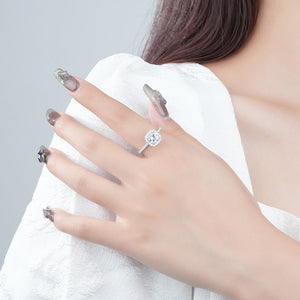
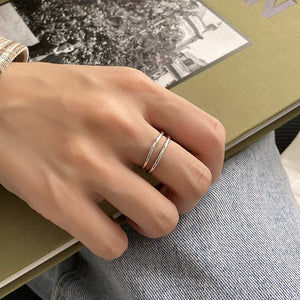
The piece they're describing → Dainty Stacking Rings for Women — 18K Gold Plated, Thin Band Set, Minimalist
Personalize Yours

