


• Birthstones: Topaz (official) and Citrine (modern alternative, added 1952)
• Topaz: Al₂SiO₄(F,OH)₂; Mohs 8; comes colorless, blue, yellow, pink, orange; imperial topaz (Ouro Preto, Brazil) most prized at $1,000+/ct; has perfect cleavage
• Citrine: Yellow quartz (SiO₂ + iron); Mohs 7; most commercial citrine is heat-treated amethyst; natural citrine is paler; "Madeira citrine" = deep orange from Porto Alegre region
• Key distinction: Most "citrine" in jewelry is actually heated amethyst — ask if it's natural
• Key meaning: Topaz = clarity, wisdom, prosperity; Citrine = abundance, positivity ("merchant's stone")
• Internal link: See our full citrine meaning guide
• Shop: November birthstone necklaces in sterling silver
November's two birthstones both share warm, golden tones that feel perfectly calibrated for the autumn harvest season. Topaz offers a wider range than most people realize — from the coveted imperial orange-pink of Ouro Preto to blue, pink, and colorless varieties. Citrine brings the warm yellow of sunlight in a durable, accessible quartz package. And the connection between them is deeper than most buyers know: the "citrine" in most jewelry stores started life as amethyst, November's neighbor on the color wheel, transformed by heat into gold.
At AJLuxe, our birthstone necklaces use genuine semi-precious stones set in 925 sterling silver — not glass or synthetic substitutes.
What Are November's Birthstones?
November has two official birthstones recognized by the American Gem Trade Association and Jewelers of America. Topaz has been the traditional November birthstone in Western tradition. Citrine was added in 1952 as an affordable, widely available alternative — the two stones share warm golden-yellow tones that make them natural companions on any November birthstone list.
| Stone | Chemistry | Mohs | Key Color | Price Range |
|---|---|---|---|---|
| Topaz | Al₂SiO₄(F,OH)₂ | 8 | Colorless (common); blue (treated); yellow-orange-pink (imperial) | $5–$1,500+/ct depending on color |
| Citrine | SiO₂ + iron (Fe³⁺) | 7 | Pale yellow to deep orange-brown; "Madeira" deep amber | $5–$50/ct |

Topaz — More Colors Than Most Gems
What Is Topaz?
Topaz is an aluminum silicate mineral containing fluorine and hydroxyl groups (Al₂SiO₄(F,OH)₂). It has excellent hardness at Mohs 8 — harder than quartz, garnet, and tanzanite — and a glassy luster that produces excellent brilliance when faceted. Pure topaz is colorless; trace impurities create the color range seen in gem topaz. The name "topaz" may derive from the Sanskrit tapas, meaning "fire" or "heat," though some historians believe it comes from the Greek island of Topazios (now Zabargad) where peridot was historically mined — a case of ancient misidentification.
One critical property that buyers should know: topaz has perfect basal cleavage. This means that despite its Mohs 8 hardness, topaz can split cleanly in one direction if struck sharply. A ring stone that takes a hard blow at the right angle can cleave in half. This doesn't make topaz unsuitable for rings — generations of topaz rings have survived daily wear — but it means protective settings (bezel, halo) are advisable, and hard impacts should be avoided.
Imperial Topaz — The Most Prized Topaz in the World
Imperial topaz is orange-pink to orange topaz from the Vermelhão, Antônio Pereira, and surrounding mines in Ouro Preto, Minas Gerais, Brazil. The color must be in the orange-to-pink-orange range to qualify as "imperial" — other yellows and oranges from other sources don't earn the designation. The color is caused by chromium impurities and is entirely natural (not treated).
The finest imperial topaz has a deeply saturated orange with pink overtones — sometimes called "precious topaz" to distinguish it from the irradiated blue topaz that dominates the jewelry market. Top imperial topaz sells for $1,000–$3,000+ per carat. It has historically been associated with Russian royalty (the Ural Mountains also produce imperial topaz in smaller quantities) — the name "imperial" references the Russian Imperial family's prized collection of these orange stones.
Topaz Color Range — A Guide to Every Variety
| Topaz Variety | Color | Treatment | Key Source | Price |
|---|---|---|---|---|
| Imperial Topaz | Orange-pink to orange; rich, saturated | None — natural color | Ouro Preto, Brazil | $500–$3,000+/ct |
| Blue Topaz (Sky/Swiss/London) | Pale to deep blue | Irradiation + heat | Brazil (treated), global | $5–$60/ct |
| Pink Topaz | Pale to vivid pink | Sometimes heat-treated; some natural pink | Pakistan, Brazil, Russia | $50–$500+/ct |
| Yellow Topaz | Pale yellow to golden yellow | Often natural or mild treatment | Brazil, Nigeria | $10–$200/ct |
| Colorless (White) Topaz | Clear, colorless — sometimes used as diamond simulant | None | Brazil, Russia, many others | $5–$20/ct |

Citrine — Sunshine in a Stone
What Is Citrine?
Citrine is the yellow to orange-brown variety of quartz (SiO₂). Its color is caused by Fe³⁺ (oxidized iron) impurities in the crystal structure. Pure natural citrine is relatively rare — most occurs in pale yellowish or golden tones. The vivid orange-red "Madeira citrine" and deep golden "Brazilian citrine" that dominate the jewelry market are almost entirely heat-treated amethyst (or sometimes smoky quartz), which turns yellow when heated to approximately 470°C.
This is important to understand: when a jewelry seller says "citrine," there is a 90%+ probability they are referring to heat-treated amethyst. This is not a fraud — heat treatment is accepted and disclosed in professional gem trading. But it's worth knowing. Natural citrine is typically paler, less vivid, and more expensive per carat than its heated-amethyst counterpart. If you want natural citrine, ask for it specifically.
How to Tell Natural vs Heated-Amethyst Citrine
| Feature | Natural Citrine | Heated Amethyst ("Citrine") |
|---|---|---|
| Color | Pale yellow to golden, often with color zoning | Orange to deep reddish-orange, vivid and saturated |
| Color zoning | Irregular, natural-looking distribution | Often shows orange-red streaks or zones at the base of the crystal |
| Price | Higher per carat for equivalent size | Very low — widely available |
| Source | Madagascar, Brazil (limited), Spain | Brazil (treated), Uruguay (treated) |
Citrine Varieties
- Madeira citrine: Named for Madeira wine, this deep amber to reddish-orange citrine from Porto Alegre, Rio Grande do Sul, Brazil is the most prized citrine color. Almost exclusively heat-treated amethyst. The color is rich and autumnal — it photographs beautifully.
- Palmeira citrine: Pale gold to yellow, slightly less saturated than Madeira. From Palmeira, Brazil.
- Bolivian citrine / Ametrine: Some citrine from Bolivia's Anahi Mine occurs naturally alongside amethyst zones in the same crystal — creating the ametrine bicolor described in the February article.
- Lemon quartz: Very pale yellow quartz, sometimes marketed as pale citrine. Usually irradiated to produce a brighter lemon color.
Citrine as the "Merchant's Stone"
Citrine has a long association with abundance, prosperity, and positive energy — making it one of the most popular stones for business-related intentions in crystal tradition. Its "merchant's stone" nickname comes from the practice of keeping citrine in cash registers and wallets to attract wealth. This tradition likely originates from its sunny golden color, its association with the solar plexus chakra, and its widespread historical use in jewelry worn by wealthy merchants.
For the complete history and healing properties, see our full citrine meaning guide.
November Birthstone Meaning and Symbolism
Topaz meaning: Topaz has been associated across cultures with clarity, wisdom, and good fortune. In ancient Hindu tradition, topaz was linked to Jupiter and believed to bring wisdom, wealth, and health. Medieval Europeans wore topaz as protection against magical spells and sudden death. The Golden Age of ancient Egypt used yellow topaz to represent Ra, the sun god. Imperial topaz's orange-to-golden color has maintained associations with solar energy, creativity, and self-realization.
→ Read our full guide to topaz meaning — covering every color variety (blue, yellow, imperial), healing properties, chakra connections, and how to choose topaz jewelry.
Citrine meaning: Citrine is associated with positivity, abundance, and personal power. Unlike most crystals which absorb negative energy, citrine is said in crystal tradition to be one of only two stones that never needs cleansing (the other is kyanite) — it dissipates and transmutes negative energy rather than accumulating it. Citrine is linked to the solar plexus chakra: confidence, personal will, and manifestation. Its color connects it to sunlight, warmth, and the harvest.
What Color Is the November Birthstone?
Both November birthstones share warm, golden-amber tones — making November one of the most seasonally appropriate birthstone months.
- Topaz (November shade): The traditional November topaz is yellow to orange — specifically imperial topaz's golden orange-pink. Yellow topaz is the "classic" November birthstone color in historical tradition.
- Citrine: Yellow to deep amber — from pale lemon to the rich reddish-orange of Madeira citrine.
- Blue topaz: Also officially a November birthstone topaz, though its blue color feels more like December. Blue topaz and yellow/orange topaz are the same mineral in different color states.
The most visually evocative November birthstone color is the warm amber-gold of Madeira citrine or the orange-pink of imperial topaz — both invoke November's autumn palette perfectly.
How to Choose November Birthstone Jewelry
| Priority | Best Choice | Budget |
|---|---|---|
| Best value warm-toned November stone | Madeira citrine | Very affordable — beautiful amber at low cost |
| Most prestigious November topaz | Imperial topaz (orange-pink, Ouro Preto) | $300–$1,500+ for good quality |
| Unique birthstone combo gift | Ametrine pendant (citrine + amethyst) | Moderate — one-of-a-kind bicolor stone from Bolivia |
| Durability priority (rings) | Topaz (Mohs 8 — harder than citrine) | Varies; blue topaz very affordable |
| Budget November birthday gift | Citrine silver necklace or earrings | Excellent quality available at very low prices |
How to Care for November Birthstone Jewelry
Topaz care:
Citrine care tip: Wondering if citrine jewelry is safe in water? Read our complete guide: Can Citrine Go in Water?.
- Clean with warm soapy water; ultrasonic is generally safe but avoid for fracture-filled stones
- Avoid: Hard impact — topaz's perfect cleavage means it can split if struck sharply; steam cleaners
- Store separately — topaz (Mohs 8) can scratch citrine, amethyst, garnet, and other softer gems
Citrine care:
- Clean with warm soapy water and soft brush; ultrasonic generally safe
- Avoid prolonged direct sunlight — can fade slightly over time (especially heat-treated material)
- Mohs 7 — avoid storage with harder stones; everyday pendants and earrings are fine
Gifting November Birthstone Jewelry
| Occasion | Best Choice | Why |
|---|---|---|
| November Birthday | Citrine or imperial topaz necklace | Classic birthstone; warm autumn tones |
| Thanksgiving gift | Madeira citrine pendant (deep amber) | Harvest amber color is perfect for November season |
| For someone starting a business | Citrine (merchant's stone) | Traditional association with abundance and prosperity |
| Milestone / meaningful gift | Imperial topaz — orange-pink, natural, from Ouro Preto | Rare, prestigious, tells a story — found in one place in the world |
Browse our November birthstone collection in sterling silver:
• November birthstone necklaces — topaz and citrine
• Gemstone necklaces — full collection
• November birthday gifts — curated gift ideas
Related: If you or someone you love is a Scorpio, read the complete Scorpio birthstone guide — covering topaz, obsidian, citrine, and malachite with full stone profiles and gifting advice.
Frequently Asked Questions About the November Birthstone
What is the November birthstone?
November has two birthstones: topaz and citrine. Topaz is the traditional November birthstone, available in many colors with the most prized being imperial topaz — golden orange-pink from Ouro Preto, Brazil. Citrine is the modern alternative — yellow to amber quartz, most commonly heat-treated amethyst.
What color is the November birthstone?
Both November birthstones share warm golden-amber tones. Traditional November topaz is yellow to orange (imperial topaz is golden orange-pink). Citrine ranges from pale yellow to deep reddish-amber (Madeira). The November birthstone color is most commonly associated with golden amber and warm honey tones.
Is most citrine actually heated amethyst?
Yes — approximately 90%+ of commercial citrine is amethyst that has been heat-treated to approximately 470°C, which converts purple amethyst to yellow. Natural citrine exists but is rarer and typically paler in color. The vivid orange-red "Madeira citrine" is almost exclusively heat-treated amethyst from Brazil. This is disclosed and accepted in professional gem trading.
What is imperial topaz?
Imperial topaz is the most prized variety of topaz — a warm orange-pink to orange color found only in the Ouro Preto region of Minas Gerais, Brazil, and in much smaller quantities in Russia's Ural Mountains. The color is entirely natural (no treatment). Fine imperial topaz sells for $500–$3,000+ per carat, making it significantly more valuable than other topaz varieties.
Does topaz have any safety concerns?
The main concern with topaz is its perfect basal cleavage — despite its high Mohs 8 hardness, topaz can split cleanly if struck sharply in the right direction. This isn't a dealbreaker for jewelry, but protective settings (bezel, halo) are advisable for rings. Topaz is also not radioactive — the blue topaz irradiation process concerns about radioactivity are addressed in our December birthstone guide.
What is Madeira citrine?
Madeira citrine is a trade name for deep amber to reddish-orange citrine named for its resemblance to the color of Madeira fortified wine. It comes primarily from the Porto Alegre region of Rio Grande do Sul, Brazil. Almost all Madeira citrine is heat-treated amethyst. The color is rich, warm, and autumnal — among the most popular citrine colors for jewelry.
Can topaz and citrine look alike?
Yes — yellow topaz and yellow citrine can look very similar to the naked eye, especially in paler tones. The differences are: topaz is harder (Mohs 8 vs 7), has higher refractive index and therefore more brilliance, has perfect cleavage (citrine does not), and is more expensive per carat. A refractometer reading distinguishes them definitively: topaz RI ~1.619–1.627; citrine (quartz) RI ~1.544–1.553.
Is citrine good for everyday wear?
Yes — citrine's Mohs 7 hardness makes it suitable for daily pendants, earrings, and bracelets. For rings worn heavily, the surface may acquire fine scratches over years. Avoid prolonged direct sunlight as citrine (especially heat-treated) can fade slightly with extended UV exposure.
What metal works best with November birthstones?
Yellow gold is the classic and most natural pairing for both citrine and imperial topaz — the warm metal tones harmonize beautifully with the golden amber stones. Rose gold is a popular modern alternative with a slightly cooler warm tone. White gold and sterling silver create striking contrast that makes the warm tones pop against the cool metal.
Are ametrine and citrine related?
Yes — ametrine is a bicolor quartz that is part amethyst (purple) and part citrine (yellow) in the same crystal. It comes only from the Anahi Mine in Bolivia. Citrine zones in ametrine form in the same way as citrine: iron in a higher-temperature oxidation state during crystal growth. Ametrine is a natural gemstone that bridges the February birthstone (amethyst) and the November birthstone (citrine) in one extraordinary crystal.
If you're shopping for a November Sagittarius (November 22–30), also check our Sagittarius birthstone guide for the full zodiac birthstone breakdown.
Final Thoughts — Choosing Your November Birthstone
November's birthstones are autumn distilled into gemstone form. Imperial topaz's golden orange-pink is one of the most beautiful warm-toned gems in existence — rare, natural, and found only in one place on Earth. Citrine's sunny amber gives that same warmth at a fraction of the price, making November birthstone jewelry exceptionally accessible without compromising beauty.
The hidden story of citrine — that most of it began life as purple amethyst, transformed by heat into gold — adds a layer of gemological interest that makes even affordable citrine jewelry worth talking about. November's birthstones are more than they appear.
Browse our November birthstone necklaces in sterling silver — and explore our complete citrine meaning and history guide.
Written by Vaishakhi Ajmera — founder of AJLuxe, specialists in personalized sterling silver jewelry. Last updated: June 2026. | Sources: GIA Topaz · American Gem Society · Jewelers of America
Explore more: Birthstone Jewelry by Month
You Might Also Like
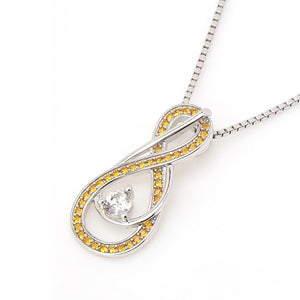

The piece they're describing → November Birthstone Necklace for Women — Yellow Topaz Infinity Pendant, 925 Sterling Silver
Personalize Yours

