


Quick Summary
- The may birthstone is emerald — a rich green variety of the mineral beryl, prized for thousands of years.
- Emerald rates 7.5–8 on the Mohs hardness scale, making it durable for everyday jewelry with proper care.
- Nearly all emeralds on the market are treated with cedar oil or resin to fill natural inclusions called "jardin."
- Color is king when grading emeralds — look for vivid, saturated green with blue undertones for the best quality.
- Alexandrite is the alternative May birthstone, prized for its dramatic color-change from green in daylight to red under incandescent light.
- Clean emerald jewelry with warm water and mild soap only — never ultrasonic cleaners or steam.
If you were born in May, your birthstone is one of the most storied gems in history: the emerald. Lush, vivid, and unmistakably green, the may birthstone has been worn by Egyptian pharaohs, Roman emperors, and Mughal rulers for millennia. Today, emerald jewelry remains a powerful symbol of growth, renewal, and love — and it's one of the most sought-after colored gemstones in the world. Whether you're shopping for a May birthday gift or simply drawn to emerald's incomparable green, this guide covers everything you need to know before you buy.
What Is the May Birthstone?
Emerald is a variety of the mineral beryl (Be₃Al₂Si₆O₁₈) that gets its distinctive green color from trace amounts of chromium and sometimes vanadium. Pure beryl is actually colorless — it's those impurities that create the color, and in emerald's case, they produce one of the most beloved greens in the natural world.
The word "emerald" traces back through Old French and Latin to the Greek smaragdos, simply meaning "green gem." Ancient Egyptians were mining emeralds near the Red Sea as early as 1500 BCE. Cleopatra famously adorned herself in emeralds and gifted them to foreign dignitaries. The Spanish conquistadors found the Incas using massive emeralds in religious ceremonies, and those Colombian stones still define the benchmark for emerald quality today.
Emerald is one of the "Big Four" precious gemstones — alongside diamond, ruby, and sapphire — which puts it in rare company. It's the birthstone for May and the traditional gift for 20th and 35th wedding anniversaries.
Emerald Color: What Makes Green, "Emerald Green"
Color is the single most important factor when evaluating an emerald. The finest stones show a vivid, saturated green with a slight blue undertone — sometimes described as "pure green to bluish green." Stones that lean too yellow or too dark lose value quickly.
Gemologists evaluate emerald color across three dimensions:
- Hue: The ideal hue is a pure, medium green with a blue secondary tone. Yellow-green stones are less prized.
- Saturation: Strong, vivid saturation commands the highest prices. Washed-out or pale stones are classified as simply "green beryl," not emerald.
- Tone: Medium to medium-dark tones are ideal. Very light or very dark stones lose vibrancy.
Colombian emeralds are considered the world standard for color — they tend toward that coveted bluish-green with exceptional saturation. Zambian emeralds (the second most important source) often show a slightly darker, more blue-green color. Brazilian emeralds tend to run lighter and more yellowish-green.
The Symbolism Behind Emerald Green
Emerald green has symbolized life, growth, and fertility across virtually every culture that encountered it. Ancient Romans associated emeralds with Venus, the goddess of love and beauty. In medieval Europe, emeralds were believed to reveal the truth and protect against evil spells. Hindu texts describe emerald as the gem of Mercury, governing intelligence and communication.
Today, emerald green carries connotations of renewal (think spring and May's lush landscapes), prosperity, and hope. It's also the color of the heart chakra in many wellness traditions, linking it to compassion and emotional healing. For May birthdays, it's a gem that feels genuinely connected to the season it represents.
Emerald Hardness and Durability: What You Need to Know
Emerald scores 7.5–8 on the Mohs hardness scale, which sounds impressive — and it is, compared to many gemstones. But Mohs hardness only measures scratch resistance, and here's where emerald gets complicated.
Emeralds are notorious for their inclusions. Almost every natural emerald contains fractures, growth tubes, and mineral crystals trapped inside during formation. In French, this internal landscape is called jardin (garden) — a poetic term that reframes what would be flaws in another gem as part of emerald's character. The gemological trade has even coined a special term for it: Type III clarity, meaning inclusions are expected and don't automatically indicate low quality.
Those inclusions do have a practical consequence: they can make emerald more brittle than its Mohs rating suggests. A sharp blow to an already-fractured stone can cause it to chip or crack. This is why emerald is considered less suitable for rings worn daily than, say, sapphire or ruby — though with care, emerald rings can last generations.
Emerald Treatments: The Oiling Standard
Here's something that surprises many buyers: virtually all emeralds on the market are treated. The Gemological Institute of America (GIA) estimates that more than 90% of faceted emeralds have been filled with oil, resin, or a combination of both to improve their apparent clarity and color. This isn't a scandal — it's an industry-wide, fully accepted practice that's been standard for centuries.
The most common treatment is cedar oil filling. Emeralds are immersed in cedar oil under vacuum or pressure, and the oil seeps into surface-reaching fractures, making them less visible because the oil has a similar refractive index to beryl. Synthetic resins (like Opticon) are also used, sometimes hardened with UV light for longer-lasting results.
What does this mean for buyers?
- Minor oil treatment: Widely accepted, little to no impact on value. Most emeralds fall here.
- "Moderate" or "significant" clarity enhancement: Disclosed on GIA reports; reduces value proportionally.
- No treatment ("none"): Extremely rare and commands a dramatic premium — sometimes 50–200% over a treated stone of identical color.
Always ask whether an emerald has been treated and request a lab report (GIA, AGL, or Gübelin) for stones over about $500.
How to Choose a Quality Emerald: A Buyer's Guide
Shopping for emerald jewelry is genuinely different from shopping for diamonds. There's no universal grading grid like the 4Cs that produces a clean numerical score — color and character matter more than cut precision or clarity grade. Here's what to prioritize:
Prioritize Color Above Everything
A vivid, saturated green will always look better than a perfectly clean but washed-out stone. In emerald, color is king, and slight inclusions are normal and expected. Don't sacrifice a gorgeous green for a slightly cleaner but lifeless stone.
Look for Well-Proportioned Cuts
The "emerald cut" — a rectangular step cut with cropped corners — was literally developed for this stone. Its flat facets showcase color beautifully and reduce the leverage that can chip corners. Oval, cushion, and pear cuts are also popular. Avoid overly shallow or deep cuts that make stones look smaller or darker than they are.
Ask About Treatment Level
For fine jewelry purchases, ask specifically about the degree of clarity enhancement. Minor oiling is fine and expected. Heavily resin-filled stones may look beautiful now but can cloud over time as the filler degrades.
Consider Origin (But Don't Overpay for It)
Colombian origin commands a price premium — but a beautiful Zambian emerald at half the price can be objectively more gorgeous. Origin matters at the high end of the market; for fashion and lifestyle jewelry, focus on color and cut.
Emerald vs. Other Green Gemstones
Emerald isn't the only green gem on the market. Here's how it compares to its most common look-alikes and alternatives:
| Gemstone | Mohs Hardness | Color Range | Typical Price (per ct) | Key Distinction |
|---|---|---|---|---|
| Emerald | 7.5–8 | Vivid green to bluish-green | $100–$10,000+ | Most saturated green; almost always treated |
| Tsavorite Garnet | 7–7.5 | Vivid green | $300–$5,000 | Untreated; higher brilliance than emerald |
| Chrome Tourmaline | 7–7.5 | Deep green | $100–$1,500 | Usually untreated; excellent clarity |
| Green Sapphire | 9 | Yellow-green to teal | $200–$3,000 | Most durable green option; harder color |
| Peridot | 6.5–7 | Yellow-green (only) | $20–$450 | Always yellow-green; August birthstone |
| Green Tourmaline | 7–7.5 | Light to dark green | $50–$1,000 | Wide color range; generally untreated |
The key takeaway: nothing matches emerald's specific hue — that vivid, slightly bluish pure green is uniquely its own. Tsavorite garnet comes closest in saturation but lacks emerald's depth of color and cultural cachet.
Alexandrite: The Alternative May Birthstone
Most people don't realize that May actually has two birthstones. The modern birthstone list (established by the American National Retail Jewelers Association in 1912 and updated over the decades) lists alexandrite as an alternate May birthstone alongside emerald.
Alexandrite is one of the most remarkable gems in existence. It's a variety of chrysoberyl that appears green or teal in daylight (or fluorescent light) and shifts to a red or purplish-red under incandescent light. This color-change effect — caused by the way the stone absorbs light — is so dramatic that alexandrite is famously described as "emerald by day, ruby by night."
Natural alexandrite is extraordinarily rare and expensive — fine specimens can cost $15,000–$70,000 per carat. Lab-created alexandrite (synthetic) offers the same stunning color-change effect at a fraction of the price, typically $50–$300 for a mounted stone, and it's a legitimate and popular option for May birthstone jewelry.
If you want something more affordable and unusual than emerald, alexandrite makes a genuinely special alternative. Its Mohs hardness of 8.5 also makes it more durable than emerald for everyday wear.
How to Care for Emerald Jewelry
Emerald's combination of inclusions and oil treatment means it needs more careful handling than most gemstones. The rules aren't complicated, but they're important:
Do
- Clean with warm water and mild dish soap. Use a soft toothbrush to gently scrub around the setting. Rinse thoroughly and pat dry with a soft cloth.
- Store separately. Harder stones (diamonds, sapphires) can scratch emerald. Keep your emerald pieces in individual pouches or compartments.
- Have it re-oiled periodically. Over time, cleaning and wear can deplete the oil in treated stones. A jeweler can re-oil an emerald to restore its appearance — typically every few years if worn regularly.
Don't
- Never use ultrasonic cleaners. The vibrations can worsen existing fractures and drive out the oil treatment, leaving a hazy, milky appearance.
- Never use steam cleaners. Heat and steam expand the stone unevenly and can flush out fillers.
- Avoid harsh chemicals. Bleach, acetone, and other solvents dissolve oil fillers and can damage the surface. Remove emerald jewelry before cleaning, swimming, or applying perfume and lotion.
- Avoid sudden temperature changes. Going from very cold to very hot can stress an already-fractured stone.
Emerald Meaning and Symbolism
Emerald carries one of the richest symbolic traditions of any gemstone. Across cultures and centuries, it's been associated with:
- Love and fidelity: Romans dedicated emerald to Venus; it's a traditional anniversary gem.
- Wisdom and foresight: Medieval legends held that emerald could reveal the future and expose lies.
- Growth and renewal: Its green color connects it to spring, nature, and new beginnings — fitting for a May birthstone.
- Prosperity: In many cultures, emerald is a stone of abundance and good fortune.
- Healing: Ancient healers used emerald to treat eye ailments and improve eyesight — a belief that persisted into the Renaissance.
For someone born in May, emerald carries personal meaning as a birthstone, but its symbolism makes it a meaningful gift for anyone going through a new chapter, celebrating love, or simply drawn to the energy of growth and possibility.
Buying Emerald Jewelry: What to Look For in Sterling Silver and Gold
When you're shopping for emerald jewelry at accessible price points — like the dainty, minimalist pieces that work for everyday wear — there are a few things worth keeping in mind about how the gem is set and what metal it's paired with.
Sterling silver (925) pairs beautifully with emerald's cool green tones. The neutral-to-cool undertone of silver complements both bluish and yellowish-green emeralds without competing with the color. It's also the most affordable precious metal option, which matters when you're pairing it with a quality stone.
18K gold plated over sterling silver adds warmth that can make an emerald look more vivid and luxurious. Yellow gold and emerald is the classic combination — think of those iconic Mughal emerald pieces set in yellow gold. Rose gold is a modern alternative that creates a lovely contrast with green.
Prong settings let the most light into an emerald, maximizing its color display. Bezel settings offer more protection for the stone — useful if you're buying a ring intended for daily wear. For pendants and earrings, either works beautifully.
At AJLuxe, all pieces are made with hypoallergenic 925 sterling silver and 18K gold plating, keeping them safe for sensitive skin while delivering that luxurious look at a price that makes sense for gifting or everyday wear.
Frequently Asked Questions About the May Birthstone
What is the may birthstone?
The May birthstone is emerald, a vivid green variety of the mineral beryl colored by trace amounts of chromium and vanadium. Emerald is one of the four precious gemstones (alongside diamond, ruby, and sapphire) and has been prized for over 3,500 years. Alexandrite is recognized as an alternative May birthstone on the modern birthstone list, prized for its rare color-change phenomenon.
What is the may birthstone color?
Emerald's color ranges from vivid pure green to bluish-green. The finest stones show a strong, saturated green with a slight blue secondary hue — this is considered the most valuable and desirable color. Stones that lean too yellow are classified as "green beryl" rather than true emerald, and very dark stones lose their characteristic vibrancy.
Is emerald a durable gemstone for everyday jewelry?
Emerald rates 7.5–8 on the Mohs hardness scale, which makes it reasonably scratch-resistant, but its natural inclusions (called "jardin") make it more prone to chipping or cracking under sharp impact than its hardness suggests. Emerald is well-suited for earrings, pendants, and necklaces worn daily. For rings, it's best reserved for special occasions or set in protective bezels. With proper care, emerald jewelry lasts for generations — many antique emerald pieces are centuries old.
What does it mean when emerald is your birthstone?
Wearing your birthstone is a centuries-old tradition believed to bring luck, protection, and alignment with the energy of your birth month. Emerald specifically is associated with growth, renewal, love, wisdom, and prosperity. As a May birthstone, it connects to spring's themes of new beginnings and vitality. Whether or not you believe in gemstone metaphysics, emerald carries a rich cultural history that makes it a deeply meaningful personal gem.
Are most emeralds treated?
Yes — the GIA estimates that over 90% of faceted emeralds on the market have been treated with oil or resin to fill natural fractures and improve clarity. This is a fully accepted, industry-standard practice that's been used for centuries. Minor to moderate oiling is disclosed on lab reports and doesn't significantly affect value. "Untreated" or "no clarity enhancement" emeralds are exceptionally rare and command a significant price premium. Always ask about treatment when making a meaningful purchase.
What's the difference between emerald and green beryl?
They're the same mineral (beryl), but the distinction lies in color intensity. Emerald is the term used for beryl with strong, vivid green coloring caused by chromium or vanadium. "Green beryl" refers to beryl that's green but lacks the saturation and depth to qualify as true emerald — it's typically lighter, more yellowish, and significantly less valuable. The dividing line isn't perfectly standardized, which is why a reputable lab certificate from GIA or AGL matters when buying a stone described as "emerald."
How do I clean emerald jewelry at home?
The safest method is warm water with a few drops of mild dish soap and a soft-bristled toothbrush. Gently scrub around the setting, rinse thoroughly, and dry with a soft lint-free cloth. Never use ultrasonic or steam cleaners — both can damage the oil treatment and worsen existing fractures. Avoid soaking emerald jewelry for extended periods, and remove it before swimming, cleaning, or applying beauty products. For pieces worn regularly, a professional re-oiling every few years keeps the stone looking its best.
What is the most valuable emerald origin?
Colombian emeralds are universally recognized as the benchmark for quality and command the highest prices on the market. The Muzo, Chivor, and Coscuez mines in Colombia have produced some of history's most extraordinary stones, characterized by their vivid, slightly bluish-green color. Zambian emeralds are the second most prestigious origin, typically showing a slightly darker, more intensely blue-green color. Brazilian and Zimbabwean emeralds are also significant sources. Origin premiums really apply at the fine jewelry level — for fashion and lifestyle jewelry, focus on color and cut rather than provenance.
What's alexandrite and why is it a May birthstone?
Alexandrite is a variety of chrysoberyl that displays a dramatic color change — green or teal in daylight, red or purplish-red under incandescent light. It was added to the May birthstone list as an alternative when the American gem trade updated the official birthstone list. Natural alexandrite is one of the rarest and most expensive gemstones in the world; fine specimens can exceed $70,000 per carat. Lab-created alexandrite offers the same spectacular color-change at accessible prices and is a popular choice for May birthday gifts that stand out from the classic emerald.
Can I wear emerald every day?
You can, with some caveats. Emerald is best suited to earrings, pendants, and necklaces for daily wear since these pieces experience less impact than rings. If you do wear an emerald ring daily, choose a bezel or halo setting that protects the stone's edges, and avoid wearing it during activities with impact risk (gardening, sports, heavy lifting). Remove emerald jewelry before applying perfume, lotion, or household cleaners, all of which can degrade the oil treatment. With those precautions, emerald jewelry worn daily can last many decades beautifully.
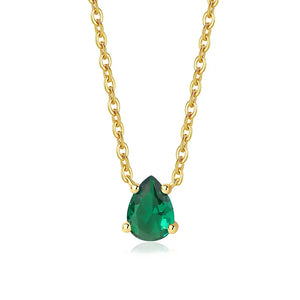
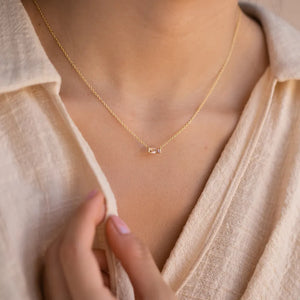
Ready to wear your May birthstone? Our birthstone necklace collection features dainty emerald-inspired pieces crafted in hypoallergenic 925 sterling silver and 18K gold plating — designed to be worn every day, layered or solo, at a price that makes sense for gifting or treating yourself. Each piece ships in a gift-ready box, making it an effortless choice for May birthdays, anniversaries, or any moment that deserves something green and gorgeous.
You Might Also Like
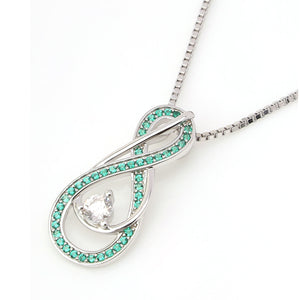
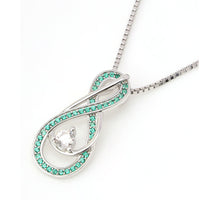
The piece they're describing → May Birthstone Necklace for Women — Emerald Green Infinity Pendant, 925 Sterling Silver
Personalize Yours

