


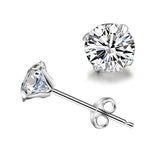
Flat back earrings -- the low-profile studs worn in cartilage, helix, tragus, and other angled or healed piercings -- come in two mechanically different styles that require two different removal motions, and mixing them up is the single biggest reason people get stuck. Twist a push-back like it's threaded and you're just grinding the post against skin; pull a screw-back straight out before it's fully unscrewed and you're forcing threads that are still engaged. This guide covers exactly how to identify which type you have, the correct motion for each, what to do if an earring genuinely won't budge, and when a stuck or painful earring means it's time to see a piercer instead of a search engine.
The Two Flat-Back Mechanisms (Check Which One You Have First)
Every flat back stud uses one of two backing systems, and they're not interchangeable in how they come off.
- Screw-back / internally threaded: The post has fine spiral threads cut into it, and the flat disc screws down onto them like a tiny nut. You can usually see or feel the threading if you look closely at the post before the disc is attached. These are common on cartilage, helix, and tragus jewelry specifically because the threading keeps the disc from loosening during sleep or when jewelry gets brushed by hair or clothing.
- Push-back / threadless (friction-fit): The post is smooth with no threading at all. The flat disc has a tiny internal clasp or friction fitting that grips the post when pushed on, similar in principle to a push-pin. These are common on lobe flat backs and many "sleep-in" style studs, since they're faster to put in and take out.
If you're not sure which you have, look at the post under good light before pulling on anything: visible spiral grooves mean threaded, a perfectly smooth shaft means push-back. When in doubt, try the push-back motion first (a light straight pull with a small wiggle) since forcing a twist on a smooth post does nothing but irritate the piercing -- if it doesn't move at all with a gentle pull, it's very likely threaded.
How to Remove Screw-Back (Threaded) Flat Back Earrings
Unscrew the front stud counterclockwise while holding the flat back disc still, the same "lefty-loosey" direction as any standard screw or bolt.
- Wash your hands and clean the piercing area with saline solution or mild soap and water before touching the jewelry.
- Get a grip on the flat disc. It sits flush against the skin and can be slippery -- a clean rubber glove, a small piece of tissue, or slightly damp fingertips all improve grip without needing tools.
- Hold the disc completely still with one hand. This is the part people skip, and it's why threaded earrings feel "stuck" -- if the disc spins along with the stud, nothing unscrews.
- Turn the front stud counterclockwise with your other hand, in small, steady turns rather than one hard twist.
- Keep turning until the stud lifts free of the disc on its own -- don't yank it out mid-turn while it's still partially threaded.
- Set both pieces somewhere they won't roll away. Flat back components are tiny and easy to lose track of, especially the disc.
How to Remove Push-Back (Threadless) Flat Back Earrings
Push-back earrings never get twisted -- they pull straight out, with a small side-to-side wiggle to break the friction seal, not a screwing motion.
- Wash your hands and clean the piercing area the same as you would for a threaded earring.
- Hold the flat disc steady against the back of the piercing with one hand.
- Pinch the front stud between the thumb and finger of your other hand.
- Pull straight out, adding a very light wiggle side-to-side if it feels tight -- this breaks the friction grip without twisting the post.
- Never spin it like a screw. There are no threads to unscrew on this type, so twisting just grinds the smooth post against the piercing channel.
If Your Flat Back Earring Won't Budge
Stop pulling or twisting the moment it feels like force instead of resistance -- earrings that have been in the same spot for months can develop mild buildup (dried lotion, dead skin, or product residue) around the post, and forcing it risks bending the post or hurting the piercing.
- Clean the area first. Rinse with saline solution or warm water and mild soap, then pat dry, in case dried residue around the post is what's gripping it.
- Apply a warm compress for a few minutes. Warmth reduces minor swelling and can loosen the earring's grip on the piercing channel.
- Add a drop of oil or petroleum jelly around the post and let it sit briefly before trying again -- this reduces friction without needing to force anything.
- Try the correct motion again, gently. Re-confirm which mechanism you have before trying a second time; attempting the wrong motion is a common reason a "stuck" earring is actually just being twisted the wrong way.
- Stop and see a piercer if it still won't move, or if there's real pain, swelling, redness, or discharge. A professional has tools and experience for a genuinely embedded or overgrown-tissue situation that DIY methods shouldn't attempt.
What Not to Do
- Don't use tweezers, pliers, or anything metal to grip and yank a stuck earring -- these tools can slip, pinch skin, or bend the post.
- Don't twist a push-back like a screw. There's nothing to unscrew, and twisting just grinds the post against the piercing.
- Don't force a fresh or still-healing piercing. New piercings need their starter jewelry to stay in for the full healing window recommended by your piercer -- typically several weeks for lobes and considerably longer for cartilage -- and changing jewelry too early raises the risk of irritation or the piercing closing unevenly. This guide is written for healed piercings; if yours is new, tender, or was pierced within the last few months, leave it to a licensed piercer.
- Don't push through real pain. Mild resistance from a tight or slightly gunked-up backing is normal; sharp pain, swelling, or an earring that seems embedded in the skin is not something to self-treat.
Screw-Back vs. Push-Back: Quick Comparison
| Feature | Screw-Back (Threaded) | Push-Back (Threadless) |
|---|---|---|
| How to spot it | Visible spiral threading on the post | Smooth post, no threading |
| Removal motion | Turn counterclockwise while holding disc still | Pull straight out with a light wiggle, never twist |
| Loosens on its own? | Rarely -- threading holds it firmly, which is why it's common for cartilage/sleep | Occasionally, with heavy activity or friction, since there's no threading to hold it |
| Best for | Cartilage, helix, tragus -- anywhere jewelry gets bumped or slept on | Lobes, everyday sleep-in studs, quick changes |
Putting a Flat Back Earring Back In
Reinsertion mirrors removal: for a screw-back, line the stud up straight and turn the disc clockwise onto the threading until it sits flush without over-tightening. For a push-back, line the post up straight and press the disc on evenly until it clicks or sits flush -- pushing it in at an angle is the most common reason a push-back feels harder to seat than it should. If you're changing into new jewelry rather than reinserting the same piece, make sure your hands and the new earring are clean first, and go slowly the first few times until the motion feels familiar.
See real examples in AJLuxe's earring collection.
Frequently Asked Questions
How do you take off an earring with a flat backing?
It depends on which mechanism your earring uses. Flip it over and look at the post: fine spiral threading means a screw-back, so hold the flat disc still and turn the front stud counterclockwise. A smooth post with no threading means a push-back, so hold the disc still and pull the stud straight out instead -- no twisting.
How do you take off an earring with a flat back?
Check the post before you pull or twist anything. Threading means screw-back (unscrew counterclockwise); a smooth post means push-back (pull straight out). Using the wrong motion for the mechanism is the most common reason a flat back earring feels stuck when it isn't.
How do you unscrew flat back earrings?
Hold the flat disc on the back of the piercing completely still with one hand, then turn the front stud counterclockwise with your other hand in small, steady turns until it lifts free. This only works on threaded (screw-back) styles -- if the post is smooth with no visible threading, it's a push-back and should be pulled straight out instead.
Why won't my flat back earrings come out?
Most of the time it's one of two things: you're using the wrong motion for the mechanism (twisting a push-back, or trying to pull a screw-back straight out before it's unscrewed), or there's mild buildup around the post from lotion, product, or dead skin. Try cleaning the area first, then re-check which mechanism you actually have before trying again.
Are flat back earrings twist off?
Only screw-back (internally threaded) flat backs twist off, by turning counterclockwise. Push-back (threadless) flat backs have a smooth post with no threading, so they pull straight out with a gentle wiggle instead of twisting.
How do you take off starter earrings?
Starter earrings from a piercing studio are almost always threaded screw-backs, since the threading keeps them secure during the healing period. Hold the back disc still and unscrew the front stud counterclockwise -- but don't remove starter jewelry before your piercer's recommended healing window has passed, since fresh piercings need the original jewelry to stay in.
Do you twist or pull flat back earrings?
It depends on the mechanism: twist (counterclockwise) for threaded screw-backs, pull straight out for threadless push-backs. Using the wrong motion is the most common reason people think their earring is "stuck" when it's actually just the wrong technique.
How do flat back piercings come out on their own?
Threaded screw-backs almost never loosen on their own, which is exactly why they're used for cartilage and sleep-in jewelry. Push-back styles can occasionally work themselves loose with heavy friction, contact sports, or sleeping directly on the piercing, since there's no threading holding the disc in place.
How do I loosen a flat back earring that's stuck?
Clean the piercing with saline or mild soap and water, apply a warm compress for a few minutes to ease any swelling, then add a small drop of oil or petroleum jelly around the post before trying the correct motion again gently. If it still won't move, or there's pain or swelling, stop and see a piercer.
Which way do you turn a flat back earring to loosen it?
Counterclockwise, the same "lefty-loosey" direction as a standard screw, and only for threaded screw-back styles. Turning a push-back at all does nothing useful, since there's no threading to loosen.
How long should new earrings stay in before I change them?
This depends on the piercing type and your body's healing time, and it's a question for your piercer rather than a generic rule -- lobes generally heal faster than cartilage, which can take considerably longer. Removing starter jewelry too early is one of the more common reasons a new piercing gets irritated or closes unevenly, so when in doubt, ask the professional who did the piercing rather than guessing.
How do you take off a flat back earring?
It depends on which of the two mechanisms you have. If you're removing an earring with a flat back that's threaded (a screw-back), hold the disc completely still and turn the front stud counterclockwise until it lifts free. If the post is smooth with no threading (a push-back), skip the twisting entirely -- pinch the disc steady and pull the stud straight out. Whether you call it a flat back, an earring with a flat backing, or a flat-back closure, the mechanism is what decides the motion, not the name.
How do you take out flat back earrings?
The same rule applies to every flat back style: check the post first. A threaded post twists off counterclockwise; a smooth post pulls straight out. Trying to twist a smooth push-back, or pull a threaded screw-back straight out before unscrewing it, is why a perfectly normal flat back can feel jammed.
How do you get a flat back earring out?
If it isn't coming out at all, the mechanism is almost always the problem, not the earring. Re-check whether the post is threaded (screw-back) or smooth (push-back) before trying again -- using the wrong motion is the single most common reason people think a flat back is stuck. If you've confirmed the mechanism and it's still not moving, see "How do I loosen a flat back earring that's stuck?" above for the warm-compress method.
How do you put on flat back earrings?
Putting one on is the reverse of taking it off, and the same mechanism check applies. For a screw-back, slide the post through the piercing from the front, then hold the front stud steady and turn the flat disc clockwise until it's snug against the back of your ear -- don't overtighten, since flat backs are meant to sit flush, not crushed against the skin. For a push-back, simply press the disc onto the smooth post from behind until it clicks into place and sits flat.
Ready for your next set of flat backs?
Once you've safely removed your old studs, our CZ Stud Earrings are hypoallergenic 925 sterling silver with a prong-set cubic zirconia stone -- an easy, everyday-safe pick for healed piercings.
Shop CZ Stud EarringsAll third-party trademarks, brand names and product names are the property of their respective owners. AJLuxe is not affiliated with, endorsed by, sponsored by, or otherwise connected to any third-party brand referenced in this article. Brand names are used solely for accurate comparative reference, and material descriptions reflect each brand's own published product specifications at the time of writing.
You Might Also Like
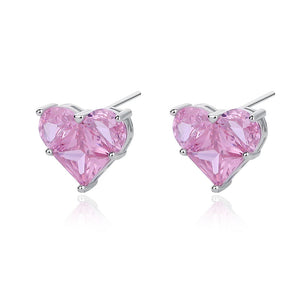
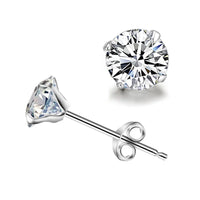
The piece they're describing → CZ Stud Earrings for Women — 925 Sterling Silver, Cubic Zirconia, Hypoallergenic
Personalize Yours


