


If you've been comparing cubic zirconia vs white sapphire for a ring, pendant, or pair of studs, you've probably noticed both get pitched as "affordable diamond alternatives" — which makes them sound interchangeable. They aren't. One is a lab-grown crystal engineered purely to look like a diamond; the other is a genuine gemstone (natural or lab-created) that just happens to be colorless instead of blue. The differences in hardness, sparkle, price, and how each ages on your hand are big enough that picking the wrong one for your situation is an easy, avoidable mistake.
What Cubic Zirconia and White Sapphire Actually Are
Cubic zirconia (CZ) is zirconium dioxide grown in a lab using a process called skull melting — there's no natural cubic zirconia deposit anywhere on Earth. It was developed for optical and laser use in the 1970s before the jewelry industry adopted it as a diamond simulant. Every piece of CZ jewelry you'll ever see was manufactured, full stop.
White sapphire is a variety of corundum, the same mineral family as blue sapphire and ruby, just without the trace elements (iron, titanium, chromium) that give those stones their color. White sapphire can be mined from the ground in places like Sri Lanka, Madagascar, and Australia, or it can be lab-created using processes like flux growth or the Verneuil method — chemically and structurally identical to the natural stone, just grown faster and cheaper.
That distinction matters more than it sounds: "lab-created white sapphire" is still a real sapphire in every measurable way. "Cubic zirconia" is a different mineral species entirely, engineered specifically to imitate diamond's optical properties rather than to be a colorless version of anything natural.
Hardness and Durability: The Number That Actually Matters
Jewelers lean on the Mohs hardness scale because it predicts how well a stone resists everyday scratching — and scratches, not shattering, are what actually dull a stone's sparkle over years of wear.
| Stone | Mohs hardness | Scratches from | Real-world wear |
|---|---|---|---|
| Diamond | 10 | Only another diamond | Never dulls from scratching |
| White sapphire | 9 | Diamond only | Extremely scratch-resistant; keeps its polish for decades |
| Moissanite | 9.25 | Diamond only | Similarly scratch-resistant to sapphire |
| Cubic zirconia | 8 - 8.5 | Sapphire, topaz, quartz-heavy dust, other CZ | Can pick up fine surface scratches over years of daily contact with other jewelry, sand, or countertops |
| Quartz / glass | 5 - 7 | Most household surfaces | Dulls and scratches within months of daily wear |
Both CZ and white sapphire comfortably survive normal daily wear — neither is fragile. The difference only shows up over the long haul. A white sapphire worn every day for fifteen years will typically still look glassy and sharp-edged. A CZ worn the same way can pick up enough micro-scratches over that time to look slightly softer or hazier, especially at the facet edges, even though it started out just as bright. That's not a defect; it's simply a half-point of hardness compounding over thousands of days of contact.
For occasional-wear pieces — statement earrings, special-occasion rings — the hardness gap almost never becomes noticeable. For a ring worn literally every day for a decade or more, it's the single biggest reason someone might choose white sapphire over CZ.
Price: Where CZ Wins By an Enormous Margin
This is the category where the two stones stop looking like close competitors. A well-cut, one-carat cubic zirconia typically costs between five and thirty dollars as a loose stone, and CZ jewelry — even in solid gold settings — rarely runs past a couple hundred dollars. A comparable one-carat natural white sapphire runs anywhere from four hundred to over a thousand dollars depending on clarity and cut, while lab-created white sapphire sits meaningfully lower, often in the fifty-to-two-hundred-dollar range per carat, but still well above CZ.
| Stone | Approx. price per carat | Sourcing |
|---|---|---|
| Cubic zirconia | $5 - $30 | 100% lab-manufactured |
| Lab-created white sapphire | $50 - $200 | Grown in weeks via flux or Verneuil method |
| Natural white sapphire | $400 - $1,200+ | Mined; clarity and origin drive price |
| Lab-grown diamond | $500 - $1,500+ | Grown via HPHT or CVD |
| Natural diamond | $2,000 - $6,000+ | Mined |
That gap is why CZ dominates fashion and everyday jewelry, while white sapphire tends to show up in slightly more "considered" purchases — engagement-adjacent pieces, milestone gifts, or anywhere a buyer wants a genuine mined or lab-grown gemstone rather than a simulant, and is willing to pay a real premium for that distinction.
Sparkle and Appearance: Rainbow Fire vs. Silvery Glow
Put the two side by side under a light and most people can actually tell them apart — just not for the reason they expect. It's not that one looks "cheap." It's that they sparkle differently.
Cubic zirconia has a higher refractive index and much greater dispersion than white sapphire, meaning it splits white light into more visible color — the rainbow flashes you see when CZ catches the sun. That's actually more fire than a real diamond produces, which is part of why untrained eyes sometimes assume a very sparkly stone must be diamond, when heavy rainbow flash is actually a CZ signature.
White sapphire, by contrast, has lower dispersion and produces a cooler, more subdued silvery-white brilliance without much rainbow color. Gemologists often describe it as looking "more like a diamond" precisely because it doesn't throw the exaggerated fire that gives CZ away — a trained eye can usually spot CZ by its dispersion alone, while white sapphire is genuinely harder to distinguish from diamond at a glance.
Neither look is objectively better — it comes down to what you want the stone to do. If you want maximum sparkle and rainbow flash for the money, CZ delivers more visual "wow" per dollar than almost anything else on the market. If you want an understated, diamond-like glow that doesn't announce itself, white sapphire's quieter brilliance is the better match.
Color and Clarity Options
Cubic zirconia is manufactured to be essentially flawless and perfectly colorless every time — because it's made in a lab under controlled conditions, there's no natural inclusion or tint to account for. Every CZ stone of a given cut and size looks nearly identical, which is exactly what you want for matching sets or symmetrical designs like stud earrings.
White sapphire, especially the natural kind, is more variable. Mined white sapphire can carry a faint grey, yellow, or brownish undertone depending on trace elements and origin, and truly colorless, eye-clean natural stones command a real premium. Lab-created white sapphire is more consistent than natural but still isn't quite as uniformly flawless as CZ, since it's still a genuine mineral crystal rather than a purpose-engineered simulant. If perfectly matched, identically colorless stones across a set matter to you, CZ has a structural advantage simply by being synthetic.

Where AJLuxe's Cubic Zirconia Jewelry Fits Into This Decision
We'll be straightforward about this because it's the question most people are actually trying to answer: should you buy CZ jewelry at all, or save up for white sapphire?
AJLuxe builds its jewelry — including pieces like the Round Brilliant Cut CZ Necklace — around cubic zirconia set in 925 sterling silver, and we chose that combination deliberately rather than defaulting to it. CZ's 8 to 8.5 Mohs hardness is more than sufficient for a necklace, pair of earrings, or ring that isn't taking daily impact against countertops and tools the way a manual laborer's wedding band might. Paired with a secure prong setting and (on plated pieces) a rhodium or 18K gold barrier layer, CZ jewelry from a well-made brand holds up for years of normal wear — it just won't outlast a decades-old heirloom sapphire being passed down a third generation.
Where we'd point you toward white sapphire instead: if you specifically want a natural or lab-grown gemstone (not a simulant) for sentimental or resale reasons, or if you're buying a piece meant to be worn literally every single day for twenty-plus years without ever being replaced. For everything else — gifts, stacking pieces, statement jewelry, anything where brilliance-per-dollar and color consistency matter more than mineral pedigree — CZ is a genuinely sound, non-compromise choice, not just a "budget settle."
Where Does Moissanite Fit? Comparing Moissanite vs. Diamond vs. Cubic Zirconia
If you're weighing CZ against white sapphire, moissanite is worth a quick mention too, since it's the third major player in the diamond-alternative space and sits between the other two on almost every metric. Moissanite (silicon carbide) rates 9.25 on the Mohs scale — slightly harder than white sapphire and closer to diamond's 10 — and it has even more fire and dispersion than cubic zirconia, sometimes described as "too sparkly" by buyers who want a more diamond-like look. Price-wise, moissanite sits well above CZ but generally below natural diamond, making it a mid-tier option for anyone who wants diamond-adjacent durability without diamond pricing.
In short: cubic zirconia wins on price and sheer sparkle-for-dollar, white sapphire wins on being a genuine mineral with a quieter glow, and moissanite splits the difference with higher hardness and even more fire than CZ, at a higher price point than either. None of the three is "better" outright — they solve different priorities.
How to Tell Cubic Zirconia and White Sapphire Apart
A few practical tests, roughly in order of reliability:
- Weight test: Cubic zirconia is noticeably denser than white sapphire. A CZ will feel heavier than a sapphire of the same visible size when held loose in your palm.
- Fire/sparkle test: Under direct light, CZ throws more visible rainbow color; white sapphire's flashes stay closer to white and silver.
- Thermal conductivity tester: Jewelers use handheld diamond testers that also flag CZ (which conducts heat very differently from natural gems) versus sapphire, which reads closer to a genuine mineral.
- Refractometer or loupe inspection by a gemologist: The only fully reliable method — a trained jeweler can identify either stone with certainty in minutes.
If you're buying from a retailer, the honest move is simply to check the listing description. Reputable sellers always disclose whether a stone is cubic zirconia, lab-created sapphire, or natural sapphire — you shouldn't have to run tests on your own jewelry to find out what you bought.

Which One Should You Actually Buy?
| Your priority | Better choice |
|---|---|
| Lowest possible price for maximum sparkle | Cubic zirconia |
| Matching, perfectly colorless stones in a set | Cubic zirconia |
| Everyday fashion jewelry, gifts, stacking pieces | Cubic zirconia |
| A genuine natural or lab-grown mineral (not a simulant) | White sapphire |
| Daily-wear piece meant to last 20+ years without replacement | White sapphire |
| Understated, diamond-like glow over rainbow fire | White sapphire |
| Resale or heirloom value tied to mineral authenticity | White sapphire |
If you want a deeper look at how cubic zirconia stacks up against other simulants and natural stones, we've covered related comparisons in cubic zirconia vs. zirconium (two commonly confused materials with very different properties) and whether cubic zirconia counts as a "real" stone in the first place.
Care Tips to Maximize Either Stone's Longevity
- Clean both stones the same way: mild soap, warm water, and a soft brush around the setting. Dry fully before storing.
- Remove CZ and white sapphire jewelry before swimming, showering, working out, or applying lotion and perfume — moisture and product residue dull sparkle on both stones over time.
- Store separately from other jewelry, especially diamonds, since diamond is the only stone hard enough to scratch either one.
- Check prongs periodically. A stone that's loose is far more likely to chip or fall out than one that's simply worn — loose settings are the real threat to longevity, not the stone's hardness rating.
- If your piece is gold-plated or rhodium-plated (common with both CZ and lab sapphire settings on sterling silver), avoid chlorine and harsh cleaners, which wear down plating faster and expose the base metal — a separate issue from why white gold turns yellow over time, but the plating-care logic is the same.
Also worth knowing: cubic zirconia is generally considered hypoallergenic when set correctly, since the stone itself contains no nickel or other common allergens — any skin reaction almost always traces back to the metal setting, not the CZ.
See also: Moissanite vs. White Sapphire: Which Should You Choose?.
Related reading: Does Cubic Zirconia Get Cloudy? Causes & Fixes (2026).
Related reading: Moissanite vs Cubic Zirconia: Which Actually Holds Up to Daily Wear? (2026).
Frequently Asked Questions
Is white sapphire better than cubic zirconia?
Neither is universally "better" — white sapphire is harder and holds its polish longer, while cubic zirconia is far cheaper and sparkles more intensely. The right choice depends on your budget and how the piece will be worn.
Can a jeweler tell the difference between CZ and white sapphire?
Yes, easily. A trained jeweler can spot the difference using a loupe, thermal conductivity tester, or refractometer within minutes, since the two stones have distinct optical and thermal properties.
Does white sapphire sparkle like a diamond?
White sapphire's brilliance is closer to a diamond's understated white flash than cubic zirconia's rainbow-heavy fire, though it's still not identical to a diamond's specific optical signature.
Is cubic zirconia stronger than white sapphire?
No. White sapphire rates 9 on the Mohs hardness scale versus cubic zirconia's 8 to 8.5, making sapphire more scratch-resistant over years of daily wear.
Which is more expensive, white sapphire or cubic zirconia?
White sapphire, by a wide margin. Cubic zirconia typically costs five to thirty dollars per carat, while white sapphire ranges from around fifty dollars for lab-created stones to well over a thousand dollars per carat for high-quality natural stones.
Can white sapphire pass as a diamond?
To an untrained eye, yes, especially in smaller sizes, since its subdued sparkle resembles a diamond more closely than cubic zirconia's exaggerated fire. A gemologist can still tell them apart using standard testing tools.
Does cubic zirconia scratch easily?
Not easily under normal wear, but it's softer than sapphire, moissanite, and diamond, so it can pick up fine surface scratches over years of daily contact with other jewelry or hard surfaces.
Is white sapphire a good alternative to diamond for an engagement ring?
It can be, particularly for buyers who want a genuine natural or lab-grown mineral rather than a simulant and are comfortable with its higher price point compared to cubic zirconia or moissanite.
Does white sapphire turn yellow over time?
Properly cut and cared-for white sapphire stays colorless indefinitely, since color stability is a property of the mineral itself, not something that fades with wear. Any yellowing you notice is more likely coming from a gold-plated setting wearing thin, not the stone.
How can you tell if a stone is cubic zirconia or white sapphire?
Compare weight (CZ feels heavier for its size), sparkle (CZ throws more rainbow color), and if possible, have a jeweler check it with a thermal or refractive tester for a certain answer.
Is cubic zirconia hypoallergenic?
Generally yes — the stone itself contains no common allergens like nickel. Any irritation typically comes from the metal setting rather than the CZ.
What is the difference between white sapphire and moissanite?
Moissanite is harder (9.25 Mohs vs. sapphire's 9) and has significantly more fire and sparkle than white sapphire, but it also costs more than both white sapphire and cubic zirconia in most cases.
Final Thoughts
Cubic zirconia and white sapphire solve different problems dressed up in similar marketing. CZ is the better pick when you want maximum, matched, colorless sparkle at a price that makes buying multiple pieces easy — that's exactly the case AJLuxe built its CZ sterling silver jewelry around. White sapphire is the better pick when the fact that it's a genuine mined or lab-grown mineral, not a synthetic simulant, actually matters to you, and you're willing to pay a real premium and accept slightly less fire in exchange for a half-point of extra hardness.
Neither is a "downgrade" from the other — they're two different answers to "I want brilliance without paying diamond prices."
Shop This Guide
See how AJLuxe's cubic zirconia jewelry balances brilliance, durability, and everyday price:
Shop the Round Brilliant Cut CZ NecklacePrefer hypoallergenic CZ earrings for everyday wear? Browse our full hypoallergenic earrings collection for sterling silver CZ styles designed for sensitive ears.
Last updated: July 2026
Written by the AJLuxe team — specialists in personalized sterling silver jewelry. For third-party gemological background on sapphire and cubic zirconia, see the Jewelers of America education resources.
All third-party trademarks, brand names and product names are the property of their respective owners. AJLuxe is not affiliated with, endorsed by, sponsored by, or otherwise connected to any third-party brand referenced in this article. Brand names are used solely for accurate comparative reference, and material descriptions reflect each brand's own published product specifications at the time of writing.
You Might Also Like
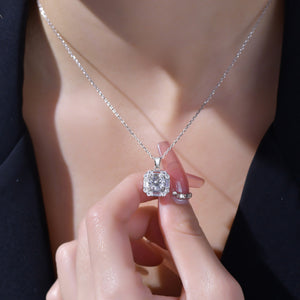
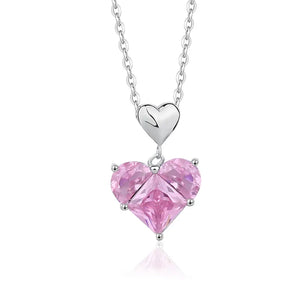
The piece they're describing → Round Brilliant Cut CZ Necklace for Women — 925 Sterling Silver, Diamond-Style Pendant
Personalize Yours


