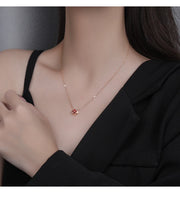
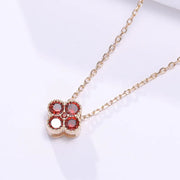
A birthstone necklace connects the stone of your birth month — garnet for January, sapphire for September, pink tourmaline for October — to a pendant you wear every day. The tradition of birthstones …
A birthstone necklace connects the stone of your birth month — garnet for January, sapphire for September, pink tourmaline for October — to a pendant you wear every day. The tradition of birthstones dates back to the Book of Exodus and was codified in the early 20th century by the American National Association of Jewelers. Today, birthstone necklaces are among the top-gifted pieces of jewelry globally because they combine personal meaning with genuine beauty in a single piece.
At AJLuxe, every birthstone necklace is made from 925 sterling silver with an 18K gold plating. The stones are genuine crystals where the category allows — garnet, amethyst, aquamarine, peridot — and high-quality lab-created equivalents for stones like ruby and sapphire, where natural gems at this price point would compromise quality. Lab-created stones are chemically and optically identical to their natural counterparts; the only difference is origin. Every product listing is transparent about which stone type is used in that specific necklace.
Birthstone necklaces work as deeply personal gifts because they require knowing a birth month — a small piece of information that signals attentiveness. A birthstone necklace given for a birthday says "I know when you were born, and I chose something tied to that." For new mothers, a necklace featuring a child's birthstone — or two or three children's stones on a bar or cluster pendant — has become one of the most popular fine-and-demi-fine jewelry categories in the market. The "mother's birthstone necklace" category alone represents millions of pieces gifted each year worldwide.
| Month | Birthstone | Color | Meaning | Mohs Hardness |
|---|---|---|---|---|
| January | Garnet | Deep red | Protection, friendship, trust | 6.5–7.5 |
| February | Amethyst | Purple | Calm, clarity, sobriety | 7 |
| March | Aquamarine | Blue-green | Courage, serenity, safe travel | 7.5–8 |
| April | Diamond / CZ | Clear / white | Strength, invincibility, love | 10 / 8.5 |
| May | Emerald | Green | Rebirth, fertility, love | 7.5–8 |
| June | Alexandrite / Pearl | Color-change / cream | Balance, purity, luck | 8.5 / 2.5–4.5 |
| July | Ruby | Red | Passion, protection, vitality | 9 |
| August | Peridot | Lime green | Strength, healing, abundance | 6.5–7 |
| September | Sapphire | Blue | Wisdom, loyalty, nobility | 9 |
| October | Pink tourmaline / Opal | Pink / iridescent | Hope, creativity, healing | 7–7.5 / 5.5–6.5 |
| November | Citrine / Topaz | Yellow-orange / blue | Joy, confidence, abundance | 7 / 8 |
| December | Blue topaz / Turquoise | Blue | Love, luck, friendship | 8 / 5–6 |
Stone size and pendant type are the two biggest style decisions. A small teardrop birthstone drop — 6 to 8 mm — on a thin 16-inch chain is the most delicate and everyday-wearable option. It sits at the collarbone, catches light when you move, and pairs easily with other necklaces in a layered look. A larger solitaire stone in a pronged bezel setting — 10 to 12 mm — makes a stronger visual statement and works beautifully as a solo piece. Halo settings, where smaller accent stones surround the birthstone, are the dressiest option and suit formal occasions and milestone gifts.
For a mother's birthstone necklace, consider how many stones you want and how they'll be arranged. A bar necklace with stones set in a horizontal row is clean and modern. A cluster pendant with stones arranged in a circle or flower shape is more organic and ornate. A vertical drop necklace with stones stacked from top to bottom is elegant and directional. All three work; the right choice depends on the recipient's aesthetic. When in doubt, the bar style is the most versatile and tends to wear well across ages and occasions.
Birthstone necklaces layer beautifully because the colored stone provides a clear focal point that anchors the layered look. A simple and reliable layering formula: birthstone pendant at 18 inches as the central element, a thin plain chain at 16 inches above it, and a longer rolo or cable chain at 20 inches below. The birthstone sits at the center of attention between two quieter chains. You can also layer two birthstone necklaces — one for your own birth month and one for a loved one's — at 16 and 18 inches. The two colored stones create a subtle, personal story visible only to those who know what the colors mean.
Stone care varies by hardness. Hard stones — garnet (Mohs 6.5+), amethyst (7), aquamarine (7.5+), sapphire (9) — are resistant to everyday scratching and suitable for regular wear. Softer stones — opal (5.5–6.5), turquoise (5–6) — should be handled more carefully and removed before any activity that might expose them to impact, abrasion, or prolonged water contact. For all birthstone necklaces, clean monthly with warm soapy water and a soft toothbrush, rinse well, and pat dry immediately. Store in the pouch or box away from other jewelry that might scratch the stone surface. Remove before swimming in chlorinated water, which can affect both the plating and some stone treatments.
January: Garnet (deep red). February: Amethyst (purple). March: Aquamarine (blue-green). April: Diamond or CZ (clear). May: Emerald (green). June: Alexandrite or Pearl (color-change or cream). July: Ruby (red). August: Peridot (lime green). September: Sapphire (deep blue). October: Pink Tourmaline or Opal (pink or iridescent). November: Citrine or Topaz (yellow-orange or blue). December: Blue Topaz or Turquoise (blue or blue-green). Several months have two official birthstones — both are equally valid, and choosing between them typically comes down to color preference or budget.
Yes, though the specific type varies by month. For garnet, amethyst, aquamarine, and peridot — stones that are widely available at reasonable prices — AJLuxe uses genuine natural crystals. For ruby and sapphire — stones where natural gem quality at this price point is difficult to guarantee — high-quality lab-created stones with identical chemical and optical properties are used. Lab-created stones are real gemstones, not glass or plastic; the only difference from natural stones is that they formed in a laboratory rather than in the earth over millions of years. For April (CZ), cubic zirconia is used — a lab-created stone that resembles diamond. Each product listing specifies the exact stone type.
For most people, 16 inches (collarbone length) or 18 inches (top-of-chest length) are the best choices. At 16 inches, the stone sits high on the chest and is always visible, even under open-collar shirts. At 18 inches, the stone drops slightly lower, which can be more flattering for longer necks and suits V-necklines particularly well because the pendant follows the neckline's angle. For a mother's multi-stone necklace with a larger pendant, 18 inches gives the piece more visual breathing room. For a simple teardrop solitaire, 16 inches keeps it intimate and close to the collarbone. For gifting when you're not sure: 18 inches is the safe universal choice.
Yes, with some consideration for stone hardness. Harder birthstones — garnet, amethyst, aquamarine, ruby, sapphire, topaz — are rated Mohs 7 or above and handle daily wear comfortably. Softer stones — opal (5.5–6.5), turquoise (5–6), pearl (2.5–4.5) — are more fragile and should be treated as occasional-wear pieces, removed before exercising, cooking, or any task involving impact or chemicals. For all birthstone necklaces, the 18K gold plating on the 925 sterling silver chain and setting will last 12 to 24 months with regular wear if you avoid chlorine, saltwater, and prolonged moisture. Remove before swimming and showering to significantly extend the plating's lifespan.
A birthstone necklace featuring children's birth month stones is one of the most popular and meaningful Mother's Day gifts in the jewelry category. The most common formats: a bar necklace with two to four stones set in a row (one per child), a cluster pendant with stones arranged together, or individual stone drops on a single chain at different heights. Each format tells the same story — "here are your children, worn close to your heart" — in a different visual language. If you're choosing for a mother of two children, a simple two-stone bar or two teardrop drops at different lengths are both clean and beautiful options. For three or more children, a bar with all stones in birth order is the cleanest approach.
A birthstone necklace is a complete piece — chain and pendant together. A birthstone pendant is just the pendant itself, sold separately to attach to a chain you already own or purchase separately. If you already have a favorite chain and want to add a birthstone element, a pendant gives you that flexibility. If you're buying a complete, ready-to-wear piece, a birthstone necklace is the simpler choice. Most AJLuxe birthstone products are sold as complete necklaces — chain and pendant together — which means you get a coordinated, ready-to-wear piece with no additional purchases needed. Check each product listing to confirm whether it includes the chain.
Yes, and it creates a lovely personal look — especially if the two stones are complementary in color. Place one necklace at 16 inches and the other at 18 or 19 inches so they sit at distinct lengths and both stones are visible. Colors that layer beautifully together: amethyst (purple) with aquamarine (blue) — adjacent on the color wheel and harmonious. Garnet (red) with peridot (green) — complementary colors that create a bold contrast. For a more subtle look, choose stones in the same color family (citrine yellow and peridot lime green). Two stones with very similar colors (aquamarine and blue topaz, for example) work best when the pendant styles are different — one teardrop, one round — to distinguish them visually.
Warm water with a drop of mild dish soap is the safest cleaning method for most birthstone necklaces. Soak for five minutes to loosen skin oils and product buildup around the setting, then gently brush with a soft toothbrush — particularly around the prongs or bezel where residue collects. Rinse under warm running water and pat completely dry with a soft cloth. For emerald necklaces specifically, limit soaking to three minutes — emeralds are often treated with oils that prolonged water exposure can strip. For opal and pearl necklaces, use only a barely-damp cloth (no soaking at all) as these porous stones absorb liquids. Never use ultrasonic cleaners on 18K gold plated pieces or on any stone rated below Mohs 7.