Anklets: A Jewelry Form That Predates Almost Everything Else You Wear When you put on an anklet, you are participating in one of the oldest continuous jewelry traditions in human history. Archaeologi…
When you put on an anklet, you are participating in one of the oldest continuous jewelry traditions in human history. Archaeological evidence from ancient Egypt places gold and silver anklets on the wrists and ankles of wealthy women over 4,000 years ago — a time when most jewelry forms we now consider standard had not yet emerged as consistent cultural practices. In South Asian cultures, anklets known as payal or pajeb have an unbroken tradition stretching back millennia, worn as both adornment and as a sound-making device whose gentle chime signaled the wearer's presence and movement. Middle Eastern cultures carried similar traditions forward without interruption. The anklet is not a recent trend or a beach-season novelty. It is one of the most ancient forms of personal adornment that still exists in recognizable form, connecting the person wearing it now to an enormous and unbroken chain of human self-expression.
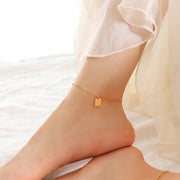
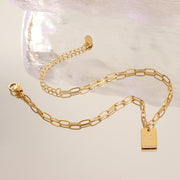
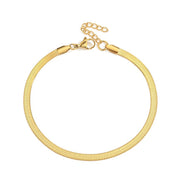
At AJLuxe, our anklets are made in 925 sterling silver — the same metal that has been used for jewelry at every quality tier for centuries. We carry delicate chain anklets, anklets with small charms, and simple elegant styles that work equally well on the beach, in the city, or under a boot in November. Whether you are wearing an anklet for the first time or adding to a collection you have been building for years, this page covers everything you need to know about sizing, symbolism, styling, and care.
The question of left ankle versus right ankle is one that comes up frequently, and the honest answer is that meaning varies substantially by cultural context, and most modern wearers in Western countries choose based on comfort with no symbolic intent whatsoever. That said, the traditions are real and worth knowing if you are curious about them.
In many Western interpretations of anklet symbolism, wearing an anklet on the left ankle has historically been associated with relationship status or romantic signaling, while the right ankle was considered neutral or simply aesthetic. These associations were never universal or formal — they arose from subcultural fashion trends and informal convention rather than any codified tradition. In South Asian cultures, the significance of the anklet is primarily about marital status and feminine identity, with both ankles worn simultaneously in many traditional contexts. In Middle Eastern traditions, anklets on both ankles simultaneously are common and carry associations of femininity and celebration rather than specific positional meaning. Across all of these contexts, the cultural meaning is specific to the tradition, and it does not necessarily transfer across cultural lines.
| Ankle / Context | Western Informal | South Asian | Middle Eastern | Modern Fashion | Personal Choice |
|---|---|---|---|---|---|
| Left ankle | Historically associated with relationship signaling in some subcultures; not universal | One of two ankles worn in traditional payal pairs | Often worn on both ankles simultaneously | No fixed meaning; left is common default | Whichever feels more comfortable |
| Right ankle | Considered neutral or purely aesthetic | One of two ankles worn in traditional payal pairs | Often worn on both ankles simultaneously | No fixed meaning; right works equally | Whichever your dominant hand makes easier to clasp |
| Both ankles | Associated with strong personal style statement | Traditional and common in many regional traditions | Traditional and celebratory | Growing trend, especially with layered styles | Double the jewelry, double the intention |
| Left, single | Most common Western default | Unusual if traditional; one of a pair | Unusual standalone | Standard single-anklet approach | Fine for everyday wear |
| Right, single | Neutral in Western context | Unusual if traditional; one of a pair | Unusual standalone | Equally valid single-anklet approach | Fine for everyday wear |
The most accurate thing to say about anklet position in 2026 is this: most people who wear a single anklet choose the ankle that is easier to clasp and more comfortable, and they are not making a statement about anything other than the fact that they like anklets. If you are in a cultural context where position carries specific meaning, you will already know it.
Anklet sizing is frequently overlooked and frequently wrong. The standard women's anklet is sold in a 9-to-10-inch range, and most people buy based on that without measuring. The result is often an anklet that is either too tight when walking or so loose it slides down to the foot. Neither is comfortable, and neither looks as good as a properly fitted anklet.
The correct method is simple. Measure your ankle with a flexible tape measure at the narrowest point, just above the ankle bone. That measurement is your base ankle circumference. Add one inch to that measurement and you have your ideal anklet size. This gives you enough room for the anklet to sit comfortably without pulling, while keeping it high enough on the ankle that it does not slip down toward the foot when you walk. The two-finger rule is a useful quick check: after putting on the anklet, you should be able to slide two fingers between the anklet and your ankle easily. If you cannot, it is too tight. If there is significantly more than two fingers of space, it is too loose. An anklet sits above the ankle bone, not on it — a common misconception is that it should rest directly on the bone, which is both uncomfortable and tends to cause more movement and friction.
Anklets experience more exposure to damaging elements than virtually any other piece of jewelry you wear. While your necklace sits against your collarbone in relatively protected and dry territory, your anklet spends its day in direct contact with the ground environment — exposed to sun, sweat, sand, pool water, ocean salt, sunscreen, moisturizers applied to legs and feet, and the friction of shoe straps, socks, and foot movement. Sweat accumulates at the ankle during any physical activity in a way that does not happen at the wrist or neck to the same degree. In summer, the combination of sun, heat, salt water, and sunscreen is among the most chemically aggressive environments any piece of jewelry encounters.
This is why the base metal — the metal at the core of the piece beneath any plating — matters more for anklets than for almost any other jewelry category. A brass anklet with gold or silver electroplating will degrade faster at the ankle than the same piece worn anywhere else on the body. The plating over brass is typically thin (0.1 to 0.5 microns in most commercial jewelry) and wears through under normal conditions within weeks to months. At the ankle, that timeline is compressed significantly by the additional moisture, friction, and chemical exposure. Once the plating wears through, you are left with the brass base, which tarnishes, reacts with skin, and can cause green discoloration. A 925 sterling silver anklet holds up significantly better under these conditions because silver is a noble metal — it does not react with sweat and skin in the same aggressive way that brass does. If you plan to wear an anklet through a full summer of outdoor activity, beach trips, and daily life, the base metal is the single most important quality factor to evaluate before purchasing.
The cultural association between anklets and beach season is real but incomplete. An anklet is not a seasonal piece. When treated as a permanent part of your jewelry wardrobe, it works in every season and with essentially every outfit style if you approach it correctly.
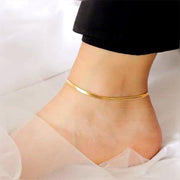
In summer with sandals, the anklet is at its most visible — the most obvious pairing and the most photographed. In summer with bare feet, the anklet carries an elegance that sandals actually reduce slightly; a single delicate anklet on a bare ankle against a linen dress or simple shorts is a considered and intentional look. In fall with low heels, a delicate chain anklet peeks above the shoe strap in a way that rewards observers who look closely. In fall and winter with ankle boots, the anklet sits under the boot against your skin — invisible to others but present to you, a small private detail that adds intention to getting dressed. In spring with trousers rolled at the ankle, a single dainty anklet is a styling detail that signals care. The anklet adapts to the season rather than disappearing in it. The key is choosing a style simple and delicate enough to work in formal-adjacent contexts — a simple chain or small charm reads as refined; a large multi-charm statement anklet is more beach-specific by design.
Wearing two anklets on the same ankle has moved from a niche styling choice to a mainstream approach, visible across all demographics and style categories. The technique works when the two pieces create visual interest through contrast rather than competing with each other. The basic rule is different styles at different lengths: a simple chain anklet at nine inches paired with a charm or slightly more textured piece at ten inches creates a layered effect where both pieces remain individually readable. The length difference matters — two anklets at the same length tend to sit on top of each other and blur into a single undifferentiated band.
Mixing sterling silver and gold-toned anklets on the same ankle works well because the ankle is a casual styling zone where the rigid mixed-metals rules that apply to necklaces and earrings relax naturally. The low-profile nature of anklets means the combination registers as layered rather than mismatched. Avoid pairing two identical styles in the same metal at any lengths — they will not create texture, they will simply appear as a single heavier piece. The goal of layering anklets is complexity achieved through contrast, not quantity.
Anklets endure more than any other piece of jewelry in your collection. Direct sun exposure, accumulated sweat, sand and grit acting as an abrasive, chlorine from pools, salt from ocean water, the chemical residue of sunscreen and after-sun products, and the daily friction of shoes and socks — this is a more demanding environment than a necklace, earring, or bracelet encounters. The care requirements reflect this reality. Clean your anklet more frequently than your other jewelry. If you wear an anklet every day, weekly cleaning is not excessive — it is appropriate maintenance. After any ocean or pool exposure, rinse the anklet with clean fresh water immediately, before the salt or chlorine dries onto the metal. Pat it thoroughly dry rather than letting it air-dry, which allows mineral deposits from water to accumulate on the surface.
When storing an anklet, hang it rather than coiling it in a dish or box. Coiling an anklet consistently in the same position creates stress points in the chain that eventually weaken and break. A small hook or a jewelry stand with pegs works perfectly. 925 sterling silver will tarnish faster at the ankle than on a necklace or bracelet — this is simply a function of increased exposure to moisture and air, and it is completely normal. It does not indicate that the silver is low quality. A polishing cloth restores the shine quickly and completely. If tarnish has accumulated significantly, a short soak in warm water with a small amount of mild dish soap followed by a gentle scrub with a soft toothbrush and a thorough rinse and dry will restore the piece. Do not use commercial silver dips on anklets with stones or charm components, as they can damage certain finishes and adhesives.
An anklet is one of the simplest ways to add an intentional detail to your daily look — a small piece of jewelry that has been in continuous use for over four thousand years and shows no sign of disappearing. Whether you choose a single delicate chain, a charm anklet, or a layered pair, the most important thing is that it fits correctly and is made from a material that holds up to the environment your ankle lives in. Browse our full collection of 925 sterling silver anklets above.