

Necklaces have meaning. Not just as jewelry — as communication. A heart pendant given as a first anniversary gift says something different than the same heart pendant a mother wears with her children's birthstones. The design, the occasion, and the giver all shape what a necklace means to the person wearing it. This guide breaks down the symbolism behind every major necklace style and what different cultures have associated with them throughout history.
At AJLuxe, our necklaces are handcrafted in 925 sterling silver — the 925 stamp is on every clasp, so you always know exactly what you're wearing.
Why Necklaces Carry Meaning
Of all jewelry placements on the body, the neck holds particular significance. Anatomically it connects the head (reason, thought) to the body (feeling, emotion). Spiritually and symbolically, cultures across the world have treated the neck as a conduit — something placed there guards, blesses, or marks its wearer.
The earliest known necklaces were found in Morocco, dating to approximately 110,000 BCE — perforated shells strung on fibres. Archaeological evidence from ancient Mesopotamia (4,000 BCE), Egypt (3,000 BCE), and ancient India shows elaborate neck adornments used in religious ritual, royal ceremony, and personal protection alike. The function changed with the era; the significance didn't.
Meaning by Necklace Style
Heart Necklace
The heart symbol as a representation of romantic love dates to the 13th century in European manuscript art, though heart-shaped pendants in jewelry became prominent from the 17th century onward. Today a heart necklace communicates love, affection, and care. The relationship context shifts the meaning: a heart necklace given by a partner carries romantic intent; the same piece given by a mother to a daughter carries maternal love and protection.
A small gold heart on a fine chain is one of the most consistently popular gifts in jewelry — the symbolism is universal and immediately understood.
Infinity Necklace
The infinity symbol (∞) entered mathematics in the 17th century through John Wallis, but its use in jewelry is contemporary. In necklace form it represents endlessness, eternal commitment, and unbreakable connection. An infinity necklace is often given to mark a bond that is meant to last — a significant anniversary, a deep friendship, or a parent-child relationship. The loop without beginning or end communicates "always" and "forever."
Cross Necklace
The cross has been a symbol of Christianity since the 4th century CE and remains one of the most globally recognized religious symbols. As a necklace, it signals Christian faith, spiritual protection, and religious identity. In contemporary fashion, cross necklaces are also worn as aesthetic pieces without strict religious intent — particularly in gold, as a symbol of refinement and heritage. The meaning depends on the wearer's relationship to it.
Initial / Letter Pendant
Initial necklaces represent personal identity, individuality, and belonging. Wearing your own initial asserts selfhood. Wearing another person's initial (a partner's, a child's, a parent's) signals connection and dedication to that person. Initial jewelry was historically associated with monogrammed personal items given as betrothal gifts in the 19th century; today it's become one of the most versatile forms of personalized jewelry.
Birthstone Necklace
Birthstones have been associated with months and zodiac signs since antiquity — the Breastplate of Aaron in the Old Testament describes twelve gemstones representing the twelve tribes of Israel, which were later connected to the twelve months of the year. Modern birthstone lists were standardized by the American National Retail Jewelers Association in 1912.
A birthstone necklace represents birth, personal identity, and connection to the month and season of one's life. When a necklace features multiple birthstones — a mother's children's stones, for example — it becomes a symbol of family and the people the wearer loves most.
Locket Necklace
Lockets are hollow pendants designed to hold a small photograph, lock of hair, or memento inside. Their origin as personal jewelry dates to at least the 16th century, when Queen Elizabeth I of England wore a ring-locket containing a portrait of her mother, Anne Boleyn. Lockets represent carried love, private remembrance, and the protection of precious things. A photo locket is one of the most emotionally resonant gifts in jewelry because it literally holds something irreplaceable inside it.
Name Necklace
Name necklaces — script or block lettering spelling out a person's name — became globally recognized through culture and celebrity in the 1970s and surged in popularity again in the 2020s. They represent identity, self-expression, and the celebration of a name. A name necklace given as a gift says "I see you as an individual." As a self-purchase, it's a statement of personal pride and ownership of one's own identity.
Pearl Necklace
Pearls have been associated with purity, wisdom, integrity, and feminine strength across many cultures. In ancient Rome, pearls were a symbol of wealth and status — so precious that Julius Caesar passed laws restricting their use to the ruling class. In Chinese tradition, pearls represent the moon and are associated with feminine yin energy, healing, and insight. In contemporary jewelry, a pearl necklace signals elegance, refinement, and timelessness.
Ankh Symbol
The ankh is an ancient Egyptian hieroglyphic symbol for "life" — the combination of the cross (earth, physical life) and the loop (eternal life, spiritual continuation). As a necklace pendant, it represents eternal life, vitality, and the connection between the physical and spiritual realms. It was worn by pharaohs as a symbol of divine authority and was placed in tombs to protect the deceased in the afterlife.
Necklace Traditions Across Cultures
Indian culture: The mangalsutra — a sacred necklace of black beads and gold worn by married Hindu women — represents the marital bond and the protection of a husband's life and wellbeing. It's tied by the groom during the wedding ceremony and is considered one of the most significant jewelry traditions in South Asian culture.
Hawaiian culture: Lei necklaces — garlands of flowers, shells, or leaves — represent love, respect, and welcome. They're given at arrivals, graduations, and celebrations as a gesture of aloha (love, peace, compassion). A lei given in Hawaii is always accompanied by a specific intention.
African traditions: Neck adornments have significance across dozens of sub-Saharan African cultures — from the beaded maasai necklaces of Kenya (which signal social status, age, and tribal identity) to the brass neck rings of the Ndebele people of South Africa (representing beauty, wealth, and marital status).
European nobility: Chains of office — heavy gold chain necklaces worn by mayors, judges, and civic leaders in the UK and Europe — represent authority, public service, and the weight of institutional responsibility. Many date to the medieval period and are still worn ceremonially today.
Choosing a Necklace with Intention
Understanding symbolism helps you choose a necklace gift that resonates rather than one that's merely pretty. A heart necklace for a first anniversary. An infinity necklace for a 10th. A birthstone pendant with her children's stones for Mother's Day. A name necklace for a 21st birthday. An initial pendant when she's someone you want to know better.
Every style carries a different weight. The best gift is the one where the symbolism fits the relationship and the moment. Browse our personalized jewelry collection for initial, birthstone, and name pendants, or our heart necklaces for designs built around connection and love.
Frequently Asked Questions
What does a heart necklace symbolize?
Love, affection, and emotional connection. A heart necklace is one of the oldest symbols of romantic love in jewelry, and depending on context it can also represent maternal love, deep friendship, or self-love. The universal recognition of the heart symbol means it needs no explanation — it speaks immediately to anyone who sees it.
What does an infinity necklace mean?
Endless connection, eternal commitment, and unbreakable bonds. An infinity necklace is often given to mark relationships meant to last — long-term partnerships, deep friendships, parent-child bonds. The loop with no beginning or end communicates permanence: "this connection has no limit and no end."
What does it mean when someone gives you a necklace?
It depends on the relationship and the design. In romantic relationships, a necklace is a significant gesture of affection — intimate but not as committal as a ring. In family relationships (mother-daughter, parent-child), a necklace is a symbol of protection and enduring love. In friendships, it often signals a meaningful milestone — a graduation, a birthday, a thank-you for something important. The fact that a necklace is worn close to the heart increases its emotional resonance as a gift.
What does a birthstone necklace symbolize?
Your birth month, personal identity, and cosmic connection. Birthstones have been associated with months and astrology since antiquity. Wearing your birthstone connects you to the season of your birth, carries that stone's traditional associations (amethyst for wisdom, garnet for vitality, sapphire for loyalty), and signals that the piece was made specifically for you.
What does a locket necklace mean as a gift?
It means you are carrying someone with you. Lockets hold photographs or small mementos inside — a private token visible only to the wearer. Giving a locket says "keep this person close to you, literally." It's one of the most emotionally resonant gifts in jewelry precisely because of what it contains, not what it looks like.
Does the side you wear a necklace on have meaning?
In some traditions, yes — but it's not universal. In Western jewelry culture, necklace placement is generally aesthetic rather than symbolic. In some South Asian traditions, specific necklaces (like the mangalsutra) have prescribed wearing norms. In contemporary everyday jewelry, the positioning of a necklace — whether centered or layered — is purely a matter of personal style.
For a practical overview of every necklace type available today — chains, styles, and lengths: Types of Necklaces Explained.
Final Thoughts
Every necklace tells a story. The best ones are chosen with that story in mind — not just for how they look, but for what they communicate to the person wearing them and the person who gave them. An initial pendant is identity. A heart is love. An infinity loop is forever. A birthstone is you. Choosing jewelry with this awareness turns a purchase into something meaningful. Browse our personalized jewelry and heart necklace collections for pieces designed to carry meaning.
Last updated: June 2026
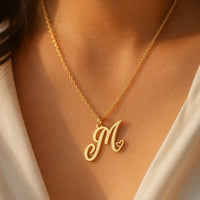
The piece they're describing → Heart Initial Necklace for Women — 18K Gold Plated, Personalized Letter + Heart Pendant
Personalize Yours

