


The short answer
Most two-tone rings at accessible price points are built from one base metal (often 925 sterling silver) with two different plating or finishing treatments, not two genuinely separate precious metals fused together -- worth knowing so you're not paying a premium for a construction claim that isn't quite accurate. Mixing metals in your overall jewelry look is also widely accepted as a normal styling choice today, not a fashion mistake to avoid.
A two-tone ring is popular specifically because it solves a real styling problem: matching jewelry to an outfit or to other pieces that mix gold and silver. This guide covers how a two-tone ring is actually constructed and whether "don't mix metals" is still a rule worth following.

How a two-tone ring is actually built
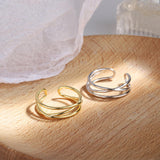
At accessible price points, a two-tone ring is almost always one base metal finished two ways, not two different precious metals fused together. A common construction is 925 sterling silver with select sections gold-plated and the rest left in its natural silver finish -- the ring reads as two-tone visually, but structurally it's one metal underneath. That's not a downside, but it's worth knowing: a listing that states the base metal plainly ("925 sterling silver, partially gold-plated") is being more transparent than one that just shows a gold-and-silver product photo without explaining the construction.
Is mixing metals still a rule to avoid?
No -- mixed-metal jewelry is now broadly treated as a normal, deliberate styling choice rather than a mismatch to avoid. The older convention of matching every piece of jewelry to one metal tone has relaxed significantly; a two-tone ring, worn alongside either gold or silver pieces separately, works precisely because it bridges both without looking out of place next to either. If you want a starting rule of thumb rather than none at all, keep one metal as the dominant tone across most of your pieces and use the two-tone item as the intentional connector -- but there's no hard rule you're breaking by mixing freely.
Two-tone vs. single-tone ring
The table below compares the two directly on styling flexibility and what to expect from the build.
Caring for a plated two-tone ring
Two-tone plated pieces need slightly more attentive care than a single-finish ring, since the two plating layers can wear at different rates if one side takes more contact than the other. Avoid chlorinated water, perfume, and lotion contact, remove the ring before manual tasks that create friction against the band, and wipe it periodically with a soft polishing cloth rather than an abrasive one, which can wear down plating unevenly across the two tones.
| Attribute | Two-tone ring | Single-tone ring |
|---|---|---|
| Styling flexibility | Pairs with both gold and silver jewelry | Pairs most seamlessly with matching-tone pieces |
| Construction (accessible price point) | Usually one base metal, two plating finishes | One base metal, one plating finish |
| Care | Two plating surfaces to maintain evenly | One plating surface, simpler upkeep |
Shop This Guide
A 925 sterling silver ring finished with both gold and silver-toned plating in a single band, a genuinely wearable two-tone piece rather than two rings sold as one.
Shop the Two-Tone RingFrequently Asked Questions
What does a two-tone ring mean?
Two-tone simply describes the ring's construction -- two metal finishes combined in one band -- rather than a specific symbolic meaning. It's chosen mainly for styling versatility, since it visually pairs with both gold-toned and silver-toned jewelry.
Is it okay to wear mixed metal jewelry?
Yes -- mixing metals is now widely treated as a normal, deliberate styling choice rather than a rule to avoid. A common approach is to keep one tone dominant across most pieces and use a two-tone piece as the visual bridge, but there's no strict rule against mixing freely.
What metals should not be mixed together?
There's no hard rule against mixing any specific metal pairing in fashion jewelry today -- the older convention against combining gold and silver tones has relaxed. The more practical consideration is durability: mixing a soft, reactive metal directly against a harder one over prolonged skin contact can occasionally cause minor surface transfer, but this is a minor cosmetic issue, not a safety concern, for standard costume and fine-fashion jewelry.
How can I tell if a two-tone ring is genuinely two metals or one plated piece?
Check the listing for the stated base metal -- if it says "925 sterling silver" with a plating description, it's one metal finished two ways. A listing describing two genuinely separate metals (for example, solid gold sections mechanically joined to solid silver sections) is a different, typically more expensive, construction and should say so explicitly.
Do two-tone rings tarnish faster than single-tone rings?
Not inherently faster, but they do have two plating surfaces to maintain instead of one, so uneven wear (one side getting more contact or friction than the other) can become visible sooner if the ring isn't cared for evenly across both tones.
Can I wear a two-tone ring every day?
Yes -- with the same basic plated-jewelry care as any ring: avoid chlorinated water, perfume, and lotion contact, and wipe it periodically with a soft cloth. Two-tone construction doesn't make a ring less durable for daily wear, just slightly more involved to maintain evenly.
All third-party trademarks, brand names and product names are the property of their respective owners. AJLuxe is not affiliated with, endorsed by, sponsored by, or otherwise connected to any third-party brand referenced in this article. Brand names are used solely for accurate comparative reference, and material descriptions reflect each brand's own published product specifications at the time of writing.
You Might Also Like
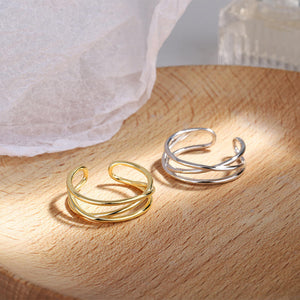
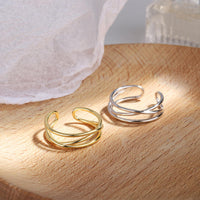
The piece they're describing → Gold Silver Stacking Ring for Women — 925 Sterling Silver, Dual Tone, Adjustable
Personalize Yours


