


Red garnet and carnelian are both red-to-orange gemstones, but they're very different. Garnet is a silicate mineral (Mohs 7–7.5) with a deep crystalline glow and costs $50–$600 per carat. Carnelian is a chalcedony quartz (Mohs 6.5–7) with a waxy, translucent look and costs just $5–$30 per carat.
TL;DR:
• Garnet = deeper red, crystalline glow, harder, more expensive ($50–$600/ct) — great for fine jewelry
• Carnelian = orange-red, waxy finish, more affordable ($5–$30/ct) — perfect for everyday wear
• Both have strong spiritual roots: garnet for passion and protection, carnelian for courage and creativity
When you're shopping for a red or orange-red gemstone, two names come up again and again: red garnet and carnelian. They can look similar at first glance, especially in photos. But hold them side by side and you'll see they're worlds apart — in mineral family, price, durability, and the energy they're said to carry. This guide breaks down every difference so you can pick the right stone for your style, budget, and intentions.
In This Guide
- What Are Red Garnet and Carnelian?
- Color: How to Tell Them Apart
- Durability and Everyday Wear
- Price Comparison
- Healing Properties and Spiritual Meaning
- Which Stone for Which Occasion?
- Frequently Asked Questions
- Final Thoughts
What Are Red Garnet and Carnelian?
Red garnet and carnelian belong to completely different mineral families. Garnet is a silicate mineral — actually a group of related minerals — most commonly found as almandine or pyrope in its red form. Carnelian is a variety of chalcedony, which is itself a microcrystalline form of quartz. Knowing this family difference explains almost every other distinction between them.
Garnet has been prized since antiquity. Vikings wore garnet-studded jewelry for protection in battle. Byzantine craftsmen inlaid it into gold cloisonné. The name comes from the Latin granatum, meaning pomegranate seed — a reference to the gem's deep red color and shape. Major sources today include Brazil, Mozambique, India, and Madagascar.
Carnelian's history is just as rich. Ancient Egyptians carved it into amulets and signet rings, believing it granted courage to the wearer. Romans used it for wax seals because hot wax doesn't stick to carnelian. Napoleon reportedly wore a carnelian seal ring. The stone is found widely in India, Brazil, and Uruguay, making it one of the most accessible gemstones on the market.
Here's a side-by-side overview of the key specs:
| Property | Red Garnet | Carnelian |
|---|---|---|
| Mineral Family | Silicate (nesosilicate group) | Chalcedony (quartz family) |
| Mohs Hardness | 7–7.5 | 6.5–7 |
| Color Range | Deep red, blood red, burgundy | Orange-red, reddish-orange, amber |
| Luster | Vitreous (glassy, crystalline glow) | Waxy to dull |
| Transparency | Transparent to translucent | Translucent, often banded |
| Price per Carat | $50–$600+ | $5–$30 |
| Chakra | Root + Heart | Sacral |
| Main Sources | Brazil, Mozambique, India | India, Brazil, Uruguay |
| Historical Use | Viking, Byzantine jewelry | Egyptian/Roman signet rings |
Color: How to Tell Them Apart
Color is where most people get confused — and it's understandable. Both stones can appear red in photos. But in person, they're quite distinct. Red garnet is a deep, rich red — think blood red, wine red, or deep burgundy. It has a glassy, crystalline inner glow. When you hold a faceted garnet up to light, it lights up from within. That's its vitreous luster at work.
Carnelian sits in a different part of the color spectrum. It leans orange-red to reddish-orange, sometimes closer to amber or burnt sienna. It doesn't glow the same way garnet does. Instead, it has a waxy, slightly soft finish. It's often semi-translucent with faint banding or cloudy patches — characteristics inherited from its chalcedony family. Some carnelian pieces are nearly solid orange; others have distinct red zones.
The easiest visual test: look at the surface quality. Garnet has a bright, sharp reflection — almost like glass. Carnelian has a softer, more matte or waxy sheen. If you can see right into the stone with nice internal clarity, it's likely garnet. If the stone looks cloudy or slightly milky when backlit, it's probably carnelian. Color-treated carnelian exists (iron-rich chalcedony heated to deepen color), so very uniform orange-red carnelian may have been heat-treated — this is common and accepted in the trade.
Garnet can also appear darker in low light, almost appearing black-red, while carnelian tends to stay in the warm orange-red range regardless of lighting. This light-sensitivity is a handy identifier when you're comparing stones in a shop or at a gem show. For a deeper dive into garnet's color varieties, see our garnet birthstone guide.
Durability and Everyday Wear
Both stones are wearable in everyday jewelry, but garnet has a slight edge on hardness. At Mohs 7–7.5, garnet sits solidly above common household dust (which averages around Mohs 7), so it resists scratching better than softer stones like opal or pearl. Carnelian at Mohs 6.5–7 is still respectable — tougher than many gems — but the lower end of its range means it can pick up fine scratches over time, especially in rings or bracelets that take a lot of abrasion.
In terms of toughness (resistance to chipping and cracking, separate from scratch hardness), carnelian actually performs well. Chalcedony has no cleavage planes, meaning it doesn't have built-in structural weak points. Garnet, while harder, does have some cleavage, which can make it more vulnerable to sharp impacts. A hard knock on a corner can chip garnet more easily than you'd expect given its hardness rating.
For rings, garnet is generally the better choice because of its higher hardness, but choose a protective setting (bezel or halo) to shield the edges. Carnelian works beautifully in rings too — historically it was the ring stone of choice for ancient signet rings — just be mindful of heavy daily wear. Both stones are excellent for necklaces and earrings, where abrasion risk is much lower. The GIA gem encyclopedia has detailed care info for both stones.
Cleaning both stones is simple: warm water, mild dish soap, and a soft cloth. Avoid ultrasonic cleaners for carnelian, as vibration can stress the microcrystalline structure. Garnet handles ultrasonics better, but steam cleaning should be avoided for both. Store them separately from harder gems like diamonds, sapphires, or rubies to prevent scratching.
Price Comparison
This is where the two stones diverge most dramatically. Red garnet — particularly fine-quality almandine or pyrope — runs $50–$600 per carat, and top-quality specimens with excellent color saturation and minimal inclusions can exceed that range. Tsavorite garnet (green) and demantoid can cost thousands per carat, but we're focused on the common red varieties here.
Carnelian is one of the most budget-friendly gemstones you can find. Good-quality carnelian retails for $5–$30 per carat. Even high-grade, well-cut pieces rarely exceed $40/ct. This affordability comes from carnelian's abundance — it's found on multiple continents, and the chalcedony family is simply more common than garnet-quality mineral formations.
For jewelry buyers, this price gap has real-world implications. A carnelian pendant might cost $20–$50. A similar-sized red garnet pendant in sterling silver could run $80–$300, and in gold settings, much more. If you love the red-orange color family but are on a budget, carnelian delivers tremendous value. If you want a more precious stone with collector value and depth, garnet is the investment.
It's also worth noting that most carnelian on the market is natural (just heat-treated to enhance color), while some garnets sold at the very low end of the price scale may be synthetic or lab-created. When buying either stone, buy from reputable jewelers who disclose treatments. The Jewelers of America buying guide covers what to ask when purchasing colored stones.
Healing Properties and Spiritual Meaning
Both red garnet and carnelian carry long traditions of spiritual and energetic use. They share some overlap — both are associated with vitality and warmth — but they work on different chakras and support different areas of life. Crystal healing isn't scientifically proven, but the traditions behind these stones span thousands of years and cultures.
Red garnet is linked to the root and heart chakras. It's a stone of passion, protection, and deep commitment. Healers traditionally use it to boost physical energy, strengthen relationships, and ground scattered energy. It's said to support the immune system, improve circulation, and bring courage in difficult times. In relationships, garnet is associated with devotion and rekindling desire — one reason it's a popular gift for anniversaries and Valentine's Day.
Carnelian governs the sacral chakra — the energy center tied to creativity, sexuality, and emotional flow. It's been called the "singer's stone" because it's thought to clarify the voice and boost confidence. Ancient Egyptians believed carnelian in its orange form represented active energy and fertility, while red carnelian symbolized the blood of Isis. Modern crystal practitioners use it to overcome procrastination, spark creative projects, and build self-trust.
| Life Area | Red Garnet | Carnelian |
|---|---|---|
| Love & Relationships | Deep commitment, passion, devotion | Attraction, emotional openness |
| Creativity | Fuels motivation and drive | Sparks ideas, overcomes blocks |
| Protection | Strong protective shield | Protects against envy and fear |
| Energy & Vitality | Physical stamina, immune support | Emotional energy, enthusiasm |
| Courage | Courage in crisis, resilience | Confidence, bold action |
| Grounding | Strong earth-root grounding | Emotional grounding and stability |
| Chakra | Root + Heart | Sacral |
Which Stone for Which Occasion?
Choosing between garnet and carnelian often comes down to your purpose. Are you buying fine jewelry that will last decades? Going for a spiritual tool? Looking for an affordable everyday piece? The table below maps each use case to the right stone.
| Occasion / Purpose | Better Choice | Why |
|---|---|---|
| Anniversary or fine gift | Red Garnet | Precious stone with lasting value; deeper symbolic meaning for love |
| January birthstone jewelry | Red Garnet | Official January birthstone |
| Budget-friendly everyday wear | Carnelian | Much more affordable; still durable enough for daily use |
| Creative work or artistic endeavors | Carnelian | Sacral chakra stone; traditionally associated with creativity and confidence |
| Protection talisman | Red Garnet | Historical warrior/traveler stone; strong protective symbolism |
| Stacking bracelets or layered necklaces | Either / Both | Pair them together — the color contrast is beautiful |
| Crystal healing practice | Depends on intent | Garnet for grounding/love; carnelian for creativity/courage |
| Gift for a teenager or young adult | Carnelian | Lower price point, trendy warm tones, meaningful without high risk if lost |
| Collector's piece | Red Garnet | Greater per-carat value; quality stones appreciate over time |
One more consideration: skin tone. Warm skin tones (yellow, olive, peachy undertones) tend to look stunning with carnelian's orange-red warmth. Cool skin tones (pink, blue, neutral undertones) often pair better with garnet's deeper, cooler red. That said, both stones are warm-toned gems overall, so personal preference matters most. For more on garnet's history as a birthstone, see our January birthstone guide.
Frequently Asked Questions
Is red garnet the same as carnelian?
No. Red garnet and carnelian are completely different minerals. Garnet is a silicate mineral with a deep crystalline red color and Mohs hardness of 7–7.5. Carnelian is a chalcedony (quartz variety) with an orange-red, waxy appearance and Mohs hardness of 6.5–7. They look similar in photos but are easy to tell apart in person.

Which is more expensive, garnet or carnelian?
Garnet is significantly more expensive. Quality red garnets cost $50–$600 per carat or more, depending on color, clarity, and cut. Carnelian typically retails for $5–$30 per carat, making it one of the most affordable gemstones available. For budget-conscious buyers, carnelian offers excellent value in the red-orange color family.
How do I tell red garnet from carnelian at home?
Look at luster and color tone. Garnet has a bright, glassy (vitreous) shine and a deep, true red color. Carnelian has a softer, waxy or slightly dull surface and leans more orange-red. Hold each stone up to a light source — garnet will glow with a crystalline inner light, while carnelian stays more translucent-cloudy. Garnet is also usually faceted, while carnelian is more often cabochon-cut or beaded.
Can carnelian be mistaken for garnet?
Yes, in low-quality photos or certain lighting conditions, carnelian and garnet can look similar. However, in person, the difference in luster, color tone, and transparency is usually obvious. A jeweler's loupe or even just bright natural light will show garnet's crystalline structure versus carnelian's waxy, microcrystalline appearance.
Is carnelian a type of garnet?
No. Carnelian is not related to garnet at all. Carnelian is a form of chalcedony, which belongs to the quartz family (silicon dioxide). Garnet belongs to a completely different mineral group — silicate minerals with a different crystal structure. They just happen to share a similar color range.
Which stone is better for everyday jewelry?
Both work for everyday wear, but garnet's higher Mohs hardness (7–7.5 vs. 6.5–7) gives it a slight edge for rings. Carnelian is excellent for necklaces, earrings, and bracelets where scratch risk is lower. Carnelian also has no cleavage, so it's actually more resistant to chipping than garnet in some impact situations.
What chakra does red garnet activate?
Red garnet is associated with both the root chakra (Muladhara) and the heart chakra (Anahata). It's used in crystal healing for grounding, physical vitality, and deepening emotional connections. Many practitioners place garnet at the base of the spine during root chakra work.
What chakra does carnelian activate?
Carnelian is the stone of the sacral chakra (Svadhisthana), located just below the navel. It governs creativity, sexuality, emotional expression, and pleasure. Crystal healers use carnelian to unblock creative energy, restore motivation, and build confidence.
Is garnet the January birthstone?
Yes. Garnet is the official birthstone for January. It's one of the oldest birthstone assignments, appearing in lists dating back centuries. Red garnet is the most traditional choice, though garnet comes in nearly every color. Learn more in our January birthstone guide.
How does red garnet compare to ruby?
Both garnet and ruby are deep red stones, but they're quite different in value and hardness. Ruby is corundum (Mohs 9) and significantly more valuable — fine rubies cost thousands per carat. Garnet is softer (Mohs 7–7.5) and much more affordable. Color-wise, ruby tends toward a purer, brighter red, while garnet can appear darker and more brownish-red. See our garnet vs ruby comparison for a full breakdown.
Can I wear garnet and carnelian together?
Absolutely. Garnet and carnelian pair beautifully together in layered necklaces or stacking bracelets. The deep red of garnet contrasts nicely with carnelian's warmer orange-red. Spiritually, they're considered complementary — garnet's grounding root energy combined with carnelian's creative sacral energy can be a powerful combination.
Is carnelian heat-treated?
Most carnelian on the market has been heat-treated. This is a standard, accepted practice in the gem trade. Chalcedony that's naturally low in iron turns orange-red when heated, deepening the color. Heat treatment is permanent and doesn't reduce the stone's value or durability. Dealers and jewelers are expected to disclose treatments, though with carnelian it's so common it's often considered a given.
Final Thoughts
Red garnet and carnelian are both beautiful, meaningful stones — they're just built for different purposes. If you want a precious gemstone with depth, durability, and investment value, red garnet is your answer — see our red garnet buying guide for how to choose one. It's the January birthstone, a stone of passion and protection, and one of the most striking red gems in the world. If you want warmth, creativity, and affordability, carnelian delivers all three with centuries of history behind it.
The good news: you don't have to choose just one. They layer together beautifully and work in harmony energetically. Whether you're buying for style, meaning, or both, either stone will bring something special to your collection.
Shop our garnet birthstone necklace in sterling silver.
All third-party trademarks, brand names and product names are the property of their respective owners. AJLuxe is not affiliated with, endorsed by, sponsored by, or otherwise connected to any third-party brand referenced in this article. Brand names are used solely for accurate comparative reference, and material descriptions reflect each brand's own published product specifications at the time of writing.
You Might Also Like
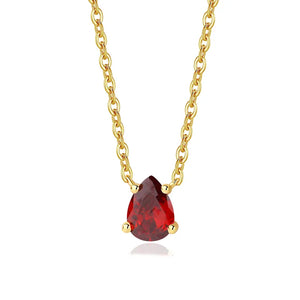
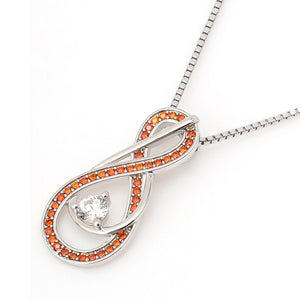

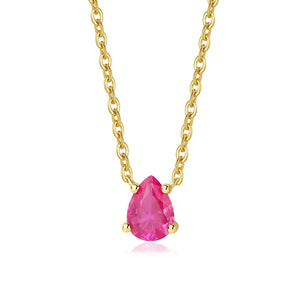
The piece they're describing → Garnet Pendant Necklace for Women — Red Garnet Teardrop, 925 Sterling Silver
Personalize Yours


