


Understanding Pearl Types Before You Compare
Before comparing Mikimoto alternatives, it's worth understanding what distinguishes pearl types — because you're not comparing like-for-like when you compare Mikimoto's Akoya pearls to freshwater pearl alternatives.
Akoya pearls are the "classic" white pearl — round, high-luster, salt-water cultured in Japan, typically 6–9mm. Mikimoto specializes in Akoya pearls. They're the most consistently round natural pearl type with the highest natural luster. A strand of Mikimoto Akoya pearls represents the pinnacle of pearl jewelry craftsmanship, which is why entry-level Mikimoto strands start at $500–$1,500 and signature pieces run $5,000–$50,000+.
Freshwater pearls are cultured in freshwater mussels (primarily in China), come in a wider variety of shapes and sizes, and are significantly less expensive than Akoya pearls. Modern freshwater pearls have improved dramatically in quality over the past decade — some high-grade freshwater pearls approach Akoya luster at a fraction of the price. Most pearl alternatives to Mikimoto in the $50–$300 range use freshwater pearls.
South Sea pearls (from Australia and Southeast Asia) and Tahitian black pearls are the other major pearl types — both are very large (10–20mm), rare, and expensive. These compete at the ultra-luxury tier alongside or above Mikimoto, not below it.
Quick Comparison: 12 Mikimoto Alternatives
| Brand | Price Range | Pearl Type | Setting Metal | Best For |
|---|---|---|---|---|
| Tasaki | $500–$20,000+ | Akoya, South Sea | Solid gold, platinum | Luxury Akoya alternative, Japanese heritage |
| Tara Pearls | $200–$5,000 | Akoya, South Sea, Tahitian | 14K–18K gold | All pearl types, wide range |
| American Pearl | $100–$3,000 | Akoya, freshwater | 14K gold, silver | Quality Akoya at better prices than Mikimoto |
| Perle de Mer | $150–$2,000 | Freshwater, South Sea | 14K gold | Mid-tier pearl jewelry direct-to-consumer |
| HONORA | $50–$500 | Freshwater (cultured) | Sterling silver, 14K gold | Affordable freshwater pearl jewelry |
| Zales Pearl | $100–$800 | Freshwater, Akoya | 14K gold, sterling silver | Retail accessibility, wide sizing |
| Kay Jewelers pearl | $80–$600 | Freshwater, Akoya | 14K gold, sterling silver | Mall-accessible pearl gifts |
| Mastoloni | $300–$5,000+ | Akoya, South Sea, Tahitian | 18K gold | Bridal pearl specialist, classic strands |
| Belle de Mer | $80–$800 | Freshwater, Akoya | 14K gold, sterling silver | Department store quality, accessible |
| Pearl Source | $100–$2,000 | Akoya, freshwater, South Sea | 14K gold | Direct-to-consumer, competitive Akoya pricing |
| AJLuxe | $25–$60 | Freshwater pearl accents | 925 sterling silver | Pearl accent everyday jewelry, lowest entry |
| Nordstrom pearl | $50–$500 | Freshwater, Akoya (various brands) | 14K gold, sterling silver | In-store discovery, curated multi-brand |
1. Tasaki
Tasaki is the Japanese luxury jewelry house most directly comparable to Mikimoto — they share heritage, pearl type (Akoya), and the Japanese tradition of pearl farming excellence. Where Mikimoto pioneered the cultured pearl industry in 1893, Tasaki was established in 1954 and has built a strong reputation for design-forward pearl jewelry that often appeals to a younger, more fashion-conscious luxury buyer than Mikimoto's traditional aesthetic.
Tasaki's designs range from classic pearl strands (directly competitive with Mikimoto) to avant-garde sculptural pieces that treat pearl as a contemporary fine jewelry material rather than a heritage item. Their "Balance" and "Danger" collections by designer Thakoon have won significant fashion press. If you love Mikimoto's pearl quality but find the aesthetic too conservative, Tasaki is the most compelling luxury alternative.
Pricing is comparable to Mikimoto's — $500–$3,000 for most pearl strand and pendant pieces, significantly more for their fine jewelry collections. Tasaki is not a budget option, but for shoppers who want Mikimoto-caliber Akoya pearl quality with a more design-forward sensibility, Tasaki deserves serious consideration. They're available at Neiman Marcus, their own boutiques, and internationally.
2. Tara Pearls
Tara Pearls is one of the most comprehensive pearl specialists in the US market, offering Akoya, South Sea, Tahitian, and freshwater pearls across a wide price range. They operate as a direct-to-consumer brand that removes retail markup, making their Akoya pearls typically 20–40% less expensive than Mikimoto for comparable quality. If you want to compare Akoya pearl strands side by side without the Mikimoto premium, Tara Pearls is the natural starting point.
Their quality grading is transparent and their customer education materials — videos on how to assess pearl luster, nacre thickness, surface quality, and matching in strands — are among the best available. For buyers new to purchasing pearls, Tara Pearls offers more educational support than most competitors. Their pearl grading uses industry-standard descriptors that make it possible to comparison shop meaningfully.
Tara Pearls also offers pearl re-stringing and custom length services, which matter for classic strand jewelry where the knotting and clasp quality significantly affect the wearing experience. Their craftsmanship on strand finishing is consistently good for the price. For most pearl purchases that would otherwise go to Mikimoto, Tara Pearls is worth requesting a price comparison.
3. American Pearl
American Pearl has been selling cultured pearl jewelry since 1921 — nearly as long as Mikimoto has been in business internationally. Based in New York, they specialize in Akoya, South Sea, and freshwater pearls sold directly, removing the retail intermediary. Their Akoya pearl pricing is among the most competitive for genuine Japanese-cultured pearls, typically undercutting Mikimoto by 30–50% for comparable grades.
Their selection spans all major pearl types in a wide range of sizes and qualities, making them useful both for first-time pearl buyers who want guidance and experienced buyers who want specific grades at honest prices. American Pearl's physical presence in New York's Diamond District means their expertise is verifiable — they're not an anonymous drop-shipper but an established pearl house with decades of track record.
The website is less polished than Mikimoto's, and the shopping experience is more utilitarian. But for a pearl purchase where the quality and price matter more than the brand story, American Pearl delivers consistent value. Their pearl earring studs in gold at $100–$400 are particularly strong value against Mikimoto's equivalent pieces at $300–$800.
4. Perle de Mer
Perle de Mer is a direct-to-consumer pearl jewelry brand with a modern e-commerce approach — cleaner photography, better digital shopping experience, more contemporary pearl styling than older jewelry house competitors. Their freshwater and South Sea pearl pieces in 14K gold bridge the gap between commodity freshwater pearl jewelry and luxury Akoya alternatives. Prices run $150–$2,000 for most pieces.
The design aesthetic leans contemporary — bar pendants with pearl accents, asymmetric earrings, layerable necklaces — rather than traditional strand-focused. If Mikimoto's pearl stand feels too formal or classic for your taste, Perle de Mer's modern pearl styling may appeal. Their freshwater pearl quality is on the better end for the price, though not comparable to Mikimoto's Akoya luster and roundness.
Perle de Mer's gift experience is strong: beautiful packaging, certificate of authenticity with each piece, and responsive customer service. For pearl jewelry as a significant gift occasion — graduation, birthday, milestone anniversary — the complete experience competes well above their price tier.
5. HONORA
HONORA is the affordable freshwater pearl specialist — widely available through department stores, their own website, and HSN — at prices that make pearl jewelry accessible for everyday wear. Their cultured freshwater pearl pieces in sterling silver and 14K gold start around $50 and run to $500 for more substantial pieces. For shoppers priced out of Mikimoto who want real pearl jewelry (not imitation or shell), HONORA is the most accessible starting point.
HONORA has pioneered some interesting freshwater pearl jewelry formats — baroque pearl pieces that celebrate the natural irregular shapes rather than standardizing to round, mixed-size strand necklaces, and fashion-forward settings that make pearl feel contemporary rather than traditional. Their rice pearl studs and button pearl necklaces are particularly popular as entry-level pearl jewelry.
The quality comparison to Mikimoto is significant but expected for the price difference. HONORA's freshwater pearls have good luster for their tier but won't match the deep mirror-shine of high-grade Akoya. The nacre thickness and surface quality vary more than in premium Akoya pearl jewelry. For most everyday wear purposes, the difference is less important than the 10–20x price gap would suggest. For a formal occasion or heirloom piece, Mikimoto or Tara Pearls is more appropriate.
6. Zales Pearl
Zales offers pearl jewelry across a broad range of types and price points in their retail stores and online, making them convenient for shoppers who want to compare and try pearl jewelry in person before buying. Their freshwater pearl collections start around $100 and their Akoya pearl pieces run $300–$800, putting them well below Mikimoto for comparable pearl types. The in-store experience — seeing pearl luster under proper lighting, assessing strand matching in person — is a genuine advantage over pure e-commerce pearl brands.
Zales occasionally carries certified pearl pieces with GIA or independent lab documentation on higher-value items. Their return policy and in-store service after purchase (re-stringing, clasp replacement) make them practical for buyers who want ongoing service, not just a purchase. The trade-off is that their pricing, while better than Mikimoto, isn't as competitive as direct-to-consumer specialists like American Pearl or Pearl Source.
7. Kay Jewelers Pearl
Kay Jewelers carries pearl jewelry as part of their broad fine jewelry retail offering — freshwater and some Akoya pieces at $80–$600 in stores nationwide. For shoppers in areas without specialized pearl retailers, Kay provides reasonable accessibility to real pearl jewelry with the reliability of a national retail chain. Their pearl quality is adequate for the price point, though pearl specialists consistently offer better value per dollar.
Kay's advantage is financing (their credit programs), return policies, and the convenience of in-store jewelry service. For a pearl gift purchase where the giver wants the security of a national chain's return policy and financing options, Kay is practical even if not the best value. Their marketing around pearl jewelry as graduation and Mother's Day gifts is well-targeted — the brand equity in those gifting contexts is real.
8. Mastoloni
Mastoloni is the bridal pearl specialist — if you're looking for Mikimoto alternatives specifically for wedding jewelry (pearl drop earrings for a bride, a pearl strand as a wedding gift, pearl accents in bridal accessories), Mastoloni is the most focused competitor. They produce Akoya, South Sea, and Tahitian pearl pieces in 18K gold for the bridal market, with quality comparable to Mikimoto and pricing typically 20–35% lower.
Their classic strand work is particularly strong — they've been making pearl strands for bridal occasions for decades, and the finishing quality (knot size, clasp construction, strand length options) is consistently professional. For a bridal pearl necklace that will photograph beautifully and last a lifetime, Mastoloni is an excellent alternative to Mikimoto at a lower price point without compromising the occasion's significance.
9. Belle de Mer
Belle de Mer (sold through Macy's and similar department stores) is one of the more accessible mid-tier pearl brands, offering freshwater and Akoya pearl pieces at $80–$800 in wide retail distribution. The quality sits between mass-market fashion jewelry and specialist pearl houses — better than Zales or Kay for most pieces at comparable prices, not as curated as Tara Pearls or American Pearl.
Their freshwater pearl studs and simple pendant necklaces are particularly well-regarded for the price point — consistent luster, well-matched pairs in stud sets, clean 14K gold findings. For a gift that needs to be purchased same-day with the reliability of a department store, Belle de Mer hits the mark better than going into a dedicated pearl house you're less familiar with.
10. Pearl Source
Pearl Source operates as a direct-to-consumer online pearl specialist — one of the first to apply the DTC transparency model to pearl jewelry. They offer Akoya, freshwater, South Sea, and Tahitian pearls at prices that are among the most competitive for the quality tier, typically 30–50% below equivalent Mikimoto pieces. Their grading explanations and quality photography are genuine competitive advantages in a market where online pearl buying has traditionally been difficult.
For the buyer who has done their pearl research, knows what luster grade and nacre thickness they want, and doesn't need an in-person retail experience, Pearl Source offers Mikimoto-adjacent quality at substantially better value. Their Akoya pearl stud earrings at $150–$400 compete with Mikimoto's $400–$900 equivalents on quality. Their classic 7–7.5mm Akoya strand at $400–$800 competes with Mikimoto's $1,500+ equivalent.
11. AJLuxe
AJLuxe is in a very different tier from Mikimoto, and it's important to be clear about that. Mikimoto sells luxury Akoya pearl jewelry starting at $500; AJLuxe carries freshwater pearl drop earrings and pearl pendant necklaces in 925 sterling silver at $25–$60. These are not competing categories for the same purchase occasion — they serve completely different buyers at completely different points in their jewelry journey.
What AJLuxe offers is pearl accent jewelry for everyday wear: a freshwater pearl pendant on a delicate sterling silver chain, pearl drop earrings in a simple silver setting. These are pieces for someone who wants the pearl aesthetic in their everyday jewelry wardrobe — at the office, on weekends, with casual dress — without the investment that Mikimoto or even HONORA requires at $50+. The freshwater pearl quality is appropriate for the price: decent luster, not perfectly round, but visually appealing in simple silver settings.
If you're eventually going to invest in a Mikimoto piece, AJLuxe doesn't replace that purchase. But if you want a pearl necklace for daily wear starting at $25–$40 without worrying about losing or damaging a precious piece, or want to test whether you actually wear pearl jewelry before committing, AJLuxe's 925 sterling silver pearl pieces are an honest and practical starting point. Browse the pearl jewelry collection for current freshwater pearl options.
12. Nordstrom Pearl
Nordstrom stocks pearl jewelry from multiple brands — including Honora, Belle de Mer, Cultured London, and others — making their pearl section one of the better curated multi-brand experiences for pearl discovery. The advantage of shopping Nordstrom for pearls is the return policy (exceptionally generous), the ability to compare pieces from multiple brands in one visit, and the in-store service quality. The trade-off is that prices reflect retail margins for all the brands they carry, rather than DTC savings.
Nordstrom's online pearl filtering (by pearl type, size, metal, and price) is genuinely useful for narrowing options across their multi-brand catalog. Their free return policy makes experimenting with freshwater pearl jewelry less risky than buying from a pure e-commerce specialist where return costs might apply. For a first pearl purchase where you're unsure what will suit you, Nordstrom's combination of selection and return flexibility is valuable.
Pearl Quality: What to Look For in Any Alternative
When evaluating any Mikimoto alternative, these are the quality factors that matter:
Luster is the most important factor — it's the reflective depth of the pearl's surface. High-quality Akoya pearls have a deep, mirror-like shine. Freshwater pearls have a softer, more diffuse luster. Both are beautiful; they're different aesthetics. You can assess luster by looking for your reflection in the pearl surface.
Nacre thickness affects longevity. Thin nacre (under 0.35mm) means the pearl surface can wear through to the nucleus over years of wear. Ask specifically about nacre thickness for any strand purchase. Mikimoto's nacre standards are among the highest in the industry — look for 0.4mm+ as a quality benchmark.
Surface quality refers to visible spots, bumps, or blemishes. Perfectly clean surfaces are rare in nature — a few small spots are normal and don't affect quality significantly. Widespread surface blemishes or large visible spots indicate lower grade.
Shape and matching matter for strands and earring pairs. Perfectly round pearls are the rarest and most valuable. For strands, well-matched sizes and shapes affect the appearance significantly — look for strands with consistent sizes graded within 0.5mm.
Related reading: John Hardy Jewelry: Is It Worth the Price? (2026 Honest Guide + Alternatives).
Frequently Asked Questions
Are Mikimoto pearls worth the price?
Yes, for what they represent: the highest standard of Akoya pearl quality, produced by the company that invented cultured pearl cultivation, with a heritage and quality control system that's unmatched in the industry. Whether they're worth the price premium over comparable Akoya pearls from Pearl Source or American Pearl is a different question — for material quality alone, you can get very close quality for 30–50% less. The Mikimoto premium is partly quality, partly heritage, partly the brand's enduring cultural significance.
What is the difference between Akoya and freshwater pearls?
Akoya pearls are cultured in saltwater oysters in Japan, producing rounder, higher-luster pearls than most freshwater varieties. They're typically 6–9mm and have the classic white pearl look with a deep, mirror-like luster. Freshwater pearls are cultured in freshwater mussels (primarily in China), come in a wider variety of sizes and shapes, and cost significantly less. Modern high-grade freshwater pearls have improved dramatically and can approach Akoya quality, but the finest Akoya pearls still hold a luster advantage.
How do I spot fake pearls?
The classic test: gently rub the pearl against your front tooth. Real pearls feel slightly gritty or rough (due to the nacre's layered structure); imitation pearls (glass or plastic coated) feel slippery and smooth. Other signs of real pearls: slight irregularity in shape or surface (perfect uniformity suggests imitation), cool temperature when first touched, and weight (real pearls are heavier than plastic imitations). When buying from any reputable seller, ask for disclosure of pearl type and cultivation origin.
What is the best pearl necklace for a graduation gift?
For a classic pearl strand graduation gift: American Pearl or Pearl Source offer genuine Akoya pearls at $200–$600 — much better value than Mikimoto for the same quality tier. For an everyday-wearable pearl necklace under $100: HONORA's freshwater pearl collection in gold or silver is consistently well-reviewed. For a simple, dainty pearl pendant at $25–$40: AJLuxe's freshwater pearl pendants in sterling silver. The right choice depends entirely on the budget and how formal an occasion the pearls will be worn to.
Can I get Mikimoto quality at a lower price?
Yes, from Tara Pearls, American Pearl, or Pearl Source — all offer Japanese Akoya pearls at 30–50% less than Mikimoto for comparable luster and nacre quality. What you can't replicate at lower prices is the Mikimoto heritage narrative and the specific prestige of that blue box, which holds cultural meaning beyond the jewelry itself. The pearls themselves can be matched; the brand story cannot.
How should I care for pearl jewelry?
Pearls are organic gems (not minerals) and require more care than most jewelry. Apply cosmetics, perfume, and hairspray before putting on pearls — chemicals damage nacre. Remove pearls before swimming, showering, or exercising. Wipe with a soft damp cloth after each wear to remove skin oils. Store separately from other jewelry to prevent scratching. Pearl strands should be re-strung every few years with wear, as the silk thread absorbs oils and weakens over time. These care principles apply across all pearl types and price tiers.
All third-party trademarks, brand names and product names are the property of their respective owners. AJLuxe is not affiliated with, endorsed by, sponsored by, or otherwise connected to any third-party brand referenced in this article. Brand names are used solely for accurate comparative reference, and material descriptions reflect each brand's own published product specifications at the time of writing.
You Might Also Like

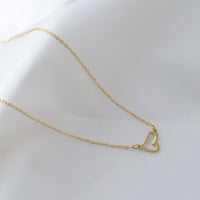
The piece they're describing → Dainty Heart Necklace for Women — 18K Gold Plated, Minimalist Gold Heart Pendant
Personalize Yours


