


- Seven main men's bracelet styles: chain, cuff, bangle, beaded, leather, charm, and tennis bracelet
- Measure your wrist and add 0.5" for a fitted feel, 0.75"–1" for a casual or relaxed fit
- Start with one or two bracelets before building a three-piece stack — subtlety reads more intentional
- Remove bracelets before swimming or heavy exercise; wipe down sterling silver and gold-plated pieces after wear
Bracelets are often the most overlooked piece of men's jewelry — and, ironically, the easiest place to start. Unlike a necklace (which sits at the neck and draws immediate attention) or a ring (which requires you to know your size), a bracelet sits on the wrist with almost no barrier to entry. You put it on, it moves naturally with your hand, and it adds texture and dimension to an outfit without demanding anything from you. This guide covers all seven men's bracelet styles, how to measure your wrist, how to layer 2–3 pieces without it looking cluttered, and how to care for what you buy.
Related reading: the real gold vs. plated vs. gold-tone steel breakdown for a men's bracelet.
The 7 Main Men's Bracelet Styles
Men's bracelets span a wide range of aesthetics — from polished chain bracelets worn to the office, to chunky cuffs worn to a concert. Here's how they break down:
| Style | Material | Vibe | Occasion |
|---|---|---|---|
| Chain bracelet | Sterling silver, gold-plated | Clean, modern, versatile | Everyday, office, casual, date night |
| Cuff | Sterling silver, stainless, gold | Bold, sculptural, confident | Evening, weekend, statement dressing |
| Bangle | Metal (rigid closed ring) | Minimal, architectural | Casual, stacking, fashion-forward |
| Beaded / gemstone | Natural stone, lava, crystal | Casual, bohemian, mindful | Weekend, travel, layering piece |
| Leather | Leather (often with metal clasp) | Rugged, casual, relaxed | Casual, outdoor, festival |
| Charm bracelet | Sterling silver chain + charms | Personal, expressive, storytelling | Gifting, personal milestone, everyday |
| Tennis bracelet | Metal with set stones | Luxe, refined, dressy | Evening, special occasion, gifting |
For most men starting out, the chain bracelet is the right first move. It's the most wearable, the most gender-neutral in modern styling terms, and the style that layers most easily with other pieces. Cuffs and beaded bracelets make strong second and third additions to a stack. For the full method — metal mixing, watch pairing, and wrist-size adjustments — see our complete guide to stacking bracelets.
How to Find Your Bracelet Size
Bracelet fit is simpler than ring sizing but just as important. A bracelet that's too tight looks constrictive; one that's too loose slides up your forearm and catches on everything.
Step 1: Wrap a flexible measuring tape (or a strip of paper) around your wrist just below the wrist bone. Note the measurement in inches.
Step 2: Add your preferred ease:
- +0.5" — fitted feel; sits close to the wrist, minimal movement
- +0.75" — standard fit; the most common preference for chain bracelets
- +1" — relaxed/loose fit; sits lower on the wrist, moves freely
Average men's wrist sizes and standard bracelet lengths:
- Small wrist (6.5"–7") → bracelet size 7"–7.5"
- Medium wrist (7"–7.5") → bracelet size 7.5"–8" (most common men's size)
- Large wrist (7.5"–8.5") → bracelet size 8"–9"
When in doubt, size up rather than down. A slightly loose chain bracelet is more comfortable and more stylish than one that pulls taut across the wrist. Most chain bracelets have an adjustable clasp that gives you 0.5"–1" of extra range — check the product listing before buying.
How to Layer Men's Bracelets
The goal with bracelet layering is texture and contrast — pieces that look like they belong together without being identical. Here's how to build a stack that reads as intentional:
The 2-bracelet rule (easy entry): Start with two bracelets on the same wrist. A chain bracelet paired with a beaded bracelet is the most reliable combination — one smooth metal piece, one textured natural stone piece. Different materials, similar scale. Wear both on the dominant or non-dominant wrist (whichever you prefer — there's no rule).
The 3-bracelet stack (fully curated): Add a third piece — a slim cuff or a plain bangle — to your two-piece foundation. The third piece should be the thinnest of the three so it doesn't compete. Order them loosely from thinnest to chunkiest moving from the hand up toward the elbow.
Mixing textures: The most flattering men's stacks combine at least two different materials: metal + stone, metal + leather, or metal + metal with different finishes (polished + matte). Three pieces in the same material and same finish tend to look uniform rather than layered.
Same wrist vs. opposite wrist: Wearing bracelets on your watch wrist alongside your watch is a strong look if you're deliberate about it — keep the bracelets simple (a single slim chain or a bead bracelet) so they don't compete with the watch. Alternatively, wear your watch on one wrist and your bracelet stack on the other. Both approaches are valid.
The ceiling: Three bracelets on one wrist is a practical limit for most men in everyday contexts. For casual or festival settings, four can work. Beyond that, movement gets restricted and the look becomes the focal point of the entire outfit rather than an accent.
Shop Men's Bracelets at AJLuxe →
Our charm bracelet collection includes sterling silver chain styles that work as a standalone piece or as the foundation of a layered stack. For a natural stone layering piece, explore our gemstone and crystal jewelry — 8–10mm beaded styles in men's-appropriate scale.

Best Metals and Materials for Men's Bracelets
| Material | Longevity | Care | Cost | Best For |
|---|---|---|---|---|
| Sterling silver | Years with care | Polish; avoid chlorine | $$ | Everyday, gifting, versatile style |
| 18K gold-plated over sterling | 1–3 years with care | Avoid sweat, perfume; wipe dry | $$ | Warm-tone preference, gifting, occasion wear |
| Stainless steel | Very long | Wipe clean; minimal effort | $ | Active lifestyles, gym, daily rough wear |
| Leather | 1–2 years | Keep dry; condition periodically | $–$$ | Casual, layering with metal piece |
| Gemstone / beaded | Years (elastic wears) | Avoid soaking; re-string over time | $–$$ | Layering texture, casual, mindful/personal |
For men who want one reliable everyday bracelet, sterling silver is the most balanced choice — classic look, reasonable durability, widely available in chain and cuff styles, and easy to care for. For gifting, gold-plated over sterling reads as more luxurious and is the more giftable presentation. For maximum longevity and low maintenance, stainless steel is the practical answer.
Men's Bracelets by Occasion
Different settings call for different levels of presence. Here's a quick map:
- Casual / weekend: Beaded gemstone bracelet, leather wrap, or a single relaxed chain. These tolerate being bumped around and read as personal rather than formal.
- Office / professional: A thin sterling silver chain bracelet (7–8mm wide) or a minimal polished cuff. Nothing that jangles loudly or slides onto the desk when you type. Stick to one piece.
- Evening / date night: A gold-plated chain bracelet or polished cuff worn alone makes the biggest visual impact in low light. This is also where a tennis bracelet earns its place for men who enjoy a more luxe aesthetic.
- Gifting: A personalized charm bracelet with one or two meaningful charms is the strongest gift choice — it's personal, wearable, and not something most men buy for themselves. A clean chain in sterling silver or gold-plated is the safe universal gift.
How to Care for Men's Bracelets
Bracelets take more wear than almost any other piece of jewelry — they're on the wrist through handwashing, typing, exercise, and everything else. A few habits extend their life significantly:
- Remove before swimming. Chlorine in pools is the fastest way to degrade sterling silver plating and damage elastic cords on beaded bracelets. Saltwater is similarly harsh. Take them off before you get in.
- Wipe down after wear. Sweat contains salt and oils that accelerate tarnish on silver and gold-plated pieces. A quick wipe with a soft cloth after a long day or a workout is enough.
- Avoid perfume and cologne directly on bracelets. Spray first, then put on your jewelry — the alcohol in fragrance breaks down plating faster than almost anything else.
- Store separately. Metal on metal scratches. Keep bracelets in separate pouches or compartments when you're not wearing them. This matters especially for polished finishes on silver and cuffs.
- Re-string beaded bracelets as needed. Elastic cord on beaded bracelets weakens over time, especially if the bracelet gets wet frequently. Most jewelers will re-string for a small fee, and the stones themselves last indefinitely.
What to Look for When Buying a Men's Bracelet
Before buying a men's bracelet, check four things: whether the metal is actually skin-safe (not just marketed that way), what kind of clasp it uses, whether the price matches the material claimed, and whether any plating is disclosed rather than glossed over as simply "gold." Get those four right and style/fit are the only decisions left.
- Skin safety, not just "looks nice." Nickel is the most common cause of a reaction to everyday jewelry, and it shows up in a lot of low-cost costume pieces without any warning on the listing. Sterling silver and 18K gold-plated-over-sterling pieces are hypoallergenic and safe for sensitive skin — look for that spelled out explicitly, not implied.
- Clasp type. A lobster or toggle clasp with an adjustable extender (0.5"–1" of range) is worth more long-term than a fixed-length bracelet, since it survives sizing mistakes and small wrist-size changes over time. Cheap spring-ring clasps are the first part of a bracelet to fail.
- Price-to-material honesty. A sterling silver or gold-plated-over-sterling chain bracelet from a direct-to-consumer brand typically runs $25–$80 — below that range in "silver" or "gold," and the metal is almost never what the listing implies; well above it, you're paying mostly for brand markup rather than material. AJLuxe's own bracelets sit in that $24.99–$79.99 band, all 925 sterling silver or 18K gold plating over sterling silver, stated as such rather than sold as solid gold.
- Plating disclosure. "Gold-plated," "gold-filled," and "solid gold" are three different products with three different lifespans — a listing that just says "gold" without naming which one is a red flag. The FTC's Jewelry Guides require plated pieces to be labeled as plated rather than sold as solid gold; a brand that skips this on its own product pages is worth a second look before you buy.
Run any bracelet you're considering — for yourself or as a gift — through those four checks before comparing styles. A $30 bracelet that's honestly sterling silver and clearly labeled beats a $30 bracelet marketed simply as "gold" with no metal disclosure at all.
For an electrician specifically, see our gifts for an electrician guide.
Shopping for a truck driver? Our gifts for a truck driver guide covers what fits life on the road.
For a welder, our gifts for a welder guide covers real arc-safety rules.
Frequently Asked Questions
What is the most popular bracelet style for men?
Chain bracelets are the most popular men's bracelet style — they're the most versatile, pair with almost any outfit and metal tone, and are available in a wide range of widths and link styles (box chain, curb chain, figaro, rope). A sterling silver or gold-plated chain bracelet in the 7"–8" size range is the single safest bracelet purchase for most men.
What size bracelet do men wear?
The most common men's bracelet size is 7.5" or 8". Most men have wrists measuring 7"–8", and adding 0.5"–1" of ease puts them in the 7.5"–9" finished length range. When a bracelet comes in one size (often listed as "fits most"), it's usually 8" — which fits the majority of adult men comfortably with a standard fit.
How do men measure their wrist for a bracelet?
Wrap a flexible measuring tape or a strip of paper around your wrist just below the wrist bone — the prominent bone on the outside of the wrist. Mark the point where it meets and measure the length in inches. That number is your wrist circumference. Add 0.5" for a fitted bracelet, 0.75" for a standard fit, or 1" for a loose, casual hang.
Can men wear bracelets on both wrists?
Yes — there's no rule against it, and many men do wear pieces on both wrists, often with a watch on one side and a bracelet stack on the other. The most common setup is a watch on the dominant wrist and a bracelet or two on the non-dominant wrist. Wearing a single slim bracelet on the same wrist as a watch (on the other side of the watch, near the hand) is also a common and clean look.
How do men layer bracelets without it looking overdone?
The key is contrast in material and texture. A chain bracelet + a beaded bracelet is the most reliable two-piece combination — different materials, similar scale. For three pieces, add a slim cuff or bangle as the thinnest element. Keep metal tones consistent (all silver or all gold). Three pieces on one wrist is the practical ceiling for everyday settings; more than that requires a more deliberate fashion context.
Should a man's bracelet match his watch?
Not exactly, but they should coordinate. If your watch has a silver or stainless case, a sterling silver bracelet pairs naturally. If your watch has a gold-tone case or bezel, a gold-plated bracelet reads more cohesive. The fit matters too — a slim, flat chain bracelet sits alongside a watch without fighting for space, while a wide cuff may look cluttered right next to a large watch head. When in doubt, wear the bracelet on the opposite wrist from the watch.
What metal is best for a men's everyday bracelet?
Sterling silver is the most balanced choice for everyday wear — it looks clean and classic, is widely available in a variety of styles, and is easy to maintain with occasional polishing. Stainless steel is more durable and requires less care, but comes in fewer styles. Gold-plated over sterling looks the most premium but requires more careful handling (avoid chlorine, sweat, and perfume contact) to maintain the plating long-term.
What bracelets are appropriate for a professional or office setting?
In a professional or office context, one slim, polished bracelet is the safe choice. A thin sterling silver or gold-plated chain bracelet (7–8mm wide) or a minimal flat cuff works well. Avoid anything that makes noise when you move (jangly bangles, loose charm bracelets), anything wider than about 15mm, or anything with a very casual material like leather or knotted cord. One piece worn quietly reads as intentional; multiple pieces in a formal setting require more sartorial confidence to carry off.
Do bracelets tarnish?
Sterling silver and gold-plated over sterling will tarnish over time, especially with exposure to sweat, humidity, chlorine, and perfume. This is normal — tarnish is a surface oxidation layer, not permanent damage. Sterling silver can be restored easily with a polishing cloth or silver polish. Gold plating eventually wears through with very heavy daily use, but proper care (wiping dry after wear, storing separately, avoiding harsh chemicals) significantly extends its life. Stainless steel, titanium, and tungsten do not tarnish.
What is a good starter bracelet for a man who has never worn jewelry?
The best first bracelet is a slim sterling silver chain bracelet — 6–8mm wide, in a classic curb or box chain, at your wrist size plus 0.75". It's the most wearable style for a first-timer: it sits close to the wrist without drawing heavy attention, works with casual and semi-formal outfits, doesn't require any styling decisions, and doesn't compete with a watch. Start with one piece, wear it daily for two weeks, and add a second piece once it starts to feel natural.
Final Thoughts
Men's bracelets are the easiest category of jewelry to start with — the fit is forgiving, the styles range from invisible-minimal to bold statement, and the entry price point is low enough to experiment without commitment. Whether you're shopping for yourself or looking for a gift, a sterling silver chain bracelet is almost always the right first move.
Build the stack gradually. Start with one piece, wear it until it becomes part of how you dress, then layer in a second. The men who look best in multiple bracelets aren't wearing more — they're wearing pieces that each have a reason to be there. A chain for the everyday, a beaded piece for personality, a cuff for occasions when you want more presence. Three pieces with intention beats six pieces added all at once.
Explore our sterling silver charm bracelet collection for a chain bracelet that works as a standalone or as a stack foundation. For a natural stone layering piece in men's-appropriate bead sizing (8–10mm), our crystal and gemstone collection has options that pair well with silver or gold-toned chain pieces. For everything else in men's jewelry — rings, necklaces, earrings — our complete men's jewelry guide covers it all in the same depth.
All third-party trademarks, brand names and product names are the property of their respective owners. AJLuxe is not affiliated with, endorsed by, sponsored by, or otherwise connected to any third-party brand referenced in this article. Brand names are used solely for accurate comparative reference, and material descriptions reflect each brand's own published product specifications at the time of writing.
You Might Also Like
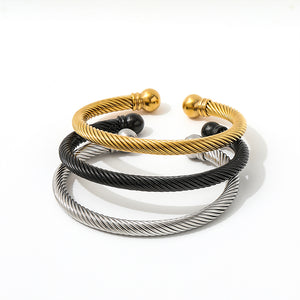

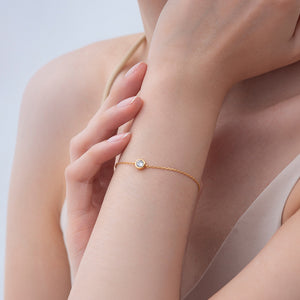
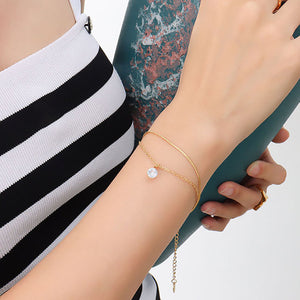
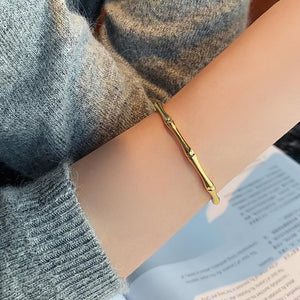
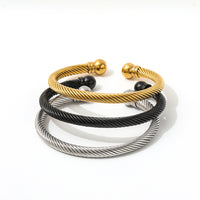
The piece they're describing → Cable Chain Cuff Bracelet — 18K Gold Plated, Open Cuff, Adjustable
Personalize Yours


