


Few symbols carry as much weight across so many different cultures as the lotus flower. From the temples of ancient India to the meditation halls of Japan, from Egyptian hieroglyphs to modern wellness tattoos, the lotus appears everywhere humans have wanted to capture the idea that something beautiful and pure can emerge from darkness. This guide covers every dimension of its meaning: the symbolism, the colors, the cultures, and, for those who wear it, what it says about the person carrying it.
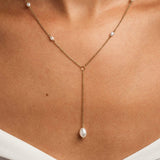
Shop our freshwater pearl necklace, like the lotus, a pearl forms through difficulty in water before emerging as something pure and luminous. Both are symbols of the same quiet strength.
What Does the Lotus Flower Mean?
The lotus flower means purity, spiritual awakening, rebirth and resilience, and all four come from one fact: the plant is rooted in mud. It grows through murky, stagnant water, and yet every morning it opens clean and unblemished on the surface. Nothing sticks to it. This is where all its symbolism originates.
The four core meanings are:
- Purity, The lotus rises unstained from muddy conditions, representing a mind or heart that remains clear regardless of difficult circumstances.
- Enlightenment and spiritual awakening, The journey from muddy depths to open air maps perfectly onto the soul's journey from ignorance to wisdom.
- Rebirth and renewal, Lotus flowers close at night, sink beneath the water, and re-emerge each morning. This daily cycle has made the lotus a universal symbol of resurrection and fresh starts.
- Resilience, The lotus does not avoid difficulty; it grows through it. This makes it one of the most widely used symbols for overcoming hardship without losing beauty or grace.
The Lotus Across Religion and Culture
Buddhism
In Buddhism, the lotus is the most important floral symbol. The padma (Sanskrit for lotus) appears beneath the feet of the Buddha and bodhisattvas in virtually every artistic representation. The position of the lotus in a painting carries meaning: a lotus fully above water signals complete enlightenment; a lotus still partially submerged represents a being still working through the world of illusion toward awakening.
The lotus is also central to the famous mantra Om Mani Padme Hum, often translated as "the jewel in the lotus", which invokes the idea of enlightenment as the jewel hidden within the flower of the human experience.
Hinduism
In Hinduism, the lotus (Kamala) is the seat of the divine. Brahma the creator emerges from a golden lotus growing from Vishnu's navel at the beginning of creation. Lakshmi, goddess of wealth and beauty, stands on a pink lotus. Saraswati, goddess of wisdom and learning, sits on a white one. The lotus in Hinduism specifically represents divine beauty paired with non-attachment, the gods touch the world but are not contaminated by it, just as the lotus touches water but stays dry.
Ancient Egypt
Egypt's relationship with the lotus predates Buddhism and Hinduism by thousands of years. What Egyptians called the "lotus" was actually the blue water lily (Nymphaea caerulea), a related but distinct plant, though the symbolism transferred cleanly. In Egyptian cosmology, the sun rose from a great lotus floating on the primordial waters of chaos. This made the lotus a symbol of creation, the sun, and the beginning of all life. Hieroglyphs of the lotus appear in funerary contexts because the daily death-and-rebirth of the lotus mapped onto ideas of the afterlife.
China and Taoism
In Chinese culture, the lotus carries additional layers that Western interpretations often miss. The Taoist philosopher Zhou Dunyi wrote the famous essay Ode to the Lotus in the 11th century, arguing that the lotus, unlike the peony (riches) or chrysanthemum (reclusion), represented the ideal of the junzi: a noble person who lives among the world's impurity without being corrupted by it. In Confucian tradition, the lotus became a metaphor for the virtuous person who maintains moral integrity despite a corrupt environment.
The Chinese phrase 出淤泥而不染 (chū yūní ér bù rǎn), "rises from mud without being stained", is still used today as a compliment for someone who maintains their character in difficult circumstances.
Japan
In Japan, the lotus (hasu) is primarily a Buddhist symbol but has merged into national aesthetic sensibility. Japanese funeral traditions often feature lotuses, since the flower represents the soul's passage to the Pure Land. The lotus appears extensively in ikebana (flower arranging) as a meditative practice, and in garden design, the famous lotus ponds at temples like Kenroku-en in Kanazawa are deliberately designed for quiet contemplation.
Lotus Flower Color Meanings

Color transforms the lotus's meaning significantly. Here is the full guide:
| Color | Primary Meaning | Cultural Context |
|---|---|---|
| Pink | Purity, divine grace, the Buddha himself | The "supreme" lotus in Buddhism; Lakshmi in Hinduism |
| White | Mental and spiritual purity, perfection, peace | Associated with Bodhi (awakening); Saraswati in Hinduism |
| Red | Love, passion, compassion, the heart | Linked to Avalokiteshvara (bodhisattva of compassion) |
| Blue | Wisdom, intelligence, clarity of mind | Often depicted unopened, suggesting wisdom is always deepening |
| Purple | Spiritual transformation, mysticism, higher consciousness | Used in esoteric Buddhist traditions; less common in nature |
| Yellow / Gold | Joy, abundance, spiritual wealth | Associated with rebirth and prosperity in Chinese tradition |
What Does the "Lotus Effect" Mean?
Modern scientists have studied the lotus leaf so extensively that engineers gave the phenomenon a name: the lotus effect. The leaf's microscopic surface structure causes water droplets to bead and roll off completely, carrying dirt with them. The leaf cannot get wet.
This self-cleaning property has inspired developments in water-resistant textiles, anti-fouling paints, and architectural surfaces. What ancient cultures understood symbolically, the lotus stays pure, turned out to be physically, scientifically true. The lotus does not merely represent non-attachment; it is structurally designed for it.
What Does Lotus Flower Jewelry Mean?

When someone wears a lotus, they are choosing to carry a reminder, specifically, the reminder that beauty and clarity are possible even from difficulty, not only after it. This is different from most other nature symbols. A butterfly is beautiful; it symbolizes transformation that has already been completed. A lotus is beautiful while it is still in process, rooted in mud, working upward.
This makes lotus jewelry meaningful for anyone navigating a hard chapter: grief, recovery, a major life transition, or simply the ordinary difficulty of staying grounded while the world feels murky. It is not a victory symbol. It is a process symbol, which is part of why it resonates so broadly.
There is a natural companion to the lotus in the world of jewelry: the pearl. Like the lotus, the pearl forms inside something unglamorous, a living oyster, layer by slow layer, in response to an irritant. The result is one of the most luminous things found in nature. Both lotus and pearl carry the same essential message: what forms through difficulty is often the most beautiful thing.
Shop our dainty freshwater pearl necklace, a natural freshwater pearl pendant on a gold plated chain, the wearable companion to the lotus's meaning of purity formed through persistence.
Lotus Flower Meaning as a Gift
Giving lotus jewelry carries a layered message that few other symbols match. When you give someone a lotus, the implicit meaning is: I see what you're growing through, and I know what you're becoming. It is a gift of witness, acknowledging that someone is in a difficult place while expressing belief in their emergence.
Common occasions where lotus jewelry is particularly meaningful:
- Recovery or healing, from illness, loss, or a hard period of life
- New beginnings, a graduation, a new job, leaving a difficult relationship
- A spiritual milestone, starting a meditation or yoga practice, a retreat, a meaningful anniversary
- Simply saying "I see you", for a friend who is quietly going through something hard
What Does a Lotus Tattoo Mean?
A lotus tattoo usually means growth through hardship: the wearer is marking a difficult chapter they came through, or one they are still working through. The meaning follows the same color and culture rules as the flower itself, so a pink lotus nods to Buddhism and awakening, a white one to calm and clarity, a red one to compassion and love. Open blooms suggest arrival, closed buds suggest a journey still underway.
Is the Lotus in the Bible?
The lotus is not a Christian symbol, and the Bible does not give it a symbolic meaning. Some English translations of the Book of Job mention lotus plants as cover for the behemoth, but only as scenery. In Christian art, the lily is the flower tied to purity, which is why people searching for a Christian meaning of purity often land on the lily instead.
Frequently Asked Questions
What does the lotus flower symbolize?
The lotus primarily symbolizes purity, spiritual enlightenment, resilience, and rebirth. The symbolism comes from the plant's biology: it is rooted in mud but rises clean and unstained to the surface each morning.
What does the lotus flower mean in Buddhism?
In Buddhism, the lotus represents the journey from ignorance to enlightenment. It appears beneath the feet of the Buddha and bodhisattvas as a throne of purity. The famous mantra Om Mani Padme Hum literally references the jewel hidden in the lotus.
What does the lotus flower mean in Hinduism?
In Hinduism, the lotus is the seat of divine creation. Brahma emerges from a lotus at the beginning of time; Lakshmi (wealth and beauty) stands on a pink lotus; Saraswati (wisdom) sits on a white one. It represents divine non-attachment, touched by the world but unstained by it.
What is the spiritual meaning of the lotus flower?
Spiritually, the lotus represents the soul's journey from darkness (mud) through effort (growing through water) to awakening (blooming in light). It is one of the most universal symbols for the process of becoming.
What does a white lotus flower mean?
A white lotus signifies mental and spiritual purity, perfection, and peace. In Buddhism it is associated with Bodhi, awakening. In Hinduism it is the throne of Saraswati, goddess of wisdom.
What does a pink lotus flower mean?
The pink lotus is considered the supreme lotus in Buddhism, directly associated with the Buddha himself. It signifies divine grace, feminine energy, and purity of spirit.
What does a red lotus flower mean?
The red lotus symbolizes love, passion, and compassion, particularly the open-hearted compassion of the bodhisattva Avalokiteshvara (Guanyin in Chinese tradition).
What does lotus flower jewelry mean?
Lotus jewelry carries the meaning of personal growth, resilience, and the reminder that clarity and beauty can emerge from difficult circumstances. People wear it as a symbol that they are in process, moving through difficulty toward something better, not as a trophy for having arrived.
What does the Chinese saying about the lotus mean?
The Chinese phrase 出淤泥而不染 (chū yūní ér bù rǎn) means "rises from mud without being stained", used as a compliment for someone who maintains their character and integrity in a corrupted or difficult environment.
Is lotus flower jewelry a good gift?
Yes, lotus jewelry is particularly meaningful for someone going through a hard chapter, a major transition, or a new beginning. The implicit message is: I see what you're growing through, and I believe in what you're becoming.
Related reading: Birth flower jewelry meaning.
All third-party trademarks, brand names and product names are the property of their respective owners. AJLuxe is not affiliated with, endorsed by, sponsored by, or otherwise connected to any third-party brand referenced in this article. Brand names are used solely for accurate comparative reference, and material descriptions reflect each brand's own published product specifications at the time of writing.
You Might Also Like
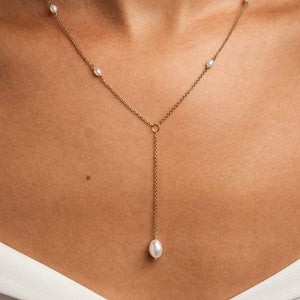

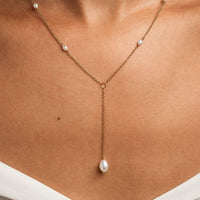
The piece they're describing → Freshwater Pearl Necklace for Women — 14K Gold Plated Chain, Natural Pearl Pendant
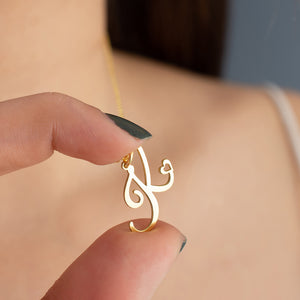
Personalize Yours


