

- Your own initial = self-expression, identity, confidence, ownership of your name
- A partner's initial = romantic devotion — carrying them with you daily
- A child's or parent's initial = the most direct wearable symbol of unconditional love
- A best friend's initial = chosen family, lasting bond, "you matter to me"
- A late loved one's initial = memorial jewelry — keeping them present, honoring their memory
- Two initials together = a relationship declared — romantic, familial, or chosen
You've seen it a hundred times — a delicate gold chain, one small letter resting at the collarbone. Maybe you're wondering what it means. Maybe someone gave you one and you're trying to understand the gesture. Maybe you're thinking about buying one and can't quite put into words why it feels right. The answer is simpler than you think: an initial necklace means this letter matters. And behind that letter, there's always a story.
The initial necklace meaning depends entirely on which letter you wear and why. That's what makes it one of the most versatile and emotionally resonant pieces in jewelry — not despite the simplicity, but because of it. One letter can hold a whole relationship.
The History of Initial Jewelry
The impulse to wear a letter — yours or someone else's — is ancient. It didn't start on Instagram or in a Carrie Bradshaw scene. It started with pharaohs, queens, and lovers who felt the same pull you do now.
In ancient Egypt, rulers wore cartouches: oval name-amulets in hieroglyphics, believed to protect the wearer in life and the afterlife. In ancient Rome, signet rings stamped with family initials authenticated legal documents — the initial was the person's identity in physical form. Fast forward to the Tudor court: Anne Boleyn famously wore a gold and pearl "B" pendant in portraits from the 1530s, sparking a trend among English nobility that linked initial jewelry with rank, pride, and personal declaration.
The Victorian era (1837–1901) made initial jewelry a language of love. Young women received a suitor's engraved initial as a discreet romantic signal, before engagements were publicly announced. It was a coded way of saying: this person has my heart. By the early 20th century, mass jewelry production democratized personalized pieces — monogrammed lockets and initial brooches moved from aristocratic courts to everyday women across the country.
The modern revival came in waves. The 1970s brought bold gold nameplate necklaces — big, unapologetic, New York-energy declarations of identity. Then came the 2000s television moment: Carrie Bradshaw's gold nameplate necklace on Sex and the City became one of the most referenced pieces of jewelry in pop culture history. The 2010s brought celebrity influence — Meghan Markle wore an "H and M" necklace long before her engagement was announced. Taylor Swift wore a "J" pendant for years. The 2020s turned the trend into a global movement: personalized jewelry is now the most consistently requested jewelry category globally, driven by a cultural shift away from logo fashion toward personal meaning. The history explains the staying power: initial jewelry has always been about declaring what — and who — matters most.
What It Means to Wear Your Own Initial
Wearing your own initial is an act of self-affirmation. It's not vanity — it's ownership. Your name is the first thing that ever belonged to you, and wearing its first letter keeps that identity visible in your daily life.
It's a quiet declaration: I know who I am. For people who've changed their name — through marriage, transition, or personal evolution — wearing a new initial anchors the new identity in something physical. For people going through hard seasons, it's grounding. A constant reminder that the person you are doesn't disappear just because things feel uncertain.
There's also something to the way wearing your own initial interacts with confidence. You chose that letter. You put it on every morning. That small act of self-recognition adds up. It's why initial necklaces show up consistently in conversations about self-love gifts — not because they're trendy, but because the symbolism genuinely lands.
What It Means to Wear Someone Else's Initial
Wearing someone else's initial is a different gesture entirely. Now you're not just expressing who you are — you're saying that another person is part of who you are. You're choosing to carry them with you.
For partners: it's an act of closeness with roots in Victorian romanticism. Historically, wearing a suitor's initial was almost a pre-engagement signal — private but loaded with meaning. Today that weight is still there, even if it's more casually worn. Putting your partner's initial at your collarbone is an intimate choice. It says: I want a piece of you near me always.
For parents wearing a child's initial (or children wearing a parent's): it's unconditional love made wearable. Many mothers layer one initial per child, building a necklace that literally grows with the family. The letter isn't just decorative — it's a map of their most important relationships, worn every day without requiring any explanation.
For friends: matching initial necklaces — each wearing the other's letter — are one of the most meaningful friendship gestures that doesn't cross into romance. It says "you're my chosen family" without needing a word.

Meaning by Initial Type: A Complete Reference
| Initial Worn | What It Typically Represents | Common Occasion |
|---|---|---|
| Your own first initial | Self-identity, confidence, ownership of your name and story | Self-purchase, birthday, graduation, life milestone |
| Partner's initial | Romantic devotion — carrying them with you daily | Valentine's Day, anniversary, relationship milestone |
| Child's initial | Unconditional parental love — a family carried at the collarbone | Mother's Day, baby shower, new parent gift |
| Parent's initial | Honoring the person who shaped you — gratitude and pride | Parent's birthday, holiday, thank-you gift |
| Best friend's initial | Chosen family — a bond declared without romantic pressure | Friendship anniversary, going-away gift, just because |
| Late loved one's initial | Memorial — keeping someone present who can no longer be there in person | After a loss, remembrance, tribute gift |
| Two initials together | A relationship named — romantic, familial, or chosen | Couples jewelry, anniversary, commitment gift |
For more on the meaning behind wearing two letters at once, see our guide to double initial necklace meaning.
Initial Necklaces as Memorial Jewelry
Wearing the initial of someone who has died is one of the most personal, and increasingly common, uses of letter jewelry. Grief is invisible. An initial necklace makes the invisible visible — quietly, privately, without requiring anyone else to understand the weight of that letter.
The impulse is ancient. People have worn the tokens of the dead since long before jewelry was commercially produced. A carved initial, a lock of hair in a locket, a ring passed down generations — the form changes, but the purpose doesn't. It's about continuity. About refusing to let the relationship end just because the person did.
What makes initial necklaces particularly powerful as memorial pieces is their dailiness. You don't put on memorial jewelry only for anniversaries or gatherings. You wear it every morning, with your coffee, getting ready for a day that continues without the person who mattered most. That small act of choosing to keep them close — every day, not just in moments of active grief — is what makes it meaningful rather than mournful.
If you're choosing a memorial initial necklace, there's no protocol. Wear their first initial, their last initial, or the initial that felt most like them. The meaning belongs to you. Anyone who asks is asking you to share something private — you never owe that answer.
What Wearing an Initial Necklace Says About Your Personality
Initial jewelry sends a quiet signal about the kind of person you are — not loud, but legible. Here's what it actually communicates:
You're sentimental, but tastefully. You don't need to announce your feelings loudly. A single letter says everything without shouting it. That's the emotional signature of people who feel deeply but express it with restraint.
You value personal meaning over logo prestige. Initial jewelry is the opposite of a brand-name status piece. It's not about what label is on the clasp — it's about who's in that letter. The people most drawn to initial necklaces tend to value authenticity over performance.
You're confident in your own story. Whether it's your own initial or someone else's, wearing a letter says: I know what matters to me. That kind of quiet confidence reads clearly to people around you, even if they can't name exactly why.
You layer intentionally. Initial necklace wearers tend to be people who build outfits with purpose, not accident. The letter is a choice, not a fill-in. That extends to the rest of how they dress.
The Cultural Moment: Why Personalized Jewelry Is Having a Renaissance
We're in the middle of a quiet revolution in how people relate to the things they wear. For decades, fashion operated on a prestige-logo model: wear the right name, signal the right status. That model is cracking. And personalized jewelry is what's filling the gap.
The shift has a name in fashion circles: quiet luxury. Less logo, more meaning. The idea that what you wear should say something about you — not about a brand's marketing budget. Initial necklaces fit this moment perfectly. They're personal in a way no brand can replicate. A Gucci belt can be copied. The letter of someone you love can't.
Social media accelerated this. When everyone can see everyone else's jewelry, the pieces that generate the most genuine curiosity are the ones with a story. "What does your necklace mean?" is a question that opens a real conversation. "What brand is your necklace?" doesn't do the same work.
There's also a generational driver. Millennials and Gen Z are more likely to define their identity through personal relationships and values than through institutional markers like alma maters or employers. Wearing initials — yours, your family's, your people's — maps onto that instinct directly. It's jewelry that says: this is who I am, and these are the people who made me.
When Someone Gives You an Initial Necklace: What It Means
Receiving an initial necklace as a gift is one of those moments that can feel more loaded than the occasion seems to warrant. That's because it usually is. The person who chose to give you a letter — rather than a generic piece of jewelry — made a deliberate decision about what they wanted to say.
Context changes everything here. The table below breaks down what the gesture typically means, based on who's giving it:
| Who Gave It | What It Typically Means | Emotional Significance Level |
|---|---|---|
| Romantic partner (your initial) | I see you and I celebrate who you are as an individual | High — thoughtful, personal, non-presumptuous |
| Romantic partner (their initial) | I want you to carry me with you — a romantic declaration | Very high — historically significant gesture |
| Parent to child | Your identity is worth celebrating — I'm proud of who you are | High — affirming, milestone-appropriate |
| Child to parent | You carry me every day; I want you to wear that | Very high — often one of the most meaningful gifts a parent receives |
| Best friend | You're my chosen family — I want to keep you close | High — especially meaningful in long friendships |
| Grandparent to grandchild | This letter is your legacy — wear it with pride | Medium-high — traditional, heirloom-adjacent |
| Memorial gift from family | Carry them with you — they're still part of this family | Very high — deeply personal, grief-sensitive |
For more on choosing the right initial necklace gift, see our complete gift guide with occasion-specific recommendations.

Do You Wear Your Initial or Theirs? The Etiquette Question
This comes up constantly and there is genuinely no wrong answer. But there are conventions, and understanding them helps you make the choice feel intentional rather than random.
Wearing your own initial is always appropriate and never requires explanation. It's a self-expression choice, and the most universally understood version of initial necklace meaning. No one will ask you to explain it.
Wearing a partner's initial is a more private declaration. Historically it carried the weight of a near-commitment — in the Victorian era it meant something close to "we're essentially betrothed." Today it's less formal, but the intimacy is still there. It's a choice most people make when the relationship feels significant enough to wear. If you're in the early stages of dating, wearing your partner's initial before they might feel ready to reciprocate can feel like pressure. Later in a committed relationship, it's simply a declaration of love.
Wearing multiple initials — yours and someone else's stacked on the same chain — splits the difference. You're declaring both your own identity and your connection to another person simultaneously. This is the most popular format for mothers and people building layered necklace stacks.
The bottom line: the etiquette is that there is no etiquette. Wear what feels true to you. The only question worth asking is: does this letter mean something to me? If yes, wear it. That's the whole rule.
Ready to shop? See our best sterling silver initial necklace guide — 5 styles from $24.99, all with a genuine 925 silver base.
Frequently Asked Questions
What does it mean when someone gives you a necklace with their initial?
When someone gives you a necklace bearing their own initial, they're asking you to carry them with you. It's a deliberately intimate gesture with roots in Victorian romantic tradition, where a suitor giving their initial to someone they loved signaled deep attachment and near-commitment. Today it still carries that weight — the person giving it is saying: I want to be close to you even when we're apart.
Should you wear your initial or your partner's initial?
Both are completely valid and mean different things. Wearing your own initial is a self-expression choice — it celebrates your identity independent of any relationship. Wearing your partner's initial is a romantic gesture that says you're choosing to carry them with you. There's no rule about which to choose. Many couples wear each other's initials — one person wears the other's letter, or they each wear the other's. The meaning is defined by the people involved, not by convention.
What does wearing your own initial mean?
Wearing your own initial is an act of self-affirmation and identity ownership. It says: I know who I am, and my name matters. It's one of the most common forms of initial jewelry and carries no vanity — it's simply a declaration of selfhood. It's especially meaningful during periods of change: after a name change, a major life transition, or simply as a grounding reminder of your own identity during challenging times.
Is an initial necklace a romantic gift?
It can be, depending on whose initial is on the necklace. Giving someone their own initial is thoughtful and personal but not overtly romantic — it celebrates who they are as an individual. Giving someone your initial is the more romantic version: you're asking them to carry you. An initial necklace also becomes deeply romantic as a couple's gift when both people wear each other's initial. Context determines the romantic weight more than the piece itself does.
What does it mean when a boyfriend gives you his initial necklace?
It's one of the most intentionally romantic jewelry gestures a partner can make. He's not just giving you jewelry — he's asking you to wear a piece of him. In the Victorian tradition that initial jewelry comes from, this was essentially a near-proposal: a private signal of deep attachment. Today it's less formally loaded, but the intimacy is still real. It means he wants to be present with you even when he's not physically there. If you receive this gift, it almost certainly means the relationship is significant to him.
Why do people wear initial necklaces?
People wear initial necklaces for several deeply personal reasons: to express their own identity and self-ownership; to carry a loved one — a partner, child, parent, friend — in a daily, wearable way; to honor someone who has passed; or simply because a single letter is the most elegant and direct form of personal jewelry. The reasons tend to be layered. Most people who wear initial necklaces regularly can tell you exactly whose letter they're wearing and exactly why.
Is it weird to wear your own initial?
Not at all. Wearing your own initial is one of the most common initial jewelry choices, and has been for centuries. It's self-expression, not narcissism. The letter grounds you in your own identity — it's a small, daily act of self-recognition that many people find genuinely meaningful, especially during periods of change or uncertainty. If anything, it's one of the most emotionally uncomplicated initial necklace choices because the meaning belongs entirely to you.
What does it mean to wear a deceased person's initial?
Wearing a late loved one's initial is one of the most meaningful forms of memorial jewelry. It keeps the person present — a quiet, daily tribute that doesn't require explanation or announcement. Grief counselors frequently note that tangible physical reminders like memorial jewelry help people maintain connection without being anchored to loss. There's no protocol for how or when to wear it. The meaning belongs entirely to the wearer. Many people find it comforting rather than mournful: not an act of mourning, but an act of ongoing love.
Are initial necklaces still in style?
Yes — and genuinely so, not just as a trend holdover. Personalized jewelry has been the fastest-growing jewelry category for several consecutive years, driven by the broader cultural shift from logo-driven status jewelry toward pieces with personal meaning. Initial necklaces in particular have held their place because their appeal is foundational: they're always meaningful to the wearer, which makes them immune to the kind of trend fatigue that affects purely aesthetic styles. A piece that carries identity or love doesn't go out of style the way a particular pendant shape does.
What does a monogram necklace mean vs. an initial necklace?
An initial necklace features a single letter — typically the first letter of a first or last name. A monogram necklace uses two or three letters, traditionally arranged with the last initial larger in the center, flanked by first and middle initials. Monograms feel more formal and are often associated with married names, heirloom pieces, or preppy traditions. Initial necklaces are more casual, versatile, and personal. The symbolism is similar — identity and ownership — but the register is different: monograms say "family lineage," initials say "this is me."
What does a double initial necklace mean?
A double initial necklace carries two letters — usually representing two people or two aspects of the wearer's identity. The most common combination is a couple's initials, worn as a declaration of the relationship. Parents also wear a child's first and middle initials together, or two children's initials. Some people wear their first and last initials as a full identity statement. For a full breakdown of every double-initial combination and what it means, see our guide to double initial necklace meaning.
Final Thoughts
An initial necklace is one of the quietest, most powerful things you can wear. A single letter can hold a whole identity, a whole relationship, a whole life of love — and it does all of that without ever needing to explain itself. That's not a small thing. That's exactly why initial jewelry has endured for centuries and why it still matters now.
Whether you're wearing your own letter as an act of self-recognition, carrying a loved one's initial close to your heart, or honoring someone you've lost, the gesture is the same at its core: this matters enough to wear.
Browse our personalized jewelry collection to find initial necklaces in all 26 letters, available in gold and sterling silver, ready to ship in a gift box. Or explore our letter necklaces collection for styles from delicate and dainty to bold statement pieces.
The letter you choose says more than you think. Make sure it says the right thing.
Written by Vaishakhi Ajmera — founder of AJLuxe, specialists in personalized sterling silver jewelry. Last updated: May 2026.
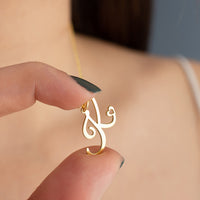
The piece they're describing → Heart Initial Necklace for Women — 18K Gold Plated, Personalized Letter + Heart Pendant
Personalize Yours

