



Can Tiger's Eye Go in Water? The Direct Answer
Yes — briefly. Tiger's eye sits at Mohs 6.5–7, which puts it firmly in the water-safe zone. A quick rinse under lukewarm water is fine and will not damage the stone.
However, tiger's eye has one important distinction from pure quartz crystals: it contains iron oxide from its formation process. This iron content means prolonged water exposure creates a real risk of surface rust spots developing over time — not from a single rinse, but from repeated soaking or leaving the stone wet.
Bottom line: Brief rinse = fine. Prolonged soaking = avoid. Salt water = never. Dry immediately every time.
Water Safety Chart for Tiger's Eye
| Water Type | Safe? | Notes |
|---|---|---|
| Brief rinse (15–30 sec) | ✅ Yes | Safe — dry thoroughly and immediately |
| Running water (tap) | ✅ Brief only | 30 seconds max; effective for cleansing |
| Prolonged soaking | ❌ No | Iron content can cause rust spots on surface |
| Salt water | ❌ No | Abrasive + accelerates iron oxidation |
| Hot water | ❌ No | Thermal shock risk |
| Moon water (direct) | ⚠️ Caution | Indirect method preferred due to iron content |
| Crystal elixir (direct) | ❌ No | Use indirect method only |
| Leaving wet overnight | ❌ No | Rust spot risk — dry immediately every time |
Why Iron Content Matters for Water Care
Tiger's eye forms through a fascinating geological process called pseudomorphosis. The stone begins as crocidolite — a fibrous blue mineral. Over millions of years, silica (quartz) slowly replaces the crocidolite fiber by fiber, while iron compounds from the original mineral get locked in as iron oxide (goethite). The result is the golden-brown banded stone with its characteristic chatoyancy — the silky moving light effect known as the "cat's eye."
It is those iron oxide inclusions that create the water risk. Iron oxide is chemically stable under normal conditions, but prolonged water exposure — especially combined with oxygen — can initiate surface oxidation. Over time and with repeated soaking, this can produce faint rust-coloured spots or a slight dulling of the surface sheen.
This is not an immediate danger from a single rinse. But it is why the rule for tiger's eye is: rinse briefly, dry completely, never soak overnight.
Is Tiger's Eye Asbestos? The Safety Question Answered
This is one of the most common questions about tiger's eye — and it deserves a clear, complete answer.
The short answer: polished tiger's eye jewellery is safe.
Here is the full picture. Tiger's eye originally forms from crocidolite — a type of blue asbestos. This is where the concern comes from. However, the pseudomorphosis process completely replaces the crocidolite fibers with quartz. By the time tiger's eye reaches its final state as a gemstone, the asbestos fibers no longer exist — they have been mineralogically converted to silica and iron oxide.
Scientific studies, including analysis by the International Agency for Research on Cancer (IARC), confirm that polished and tumbled tiger's eye gemstones do not present an asbestos hazard.
Important nuances:
- Polished jewellery-grade tiger's eye: Safe to wear, safe to handle, safe to briefly rinse.
- Raw specimens from certain localities: Some raw, uncut specimens — particularly from certain South African deposits — may contain residual fibrous material. Handle with care, do not grind, saw, or sand raw specimens at home.
- Professional lapidary cutting: Professional gem cutters use wet cutting equipment and respiratory protection when working with any fibrous stone. This is standard practice, not an indication that finished jewellery is hazardous.
For context: the tiger's eye in jewellery you purchase from a reputable jeweller is fully formed, polished quartz with iron oxide inclusions. It is a beautiful, wearable gemstone — not a health hazard.
Best Ways to Cleanse Tiger's Eye
| Method | Safe? | Notes |
|---|---|---|
| Sunlight | ✅ Best | Solar stone — 4–6 hours in morning sun is ideal |
| Moonlight | ✅ Yes | Overnight on full moon windowsill |
| Sound bath | ✅ Yes | Singing bowl or tuning fork |
| Smoke cleansing | ✅ Yes | Sage, palo santo, or cedar |
| Selenite plate | ✅ Yes | Leave overnight for a complete reset |
| Brief water rinse | ⚠️ OK | 15–30 sec max, dry immediately |
| Salt water | ❌ No | Accelerates iron oxidation |
Tiger's eye is a solar stone — associated with the sun, confidence, and personal power. Sunlight is not just safe for tiger's eye: it is the recommended charging method. Place it in morning sunlight for 4–6 hours. Avoid intense all-day summer sun, which can cause gradual colour shifts in the iron content over months and years.
Can Tiger's Eye Go in the Sun?
Yes — and it is actually recommended. Unlike amethyst or rose quartz, tiger's eye does not fade from sunlight in the short term. Its golden-brown colour comes from iron oxide, which is UV-stable under normal exposure.
Brief sunlight exposure (4–6 hours) is ideal for charging tiger's eye. Morning sun is preferable — less intense UV than midday sun.
The one caveat: very extended sun exposure over many months can cause gradual shifts in the iron oxide colour — the rich golden-brown may subtly deepen or shift. For everyday care, this is not a concern. For rare collector specimens, keep sunlight sessions to reasonable durations.
Frequently Asked Questions
Can tiger's eye go in water?
Yes, briefly. Tiger's eye (Mohs 6.5–7) can handle a 15–30 second rinse. Dry it thoroughly and immediately. Avoid prolonged soaking — its iron oxide content can develop rust spots on the surface with repeated water exposure.
Can tiger's eye go in salt water?
No. Salt water is both abrasive and accelerates iron oxidation in tiger's eye. Avoid all salt water contact — use fresh water only, and even then keep it brief.
Is tiger's eye asbestos?
Tiger's eye forms from crocidolite (blue asbestos), but the asbestos fibers are completely replaced by quartz during pseudomorphosis. Polished jewellery-grade tiger's eye is safe to wear and handle. Raw uncut specimens from certain localities warrant more caution — do not grind or sand them at home.
Can tiger's eye go in the sun?
Yes — tiger's eye is a solar stone and sunlight is the recommended charging method. 4–6 hours in morning sun is ideal. Avoid extreme prolonged exposure over months, which can subtly shift the iron-oxide colour.
How do you cleanse tiger's eye?
Sunlight is the best method for tiger's eye — place it in morning sun for 4–6 hours. Moonlight, sound bath, smoke cleansing, and selenite plate are all excellent alternatives. A brief water rinse is acceptable but not the preferred method given the iron content.
How do you charge tiger's eye?
Place tiger's eye in direct morning sunlight for 4–6 hours. This is its natural element as a solar stone. You can also charge it on a selenite plate overnight or under a full moon. Set an intention as you charge it.
Can tiger's eye get wet?
Yes, briefly. A quick rinse or light splash is fine. The key rule: dry it immediately and never leave it wet overnight or soaking in water. The iron content creates a rust risk with prolonged exposure.
Can tiger's eye go in moon water?
Use the indirect method — place tiger's eye beside (not in) the water vessel. Given the iron oxide content, submerging tiger's eye overnight in water is not recommended. Indirect placement still allows the stone to interact with the lunar energy.
Does tiger's eye rust in water?
Not from a single rinse. The iron oxide in tiger's eye is fairly stable, but repeated prolonged water exposure — especially leaving the stone wet overnight — can cause surface rust spots to develop over time. One rinse, thoroughly dried, will not cause this.
Can raw tiger's eye go in water?
Use extra caution with raw tiger's eye. The unpolished surface has more exposed material and is less protected. A brief wipe with a damp cloth is acceptable; avoid soaking raw specimens. Polished tiger's eye jewellery is more forgiving.
Is tiger's eye safe to wear?
Yes — polished tiger's eye jewellery is completely safe to wear. The asbestos concern applies only to raw specimens being cut or ground. Finished, polished tiger's eye contains no airborne hazard. It is a popular and widely worn gemstone.
How do I clean tiger's eye jewellery?
Use a soft dry microfibre cloth for regular maintenance. For deeper cleaning, wipe with a barely-damp cloth (not submerged) and dry immediately. Avoid ultrasonic cleaners, steam cleaning, harsh chemicals, and any soaking in water.
Shop AJLuxe Crystal Jewelry
Birthstone & gemstone necklaces · 925 sterling silver · from $22.99
Browse Crystal Jewelry →Final Thoughts
Tiger's eye is a beautiful, wearable stone with a fascinating geological story — and its care requirements are straightforward once you understand the iron factor. Brief rinses are fine; prolonged soaking is not. The asbestos question has a clear answer: polished jewellery-grade tiger's eye is safe. And when it comes to energising this powerful solar stone, sunlight is your best tool.
Explore our full guide to tiger's eye meaning, healing properties, and how to use it — and browse our birthstone necklace collection for tiger's eye and other gemstone jewellery.
Explore more: Crystal Jewelry: Meanings & Guides
Related reading: Tigers eye buying guide.
What Types of Tiger's Eye Jewelry Work Best, and How Do You Style It?
Tiger's eye works best as necklaces, rings, and bracelets set in a warm-toned metal — the stone's golden-brown banding pulls out gold undertones for a rich, monochromatic look, while a sterling silver setting cools the stone down for a more contemporary, contrast-driven finish. Both pairings are correct; the choice comes down to whether you want the piece to blend in with warm tones or stand apart from them.
| Jewelry Type | Best For | Styling Note |
|---|---|---|
| Pendant necklace | Everyday wear, layering | Layers cleanly with thinner chains; the banding reads best as a single focal stone rather than stacked with other gemstone pendants |
| Ring | Statement or stacking | A single oval or round cabochon shows off chatoyancy (the moving light effect) better than small accent-stone cuts |
| Bracelet | Casual, daily rotation | Beaded strands mix well with plain metal bangles; avoid stacking against anything abrasive that could scratch the polished surface |
| Drop earrings | Evening, dressier occasions | Warms up cooler outfit palettes (navy, black, grey) more effectively than lighter-toned gemstones |
Because tiger's eye sits at a wearable Mohs 6.5–7 (durable enough for daily knocks against desks, bags, and countertops), it holds up well as a rotate-daily piece rather than something reserved for occasional wear — which is part of why it shows up so often as everyday jewelry rather than strictly special-occasion pieces.
On metal choice specifically: 18K gold plating over a base metal amplifies the stone's warm honey and umber tones for a cohesive, monochromatic look, while 925 sterling silver creates deliberate contrast — useful if the rest of your jewelry wardrobe already leans gold-heavy and you want the tiger's eye piece to stand out rather than blend in. AJLuxe's tiger's eye pieces use 925 sterling silver with 18K gold plating (not solid gold), priced $24.99–$79.99, and are hypoallergenic — a practical consideration for a stone often worn as a daily-rotation ring or bracelet where skin contact is constant.
All third-party trademarks, brand names and product names are the property of their respective owners. AJLuxe is not affiliated with, endorsed by, sponsored by, or otherwise connected to any third-party brand referenced in this article. Brand names are used solely for accurate comparative reference, and material descriptions reflect each brand's own published product specifications at the time of writing.
You Might Also Like


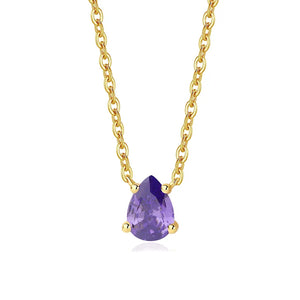


The piece they're describing → Stone Charm Necklace for Women — Raw Natural Gemstone Pendant
Personalize Yours


