


- Pale blue stone (anhydrite mineral, calcium sulfate)
- Found almost exclusively in Peru; discovered 1987
- Mohs hardness 3.5 — one of the softest healing stones
- Triple chakra stone: throat + third eye + crown
- Famous for angel communication, intuition, and inner peace
- Critical care note: NEVER put angelite in water — it will dissolve
- Often confused with celestite and blue lace agate — see comparison table below
There are pale blue stones, and then there is angelite — the one crystal named after the celestial beings it's said to call closer. Found almost exclusively in Peru and only identified by gemologists in 1987, angelite carries a quiet, sky-blue energy that feels less like power and more like presence. It doesn't shout. It opens a channel.
Whether you're drawn to it for its soft, muted beauty, its triple-chakra activation, or the deeply personal experience so many crystal users describe as feeling "watched over," this guide covers everything: the science behind how angelite forms, what it genuinely does for throat chakra communication, how it compares to similar pale blue stones, and one critical care fact that every angelite owner needs to know before it's too late.
What Is Angelite? The Stone of Angel Communication
Angelite is the trade name for blue anhydrite — a calcium sulfate mineral with the chemical formula CaSO₄. The name "anhydrite" literally means "without water" in Greek, a clue to both its geological origin and its greatest vulnerability (more on that shortly).
The stone was first formally identified and named in 1987 by gemologists J.I. Koivula and R.C. Kammerling during a study of Peruvian mineral deposits. While anhydrite itself is found globally, the specific blue-gray variety of sufficient quality for jewelry and crystal work comes almost entirely from Chiclayo, Peru. Smaller deposits exist in Mexico, Germany, Poland, and the UK, but Peruvian angelite remains the gold standard for color and clarity.
Physically, angelite appears as smooth, opaque masses in soft shades of powder blue, pale gray-blue, and occasionally lilac-blue. It rarely forms distinct crystals — most specimens are massive habit (solid mineral without visible crystal faces). Raw pieces feel chalky to the touch, and polished tumbles have a quiet waxy luster that catches light gently rather than brilliantly.
Its defining metaphysical identity is its name: the "angel stone." Crystal traditions hold that angelite creates a direct vibrational link to angelic realms and spirit guides — not in a dramatic, overwhelming way, but as a soft and steady signal that you're not navigating life alone.
How Angelite Forms from Celestite — A Geological Transformation
Here's a fact most angelite articles skip entirely, and it's one of the most fascinating things about this stone: angelite is compressed celestite.
Celestite (strontium sulfate) and angelite (calcium sulfate/anhydrite) are closely related chemically and energetically. Under specific geological conditions — heat, pressure, and the gradual loss of water molecules over millions of years — celestite deposits can transform into anhydrite. The strontium gradually gives way to calcium, and the once-glittering white or sky-blue celestite becomes the denser, more compact blue-gray of angelite.
This geological parentage explains why the two stones are often paired in crystal work: celestite is the raw, high-vibration opener; angelite is the settled, deepened version of the same energy — compressed by time into something more grounded but no less connected to the sky.
From a mineralogy standpoint, both belong to the sulfate mineral class. Both are relatively soft and water-sensitive. And both carry that distinctive pale blue frequency that crystal traditions associate with higher communication and the angelic realm.
If you work with blue lace agate already and are curious how angelite differs, the comparison table later in this article breaks it down clearly. But the celestite connection is the deeper story — angelite is, in essence, celestite that has grown quieter and more inward over geological time.
Angelite Meaning and Symbolism
The meaning of angelite flows directly from its name and its visual identity. Pale blue is universally associated with sky, heaven, breath, and peace. In nearly every spiritual tradition, blue carries the frequency of communication — of speaking truth and receiving divine guidance.
Angelite embodies all of this, but with a specific emphasis: receiving rather than projecting. Where some throat chakra stones (like blue lace agate or aquamarine) are about expressing yourself clearly, angelite's primary gift is the willingness to listen — to your own intuition, to the quiet promptings of your higher self, and, in metaphysical tradition, to the messages of angels and spirit guides.
Core symbolic meanings include:
- Peace and serenity: Angelite calms anxious thoughts and emotional turbulence. It's a stone you reach for when the world feels overwhelming.
- Divine connection: Of all healing crystals, angelite has the most direct folkloric association with angels, guides, and higher-dimensional beings.
- Compassion and forgiveness: The stone's gentle vibration is said to soften the heart toward others — and, crucially, toward oneself.
- Truth-telling: Throat chakra activation encourages honest communication — saying what needs to be said with care rather than aggression.
- Awareness and presence: Many users report that angelite makes them feel more awake to synchronicities and subtle signs in daily life.
Angel Communication: Why Angelite Has This Reputation
No other crystal has built as strong a cultural identity around angelic contact as angelite. But where does this reputation come from, and what does it actually mean in practice?
The lore begins with the stone's discovery timing: 1987 fell squarely in the New Age movement's most expansive decade, when angel consciousness literature was exploding in the West. Doreen Virtue's angel oracle work, the channeling movement, and the widespread adoption of crystal healing created the perfect environment for a newly named pale blue stone to claim the "angel communication" mantle — and angelite delivered on it for practitioners.
In energetic terms, the explanation centers on frequency. The throat chakra governs not just speaking but the transmission and reception of subtle information. When combined with the third eye (perception, intuition) and crown (divine connection) in angelite's triple-chakra activation, the result is described as a kind of open channel: you become quieter inside, more receptive, and more attuned to the subtle nudges and impressions that practitioners attribute to angelic guidance.
Practically, angelite is used in these ways for angelic work:
- Meditation: Hold angelite at the throat or place it on the third eye. Set an intention to receive guidance rather than to seek it.
- Sleep: Place near your pillow to support vivid dreams and improve dream recall — many users report "message dreams" with angelite nearby.
- Grief support: Angelite is frequently used in grief work, with the belief that it facilitates connection with loved ones who have passed.
- Prayer and journaling: Some practitioners hold angelite while praying or writing in a journal, using it as an anchor for intentional spiritual communication.
Angelite Healing Properties
Angelite's healing reputation spans physical, emotional, and spiritual dimensions — with the emotional and spiritual being the most developed in crystal tradition.
Physical Healing Properties
While angelite is not a medical treatment, crystal traditions associate it with:
- Throat and thyroid support: The throat chakra governs the thyroid gland and the entire neck/shoulder region. Angelite is often used in layouts targeting thyroid imbalance, neck tension, and voice-related issues.
- Respiratory ease: The calming effect of angelite is said to ease chest tightness, shallow breathing, and anxiety-driven breath restriction.
- Inflammation reduction: Some crystal traditions hold that angelite has a cooling, anti-inflammatory energetic quality — particularly useful for sunburned skin or fever (placed nearby, not on wet skin).
Emotional Healing Properties
- Anxiety and overwhelm: Angelite is consistently the top recommendation in crystal communities for anxiety relief. Its "soft" energy doesn't agitate the nervous system the way higher-vibration stones can.
- Compassion and self-forgiveness: The stone is used in emotional healing work around guilt, shame, and harsh self-judgment.
- Communication in relationships: Helps users speak difficult truths with gentleness rather than defensiveness or withdrawal.
- Grief processing: As noted above, angelite's connection to the spirit realm makes it a popular grief companion stone.
Spiritual Healing Properties
- Intuition enhancement: Third eye activation sharpens subtle perception.
- Higher guidance: Crown chakra connection supports accessing wisdom beyond personal experience.
- Psychic protection: Some traditions use angelite as a protective shield during mediumship or channeling work.

Angelite and the Throat, Third Eye & Crown Chakras
One of angelite's most distinctive energetic features is its triple-chakra activation — simultaneously engaging the throat (5th), third eye (6th), and crown (7th) chakras. Most crystals have a primary chakra and a secondary at most. Angelite's ability to work across all three upper chakras at once is part of why it occupies such a unique place in crystal work.
Throat Chakra (Vishuddha): The 5th chakra governs communication, self-expression, and the transmission of truth. A blocked throat chakra manifests as difficulty saying what you mean, fear of speaking up, chronic neck and shoulder tension, and thyroid imbalance. Angelite is one of the most gentle throat chakra openers — it doesn't force expression but creates safety for it.
Third Eye Chakra (Ajna): The 6th chakra governs intuition, inner vision, and the ability to perceive beyond the physical. Angelite opens this center to receive impressions, images, and insights that might otherwise pass unnoticed.
Crown Chakra (Sahasrara): The 7th chakra connects individual consciousness to universal awareness and divine intelligence. When angelite engages the crown, users often describe a sense of expanding presence — a felt sense of being held by something larger than themselves.
Together, these three activations create a coherent pathway: divine wisdom enters through the crown, is perceived through the third eye, and expressed through the throat. This is why angelite is so specifically associated with channeled communication — it opens the entire upper-chakra channel in one stone.
| Property | Detail |
|---|---|
| Mineral family | Anhydrite (calcium sulfate, CaSO₄) |
| Color | Pale powder blue to blue-gray, occasionally lilac-tinted |
| Mohs hardness | 3–3.5 (very soft — handle with care) |
| Origin | Primarily Peru (Chiclayo region); also Mexico, Germany, UK |
| Crystal system | Orthorhombic |
| Luster | Waxy to pearly (polished); matte (raw) |
| Transparency | Opaque to translucent |
| Chakras | Throat (5th), Third Eye (6th), Crown (7th) |
| Zodiac | Aquarius |
| Planet | Uranus, Moon |
| Element | Wind / Air |
| Water safe? | NO — will dissolve/degrade in water |
| Discovered | 1987 (Koivula & Kammerling, Peru) |
Angelite vs Celestite vs Blue Lace Agate — What's the Difference?
Three pale blue stones dominate the crystal market and confuse buyers constantly: angelite, celestite, and blue lace agate. They're visually similar and spiritually adjacent — but they're completely different minerals with different properties, uses, and care requirements. Here's the definitive comparison:
| Feature | Angelite | Celestite | Blue Lace Agate |
|---|---|---|---|
| Mineral | Anhydrite (CaSO₄) | Strontianite (SrSO₄) | Chalcedony (SiO₂) |
| Color | Solid powder blue/gray | Pale blue, white, clear | Pale blue with white banding |
| Mohs | 3–3.5 | 3–3.5 | 6.5–7 (much harder) |
| Relationship | Compressed celestite | Parent stone of angelite | Unrelated mineral family |
| Water safe? | No — dissolves | No — dissolves | Yes (brief contact OK) |
| Primary chakra | Throat + Third Eye + Crown | Crown + Third Eye | Throat |
| Energy feel | Soft, peace, receptive | High vibration, celestial | Calm, gentle expression |
| Best use | Angel work, grief, anxiety | Meditation, higher realms | Communication, confidence |
| Appearance | Opaque masses | Glassy crystal clusters | Layered banding |
| Jewelry use | Pendants, earrings | Clusters/display; rarely jewelry | Necklaces, bracelets, rings |
The quick version: If you want angelic communication energy in jewelry form, angelite is the practical choice (celestite is too fragile as crystals). If you want durable daily-wear pale blue jewelry, blue lace agate is the safer, harder option. If you want to go deep in meditation with very high celestial vibrations, celestite clusters on your altar serve that purpose well.

Angelite in Jewelry: How to Wear It
Despite its softness (Mohs 3–3.5), angelite is a legitimate and popular jewelry stone — but it demands thoughtful setting and wear habits. The key is protection from impact and moisture.
Best jewelry types for angelite:
- Pendant necklaces: The ideal angelite jewelry form. A bezel or prong setting that shields the stone from scratching works beautifully. The pendant rests near the throat chakra naturally — exactly where its energy is meant to work. Angelite pendants sit at the collarbone and carry a serene, peaceful presence all day.
- Earrings: Drop or stud earrings in angelite are popular. Studs in protective bezels are the most durable option.
- Bracelets: Possible but requires care — avoid wearing on your dominant writing hand where it contacts hard surfaces. A simple beaded angelite bracelet worn loosely is ideal.
- Rings: Not recommended for daily wear due to softness and impact risk on a ring finger.
Setting metals: Sterling silver and white gold complement angelite's cool blue-gray tones perfectly. Rose gold creates a beautiful warm-cool contrast. Yellow gold can work but is less traditional with pale blue stones.
When selecting angelite jewelry, look for even, smooth color without white blotches or visible voids. The best quality angelite has a consistent medium blue tone — not too pale (almost white) and not too dark (gray-blue). Peru-origin stones are the benchmark.
Critical Care Warning: Never Put Angelite in Water
This section could save your angelite crystal or jewelry piece, so read it carefully.
Angelite is water-soluble. It will dissolve, crack, and degrade if submerged in or repeatedly exposed to water.
The mineral name "anhydrite" literally means "without water" — because anhydrite forms by losing water (unlike its water-containing cousins gypsum and selenite). Put water back into anhydrite, and it begins to reverse-transform: the stone absorbs moisture, swells, cracks, and breaks down. The surface may develop white spots, the polish will cloud over, and the color will lighten unevenly. This process cannot be reversed.
Specific situations to avoid:
- Crystal water infusions / gem elixirs (never put angelite in drinking water)
- Cleansing under running tap water
- Leaving in humid environments (bathrooms, outdoor use in rain)
- Wearing angelite jewelry while swimming, bathing, or washing dishes
- Salt water cleansing (doubly damaging — salt and water combined)
Safe cleansing methods for angelite:
- Smoke/smudging: Pass through sage, palo santo, or cedar smoke for 30–60 seconds
- Sound: Singing bowls, tuning forks, or bells
- Selenite: Place on a selenite charging plate for 4+ hours (safe, gentle, effective)
- Moonlight: Set on a dry surface under moonlight overnight — avoid dew or outdoor humidity
- Visualization: Hold in hands, visualize white light clearing the stone
- Dry polishing: A soft dry cloth is safe for removing dust
The same water rule applies to celestite (angelite's parent stone) and to selenite and gypsum — all belong to the evaporite mineral family. These stones were created by water evaporating away, not by water building them up. Water undoes them.
How to Identify Real Angelite
As angelite grows in popularity, fakes and mislabeled stones appear more frequently. Here's how to verify what you're buying:
Signs of genuine angelite:
- Consistent powder blue to blue-gray color — not vivid or saturated blue
- Opaque, not glassy or transparent
- Slightly chalky or waxy texture even when polished
- Cool to the touch initially, warms quickly (typical of soft minerals)
- Lightweight relative to size (not dense like many stones)
- White streaks or white patches are normal in natural specimens
Common substitutes and fakes:
- Dyed howlite: Howlite (white with gray veining) is commonly dyed blue and sold as angelite or turquoise. Howlite is harder (3.5–4 Mohs), lighter in weight, and often shows gray veining under the dye.
- Blue calcite: Similar softness but usually more translucent and lighter blue — often called "angelite" erroneously at markets.
- Synthetic resin: Too perfect, too uniform, too light in weight. Genuine angelite always has some variation in tone.
Buy from reputable crystal dealers who source from Peru and provide mineral identification. Priced too cheaply (under $3 for a tumble) should raise flags on a larger piece.
Gifting Angelite: Who It's Perfect For
Angelite is one of the most meaningful gift choices in the crystal world, precisely because its energy is soft enough for anyone — even crystal skeptics appreciate its beauty without needing to believe in its metaphysical properties.
Perfect angelite gift recipients:
- Someone going through grief or loss — angelite's connection to spirit and its calming energy make it the most thoughtful grief crystal
- Someone who struggles with speaking up or setting boundaries (throat chakra work)
- An anxious friend or family member who needs "calming energy" jewelry
- Anyone interested in meditation, angel work, or spiritual development
- New mothers — the peaceful, protective energy resonates with early motherhood experiences
- Aquarius birthdays (January 20 – February 18) — angelite is the Aquarius stone
An angelite pendant necklace is the most popular gift format — it keeps the stone at the throat chakra, where its primary energy activates naturally throughout the day.
Browse our crystal jewelry collection — sterling silver pendants set with real gemstones, each chosen for meaning and quality.
Angelite Meaning: Frequently Asked Questions
What is the spiritual meaning of angelite?
Angelite carries the spiritual meaning of divine connection, peace, and angelic communication. It's considered a stone that creates a bridge between human consciousness and angelic guidance — helping the wearer feel supported, heard, and less alone. Spiritually, it activates the throat, third eye, and crown chakras simultaneously, creating an open channel for receiving higher wisdom.
Who should wear angelite?
Angelite is especially beneficial for people working through grief, anxiety, or communication challenges. It's the Aquarius birthstone and resonates strongly with anyone born January 20–February 18. It's also well-suited for those in healing, teaching, or caregiving professions — any work that requires both compassion and clear communication. Anyone who feels spiritually disconnected or wants to deepen their intuitive awareness will benefit from wearing angelite.
How do you activate angelite?
To activate angelite, hold it in both hands, close your eyes, and set a clear intention for what you want to work on — whether that's peace, communication, angelic connection, or grief support. Breathe deeply and visualize pale blue light filling the stone and your throat area. You can also place angelite on a selenite charging plate for several hours before first use to clear any accumulated energy from handling.
Is angelite the same as celestite?
No, but they're closely related. Angelite (calcium sulfate/anhydrite) is formed from celestite (strontium sulfate) that has been compressed under heat and pressure over millions of years, losing water in the process. Celestite forms glassy, transparent to translucent crystal clusters while angelite forms as solid opaque masses. Celestite has a higher, more electric vibration; angelite has a softer, more settled, earthed version of the same sky-blue frequency.
Can angelite go in water?
No — angelite should never go in water. As an anhydrite mineral (calcium sulfate), angelite is water-soluble. Contact with water causes the stone to absorb moisture, swell, crack, cloud, and degrade irreversibly. Never use angelite in gem elixirs, cleanse it under running water, or wear it swimming. Safe cleansing methods include smudging with sage, sound cleansing, selenite charging plates, and dry moonlight exposure.
What is the difference between angelite and blue lace agate?
Angelite and blue lace agate are both pale blue throat chakra stones but they're completely different minerals. Angelite is anhydrite (calcium sulfate, Mohs 3–3.5), water-sensitive, and associated with angelic communication and triple-chakra activation. Blue lace agate is chalcedony (silicon dioxide, Mohs 6.5–7), water-safe, and primarily a communication and confidence stone. Blue lace agate is more durable for daily jewelry wear; angelite is softer but carries a deeper spiritual association.
What chakra is angelite for?
Angelite activates three chakras: the throat chakra (5th), the third eye chakra (6th), and the crown chakra (7th). This triple-chakra activation is one of angelite's defining features — it opens the entire upper chakra channel simultaneously. The throat governs honest expression; the third eye governs intuition and inner vision; the crown connects to divine consciousness. Together, these create the full channel for receiving and communicating higher guidance.
Is angelite rare?
Angelite is moderately rare compared to common crystals like quartz or amethyst. The gem-quality blue anhydrite used for angelite comes almost exclusively from Peru (particularly the Chiclayo region), with smaller deposits in Mexico, Germany, Poland, and the UK. While not as scarce as stones like alexandrite or paraíba tourmaline, quality angelite with good color and minimal white patches commands a premium. Pricing for genuine tumbled angelite typically ranges from $5–$20 per piece depending on size and quality.
What does blue angelite mean?
"Blue angelite" is simply another name for angelite — the stone is inherently blue (powder blue to blue-gray). Some sellers use "blue angelite" to distinguish it from rarer lilac or white anhydrite varieties. The blue color is caused by trace mineral inclusions and the specific formation conditions of Peruvian anhydrite deposits. All angelite commonly sold and used in crystal work is blue.
How do you use angelite in meditation?
Hold angelite at the base of your throat or place it on your third eye (center of forehead) during meditation. Set an intention before you begin — angelite responds especially well to clear intentions around peace, communication, or receiving guidance. Many practitioners also place angelite beside them rather than holding it, letting its energy fill the meditation space. For sleep work, place a piece under your pillow or on your nightstand to support vivid, meaningful dreams.
Can angelite go in the sun?
Brief, indirect sun exposure is generally safe for angelite, but extended direct sunlight is not recommended. Prolonged UV exposure can fade the pale blue color over time. Moonlight is the preferred recharging method for angelite — particularly the full moon, which is energetically aligned with the stone's lunar and Uranian planetary associations. Keep angelite away from direct sunlight for extended periods and store it in a cool, dry location out of direct light.
What crystals pair well with angelite?
Angelite pairs especially well with selenite (both have upper-chakra frequencies and work beautifully together for spiritual work — and selenite is one of the safest angelite charging methods), celestite (its geological parent, creating a powerful combined angelic channel), labradorite (enhances the intuitive and third-eye properties), and amethyst (crown chakra amplification). For emotional work, pairing angelite with rose quartz creates a beautiful combination of peace and heart-healing.
Final Thoughts: Is Angelite the Right Crystal for You?
Angelite earns its name. In a crystal landscape full of bold, high-voltage stones — moldavite, black tourmaline, citrine — angelite stands apart by being deliberately quiet. It doesn't demand attention. It doesn't force transformation. It simply opens a door and invites something peaceful through.
If you're navigating grief, struggling to speak your truth, or feeling spiritually disconnected, angelite is one of the most consistently recommended stones in the crystal community — not because of hype, but because its gentle frequency genuinely seems to help people slow down, breathe, and feel less alone.
Its triple-chakra activation (throat + third eye + crown) is genuinely rare in a single stone, and its connection to celestite — its geological parent — gives it a lineage that resonates with anyone who works with high-vibration stones. Just remember the golden rule: keep it dry. Angelite's greatest vulnerability is the one element that gives life to everything else.
Choose angelite jewelry when you want a daily reminder to listen as much as you speak, to trust the quiet nudges of your intuition, and to move through the world with a little more grace.
Shop Angelite Jewelry at AJLuxe
Looking for angelite crystal jewelry? AJLuxe carries handcrafted 925 sterling silver and 18K gold-plated gemstone necklaces — thoughtfully designed and hypoallergenic. Whether you're drawn to angelite for its peaceful energy or its serene pale blue color, wearing it as a pendant necklace keeps it at the throat chakra where it works best.
Written by the AJLuxe team | Last updated: May 2026
Sources: GIA.edu — gemological mineral references;
Mindat.org — anhydrite mineral data
You Might Also Like

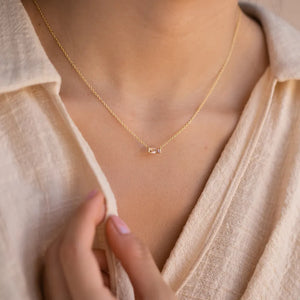
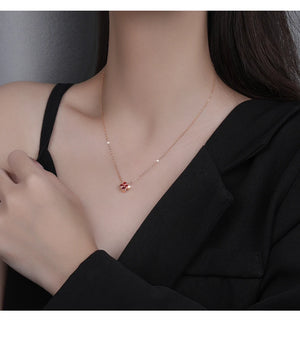
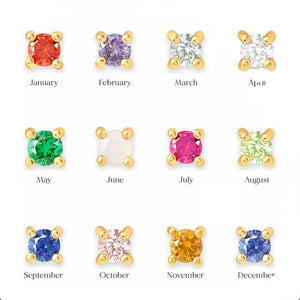

The piece they're describing → Heart Initial Necklace for Women — 18K Gold Plated, Personalized Letter + Heart Pendant
Personalize Yours