


Most people see a bi-color purple-and-gold crystal and assume someone glued two stones together. They haven't. Ametrine meaning starts with a geological fact that surprises almost everyone who learns it: this is one single quartz crystal that grew with two different color zones inside it, formed by nature, not by a jeweler's bench. That natural duality is exactly why ametrine has become one of the most symbolically rich crystals in the quartz family — a stone that visually and energetically unites two opposite forces, intuition and action, calm and confidence, within one continuous structure. In this guide, you'll learn where ametrine actually comes from, what its dual amethyst-citrine energy means, how to use and cleanse it, its chakra and zodiac associations, and how to tell genuine Bolivian ametrine from the lab-created and dyed versions flooding the market.
What Is Ametrine? The Stone That Is Two Crystals in One
Ametrine (sometimes called trystine, bolivianite, or amethyst-citrine) is a variety of quartz that displays both amethyst's violet-purple coloring and citrine's golden-yellow coloring within a single crystal, typically with a visible, often sharp boundary line where the two zones meet. Chemically, it's still silicon dioxide (SiO₂) like all quartz — what differs is the oxidation state of trace iron impurities distributed unevenly through the crystal as it grew. Where the iron sits in one oxidation state, the crystal forms amethyst's purple; where slight shifts in heat and pressure during growth altered that oxidation state, the same crystal forms citrine's gold. It's one continuous mineral lattice, two visual outcomes.
Ametrine sits at 7 on the Mohs hardness scale, the same as all quartz, which makes it a durable, everyday-wearable gemstone well suited to rings, pendants, and earrings. According to the Gemological Institute of America (GIA), ametrine's defining gemological feature is exactly this naturally occurring bi-coloration — a trait GIA notes is genuinely uncommon in nature, which is part of why the stone draws so much attention from collectors and jewelry designers alike.

Ametrine Meaning: Dual Amethyst and Citrine Energy
The core of ametrine meaning is balance between two energies that are normally treated as separate: amethyst's introspective, calming, intuitive quality and citrine's outward, energizing, confidence-building quality. Where most crystals ask you to choose a single intention, ametrine is built — literally, geologically — to hold both at once.
Crystal healing traditions describe ametrine's properties along these lines:
- Mental clarity with emotional calm: The amethyst half is associated with quieting mental chatter, easing anxiety, and supporting clear, intuitive decision-making.
- Confidence and motivation: The citrine half is linked to personal power, optimism, and the courage to take action on what intuition reveals.
- Harmony between opposites: Because both energies exist in one stone, ametrine is often used as a symbol of integrating conflicting parts of yourself — logic and feeling, rest and ambition, patience and drive.
- Creative problem-solving: Practitioners describe ametrine as useful for situations that need both a calm, reflective read of a problem and the confident energy to act on the solution.
This dual-natured symbolism is what separates ametrine from simply "wearing both amethyst and citrine." A bracelet alternating amethyst beads and citrine beads still treats the two as distinct. Ametrine's meaning is about a single, unified source carrying both qualities — not a combination assembled from outside, but a wholeness that was always there in the stone itself.
Is Ametrine Natural or Man-Made? The Anahí Mine Story
This is the single most misunderstood fact about ametrine, and it's worth being precise about it. Genuine ametrine is a 100% natural mineral. It is not amethyst and citrine fused, glued, or bonded together — it is one quartz crystal that grew with both color zones already present, the result of differential heat and oxidation states acting on iron impurities as the crystal formed deep underground. Early gemologists were skeptical of this when ametrine first reached international markets in volume during the 1970s, assuming such a clean color split had to be artificial. Field investigations and laboratory studies eventually confirmed the opposite: the natural origin of bi-colored amethyst-citrine quartz from Bolivia was conclusively verified, putting those doubts to rest.
Almost all natural, commercially significant ametrine in the world comes from a single source: the Anahí mine in the Pantanal region of eastern Bolivia, near the Brazilian border, in the Santa Cruz department. Bolivia remains the world's only commercial source of natural ametrine. The mine exploits quartz veins formed within dolomitic limestone, and a single mined crystal is often selectively cut so that some pieces become amethyst, some become citrine, and only the pieces straddling the natural color boundary become true ametrine.
The mine's name carries a legend that's become inseparable from the stone's story. According to local lore, a 17th-century Spanish conquistador named Don Felipe de Urquiza Solís married Anahí, a princess from the Ayoreo people, who introduced him to her tribe's quartz mine as a wedding gift. When Anahí was later killed defending her people, the grieving conquistador brought ametrine back to Spain in her memory, and the mine was named for her. Whether read as romantic history or folklore, the legend has become part of how ametrine is marketed and understood — a stone literally named after the union of two people, mirroring the union of two colors within it.
It's worth being upfront about one nuance: since 1994, a Russian laboratory has also produced synthetic bi-color quartz using a hydrothermal process, later irradiated to achieve the amethyst-citrine color split. Synthetic ametrine has the same chemical composition as natural ametrine but is not the Bolivian Anahí material, and it sells for a fraction of the price. We cover how to tell the two apart in the buying guide section below — but the headline fact stands: real ametrine, whether natural Bolivian or lab-grown Russian, is a true single-crystal bi-color quartz. It was never two separate stones stuck together.
How to Use, Cleanse, and Charge Ametrine
Because ametrine carries two energetic profiles in one stone, many practitioners use it specifically when they want both reflection and action in the same practice — rather than reaching for two separate crystals.
Meditation: Hold ametrine with the amethyst zone closer to your forehead or crown and the citrine zone closer to your lower body, mirroring its dual chakra associations (more on this below). Some practitioners simply hold the whole stone in both hands and set an intention that names both what they want to release (amethyst) and what they want to build (citrine).
Daily wear: A pendant is the most popular way to keep ametrine's energy close throughout the day, since it sits near the heart and throat — a neutral point between the stone's upper-body (amethyst) and lower-body (citrine) associations.
Cleansing: Quartz family stones, including ametrine, are generally water-safe for brief rinsing, though prolonged soaking isn't necessary. Common cleansing methods include:
- Running water: A short rinse under lukewarm tap or spring water, patted dry afterward.
- Moonlight: Leaving the stone out overnight, particularly during a full moon, to clear accumulated energy.
- Smudging: Passing the stone through sage or palo santo smoke.
- Sound: Using a singing bowl or bell to clear the stone with vibration.
Charging: Because ametrine combines a "moon stone" (amethyst, associated with lunar, intuitive energy) and a "sun stone" (citrine, associated with solar, active energy), some practitioners charge it under both moonlight and brief morning sunlight to honor both halves — though direct, prolonged sun exposure should be limited, as it can gradually fade amethyst's purple tone over time.
Important note: Crystal healing is a complementary practice, not a substitute for medical advice, diagnosis, or treatment. Always consult a qualified healthcare provider for physical or mental health concerns.
Ametrine Chakra and Zodiac Associations: A Dual Energy Stone
Most single-color crystals are linked to one chakra. Ametrine, true to form, is associated with two chakra pairings at once — one for each half of the stone.
The amethyst half connects to the third eye chakra (Ajna, between the eyebrows) and the crown chakra (Sahasrara, at the top of the head). These govern intuition, inner vision, and spiritual connection — the reflective, receptive side of ametrine's energy.
The citrine half connects to the solar plexus chakra (Manipura, at the upper abdomen) and, in some traditions, the sacral chakra (Svadhisthana, below the navel). These govern personal power, confidence, motivation, and creative drive — the active, expressive side of ametrine's energy.
Practitioners describe ametrine as a stone that helps move insight from the upper chakras into action through the lower chakras — you sense or understand something through the third eye, then have the confidence and drive from the solar plexus to actually act on it. This upper-to-lower chakra bridge is part of why ametrine is often recommended for people who feel "stuck between knowing and doing."
In zodiac astrology, ametrine is most commonly associated with Libra, valued for its balance-seeking nature that mirrors Libra's symbol of the scales, and with Pisces, whose intuitive, dual-natured personality (the two fish swimming in opposite directions) pairs naturally with a stone literally made of two opposing color zones. Some traditions also link ametrine to Gemini, citing the sign's twin symbolism. As with most crystal-zodiac pairings, practitioners note any sign can work with ametrine — the associations point to thematic resonance, not exclusivity.

Ametrine Buying Guide: Natural Bolivian vs. Synthetic vs. Dyed
Because genuine natural ametrine comes from essentially one mine, and because it commands a meaningful price premium over single-color quartz, the market includes a fair amount of synthetic and imitation material. Knowing the difference matters if you want the real thing.
| Type | Origin | How It's Made | What to Look For |
|---|---|---|---|
| Natural Bolivian ametrine | Anahí mine, Bolivia | Forms naturally over geologic time from heat/oxidation variance in one quartz crystal | Sharp, often angular color boundary; slight color variation within each zone; premium price point |
| Synthetic (lab-created) ametrine | Laboratory, primarily Russia since 1994 | Hydrothermal growth process, then irradiated to produce the color split | Often unnaturally uniform color zones; perfectly symmetrical boundary; sold at a fraction of natural prices; same chemistry as natural, requires gemological testing (EDXRF, IR spectra) to distinguish with certainty |
| Dyed or heat-treated quartz ("fake ametrine") | Various, often clear or low-grade quartz | Artificially colored or irradiated clear quartz to mimic the purple-gold split | Color often looks flat or overly saturated; may show dye concentration in fractures; significantly lower price than even synthetic ametrine |
What to ask before buying:
- Where is it from? Reputable sellers will tell you whether a piece is natural Bolivian ametrine or lab-created. If a seller is vague or claims an unusual origin outside Bolivia for "natural" ametrine, be skeptical.
- What's the color boundary like? Natural ametrine typically has a less perfectly symmetrical, slightly irregular boundary between zones, reflecting organic crystal growth. Lab-created material can appear almost too clean.
- What's the price relative to comparable amethyst or citrine? Natural ametrine commands a premium over single-color quartz of similar quality, given its rarity. If a "natural ametrine" piece is priced at or below standard amethyst, treat the natural-origin claim with caution.
- Is documentation available? For higher-value pieces, ask whether a gemological report is available, particularly for loose stones rather than finished jewelry.
For everyday jewelry — pendants, earrings, casual rings — the difference between natural and synthetic ametrine has little practical impact on durability or how the piece looks day to day, since both share quartz's Mohs 7 hardness. The distinction matters most for collectors, investment pieces, and anyone paying a natural-origin premium who wants to be sure that's what they're actually getting.
How to Care for Ametrine Jewelry
Ametrine's Mohs 7 hardness puts it solidly in the durable range for everyday jewelry — harder than opal, pearl, or turquoise, and well suited to rings, earrings, and pendants worn regularly.
Cleaning: Warm water with a small amount of mild soap and a soft brush is sufficient for routine cleaning. Ametrine can typically tolerate ultrasonic cleaners better than softer gemstones, but steam cleaning is best avoided, as is prolonged exposure to harsh chemicals.
Storage: Store ametrine separately from harder gemstones like diamonds or sapphires, which can scratch it even at Mohs 7. A fabric-lined box or soft pouch works well.
Sunlight: Like amethyst, prolonged direct sunlight can gradually fade ametrine's purple zone over time. It's not fragile, but it's worth avoiding leaving pieces in direct sun for extended periods, such as on a sunny windowsill.
Wear: Ametrine is suitable for daily wear in pendants and earrings. For rings, a protective setting helps guard against the everyday knocks that any gemstone, even a durable one, experiences over years of wear.
Browse our gemstone necklaces collection to see current ametrine and bi-color crystal pieces, each set in sterling silver.
Frequently Asked Questions About Ametrine
Is ametrine a natural stone or is it man-made?
Genuine ametrine is a naturally occurring mineral — a single quartz crystal that grew with both amethyst (purple) and citrine (yellow-gold) color zones within it, caused by differing iron oxidation states during formation. It is not two stones fused together. Almost all natural ametrine comes from the Anahí mine in Bolivia. Separately, since 1994 a Russian laboratory has also produced synthetic bi-color quartz through a hydrothermal process, which shares ametrine's chemistry but isn't natural Bolivian material.
Where does ametrine come from?
Nearly all commercially significant natural ametrine in the world is mined at a single source: the Anahí mine in the Santa Cruz department of eastern Bolivia, near the Brazilian border. Bolivia is recognized as the world's only commercial source of natural ametrine. The mine produces amethyst, citrine, and ametrine from the same quartz veins, with crystals selectively cut depending on where the color boundary falls.
Is ametrine rare?
Yes, natural ametrine is genuinely rare. Unlike amethyst or citrine individually, which are mined in many countries, natural bi-color ametrine of gem quality comes almost exclusively from one mine in Bolivia. Within that mine's total output, ametrine represents a smaller portion of production compared to single-color amethyst and citrine, since only crystals with a usable purple-gold boundary can be cut as true ametrine.
What is the difference between ametrine and an amethyst-citrine combination piece?
Ametrine is a single crystal that naturally grew with both colors present. An "amethyst-citrine combination" piece, by contrast, typically refers to jewelry that uses separate amethyst and citrine stones set side by side — two distinct gemstones, not one bi-color crystal. Both can look similar at a glance, but ametrine's value and meaning come specifically from its natural, unified origin, while a combination piece is an intentional pairing of two separate stones.
What does ametrine mean spiritually?
Spiritually, ametrine is understood to merge amethyst's calming, intuitive energy with citrine's confident, energizing qualities in a single stone. It's associated with balancing opposing forces — reflection and action, calm and drive, intuition and follow-through. Many practitioners use it specifically when they want to combine clear thinking with the confidence to act on what that clarity reveals.
What chakras does ametrine work with?
Ametrine works with two chakra pairings simultaneously. Its amethyst half is linked to the third eye and crown chakras, governing intuition and spiritual connection. Its citrine half is linked to the solar plexus and sacral chakras, governing confidence, personal power, and motivation. This dual chakra association is considered one of ametrine's most distinctive energetic features.
What zodiac sign is ametrine associated with?
Ametrine is most often associated with Libra, whose balance-seeking symbolism mirrors the stone's two-in-one nature, and Pisces, whose dual-fish symbol resonates with ametrine's split coloring. Some traditions also connect it to Gemini for its twin symbolism. As with most crystal-zodiac pairings, any sign can work with ametrine, particularly when seeking to balance intuition with confident action.
How can you tell if ametrine is real?
Genuine natural ametrine typically shows a slightly irregular, organic-looking boundary between its purple and gold zones, along with subtle color variation within each zone. Lab-created synthetic ametrine, which has been produced in Russia since 1994, often shows a more uniform, almost too-clean color split. Distinguishing natural from synthetic with full certainty usually requires gemological testing, such as EDXRF chemical analysis or IR spectroscopy, since both share identical chemistry. Reputable sellers should be able to tell you whether a piece is natural Bolivian or lab-created.
Can ametrine be worn every day?
Yes. At Mohs 7 hardness, ametrine is durable enough for daily wear in pendants, earrings, and rings, similar to amethyst and citrine individually. It should still be stored separately from harder stones like diamonds, kept out of prolonged direct sunlight to preserve its purple tone, and cleaned with mild soap and water rather than harsh chemicals.
Why is ametrine more expensive than amethyst or citrine alone?
Natural ametrine commands a premium because its supply is far more limited than either amethyst or citrine individually. While both of those stones are mined in multiple countries worldwide, gem-quality natural ametrine comes almost exclusively from one mine in Bolivia, and only a portion of that mine's output contains a usable bi-color boundary suitable for cutting as ametrine rather than single-color amethyst or citrine.
What is the legend behind the Anahí mine name?
According to Bolivian legend, the Anahí mine is named after an Ayoreo princess who married a 17th-century Spanish conquistador, Don Felipe de Urquiza Solís, and gifted him knowledge of her people's quartz mine as a wedding present. After Anahí was killed defending her people, the conquistador is said to have carried ametrine back to Spain in her memory, and the mine retained her name. The legend has become closely tied to how the stone is marketed today, though it's worth noting it's regarded as folklore rather than verified historical record.
Final Thoughts: Why Ametrine's Natural Duality Is the Whole Point
Ametrine rewards a closer look. What first reads as a striking but possibly artificial color combination turns out to be exactly the opposite — a single crystal that nature itself built to hold two colors, two chakra families, and two kinds of energy at once. That's rare in the mineral world, and it's rarer still in how directly the stone's physical story matches its symbolic one: balance that isn't assembled from outside, but grown from within.
If you're drawn to a stone that doesn't ask you to choose between calm and confidence, intuition and action, ametrine is worth the closer look — and worth buying from a source that can tell you honestly whether your piece is natural Bolivian material or one of its lab-created counterparts.
Explore our elemental stone charms necklace to bring bi-color crystal energy into your everyday jewelry collection, set in sterling silver.
Discover the Elemental Stone Charms Necklace — crafted in sterling silver to carry crystal meaning with you every day.
Shop the CollectionWritten by the AJLuxe team — specialists in personalized sterling silver jewelry. Last updated: June 2026.
All third-party trademarks, brand names and product names are the property of their respective owners. AJLuxe is not affiliated with, endorsed by, sponsored by, or otherwise connected to any third-party brand referenced in this article. Brand names are used solely for accurate comparative reference, and material descriptions reflect each brand's own published product specifications at the time of writing.
You Might Also Like
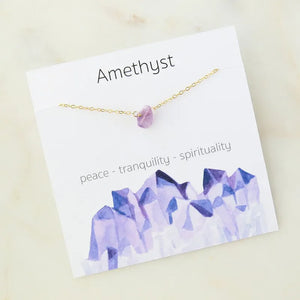
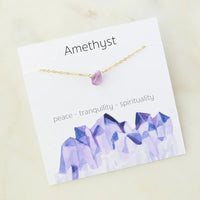
The piece they're describing → Stone Charm Necklace for Women — Raw Natural Gemstone Pendant
Personalize Yours


