Choker Necklaces: The Style That Never Actually Left A choker is defined by its position rather than its design: it sits at or just above the collarbone, typically at a length of 14 to 16 inches, and…
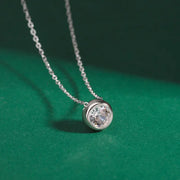
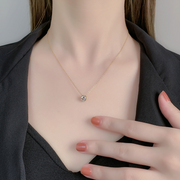
A choker is defined by its position rather than its design: it sits at or just above the collarbone, typically at a length of 14 to 16 inches, and the snug fit against the neck is the defining characteristic that no other necklace length replicates. At 16 inches, a necklace sits at the base of the neck and begins to feel like a traditional short necklace. At 14 inches, a choker hugs closer to the actual throat. The visual effect is completely distinct from longer necklaces: a choker draws the eye to the neck, frames the collarbone, and creates a band of jewelry that functions almost like punctuation around the face and neck together.
The choker's appeal has proven remarkably durable across centuries and cultures, and the reason is practical as well as aesthetic: the neck is one of the most flattering places to place jewelry because it draws the eye upward toward the face. A collarbone-grazing necklace at 18 or 20 inches directs attention downward toward the chest. A choker at 14–16 inches keeps the focus high, frames the face from below, and elongates the appearance of the neck through the band effect. These visual properties explain why chokers have appeared in every major jewelry era across recorded history.
Choker necklaces appear in ancient Egyptian art as early as 3,000 BCE, worn as wide gold collars by royalty and high-status women as markers of wealth and position. These were not delicate pieces — they were broad, rigid, heavily ornamented bands that communicated status unmistakably. In ancient Rome, similar neck ornaments appear in mosaics and sculpture. The design principle of jewelry placed snugly at the neck has been independently discovered and rediscovered across cultures because the visual logic is self-evident.
The Victorian era brought the choker into European fashion in a very different guise — narrow black velvet ribbons worn at the throat, associated in some cases with mourning customs and in others simply with elegance. Queen Alexandra of England made choker necklaces fashionable across the upper classes in the late 19th century, often wearing multi-strand pearl chokers to cover a scar on her neck. This royal association elevated the choker from ribbon to serious jewelry category. The 1990s democratized the choker entirely: rubber tattoo chokers, plastic bead chokers, black velvet ribbon chokers, and cheap lace chokers became standard accessories for teenagers and young adults across the Western world. For a decade, the choker was everywhere. The early 2000s saw a brief retreat as the minimalist and then boho jewelry trends pushed longer necklaces to dominance. The 2010s brought the choker back as a serious fashion piece — no longer relegated to teenage accessories, it returned in sterling silver, fine metalwork, and sophisticated gemstone designs. By 2026, the choker has completed the transformation from trend item to permanent collection staple.
V-neck: One of the most effective choker-and-neckline pairings. The V-neck creates a downward visual channel that draws the eye from the collarbone toward the chest, and the choker at the throat creates a horizontal band that the V begins from. The two elements work in complementary directions — the choker grounds the look at the throat while the V opens downward. A delicate silver choker at a V-neck is a combination that requires almost no further styling to look finished.
Off-shoulder: The ideal neckline for a choker. When the shoulders are fully exposed, the visual line from shoulder to collarbone to throat is uninterrupted, and the choker occupies that exposed space with maximum effect. The drama of exposed collarbone and shoulder frames the choker from below while the face frames it from above. This combination — off-shoulder top, delicate choker, nothing else — is one of the most striking minimal-jewelry looks available.
Crewneck: The most challenging neckline for choker styling. The crewneck's edge sits at or near the collarbone, and a choker at 14–16 inches sits very close to that edge, creating visual competition between the neckline and the jewelry. For crewnecks, choose the most delicate choker possible — a very thin chain at 14 inches — so the jewelry and neckline don't compete with equal visual weight. Alternatively, tuck the crewneck down slightly by rolling it or choosing a slightly lower crewneck style.
Scoop neck: Works well with chokers for similar reasons to the V-neck — the scoop opens the chest area and allows the choker to sit clearly at the throat rather than competing with fabric near the neckline. A slightly longer 16-inch choker with a scoop neck creates a harmonious composition.
Turtleneck: Skip the choker entirely with a turtleneck neckline. The turtleneck covers the neck completely, eliminating the visible skin zone that a choker depends on for its effect. Wearing a choker under a turtleneck is invisible. A turtleneck is the correct occasion to switch to stud earrings, which the high neckline actually frames well by drawing the eye up to the face and ear area.
The choker-and-layered-chains combination produces one of the most dramatic available layered necklace looks because the vertical span between a 14-inch choker and a 20-inch pendant chain is the largest in everyday necklace layering. The choker anchors at the throat; the second layer at 18 inches lands at the breastbone; the third layer at 20–22 inches extends toward the upper abdomen. This nearly 8-inch vertical span creates the maximum visual depth possible in a necklace stack, and the fact that the choker is noticeably different in character from the longer chains — shorter, closer to the body, more of a band than a drape — makes the contrast read clearly as intentional.
For choker-based layering, choose chains that differ in thickness as well as length. A 1mm delicate cable choker paired with a 1.5mm rope chain at 18 inches and a box chain with pendant at 20 inches gives each layer its own identity and prevents the visual muddling that happens when all layers are too similar in weight and texture.
Hair up is the definitive companion for a choker necklace. A bun, chignon, French twist, or even a simple ponytail exposes the full neck from shoulder to jawline and gives the choker the unobstructed visual space it deserves. The combination of an updo and a choker frames the face from three directions simultaneously: hair above and around the face, the choker band at the throat, and the exposed jaw and neck in between. This framing effect is one of the reasons chokers have persisted across centuries of changing fashion — the visual geometry of updo plus choker is inherently flattering.
With long hair worn down, a choker is partially obscured by hair falling over the shoulders and covering the sides of the neck. The effect is less dramatic but still effective — the choker remains visible at the front of the throat and at the collarbone. With long hair down, choose a choker with slightly more visual weight — a 2mm chain or a choker with a small pendant element — so it remains visible and intentional rather than disappearing under hair. Half-up half-down is the ideal long-hair-friendly choker styling: the upper hair is pulled back to expose the area around the jaw and ear, while the lower hair provides framing context below the choker level.
The fit of a choker matters more than almost any other necklace type because the snug positioning is integral to its visual effect. A choker worn too loose simply sits lower and functions like a short regular necklace, losing the distinctive throat-level positioning. A choker worn too tight is uncomfortable and can leave marks on the skin after a few hours of wear.
The two-finger rule is the reliable standard: when the choker is clasped, you should be able to comfortably slide two fingers underneath it at the front of the throat. If the choker is too tight for this, it needs to be longer. If you can fit three or four fingers, it's sitting too loose. For a custom approach, measure your neck circumference with a soft measuring tape and add approximately one inch to find your choker length. A 14-inch standard choker fits a neck of approximately 13 inches; a 15-inch choker suits a neck of approximately 14 inches; 16 inches suits a neck of approximately 15 inches.
| Neckline | Choker Recommendation | Chain Length to Pair | Styling Note |
|---|---|---|---|
| V-neck | Works beautifully; any weight | 20" pendant chain for layering | Choker at 14–15" + long pendant chain creates dramatic visual span |
| Off-shoulder | Best neckline for chokers; all styles work | 16" or 18" for second layer | Exposed shoulders and collarbone frames the choker maximally |
| Crewneck | Delicate only (1mm, 14"); may compete | Avoid layering; one delicate piece only | Choose thinnest possible choker; neckline edge competes with choker |
| Scoop neck | Works well; 15–16" sweet spot | 18–20" for second layer | Scoop opens chest area so choker has visual breathing room |
| Turtleneck | Skip — neck not visible | N/A | Switch to stud earrings instead; turtleneck frames face upward |
Understanding how chokers have moved through fashion history reveals that this is not a piece that cycles in and out but rather one that perpetually adapts to whatever the dominant aesthetic of its era demands. The 1920s Art Deco chokers were geometric, architectural, often set with diamonds and colored gemstones — formal pieces worn by flappers who were simultaneously scandalizing the establishment with shorter hemlines. The 1960s brought mod-era chokers in bold geometric forms with enamel and oversized elements that matched the era's graphic design sensibility. The 1970s saw natural materials — turquoise, coral, shell, leather — as chokers moved from formal to casual territory. The 1990s explosion democratized the form entirely, removing any prestige association and making the choker accessible to mass markets worldwide for the first time.
The 2010s rehabilitation of the choker was more significant than most trend revivals because it accomplished something stylistically important: it removed the 1990s association from the form and replaced it with a more versatile identity. Sterling silver chokers at 14–15 inches in delicate chain or bar designs became jewelry wardrobe staples rather than youth accessories. By 2026, a delicate sterling silver choker is considered appropriate across formal, professional, and casual contexts — a versatility that the rubber and velvet chokers of the 1990s never achieved. This is the most complete evolution the form has undergone, and it explains why chokers now occupy permanent positions in fine and fashion jewelry collections at all price points rather than appearing cyclically as trend items.
The choker necklace is one of the few jewelry forms where history, versatility, and genuine flattery converge. A quality sterling silver choker at 14–16 inches belongs in every permanent jewelry collection — worn alone with an updo for maximum impact, or as the anchor piece in a layered necklace stack.