


What Makes Tiffany Special — and What You're Actually Paying For
Tiffany & Co has been the world's most recognized jewelry brand for nearly 190 years. Their sterling silver and gold pieces are genuine quality: Tiffany uses 925 sterling silver and solid 14K or 18K gold, their diamonds are graded to strict internal standards, and their craftsmanship on signature pieces like the T, Return to Tiffany, and Atlas collections is consistently excellent. This is not a brand that inflates quality claims — the materials are real.
What Tiffany does inflate is price relative to market comparables. A Tiffany sterling silver chain necklace that retails for $175–$250 uses the same 925 silver a Mejuri or Catbird equivalent uses at $50–$80. A Tiffany 18K gold pendant necklace at $600–$1,200 competes with Brilliant Earth and James Allen pieces at $250–$500 for the same material tier. The Tiffany premium — the blue box, the heritage, the instantly recognizable designs — is real, but it's a brand premium, not a quality premium.
When you're shopping for Tiffany alternatives, you need to decide what you're actually buying: the look, the quality, or the brand status. No alternative can replicate the Tiffany blue box experience. Several can match or exceed the material quality at significantly lower prices. And a few capture the visual aesthetic — dainty chains, simple pendants, minimalist designs — at entry prices that make everyday wear much more practical.
Quick Comparison: 15 Tiffany Alternatives
| Brand | Price Range | Metal | Best Match |
|---|---|---|---|
| Mejuri | $50–$500 | Solid 14K gold, sterling silver, vermeil | Dainty chains, everyday fine jewelry |
| Catbird | $50–$500 | Solid 14K gold, sterling silver | Minimalist pendants, stacking rings |
| Brilliant Earth | $300–$5,000+ | Recycled solid gold | Ethical fine jewelry at Tiffany tier |
| Gorjana | $40–$200 | Gold vermeil, sterling silver | Dainty layering, California aesthetic |
| Ana Luisa | $40–$200 | 14K gold fill, sterling silver | Tiffany-style dainty at affordable prices |
| Monica Vinader | $100–$800 | Vermeil, solid gold | Personalized, engraved pieces |
| Swarovski | $60–$300 | Gold-plated base metal | Crystal-forward, fashion jewelry |
| Pandora | $35–$200 | Sterling silver, 14K gold | Charm bracelets, personalization |
| Kendra Scott | $50–$300 | Gold-plated brass | Colorful stones, gift-worthy |
| Missoma | $80–$400 | 18K gold vermeil, recycled silver | London editorial aesthetic |
| BaubleBar | $20–$100 | Gold-plated, mixed metals | Fashion-forward looks, trend-driven |
| Quince | $40–$300 | Solid 14K gold, sterling silver | Honest pricing, same quality tier |
| Stone and Strand | $75–$800 | 14K gold fill, solid 14K gold | Fashion-fine jewelry, NYC aesthetic |
| Aurate | $100–$600 | Solid 14K–18K gold | Simple gold jewelry, ethical focus |
| AJLuxe | $20–$80 | 925 sterling silver + 18K gold plating | Tiffany dainty aesthetic at entry price |
1. Mejuri
Mejuri is the most direct quality alternative to Tiffany for shoppers who want fine jewelry without the brand premium. Their solid 14K gold pieces — thin chains, simple pendants, delicate rings — use the same materials as Tiffany's gold line at roughly 30–60% lower prices. A Mejuri thin oval chain in 14K gold at $95–$130 is a material equivalent to a Tiffany chain at $300–$450. The designs are different (Mejuri's aesthetic is cleaner and more minimalist than Tiffany's signature styles), but the material quality is comparable.
Mejuri also offers sterling silver and gold vermeil pieces at lower price points for shoppers who want the look without the fine jewelry budget. Their vermeil line — 18K gold over sterling silver — is more durable than typical gold plating, though still not permanent like solid gold. The brand is transparent about materials on every product page, which is a meaningful contrast to brands that bury metal type in fine print.
The Mejuri aesthetic has evolved from Scandinavian minimalism into something broader — they now sell bolder fashion jewelry alongside their classic fine jewelry. If you specifically want that clean Tiffany dainty look, their "Everyday Fine" section is the most relevant. Mejuri's weekly drops keep the selection fresh and create some urgency around popular styles that sell out quickly.
2. Catbird
Catbird occupies a special place in the fine jewelry alternative conversation because their pieces feel genuinely special — tiny, well-made, permanent. Based in Brooklyn with a beloved physical store and a very curated online presence, Catbird makes solid 14K gold jewelry that often retails below Tiffany's equivalent sterling silver pieces. A Catbird thin gold ring at $60–$80 outlasts a Tiffany silver equivalent in wear while costing less.
Their design aesthetic is decidedly downtown New York — delicate, sometimes quirky, always intentional. If you love Tiffany's classic T collection or Paloma Picasso designs, Catbird's straightforward minimalism might feel even better. Their "Catbird Classic" line of thin bands, simple chains, and small pendants is specifically the kind of thing you wear every day and don't take off. That's exactly what Tiffany's iconic pieces aspire to be.
Catbird doesn't have Tiffany's scale or selection depth. You won't find a broad range of gemstone options or elaborate settings. What you will find is a small number of absolutely perfect simple pieces in solid gold at prices that make everyday wear feel practical rather than precious. For the "I want to wear nice jewelry every day without worrying about it" buyer, Catbird is often the right answer.
3. Brilliant Earth
Brilliant Earth is the fine jewelry competitor that most directly challenges Tiffany on both quality and values. If you're buying a diamond necklace, engagement ring, or significant gemstone piece and were considering Tiffany, Brilliant Earth deserves a detailed comparison. Their recycled gold and ethically sourced or lab-grown diamonds often match Tiffany's quality at 20–40% lower prices, and their sustainability credentials are more robust than Tiffany's.
Tiffany has improved their ethical sourcing narrative in recent years (their "Tiffany True" collection comes with source country disclosure for diamonds), but Brilliant Earth's commitment goes deeper into recycled metals, responsible mining partnerships, and lab-grown options. For buyers where the ethics of their jewelry purchase matters, Brilliant Earth is the credible fine jewelry alternative.
On design, Brilliant Earth offers both classic and contemporary styles — their engagement ring catalog is one of the most comprehensive online, and their everyday fine jewelry in 14K and 18K recycled gold has grown significantly. If you love Tiffany's Simple Solitaire or Soleste halo designs, Brilliant Earth's equivalents are often $100–$500 less for comparable materials.
4. Gorjana
Gorjana is the California answer to the dainty jewelry aesthetic — relaxed, sun-kissed, layerable. Their gold vermeil pieces (18K gold plated over sterling silver) offer the look of solid gold at dramatically lower prices: $40–$150 for most necklaces versus $300–$800+ for Tiffany's gold equivalents. If you want to look like you're wearing Tiffany-tier jewelry for brunch on a weekend without the investment, Gorjana does this well.
The trade-off versus Tiffany is durability and permanence. Gorjana's gold vermeil will show wear over time — typically 1–3 years with daily wear before the plating noticeably thins — while Tiffany's solid gold pieces theoretically last forever. For shoppers who rotate their jewelry frequently or follow seasonal trends, Gorjana's price point makes this trade-off acceptable. For a piece you want to wear every day for a decade, solid gold makes more economic sense.
Gorjana is particularly strong for layering sets. Their curated "Layer Up" section takes some of the guesswork out of building a stacked necklace look — a style that Tiffany's pieces lend themselves to but at prices that make it difficult to experiment. At Gorjana's prices, buying 3–4 pieces to layer is more accessible than buying one Tiffany pendant.
5. Ana Luisa
Ana Luisa is a direct-to-consumer brand that has carved out space as the sustainable Tiffany alternative for price-conscious shoppers. Using recycled materials and positioning on ethical production, they offer 14K gold fill and sterling silver pieces at $40–$200 — well below Tiffany's price floor. Their designs are simple, clean, and deliberately designed to look more expensive than they are.
The key material difference: Ana Luisa uses 14K gold fill, not solid gold. Gold fill is significantly more durable than standard plating — it has a much thicker gold layer bonded under heat and pressure to the base metal — but it's still not solid gold. For daily wear over 5–10 years, gold fill typically holds up much better than plating. Ana Luisa is transparent about this on their product pages, which is appreciated.
If you specifically love Tiffany's simple open heart pendant or the return-to-tiffany O pendant style, Ana Luisa has clear aesthetic equivalents at $50–$80. They're not copies — Ana Luisa's designs are their own — but they occupy the same visual vocabulary: simple shapes, delicate chains, minimal settings. For a person who wants Tiffany's everyday aesthetic without Tiffany's everyday prices, Ana Luisa is a strong contender.
6. Monica Vinader
Monica Vinader has built her brand on personalization — engravable bracelets, initial pendants, birthstone pieces — in 18K gold vermeil and solid gold. If Tiffany's personalization options (like the Return to Tiffany tag or engraving services) are part of the appeal, Monica Vinader does personalization better, more expressively, and at better prices.
Their bestselling engraved disc necklace and stacking bracelet have become jewelry staples for a reason: the quality is consistent, the personalization is genuinely well-executed, and the gift experience (nice packaging, fast turnaround, helpful customer service) matches the premium positioning. Prices run $100–$400 for most pieces, putting them squarely between the budget alternatives and Tiffany's price floor.
Monica Vinader uses vermeil (18K gold over recycled sterling silver) for most pieces, not solid gold. Their Solid Gold collection exists but is smaller and pricier. The vermeil quality is among the better in the industry, but buyers should understand the longevity limitation compared to solid gold for pieces worn daily without removal.
7. Swarovski
Swarovski is a brand most people know, and for good reason — their crystal jewelry has a distinct sparkle that's genuinely hard to replicate at any price point. But it's important to be clear about the material difference: Swarovski jewelry uses gold-plated base metals (not sterling silver, not gold fill), and their signature "crystals" are high-quality glass, not gemstones. The sparkle is real; the underlying materials are fashion jewelry tier.
Compared to Tiffany, Swarovski operates at a lower material tier but a strong brand tier. Their pieces photograph beautifully and wear well for fashion jewelry — they're intended to make an impact rather than to be kept forever. If you want Tiffany's visual presence (shine, sparkle, recognizable design) at $60–$200, Swarovski delivers this within its category. If you want Tiffany's material quality, Swarovski isn't a match.
Swarovski has made sustainability moves in recent years — phasing out some materials and transitioning production — but they remain primarily a fashion jewelry brand with a fine jewelry price point. The premium over cheaper crystal competitors reflects genuine brand differentiation and crystal quality, but buyers should know they're buying fashion jewelry aesthetics, not precious metal quality.
8. Pandora
Pandora built one of the most successful jewelry businesses in history on a core insight: personalization and collection-building create more loyal customers than any single purchase. Their charm bracelet system — where each charm tells a story — generates repeat purchases and emotional investment in a way few jewelry brands match. If you love the Tiffany charm bracelet concept, Pandora's system is more extensive, more customizable, and much less expensive.
Pandora's core charm bracelets and charms are in sterling silver or 14K gold, making their base metals genuine rather than fashion jewelry tier. The quality isn't Tiffany-level — their silver has more alloy additions for shape durability, and their gold pieces are often 14K rose gold plate rather than solid — but the charm and bracelet materials are real precious metals at the base collection level.
For everyday wear and building a meaningful jewelry story, Pandora's personalization system genuinely competes with what Tiffany offers at a dramatically different price point. A Tiffany charm bracelet starter set runs $350–$600; a Pandora equivalent runs $100–$200. The gap in material quality exists, but for most wearers, the functional experience is comparable.
9. Kendra Scott
Kendra Scott has built a massive retail presence on the back of colorful semi-precious stone jewelry at accessible prices. Their stones — natural and synthetic — come in an enormous range of colors, making them popular for birthstone gifts and color-coordinated jewelry. The Kendra Scott shopping experience — you can often choose your own stone color at the store — is genuinely fun and unique in the jewelry retail landscape.
The important material note: Kendra Scott's plated pieces use a brass base, not sterling silver. For most shoppers this is fine — the plating holds well and the visual result is attractive — but for those with metal sensitivities, brass bases can cause reactions as plating wears. This is one area where Kendra Scott competes more with fashion jewelry brands than with Tiffany's sterling silver quality.
For the Tiffany buyer who specifically loves the open heart collection or colorful stone pendants, Kendra Scott's style is broader and bolder rather than minimalist. The stones are front-and-center in a way that Tiffany's more restrained designs aren't. If you want a gift that makes an immediate visual impact, Kendra Scott often delivers better than the alternatives.
10. Missoma
Missoma is the London brand that's become synonymous with cool-girl gold jewelry — worn by influencers, celebrities, and anyone who reads fashion media with any regularity. Their 18K gold vermeil over recycled sterling silver pieces hit the $80–$400 range, putting them in a tier between affordable fashion jewelry and true fine jewelry. The aesthetic is editorial, slightly edge-forward, and distinctly different from Tiffany's more traditional sensibility.
If you love Tiffany's Elsa Peretti or Paloma Picasso designs but want something that feels more 2026 than heritage, Missoma scratches that itch. Their paperclip chains, coin pendants, and sculptural ring designs have real design merit and have influenced the broader jewelry market significantly. The vermeil quality is solid — they use a thicker plating process than many competitors — though still not solid gold longevity.
Missoma's sustainability credentials are notable: they use recycled sterling silver, their vermeil is Fairmined certified in some collections, and they publish annual impact reports. For the ethically-minded shopper who also cares deeply about aesthetics, Missoma hits multiple requirements at once.
11. BaubleBar
BaubleBar is the trend-first, price-second fashion jewelry brand — and for shoppers who want the Tiffany aesthetic on a fast-fashion budget, they deliver reliably. Their pieces change rapidly with trends, run $20–$100, and are made in gold-plated base metals designed to look great in the short term. Think seasonal statement pieces, gifting jewelry that photographs beautifully, and on-trend styles that don't need to last five years.
Don't confuse BaubleBar with a quality alternative to Tiffany — the materials are a different category entirely. But for shoppers who want to wear the minimalist chain look, the layered necklace trend, or the dainty pendant aesthetic at prices where replacing a piece annually is acceptable, BaubleBar executes the look competently. Their selection is enormous, turnaround is fast, and the gift packaging is nice.
BaubleBar's collaboration pieces — with Disney, sports teams, and other licensed properties — have expanded their appeal significantly. If you're shopping for a non-jewelry-person who wants something recognizable and fun, BaubleBar's licensed collections often hit better than a minimalist fine jewelry piece would.
12. Quince
Quince applies the Everlane model to fine jewelry: they compress retail markup by going direct from manufacturer to consumer, then pass savings to the buyer. Their solid 14K gold and sterling silver pieces often retail for 50–70% less than Tiffany equivalents with identical materials. A Quince 14K gold thin chain at $80–$120 uses the same material as a Tiffany chain at $300–$450. The designs are simpler, but the gold is the same gold.
Quince is transparent about their cost breakdown, which is valuable for shoppers who want to understand what they're actually paying for. When a Tiffany piece costs $300 and a Quince piece in the same material costs $100, Quince shows you that $200 is brand, packaging, and retail overhead — not quality. That transparency is rare in jewelry retail.
The shopping experience is utilitarian, not aspirational. Quince doesn't have Tiffany's beautiful photography, gifting ritual, or legacy story. The website is clean but not luxurious. If you're purely maximizing material quality per dollar spent, Quince wins. If the buying experience and brand story matter to you, they don't compete with Tiffany on that dimension.
13. Stone and Strand
Stone and Strand has built a strong following among the fashion-forward set who want fine jewelry quality but editorial aesthetics — think of them as the Vogue to Tiffany's Town & Country. Their pieces in 14K gold fill and solid 14K gold cover birthstones, diamonds, and colored gems in designs that feel genuinely contemporary. For the Tiffany buyer who wants their next piece to feel more current than classic, Stone and Strand is worth close attention.
Their pricing hits the mid-tier: $75–$300 for most everyday pieces, more for solid gold fine jewelry with stones. That puts them above AJLuxe and BaubleBar, below Tiffany, and competitive with Missoma and Ana Luisa. Stone and Strand is explicit about their "fine" versus "demi-fine" designations — solid gold pieces are clearly marked, gold fill is disclosed. This transparency matters when you're evaluating alternatives.
14. Aurate
Aurate is the responsible fine jewelry brand with some of the cleanest design work in the direct-to-consumer space. Their solid 14K and 18K gold pieces — simple chains, minimal pendants, geometric earrings — are what Tiffany's core aesthetic would look like if it were designed today rather than in 1837. Prices run $100–$600, making them more accessible than Tiffany's gold pieces while maintaining the same material quality.
Aurate uses recycled gold and responsibly sourced diamonds, and they donate to educational nonprofits with each purchase. The brand story is coherent and the jewelry reflects it — clean, responsible, modern. If you want a simple gold necklace that will last forever at a price that feels fair for what it is, Aurate's core collection is among the best options at this tier.
15. AJLuxe
AJLuxe occupies a very different tier from Tiffany, and being completely honest about that is important. Tiffany sells solid sterling silver and solid gold; AJLuxe uses 925 sterling silver with 18K gold plating. These are different materials with different longevity characteristics, and any comparison should be clear about that upfront.
That said, AJLuxe uses 925 sterling silver — the same silver standard as Tiffany's silver pieces. The silver base is genuine, hypoallergenic, and nickel-free. Where Tiffany uses the sterling silver as the final metal (and polishes it), AJLuxe applies 18K gold plating over that sterling silver base to achieve a gold appearance. The plating will gradually thin with daily wear — typically 1–3 years depending on skin chemistry and care habits — while Tiffany's solid silver won't.
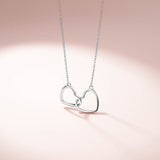
If you love the Tiffany dainty necklace aesthetic at $150–$500, AJLuxe offers very similar styles starting at $20. The pendant silhouettes, the delicate chains, the minimalist sensibility — these translate across the price gap. The difference is the plating versus solid construction, and that difference is important to understand before buying.
Where AJLuxe makes sense: if you want to wear a dainty layered necklace look every day without worrying about losing or damaging a $300 piece, AJLuxe's $20–$40 sterling silver pieces let you build that aesthetic without the investment anxiety. If you're testing whether you like a particular style before committing to a fine jewelry version, AJLuxe is an excellent trial run. If you're looking for a fashion-forward gift that photographs like luxury jewelry but won't ruin your budget, AJLuxe delivers that. Browse the sterling silver jewelry collection for the closest Tiffany-aesthetic styles.
How to Choose: What Matters to You?
The best Tiffany alternative depends on what you actually value about Tiffany's jewelry. Work through these questions to narrow your choice:
Do you need solid gold or silver? If yes, your options are Mejuri, Catbird, Quince, Aurate, Brilliant Earth, and Tiffany itself. All offer solid precious metals at various price points. Everything else in this list uses plating or fill over a base metal.
Is the design aesthetic or the material quality the priority? For design aesthetic on a budget: Ana Luisa, Gorjana, and AJLuxe replicate the visual well at very different prices. For material quality that genuinely competes with Tiffany: Mejuri, Catbird, and Quince are the honest answers.
Is personalization important? Monica Vinader has the best personalization system in the mid-tier. Pandora for charm-building. Tiffany for heritage-engraved pieces.
Is ethics/sustainability a factor? Brilliant Earth, Aurate, and Missoma have the strongest credentials. Catbird is also certified B Corp.
Related reading: Vivienne Westwood Necklace: Price, Authenticity & Affordable Alternatives (2026).
Related reading: Jennifer Fisher Jewelry: Is It Worth It? Plus Affordable Alternatives (2026).
What Counts as "Affordable Fine Jewelry," Exactly?
Affordable fine jewelry means pieces made from genuine precious metal — solid 10K–18K gold, sterling silver, or gold vermeil — priced roughly $50–$500, occupying the gap between mass-market costume jewelry and traditional luxury-brand pricing like Tiffany's $150–$1,200+ range. The term gets used loosely across the industry, but the metal is what actually decides whether a piece belongs in the category, not the price tag alone.
Here's how the tiers break down by what's actually inside the piece:
| Tier | What it means | Typical price |
|---|---|---|
| Fine jewelry | Solid gold (10K+) or solid sterling silver all the way through | $100–$1,000+ |
| Vermeil | A legally defined standard: 2.5 microns of 10K+ gold over sterling silver (per the FTC's Jewelry Guides) | $50–$400 |
| Gold-filled | A thick, mechanically bonded gold layer over a base metal — more durable than plating, not solid | $40–$200 |
| Gold-plated / fashion jewelry | A thin electroplated gold layer over silver or base metal | $15–$100 |
Strictly speaking, only the first two tiers — solid metal and vermeil — are what jewelers mean by "fine jewelry." AJLuxe's 925 sterling silver with 18K gold plating sits in the fashion-jewelry tier by that definition, not the vermeil or solid-gold tiers — the plating is thinner than the FTC's vermeil threshold, which is why it wears differently over time (see the AJLuxe section above for specifics). That's an honest distinction worth knowing before you shop by the phrase "affordable fine jewelry": if a listing doesn't state the metal thickness or plating method, ask before you buy, since "affordable" and "fine" are being stretched to cover very different products across the market.
Source for the vermeil standard: FTC Jewelry Guides.
Frequently Asked Questions
What jewelry brand is comparable to Tiffany in quality?
For comparable material quality at lower prices: Mejuri, Catbird, Quince, and Aurate all use solid 14K gold and genuine 925 sterling silver — the same material tier as Tiffany's sterling and gold pieces — at prices 30–70% lower. Brilliant Earth competes at the fine jewelry diamond tier. The Tiffany brand premium is real, but the material quality can be matched elsewhere.
Is Tiffany jewelry actually better quality than alternatives?
For their core pieces, Tiffany's material quality is genuinely good — solid silver and gold, quality diamonds, consistent craftsmanship. But "better" depends on your comparison. Tiffany is not better quality than Catbird solid gold or Mejuri solid gold at the metal level — those are the same materials. Where Tiffany may exceed: polishing and finishing standards, gemstone quality on their premium pieces, and the designed-to-last construction of iconic pieces. What Tiffany charges extra for is primarily brand heritage and the iconic box.
Is Pandora a good alternative to Tiffany?
For charm bracelets and personalization: yes, Pandora is excellent and significantly less expensive. For dainty necklaces and everyday fine jewelry: less so — Pandora's design language is very different from Tiffany's minimalism. Pandora's materials (sterling silver and some gold) are genuine, though their quality control is less meticulous than Tiffany's. For a charm bracelet gift under $150, Pandora beats Tiffany on selection and price.
What's the cheapest Tiffany-looking necklace I can buy?
AJLuxe offers dainty necklace styles in 925 sterling silver starting at $20–$25 — the closest to Tiffany's visual aesthetic at the lowest price point in this list. BaubleBar has similar price points in plated base metals. Neither matches Tiffany's material quality, but both capture the minimalist pendant look effectively at entry prices.
Does Tiffany use sterling silver?
Yes. Tiffany's silver jewelry uses 925 sterling silver — the same standard as high-quality silver from any reputable jeweler. Their signature silver polish and proprietary finishing techniques give Tiffany silver its distinctive look, but the underlying metal is standard 925 sterling. Competitors like Mejuri, Catbird, AJLuxe, and many others use the same 925 silver standard.
Why is Tiffany so much more expensive than similar jewelry?
Tiffany prices reflect brand premium, not just material cost. When you buy a Tiffany piece, you're paying for: the iconic blue box and retail experience, the Tiffany name recognition, the heritage and prestige narrative, the physical store locations in premium real estate, and the marketing budget that maintains all of the above. The actual silver or gold in a Tiffany piece costs a fraction of the retail price — the same is true of any luxury brand.
Is Mejuri better than Tiffany?
For material quality per dollar: yes, Mejuri wins clearly. For brand prestige and gifting experience: Tiffany still leads. For design (depends on preference): Mejuri's minimalism may actually appeal more to some buyers than Tiffany's more traditional designs. For longevity and resale value: Tiffany pieces hold value better due to brand recognition. "Better" depends what you're optimizing for.
What is the best affordable Tiffany alternative?
For solid gold quality at affordable prices: Quince. For dainty silver aesthetic on the lowest budget: AJLuxe at $20–$80. For the best balance of quality, aesthetics, and price: Mejuri or Ana Luisa at $50–$150. The right answer depends on whether you're prioritizing material quality, design aesthetic, or price.
Comparing lock-style and bangle silhouettes? Our Cartier Love bracelet alternatives guide breaks down the Love bracelet's price, mechanism, and honest dupe options.
Specifically comparing Tiffany's bold chunky-chain HardWear collection? See our dedicated Tiffany HardWear alternatives & dupes guide.
Related reading: see our Ross-Simons alternatives guide.
All third-party trademarks, brand names and product names are the property of their respective owners. AJLuxe is not affiliated with, endorsed by, sponsored by, or otherwise connected to any third-party brand referenced in this article. Brand names are used solely for accurate comparative reference, and material descriptions reflect each brand's own published product specifications at the time of writing.
You Might Also Like
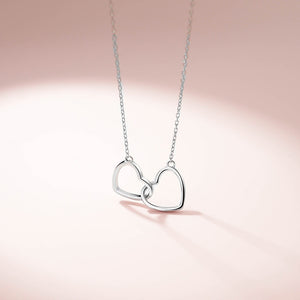
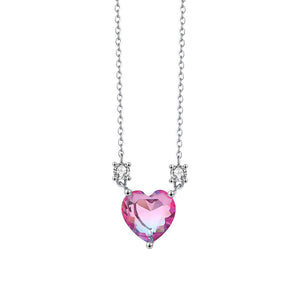
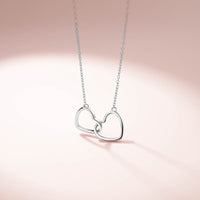
The piece they're describing → Double Love Heart Necklace for Women — 925 Sterling Silver, Layered Heart Pendant
Personalize Yours


