


Red garnet is a naturally untreated gemstone that comes in six main varieties ranging from $20 to $5,000+ per carat. The most common is almandine (deep red-violet), while pyrope offers the classic bright red look most buyers want. Color, not carat size, drives value most. Avoid stones with brown masking and always check that the setting protects the stone.
TL;DR:
• Six garnet varieties exist — almandine and pyrope cover most jewelry; demantoid and tsavorite are the premium picks.
• Garnet is almost never heat-treated, which makes it more trustworthy than ruby or sapphire at the same price.
• Skip certification on stones under $300; for fine demantoid or color-change garnet, an AGL or GIA report is worth it.
Red garnet has been a jewelry staple for thousands of years, and for good reason. It's durable, naturally brilliant, and — unlike most colored gemstones — almost never treated. Whether you're shopping for a January birthstone gift or your first fine gemstone purchase, this guide gives you everything you need to buy with confidence. We cover all six garnet varieties, how to read color and clarity, what prices actually look like in 2026, and the red flags that separate real stones from glass fakes.
In This Guide
- What You Need to Know First
- The 6 Garnet Varieties
- How to Grade Red Garnet Color
- Clarity, Cut, and Carat: What Matters Most
- Price Guide by Variety and Quality
- Treatments and Natural Status
- Best Settings for Red Garnet Jewelry
- Red Flags: How to Spot Fakes and Low Quality
- Do You Need a Certificate?
- Frequently Asked Questions
- Final Thoughts
What You Need to Know First
Garnet isn't a single mineral — it's a family of silicate minerals that share the same crystal structure but differ in chemistry. That's why you get red, orange, green, and even color-changing varieties all under the same name. When most people say "red garnet," they mean almandine or pyrope, the two most common types in jewelry. But knowing the difference between all six varieties helps you shop smarter and avoid paying pyrope prices for almandine quality.
The biggest advantage garnet has over ruby, sapphire, or emerald is simple: it's almost never treated. The colored gemstone market is full of heat-treated, fracture-filled, and glass-infused stones sold as "natural." Garnet skips all of that. What you see is what the earth made. That's a genuine selling point, especially if you're comparing a red garnet ring to a red ruby ring at a similar price point.
Garnet also scores well on the Mohs hardness scale — between 6.5 and 7.5 depending on variety — which makes it suitable for everyday jewelry like rings and bracelets, not just pendants and earrings. It's not as hard as sapphire or ruby (both at 9), so you want a protective setting for rings, but it holds up far better than softer stones like opal or pearl. For more on how garnet compares to its closest look-alike, see our garnet vs. ruby guide.
Finally, garnet origin matters more than most buyers realize. Mozambique has become the dominant source for high-quality pyrope and almandine, and stones from there command a small premium. Russian demantoid — the rarest and most valuable garnet variety — is worth significantly more than demantoid from other origins. We'll break this down variety by variety below.
The 6 Garnet Varieties
The six main garnet varieties you'll encounter in the jewelry market each have distinct color profiles, hardness ratings, and price ranges. Understanding which variety you're buying matters more than most buyers expect, because the name "garnet" can describe stones that vary in price by a factor of 100 or more.
| Variety | Color | Mohs | Price Per Ct | Best Use |
|---|---|---|---|---|
| Almandine | Deep red-violet | 7–7.5 | $20–$150 | Everyday jewelry, rings |
| Pyrope | Bright red | 7–7.5 | $30–$200 | Classic red jewelry |
| Rhodolite | Purplish-red | 7–7.5 | $50–$200 | Pendants, earrings |
| Spessartite (Mandarin) | Orange-red | 7–7.5 | $50–$400 | Statement pieces |
| Tsavorite | Vivid green | 7–7.5 | $200–$3,000 | Fine jewelry centerpieces |
| Demantoid | Green (andradite) | 6.5–7 | $500–$5,000+ | Collector pieces, fine rings |
Almandine is the workhorse of the garnet world. It's what you'll find in most budget garnet jewelry, and there's nothing wrong with that — a well-cut almandine in the right setting looks beautiful. Pyrope is what most buyers picture when they think "red garnet": a clean, bright red with excellent transparency. Rhodolite sits between the two, with a more purplish tone and noticeably better brilliance than almandine at a similar price.
Spessartite (also called Mandarin garnet at the orange end of the spectrum) has developed a strong collector following for its vivid orange-red color that you simply can't get from pyrope or almandine. Color-change garnet is a separate category worth mentioning — these stones shift from blue-green in daylight to red-purple under incandescent light, and they trade between $200 and $2,000 per carat depending on how dramatic the shift is.
Tsavorite and demantoid are green garnets, not red, but they belong in this guide because they're marketed as "garnet" and buyers sometimes encounter them when searching for garnet jewelry. Demantoid has higher dispersion (fire) than diamond, which makes large eye-clean specimens extraordinarily valuable. If someone offers you a 3-carat demantoid for $50, it's not demantoid.
How to Grade Red Garnet Color
Color is the single most important quality factor in red garnet, and it breaks down into three components: hue, saturation, and tone. Hue is the basic color — pure red is ideal for pyrope, while almandine naturally trends toward red-violet. Saturation is how vivid or intense the color appears. Tone is how light or dark the stone looks. The best red garnets hit a medium-dark tone with vivid saturation and no brown masking.
Brown is the enemy of garnet value. Many almandine stones look beautiful in bright outdoor light but appear brownish-black indoors under standard lighting. Always view a garnet under both natural light and incandescent light before buying. If the stone goes dark or muddy indoors, that's a significant quality downgrade regardless of what the seller says about the color outdoors.
On the other end, avoid stones that look washed-out or pale. Garnet should never look pink or translucent at normal viewing distances — a pale stone indicates either a low-quality cut or a variety mismatch (some sellers label pale rhodolite as "pink garnet" to justify a lower price). The sweet spot for pyrope is medium-dark red: saturated enough to show depth, light enough to show life and brilliance when you move the stone.
Lighting matters enormously when shopping online. Ask sellers to provide photos in both natural light and indoor LED or incandescent light. Reputable sellers do this as standard practice. If you only see photos taken in bright sunlight or with macro flash lighting, you're not getting an accurate picture of how the stone will look in everyday wear.
Clarity, Cut, and Carat: What Matters Most
Garnet is classified as a Type II gemstone by gemologists, which means it typically grows with some inclusions and buyers should expect them. The standard for most red garnet is "eye-clean" — meaning you can't see inclusions without magnification at normal viewing distance. This is achievable at most price points for almandine and pyrope. Rhodolite tends to be cleaner, while almandine often shows needle-like inclusions that don't affect the stone's appearance unless you're looking closely.
One exception: demantoid garnet is prized for a specific inclusion called "horsetail" — a wispy, radiating pattern that proves Russian origin. In demantoid, horsetail inclusions actually increase value. This is the only gemstone where a specific inclusion type works in your favor rather than against you.
Cut quality affects how much life and brilliance the stone shows, and it's often overlooked in garnet purchases because buyers focus on color. A poorly cut garnet will look dark and lifeless because light leaks out the bottom rather than reflecting back to your eye. Look for stones with even facets, no "windowing" (a pale washed-out area in the center when you look straight down), and good symmetry. Round brilliants and ovals tend to maximize garnet's natural brilliance; cushion cuts are popular for larger stones.
Carat weight affects price, but not as dramatically as in diamonds. A 2-carat pyrope costs roughly twice what a 1-carat pyrope of similar quality costs — there's no exponential jump the way you see in diamonds or fine rubies. For most buyers, a 1–2 carat stone in a solitaire setting offers the best combination of visual impact and value. Stones over 5 carats in almandine or pyrope exist but rarely command premium prices unless the color is exceptional.
Price Guide by Variety and Quality
Garnet prices in 2026 span an enormous range depending on variety, color, and size. The table below gives realistic price-per-carat benchmarks based on current market data. Note that these are stone-only prices — jewelry settings add $50–$500+ depending on metal and craftsmanship.
| Variety | Quality Tier | Price Per Carat | What to Expect |
|---|---|---|---|
| Almandine | Commercial | $20–$60 | Visible inclusions, good color |
| Almandine | Fine | $60–$150 | Eye-clean, vivid red-violet |
| Pyrope | Commercial | $30–$80 | Good color, some brown tint |
| Pyrope | Fine | $80–$200 | Clean, vivid medium-dark red |
| Rhodolite | Commercial–Fine | $50–$200 | Purplish-red, very transparent |
| Spessartite | Commercial–Fine | $50–$400 | Orange-red, vivid, brilliant |
| Color-change | Fine | $200–$2,000 | Strong color shift required |
| Tsavorite | Fine–Exceptional | $200–$3,000 | Vivid green, clean, rare over 2ct |
| Demantoid | Fine–Exceptional | $500–$5,000+ | High dispersion, Russian = premium |
A few things to note about these ranges. First, Mozambique origin commands a 10–20% premium over stones of similar quality from other sources for pyrope and almandine. Second, stones over 3 carats in any variety see price jumps because larger clean material is rarer. Third, the lower end of any range typically means commercial-grade material that still looks attractive in a finished piece — you don't need to chase the top of the range for beautiful everyday jewelry.
For most buyers shopping for a garnet birthstone necklace or garnet ring in sterling silver, the sweet spot is $40–$100 for the stone — either a fine almandine or a commercial-to-fine pyrope in the 1–2 carat range. You'll get excellent color, decent clarity, and a stone that holds its appearance for decades with normal care.
Treatments and Natural Status
Here's the short version: garnet is almost never treated. No heat treatment, no fracture filling, no beryllium diffusion, no glass infusion. This sets it apart from nearly every other major colored gemstone. When you buy a red ruby or blue sapphire, you're almost certainly buying a treated stone — industry estimates put heat treatment rates at 95%+ for commercial ruby. With garnet, what you see is what the earth produced.
This matters for two reasons. First, untreated natural stones hold their value better over time and are more desirable to collectors. Second, it simplifies the buying process — you don't need to ask a garnet seller "is this treated?" the way you do with ruby or emerald. The answer is almost always no, and if a seller claims their garnet has been "enhanced," that's a red flag worth investigating.
The one exception is surface coating. A small number of low-end garnets are coated with a thin layer to improve color or sheen, similar to what happens with some low-quality topaz. This is rare and usually obvious to a trained eye, but it does happen. If you're buying a stone priced well below market rate with suspiciously perfect surface appearance, ask about coatings.
For more context on how garnet's natural status compares to its closest competitor, check out our garnet birthstone guide, which covers origin, care, and symbolism in more detail. The GIA's garnet information page also has excellent background on treatment status across all garnet varieties.
Best Settings for Red Garnet Jewelry
Garnet's hardness (6.5–7.5 Mohs) makes it suitable for most jewelry types, but the setting plays a big role in long-term durability. For rings — especially those worn daily — a prong or bezel setting that keeps the stone elevated and protected is the smart choice. Four-prong and six-prong settings are both good options; six-prong gives you more security for larger stones.
Avoid open-back bezel settings for ring use. An open-back bezel exposes the bottom of the stone to friction against your finger and table surfaces repeatedly throughout the day. Over months and years, this wears down the pavilion facets and dulls the stone's brilliance. Closed-back bezels avoid this problem entirely, and they also allow light to reflect off a foil or polished metal backing, which can actually enhance a darker stone's appearance.
For pendants and earrings, garnet has fewer setting restrictions since these pieces see less abrasion than rings. Simple prong settings in sterling silver work beautifully and keep the stone visible from all angles. Garnet's natural color is rich enough that it doesn't need a complex setting to make an impact — a clean oval or round stone in a four-prong silver pendant is a classic combination that never goes out of style.
Sterling silver is the most popular metal choice for garnet jewelry, and it works well visually because the cooler tone of silver complements the warm red of the stone. Yellow gold is the traditional pairing and creates a warmer, more vintage look. Rose gold has become popular for rhodolite specifically, since the purplish-red of rhodolite contrasts beautifully against pink-gold tones. Avoid plated metals for everyday garnet rings — the plating wears off and the exposed base metal can scratch the stone over time.
Red Flags: How to Spot Fakes and Low Quality
The garnet market has fewer fakes than the ruby or emerald market, but they exist. The most common substitution is red glass — it's cheap, it comes in large clean pieces, and it looks convincingly like garnet to the untrained eye. The giveaway is price: if you're seeing a 5-carat "garnet" for $5 total, it's glass. Real garnet at that size and quality would cost $100–$500 depending on variety.
Glass has zero inclusions and feels different when you hold it. Glass is a poor thermal conductor, so it warms up quickly in your hand. Natural garnet feels cooler initially because it conducts heat away from your skin. This isn't a foolproof test, but it's a useful quick check. More reliably, glass shows no birefringence (doubling of back facets when viewed through the stone) and no natural inclusions, while real garnet almost always has at least trace inclusions visible under magnification.
Watch for these specific red flags when shopping:
- Perfect large stones at low prices: A 3-carat eye-clean pyrope for $15 is either glass or synthetic. Real clean large garnets cost real money.
- Vague descriptions: Sellers who list "red gemstone" or "garnet-colored stone" without specifying the variety are hiding something.
- Photos only in harsh sunlight: This masks brown undertones and makes poor-quality stones look vivid and clean.
- No return policy: Reputable gemstone sellers stand behind their product. A no-return policy on a "natural garnet" is a serious warning sign.
- Open-back settings on rings listed as everyday wear: This indicates the seller doesn't understand (or doesn't care about) practical durability.
The Jewelers of America buying guide has additional tips on verifying gemstone authenticity that apply well to garnet purchases, especially if you're buying from unfamiliar online sellers.
Do You Need a Certificate?
For most garnet purchases under $300, no — you don't need a certificate. Garnet isn't typically subject to the synthetic substitution and treatment misrepresentation that makes certification critical for ruby, emerald, and sapphire. At the budget-to-mid range, buying from a reputable seller with a clear return policy is protection enough.
When certification makes sense: stones over $300, any demantoid (especially if Russian origin is claimed), and color-change garnet. For demantoid specifically, an AGL (American Gemological Laboratories) or GIA report confirming the variety, origin, and natural status is worth the $50–$150 lab fee because the value difference between Russian and non-Russian demantoid is significant. A Russian demantoid with a horsetail inclusion confirmed by AGL can fetch double the price of a comparable Namibian stone.
If you're buying a tsavorite over 1 carat at fine quality, a certificate also makes sense — not because tsavorite is commonly faked, but because a lab report confirms it's tsavorite (green grossular garnet) rather than chrome diopside or green tourmaline, which can look similar to the untrained eye.
For almandine, pyrope, and rhodolite in the typical jewelry price range, certification adds cost without proportional benefit. Spend that money on a better stone instead. The key is buying from sellers who are transparent about variety, origin (when known), and treatment status — even without a formal certificate, that transparency is your main protection.
Frequently Asked Questions
What is the most valuable type of red garnet?
Demantoid garnet is the most valuable garnet variety overall, reaching $5,000+ per carat for fine Russian specimens. Among red garnets specifically, top-quality pyrope from Mozambique with vivid medium-dark color and no brown masking commands the highest prices — up to $200 per carat for exceptional material.

Is red garnet the same as ruby?
No. Red garnet and ruby are different minerals with different chemical compositions. Ruby is corundum (aluminum oxide), while garnet is a silicate mineral. They can look similar in color, but garnet is almost always untreated while most commercial ruby is heat-treated. Garnet also has lower hardness (7–7.5 vs. 9 for ruby). See our garnet vs. ruby comparison for the full breakdown.
Does red garnet fade or change color over time?
No. Garnet is color-stable and doesn't fade with light exposure or time. This is another advantage over some treated gemstones, where treatments can wear off or fade. Your garnet will look the same in 20 years as it does today, assuming normal care.
What is the best garnet for an engagement ring?
Rhodolite or pyrope in a protective prong or bezel setting works well for engagement rings. Both score 7–7.5 on the Mohs scale, which is acceptable for a ring worn daily if the setting protects the stone from hard knocks. Avoid almandine for daily-wear rings — it's slightly more prone to abrading than pyrope or rhodolite.
Can garnet get wet?
Yes, garnet handles water fine. You can wear it while washing your hands. Avoid prolonged soaking in harsh chemicals like chlorine bleach or acetone, which can damage the setting rather than the stone itself. For cleaning, warm soapy water and a soft brush work well.
What does it mean if garnet has inclusions?
Garnet is a Type II gemstone, so minor inclusions are expected and don't indicate a low-quality stone. Eye-clean garnets — where inclusions aren't visible without magnification — are the standard to aim for in the $50–$200 per carat range. Visible inclusions bring the price down but don't affect durability unless they're surface-reaching cracks.
Is Mozambique garnet better than Indian garnet?
Mozambique garnet has become the benchmark for fine pyrope and almandine in 2026, offering consistently vivid color and clean material at mid-range prices. Indian garnet tends to be more affordable but often shows more brown masking and inclusions. Mozambique origin commands a 10–20% premium, and it's generally worth it for stones in the fine-to-exceptional range.
What is the difference between garnet and rhodolite?
Rhodolite is a variety of garnet — specifically a mix of pyrope and almandine — that produces a distinctive purplish-red color with excellent transparency and brilliance. It's brighter and less violet than almandine, and more purple than pyrope. Rhodolite typically costs $50–$200 per carat and is considered one of the most attractive red garnet varieties for jewelry use.
Do I need a certificate to buy garnet?
Not for stones under $300. For demantoid (especially if Russian origin is claimed) or stones over $300, an AGL or GIA certificate is worth the fee. For almandine, pyrope, and rhodolite in the typical jewelry price range, buying from a transparent seller with a clear return policy is sufficient protection.
What is Mandarin garnet?
Mandarin garnet is a trade name for highly saturated orange spessartite garnet. The name comes from the vivid orange color reminiscent of mandarin oranges. Top Mandarin garnets from Nigeria and Mozambique command $200–$400 per carat for fine material. It's technically an orange garnet rather than red, but it's sold alongside red garnet varieties and is worth knowing about if you like warm-toned stones.
How do I clean red garnet jewelry at home?
Warm water, a drop of dish soap, and a soft toothbrush. Scrub gently around the setting to remove oils and dirt, then rinse thoroughly and pat dry with a soft cloth. Ultrasonic cleaners are generally safe for garnet but not recommended if the stone has visible fractures. Avoid steam cleaning, which can damage settings. Store garnet separately from harder stones like diamond or sapphire to prevent scratching.
Final Thoughts
Red garnet is one of the most honest gemstones in the market. It's nearly always natural and untreated, priced accessibly across a wide range of budgets, and durable enough for everyday wear when set correctly. Whether you're shopping for almandine at $30 per carat or considering a fine pyrope at $150 per carat, the buying process is simpler than with most colored gemstones because you don't need to navigate a minefield of treatments and synthetic substitutions.
Focus on color first — vivid, medium-dark red with no brown masking is the standard to aim for. Check that the stone looks good under indoor lighting, not just in outdoor photos. For rings, choose a prong or closed bezel setting that protects the stone. Skip the certificate unless you're spending over $300 or buying demantoid with a claimed Russian origin. And buy from sellers who tell you the variety, origin, and treatment status upfront — that transparency is worth more than any certificate at the mid-range price points.
If you're weighing red garnet against a more budget-friendly red stone, see our red garnet vs carnelian comparison.
Shop our garnet birthstone necklace in sterling silver.
All third-party trademarks, brand names and product names are the property of their respective owners. AJLuxe is not affiliated with, endorsed by, sponsored by, or otherwise connected to any third-party brand referenced in this article. Brand names are used solely for accurate comparative reference, and material descriptions reflect each brand's own published product specifications at the time of writing.
You Might Also Like
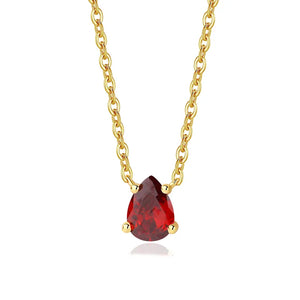
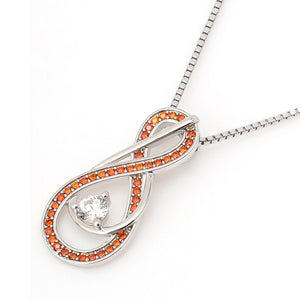

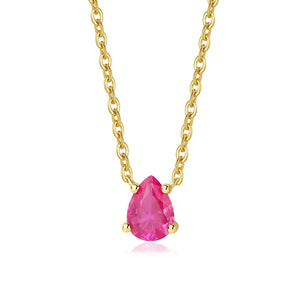
The piece they're describing → Garnet Pendant Necklace for Women — Red Garnet Teardrop, 925 Sterling Silver
Personalize Yours


