


Search "layered choker necklace" and you'll get two genuinely different products mixed into one results page: pre-built multi-strand chokers that arrive as a single clasp-on piece, and single chokers marketed as "layered" because they're meant to be stacked with something else. Neither is wrong to buy — but they solve different problems, and confusing them is the single most common reason a "layered choker" purchase disappoints. This guide covers both, plus the length math, metal-mixing, and clasp details that actually determine whether a layered look holds together or ends up tangled in a drawer.
What "Layered Choker Necklace" Actually Means
There are two products hiding under one search term, and telling them apart before you buy matters more than any styling advice.
Type 1 — the pre-set multi-strand piece. Two or more chains (or a chain plus beads) are joined at the clasp and sold as a single item, with each strand cut to a slightly different length so they fan out when worn. You put on one necklace and get the layered look with zero alignment effort. This is what most people picture when they hear "layered choker."
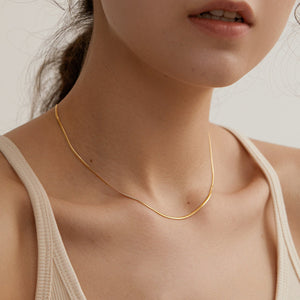
Type 2 — a single choker meant to be layered. This is one chain, full stop — but the listing is styled and photographed with a second necklace underneath it, and the product copy is written around pairing it with something longer. Our own Layered Choker Necklace is this type: a single flat snake-link chain in 18K gold plating, not a multi-strand build. It genuinely layers well because it's thin and sits close to the neck — but it won't arrive as a fanned-out multi-strand piece on its own.
Neither type is a bad purchase. A pre-set multi-strand piece is the lower-effort option if you don't already own a second necklace to pair. A single choker sold for layering is usually the better value if you're building a rotation — one chain that works alone, and works stacked with whatever else you already own. The mistake is buying Type 2 expecting Type 1's fanned-out look straight out of the box.
How to Layer a Choker Without It Looking Tangled
The whole technique comes down to one rule: keep visible separation between each chain. Necklaces that sit too close in length overlap, twist together when you move, and read as messy rather than intentional.
| Layers | Suggested lengths | Why it works |
|---|---|---|
| Two-layer | 14-16" choker + 18-20" chain | A 4-6" gap keeps the choker at the neck and the second chain at the collarbone with clear daylight between them |
| Three-layer | 14-16" choker + 18" pendant + 22-24" plain chain | Each length lands at a different point on the chest, so no two chains fight for the same visual space |
| What to avoid | A 15" choker + 17-18" necklace | A 2-3" gap isn't enough for a choker specifically — the two chains sit close enough to swing into each other |
Three pieces is the practical ceiling. Past three layers, even careful length spacing starts to look cluttered rather than deliberate, and the pieces are more likely to catch on each other over the course of a day. If you want more visual weight, add one bolder piece (a pendant, a slightly thicker chain) rather than a fourth thin chain.
Give one piece a job. A stack of three identical plain chains reads as accidental. Let the choker be the clean, minimal base layer, and give one of the longer pieces a pendant, charm, or different texture so the eye has somewhere to land.

Mixing Metals and Textures
Matching metals (all gold or all silver) is the safer, more polished-looking default — it reads as one coordinated stack rather than several unrelated pieces. Mixed gold-and-silver layering can look intentional, but it's harder to pull off well and works best when one metal clearly leads (for example, two gold chains plus one silver accent piece, not an even split).
Texture does more work than most people expect. Three smooth cable chains at different lengths still look flat next to each other. Mixing a flat snake-link or herringbone chain (which catches light differently than a round-wire chain) with a plain cable chain and one pendant piece creates depth without needing a fourth necklace.
What to Check Before You Buy a "Layered Choker"
Because the search term covers two different products, a few checks up front save a return.
- Look at every product photo, not just the hero shot. A worn-on-model photo showing multiple strands fanned at the neck confirms a true multi-strand piece. A photo showing one chain with a second necklace layered underneath usually means the listing is selling the single chain, styled for the shot.
- Read the material claim, and be skeptical of a listing that won't specify a base metal. "18K gold plated" describes a finish, not what's underneath it. If a listing can't or won't confirm the base metal, that's worth knowing before you buy something that sits against skin all day — reputable sellers state it plainly, or say clearly when they can't confirm it.
- Check for a clasp extender. A 2-3 inch extender chain is what lets one choker fit a range of neck sizes; without one, an exact 14" or 15" chain can run tight on a larger neck or loose on a smaller one.
- Compare plating quality, not just the karat number. 18K gold plating on a well-made base will outlast a thin flash-plated finish even if both listings say "18K." Reviews mentioning fading within weeks are a more reliable signal than the plating claim alone.
- Price ranges vary enormously for the same look. Fast-fashion and demi-fine sellers (think Fashion Nova, Etsy shops, and similar) price layered chokers anywhere from about $15 to $50; designer labels push past $150 for materially similar plated pieces. The jump in price above the demi-fine range buys a brand name more often than it buys better material.
Where a Layered Choker Actually Works
Necklines that leave the collarbone visible are what make a layered choker read clearly — V-necks, scoop necks, off-shoulder tops, and strapless dresses all give each layer room to sit at its own level without fabric interrupting the line. Under a crew neck or turtleneck, the layering effect mostly disappears from view, so save a multi-piece stack for necklines that show it off.
A single choker plus one longer chain is versatile enough for daily wear — office, errands, everyday outfits. A full three-piece stack reads more deliberately "styled," which suits going-out looks, date nights, or photos more than a low-key weekday.
Our Layered Choker Necklace is a single flat snake-link chain in 18K gold plating — thin enough to sit as the top layer of a stack, with a slight built-in wave that keeps it from reading as a plain straight line worn alone. Pair it with a longer pendant chain for the classic two-layer look, currently $25.99.
Shop the Layered Choker NecklaceFrequently Asked Questions
Is a layered choker necklace one piece or several?
It depends on the listing. Some "layered choker" products are a single pre-set multi-strand piece with several chains joined at one clasp; others are a single thin choker sold and photographed for pairing with a second necklace you add yourself. Check the product photos for multiple strands fanned at the neck to tell which one you're buying.
How many necklaces should you layer with a choker?
Two to three pieces total, including the choker, is the practical range. A choker plus one longer chain is the simplest combination; a choker plus two additional lengths is the upper limit before the stack starts looking cluttered rather than styled.
What length should a choker be for layering?
14-16 inches is standard choker length and works as the top layer in a stack. Pair it with a second piece at least 4-6 inches longer (18-20 inches) so there's clear visual separation rather than the two chains sitting close enough to overlap.
Can you layer a gold choker with silver necklaces?
Yes, but matching metals is the more polished default. If you do mix gold and silver, let one metal clearly lead the stack — for example, two gold pieces and one silver accent — rather than splitting the layers evenly between the two tones.
Do layered choker necklaces tarnish?
Gold-plated chokers can dull or fade at points of friction over time, same as any plated chain — how long depends on wear frequency and care, not a fixed guarantee. Removing jewelry before showering, swimming, and exercising, and applying perfume and lotion before putting it on, are the habits that extend plating life the most.
Is it cheaper to buy a multi-strand choker or layer separate necklaces?
Buying separate pieces is usually more flexible even when it costs slightly more upfront — each necklace works on its own as well as in the stack, where a pre-set multi-strand choker is one fixed look you can't take apart and rewear separately.
More Choker Guides
- Choker Necklace Guide: Styles, Fit & How to Wear One
- Types of Choker Necklaces: Every Style Explained
- Choker Necklace Size Guide: How to Find Your Perfect Fit
- Choker vs Pendant Necklace: Which Should You Choose?
All third-party trademarks, brand names and product names are the property of their respective owners. AJLuxe is not affiliated with, endorsed by, sponsored by, or otherwise connected to any third-party brand referenced in this article. Brand names are used solely for accurate comparative reference, and material descriptions reflect each brand's own published product specifications at the time of writing.
You Might Also Like

The piece they're describing → Layered Choker Necklace for Women — 18K Gold Plated
Personalize Yours


