


- Real moldavite has a rough, mossy, irregular surface — fakes feel smooth or uniformly textured.
- Hold it to light: genuine pieces show flow-lines and elongated bubbles, not round uniform ones.
- Price below $5 per gram is a major red flag — authentic moldavite runs $8–30/g minimum.
- Real moldavite has a density of 2.35 g/cm³ and warms quickly in your hand; glass fakes feel lighter and stay cool longer.
- IGBA certification or a Czech Geological Survey certificate is the strongest authenticity proof available.
- Buy from Czech Republic dealers with long track records, or established gem houses — avoid marketplace listings with no provenance.
The moldavite market is flooded with fakes — and most of them are cheap Chinese green glass sold to unsuspecting buyers online. Knowing how to spot fake moldavite before you hand over money is one of the most important skills any crystal buyer can develop. This guide walks you through 7 concrete, repeatable tests that separate genuine tektite glass from counterfeits, plus a comparison table, seller guidance, and answers to the questions buyers ask most. If you're new to moldavite, start with our moldavite for beginners guide before diving in here.
Last updated: June 2026 · Written by the AJLuxe team — specialists in crystal and sterling silver jewelry.
What Is Moldavite and Why Is It Faked So Often?
Moldavite is a natural tektite — a glassy material formed about 14.8 million years ago when a meteorite struck what is now the Nördlingen Ries crater in Germany. The impact melted local rock and soil, ejecting it into the atmosphere. It re-solidified as moldavite, landing mostly in the Bohemian region of the Czech Republic.
That's the only place on Earth where moldavite is found. The Czech Geological Survey estimates total world supply at roughly 275 metric tons — and much of the accessible material has already been mined. Scarcity drives prices up, and high prices attract fakers. You can read about its full history and properties in our moldavite meaning and properties guide.
Today, the vast majority of fake moldavite is manufactured green glass, often produced in China. Some fakes are surprisingly convincing — they're tinted the right shade of forest green and shaped to look rough. That's why visual inspection alone isn't enough. You need a set of tests, not just one impression.
Test 1: The Texture Test (Your First Filter)
Run your finger across the surface of the piece. Real moldavite feels rough, irregular, and complex. Geologists describe the surface pattern as "mossy," "worm-track," or "lechatelierite-striated" — a chaotic web of ridges, pits, and channels formed during the stone's rapid cooling from a molten state.
Fake moldavite — almost always molded glass — has a uniform surface. You might see bumps or ridges, but they repeat in a pattern. The texture feels manufactured rather than natural. Under a 10x loupe, real moldavite's surface looks like a forest floor: intricate and non-repeating. Fakes look like textured rubber or pressed glass.
This test works even on pieces set in jewelry. Run your fingertip over any exposed surface. If it's glassy-smooth or obviously patterned, walk away. Irregular, complex, non-repeating surface texture is the hallmark of genuine moldavite.
Test 2: The Light Test (Internal Structure)
Hold the piece up to a bright light source — natural sunlight or a strong LED. Tilt it slowly in different directions. You're looking at what's inside the stone.
Real moldavite contains flow-lines: curved, streaky internal patterns left by the molten glass flowing during formation. It also contains bubbles — but they're elongated and distorted, frozen mid-movement. Some pieces show lechatelierite inclusions (pure silica glass rods). These features are chaotic and natural-looking.
Fake glass typically contains round, uniform bubbles — the kind you'd see in a factory glass product. The internal structure looks clean and orderly. Some high-quality fakes are bubble-free, which actually makes them easier to spot: genuine moldavite almost always has some internal features visible under strong light. Completely clear, featureless green glass is a strong warning sign.
A 10x loupe makes this test much more reliable. Most serious collectors own one — they cost under $15 and pay for themselves the first time they save you from a $200 fake.
Test 3: The Price Red Flag
Authentic moldavite has a market-set price floor. As of 2026, raw/rough moldavite starts at roughly $8–15 per gram for smaller, lower-grade pieces, and rises to $25–50 per gram or higher for large, high-clarity faceted stones. Museum-quality pieces can reach $100+/g.
If you're seeing prices below $5 per gram — or $10 "moldavite" pendants with free shipping — you're almost certainly looking at glass. The mining, certification, and export logistics from the Czech Republic alone make sub-$5/g pricing economically impossible for genuine material.
Use price as your first filter before you even inspect the piece. A 5-gram raw moldavite specimen should cost at least $40–75 from a reputable dealer. If it's $12, it's fake. No exceptions.
Tests 4 and 5: Weight, Density, and Temperature
Density Test
Moldavite's density is approximately 2.35 g/cm³ — denser than most common soda-lime glass (2.2 g/cm³) and lighter than crystal glass (2.9 g/cm³). You won't measure this by hand, but you'll notice it: moldavite feels slightly heavier than cheap glass of the same size.
If you have a digital scale and a container of water, you can perform a basic Archimedes test. Weigh the piece dry, then submerged. Divide dry weight by the difference to get density. A result of 2.30–2.40 g/cm³ is consistent with genuine moldavite. Numbers outside this range suggest a different glass composition.
Temperature Test
Hold the piece in your closed fist for 60 seconds. Genuine moldavite warms up relatively quickly because its thermal conductivity is low — it traps your body heat. High-lead-content glass fakes (often used because lead makes glass easier to color) can feel cooler and warm more slowly.
This test is subjective and shouldn't be your only evidence. But combined with texture and light tests, a piece that stays noticeably cool in your hand for more than 2 minutes is worth questioning.
Real vs. Fake Moldavite: Side-by-Side Comparison
| Feature | Genuine Moldavite | Fake (Green Glass) |
|---|---|---|
| Surface texture | Complex, irregular, mossy/worm-track pattern | Smooth, uniform, or repetitive bumps |
| Internal bubbles | Elongated, distorted, flow-aligned | Round, uniform, evenly distributed |
| Flow-lines | Visible curved streaks inside stone | Absent or artificially added swirls |
| Color | Deep forest green, olive, sometimes brownish-green | Often bright, uniform green — too vivid |
| Density | ~2.35 g/cm³ | 2.2–2.9 g/cm³ (varies by glass type) |
| Price per gram | $8–30/g (raw); $25–100+/g (faceted) | Under $5/g; often $1–2/g in bulk |
| Origin documentation | Czech Republic; IGBA or CGS certificate | No provenance or vague "Czech" claims |
| Mohs hardness | 5.5 | Varies; often 5–6 (hard to distinguish) |
Test 6: Certification and Provenance
The strongest single proof of authenticity is a certificate from a recognized authority. Two bodies issue credible moldavite certifications:
IGBA (International Gem and Bead Association) issues certificates for individual pieces, documenting weight, origin, and authenticity based on physical testing. An IGBA certificate attached to your piece is a strong positive signal.
The Czech Geological Survey (geology.cz) is the national geological authority for the Czech Republic and the definitive scientific source on tektite classification. Reputable Czech dealers often reference their findings and sometimes commission individual authentication.
A certificate should include: the piece's weight in grams, dimensions, a photograph of the specific specimen, the issuing body's contact information, and a document number you can verify. A certificate with just a logo and a generic statement — "this is real moldavite" — is meaningless. Ask the seller for a traceable document.
No certificate doesn't automatically mean fake, but it does mean you need to rely more heavily on the physical tests above. For higher-value pieces (over $150), never skip the certification check.
Test 7: Seller Reputation and Where to Buy
Your safest option is buying directly from Czech Republic-based dealers who have been in business for more than 10 years, who specialize in moldavite (not general crystal shops), and who offer provenance documentation or return policies. Czech dealers face legal and reputational consequences for selling fakes in ways that offshore marketplace sellers do not.
Established gem houses that sell tektites and have physical addresses in the Czech Republic are the gold standard. Secondary options include established US and European dealers who disclose their Czech supplier by name.
Sellers to approach with caution include: anonymous marketplace sellers on large e-commerce platforms with no verified business history, listings that describe moldavite as "A-grade," "AAA-grade," or "premium grade" (these grading systems don't exist for moldavite), sellers who offer "raw moldavite lots" at bulk pricing, and any listing that uses stock photos rather than photos of the actual piece you'll receive.
One practical step: reverse image search the seller's product photos. If those photos appear on multiple unrelated listings or stock photo sites, you're not seeing the actual piece — a red flag for any high-value mineral purchase.
Related reading: Real vs fake pearls how to tell.
If you'd rather wear the look than the raw stone, see AJLuxe's crystal jewelry collection.
Frequently Asked Questions
How common is fake moldavite?
Extremely common. Industry estimates suggest that a significant majority — potentially 70–80% — of moldavite sold on major online marketplaces is glass. The problem accelerated after 2020, when prices spiked due to social media interest. Chinese-manufactured green glass fakes now saturate budget listings. If you're buying from an unverified marketplace seller at a low price, assume it's fake until proven otherwise.
Can you test moldavite at home without equipment?
Yes — the texture test and light test require no tools. You need only your fingertip, a bright light source, and a magnifying glass or 10x loupe (optional but helpful). The density test requires a digital scale and a cup of water. These four tests together give you a strong basis for judgment without any lab equipment.
What does real moldavite look like under a loupe?
Under a 10x loupe, genuine moldavite shows a complex, non-repeating surface of channels, ridges, and pits — often described as mossy or lichen-like. Internally, you'll see curved flow-lines and elongated, distorted bubbles. Fakes show either a smooth surface with superficial texture, uniform repeated bumps, or round factory-style bubbles inside. The irregularity of real moldavite's internal structure is the key tell.
Is moldavite always green?
Yes. Genuine moldavite is always some shade of green — ranging from pale olive to deep forest green to brownish-green. You will not find authentic moldavite in blue, purple, clear, or black (that's obsidian or other tektites). If a seller offers "rare blue moldavite" or "black moldavite," it's either a different stone or a fake. True moldavite color comes from its high iron and silica content.
Can moldavite be lab-created or synthetic?
No — there is no lab-created or synthetic moldavite. Moldavite cannot be reproduced by any current manufacturing process because its formation required a hypervelocity meteorite impact. Any seller using the phrase "lab-created moldavite" or "synthetic moldavite" is selling you colored glass with a misleading label. There is only one kind of moldavite: natural, from the Czech Republic.
Does moldavite scratch glass?
This test is often cited but is unreliable in practice. Real moldavite has a Mohs hardness of 5.5 — it can scratch soft materials but will not reliably scratch standard glass (Mohs 5.5–6). Many glass fakes have similar hardness. Scratching glass is not a definitive test and can damage your piece. Stick to the texture, light, price, and certification tests instead.
How much should I pay for real moldavite?
As of 2026, expect to pay at minimum $8–15 per gram for small, lower-quality raw pieces. Larger specimens (over 5 grams), high-clarity pieces, or faceted stones command $25–50/g or more. A standard small pendant stone (1–2 grams) should cost $20–60 for the stone alone, before setting. If you're seeing complete moldavite pendant jewelry for under $20 total, you're not buying genuine moldavite.
What is the best way to verify moldavite before buying online?
Request multiple photos of the specific piece — not stock images — including macro close-ups of the surface texture and a backlit shot showing internal structure. Ask the seller for weight in grams, dimensions, and any certification documents. Check whether the seller is based in or directly imports from the Czech Republic. Read reviews specifically mentioning authentication, not just shipping speed. For pieces over $100, request a certificate from IGBA or similar body before finalizing purchase.
Are there reputable moldavite dealers in the United States?
Yes, but fewer than you'd think. Reputable US dealers typically disclose their Czech suppliers by name, carry IGBA-certified pieces, have physical business addresses, and have been operating for at least 5–10 years. Avoid US sellers who don't disclose their supply chain or who can't answer questions about the specific region of Czech Republic the material came from (South Bohemia and Moravia are primary areas). Buying direct from Czech Republic is always the lower-risk option.
What's the difference between moldavite and green obsidian?
Green obsidian is volcanic glass; moldavite is impact glass (a tektite). They have different formation mechanisms, different chemical compositions, and different physical appearances. Moldavite has its characteristic worm-track surface texture; green obsidian is typically smooth and glassy. Moldavite is always translucent to transparent green; obsidian is usually opaque or only faintly translucent. Sellers sometimes list green obsidian as moldavite, deliberately or out of ignorance — the texture test alone distinguishes them immediately.
Final Thoughts
The fake moldavite problem is real, it's widespread, and it's not going away — but you now have 7 concrete tests that work. Use texture and light as your first two filters, let price eliminate the obvious fakes, and demand certification for any piece over $100. Buying from established Czech Republic dealers remains the gold standard, and no amount of convincing photography replaces a traceable provenance document.
If you want to go deeper on moldavite's history, formation, and spiritual properties, our complete moldavite meaning and properties guide covers everything. And if you're brand new to working with this stone, our moldavite for beginners guide is the right place to start.
Ready to experience moldavite? Explore AJLuxe's crystal jewelry collection — each piece is handcrafted in 925 sterling silver.
Shop Crystal Jewelry →All third-party trademarks, brand names and product names are the property of their respective owners. AJLuxe is not affiliated with, endorsed by, sponsored by, or otherwise connected to any third-party brand referenced in this article. Brand names are used solely for accurate comparative reference, and material descriptions reflect each brand's own published product specifications at the time of writing.
You Might Also Like
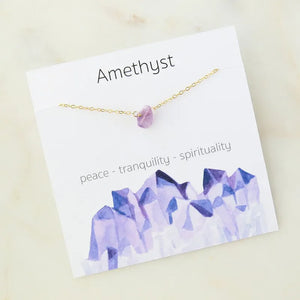

The piece they're describing → Stone Charm Necklace for Women — Raw Natural Gemstone Pendant
Personalize Yours


