


- David Yurman (founded 1980, New York) is defined by the twisted-cable motif introduced in 1983 — sterling silver cable wire finished with 14K–18K gold end caps.
- Tiffany & Co. (founded 1837, New York) is defined by heritage design codes: the Return to Tiffany heart tag (1969), the six-prong Tiffany® Setting solitaire (1886), Elsa Peretti's Open Heart pendant, and the trademarked Tiffany Blue box.
- Tiffany is the more established luxury house — 187 years old vs. Yurman's 46 — and sits in "hard luxury" territory, especially for diamonds and engagement rings, while Yurman is positioned as accessible designer jewelry.
- Despite the prestige gap, core silver pieces overlap in price: a Return to Tiffany heart tag bracelet and a David Yurman cable bracelet both typically run $150–$700.
- AJLuxe's cable-texture and classic heart-pendant pieces recreate both design languages in 925 sterling silver with 18K gold plating, priced $25–$48 instead of hundreds.
"David Yurman vs. Tiffany" is a slightly unusual matchup — one is a 46-year-old American designer brand built around a single metalwork signature, the other is a 187-year-old heritage house that helped define what an engagement ring even looks like. But the comparison keeps coming up in search because both brands sell sterling-silver-and-gold jewelry in overlapping price ranges, and shoppers deciding between a cable bracelet and a heart tag necklace are really deciding between two different design philosophies: bold, textured metalwork versus quiet, symbol-driven classicism. This guide breaks down what each brand's design signature actually is, how their prices really compare piece-for-piece, and closes with honest picks for getting either look in 925 sterling silver with 18K gold plating, for a fraction of the price.
David Yurman's Cable Design Signature
David Yurman's identity is built almost entirely around one design element: the twisted cable.
- The Cable Collection (1983). David and Sybil Yurman introduced the twisted-cable bracelet in 1983, reworking industrial cable wire into a fine-jewelry silhouette — a helix pattern of intertwined metal strands.
- Sterling silver core, gold accents. Classic Cable pieces are solid sterling silver twisted into the cable pattern, finished with 14K or 18K gold domed end caps — a two-tone look that became the brand's visual signature.
- The Cable Classic bracelet. The open-cuff bracelet with a hinged clasp and gold ball or gemstone ends is the single most recognized David Yurman piece, sold in multiple cable-thickness widths.
- A designer, not a heritage house. David Yurman is a private, family-founded American brand — no royal warrants, no 19th-century catalog, no acquisition history. Its prestige comes from the recognizability of one motif, repeated consistently since 1983.
The result is a design language that reads as "twisted metal, not smooth metal" — a texture-first look that signals "designer jewelry" without needing a diamond or a logo to do it.
Tiffany & Co.'s Heritage Design Language
Tiffany & Co.'s identity is built on nearly two centuries of design codes rather than one motif — several of which became industry standards, not just brand signatures.
- Founded in New York, 1837. Charles Lewis Tiffany opened Tiffany & Young as a stationery and fancy-goods shop; it grew into the jewelry house that popularized "Tiffany Blue," a trademarked color referencing the founding year (Pantone 1837).
- The Tiffany® Setting (1886). Charles Lewis Tiffany introduced the six-prong solitaire mounting that lifted a diamond off the band to maximize light — the design most engagement rings worldwide still borrow from, whether or not the buyer knows it originated at Tiffany.
- Return to Tiffany® heart tag (1969). The oval tag engraved "Please Return to Tiffany & Co. New York," usually on a sterling silver bracelet or necklace, has been in continuous production for over 50 years and is the brand's most recognized entry-level silver piece.
- Elsa Peretti's Open Heart (1974 onward). Designer Elsa Peretti joined Tiffany in 1974 and created the minimalist Open Heart pendant, the Bean, and the Bone Cuff — sculptural, symbol-driven pieces in sterling silver and 18K gold that remain in the permanent collection today.
- Tiffany T and modern lines. The Tiffany T collection, launched in 2014, reworks the brand's initial into an interlocking 18K gold bangle and ring line — proof the house still adds new signatures on top of its historic ones.
- LVMH acquisition (2021). LVMH bought Tiffany & Co. for roughly $15.8 billion in January 2021, the largest acquisition in LVMH's history, folding the American house into the same portfolio as Bulgari and Chaumet.
Where David Yurman's cable reads as one repeatable motif, Tiffany's design language is a set of separate, decades-apart icons — the heart tag, the Setting, the Open Heart — unified mainly by the Tiffany Blue box they arrive in.
Price-Tier Comparison: David Yurman vs. Tiffany vs. Affordable Alternatives
Despite the prestige gap — Tiffany is a true heritage luxury house, Yurman is accessible designer jewelry — their core silver-and-gold pieces land in surprisingly similar price bands. Diamonds are where the two brands diverge sharply, since Tiffany's engagement-ring business operates in an entirely different tier.
| Piece Style | David Yurman Retail (approx.) | Tiffany & Co. Retail (approx.) | Materials | Affordable Alternative |
|---|---|---|---|---|
| Signature bracelet (cable vs. heart tag) | $350–$695 (sterling silver, gold accents) | $150–$300 (Return to Tiffany, sterling silver) | Sterling silver + 14K–18K gold | $25–$37 gold-plated cable or heart-charm bracelet |
| Pendant necklace (cable vs. Open Heart) | $250–$450 | $155–$350 (Elsa Peretti Open Heart, silver) | Sterling silver, gold accent | $26–$35 gold-plated heart pendant |
| Solitaire / engagement ring | $500–$1,500 (gemstone rings; not a core focus) | $2,700–$50,000+ (Tiffany® Setting) | Platinum or gold, diamond | $28–$48 CZ solitaire ring |
| Stud or drop earrings | $225–$495 | $150–$450 | Sterling silver or 18K gold | $18–$32 gold-plated studs |
| Gold bangle/bracelet with gemstones | $1,200–$3,500+ (Cable with diamonds) | $2,150–$4,300+ (Tiffany T, 18K gold) | 18K gold, pavé diamonds | $28–$40 gold-plated CZ bangle |
That's roughly an 85–99% price difference depending on the piece, widest on engagement rings, narrowest on entry-level silver bracelets. Affordable alternatives aren't trying to replicate Tiffany's trademarked Setting or heart-tag engraving, or David Yurman's hand-finished cable — they're built to give you a similar texture or silhouette at a price where daily wear doesn't feel like a risk.
Get a Similar Look for Less
You can't buy an actual David Yurman cable cuff or a genuine Tiffany heart tag piece for under $150 — that's not how sterling silver and brand-name pricing works. What you can do is find pieces that borrow either design language in 925 sterling silver with 18K gold plating. Here's where AJLuxe's catalog gets closest, plus the single pick that works for either aesthetic.
The Middle-Ground Pick: Heart Pendant Necklace
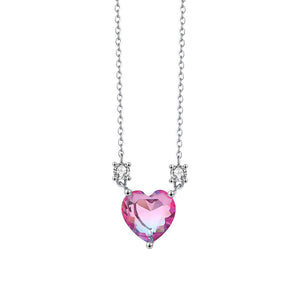
AJLuxe's Heart Pendant Necklace is the most versatile piece in this comparison for a specific reason: it's the closest style match to Tiffany's classic heart-charm silhouette — a simple, symmetrical heart pendant in 925 sterling silver with 18K gold plating, no stones, no engraving — but its plain, texture-free surface also makes it the ideal layering piece to wear alongside a cable cuff or twisted ring if your taste actually leans David Yurman. Both design houses agree on one styling rule: let one piece carry the texture or the motif, and keep everything else simple. A clean heart pendant is exactly that "everything else," which is why it works whether you're drawn to Tiffany's minimal classicism or Yurman's bold cable — at $34.99 instead of $150–$350.
1. Cable Chain Cuff Bracelet — Closest David Yurman Match
For the cable-cuff look specifically, AJLuxe's Cable Chain Cuff Bracelet is the most direct comparison to David Yurman's original Cable Classic: an open-cuff design with a visibly twisted cable texture, in 925 sterling silver with 18K gold plating, adjustable for fit, at $36.99.
2. CZ Solitaire Ring — Tiffany Setting-Inspired Alternative
For the six-prong solitaire silhouette Tiffany made famous, AJLuxe's Princess Cut CZ Ring and Sterling Silver Solitaire Ring use a raised-center-stone setting in 925 sterling silver with cubic zirconia — the same "diamond lifted off the band" visual the Tiffany® Setting popularized in 1886, without the platinum or the four-figure minimum.
3. Twisted Band Ring — Cable-Texture Alternative
The Twisted Band Ring uses a double-parallel twisted-line design in 925 sterling silver, available in gold or silver tone — the same "twisted metal, not smooth metal" texture that defines David Yurman's cable rings, at $44.99 instead of $250+.
4. Dainty Heart Necklace — Everyday Open Heart Alternative
For a smaller-scale take on Tiffany's Elsa Peretti Open Heart, AJLuxe's Dainty Heart Necklace offers a minimalist gold heart pendant on a fine chain, at $25.99 — the delicate, everyday-layering version of the same symbol-driven design philosophy.
Material and Quality Honesty: What You're Actually Buying
This is the section most brand comparisons skip, and it's the most important one for setting expectations correctly.
What David Yurman and Tiffany Actually Use
Both brands' core silver collections are built from solid sterling silver — not silver-plated base metal. David Yurman finishes its cable pieces with solid 14K or 18K gold end caps rather than a plating layer over the whole piece. Tiffany's Return to Tiffany line is solid sterling silver throughout, while its higher-tier lines — Tiffany T, Elsa Peretti gold pieces, and every Tiffany® Setting engagement ring — use solid 18K gold or platinum, not plated metal, and diamond pieces are graded and certified. Both houses' higher-tier pieces (Yurman's diamond cable, Tiffany's Setting) push retail into four and five figures.
What Affordable Alternatives Use
Affordable cable- and heart-motif jewelry, including AJLuxe's picks above, is built on 925 sterling silver with 18K gold electroplating — a thin gold layer measured in microns over a solid silver base, machine-formed rather than hand-finished or hand-set. Sterling silver is naturally hypoallergenic for most people and gives real weight to the piece, unlike hollow base-metal costume jewelry sold under similar "heart necklace" or "cable bracelet" search terms. With daily wear and basic care (avoiding water, perfume, and friction), expect the gold plating to hold its finish for roughly 1–3 years before it shows thinning — not the decades a solid-gold Yurman end cap or Tiffany 18K piece is built to last.
The Honest Trade-Off
You're not buying a lower-quality David Yurman or Tiffany piece — you're buying a different product category that borrows the cable texture or the heart-pendant silhouette. If you want a piece built to be worn for decades and passed down, solid sterling silver with real gold accents (or, for an engagement ring, platinum and a certified diamond) is the only path there, and that's exactly what both brands sell at their price points. If you want to try either aesthetic across a few pieces, or want something you can wear daily without worrying about losing an expensive cuff or pendant, a plated alternative is the more rational choice for most people.
David Yurman or Tiffany: Which Fits Your Style?
Neither brand is "better" outright — they're built around different design philosophies and different tiers of the luxury market, so the right pick depends on both your taste and your budget.
- Choose the David Yurman aesthetic if you want a clean, repeatable twisted-cable motif that reads as bold American designer jewelry — good for someone who wants one recognizable signature piece worn often, without needing engagement-ring-level spending.
- Choose the Tiffany aesthetic if you're drawn to quiet, symbol-driven classicism — a heart tag, an open heart, a solitaire — and value heritage and the recognizability of the Tiffany Blue box as much as the piece itself.
- Consider Tiffany specifically for engagement rings. Tiffany's Setting isn't just a design signature — it's the industry-standard solitaire mounting, and Tiffany's diamond grading and certification are part of what you're paying for at that tier. David Yurman is not positioned as an engagement-ring brand.
- Both work well mixed with plainer pieces. A textured cable cuff and a simple heart pendant actually pair well together — the plain heart doesn't compete with the cable's texture, which is why a heart-motif piece is one of the few things that genuinely bridges both aesthetics.
How to Style Cable and Classic-Heart Jewelry
- Let one piece be the statement. A cable cuff is built to be the focal piece on its wrist; a heart pendant is built to be worn alone on a fine chain. Resist pairing either with another heavily textured or motif-driven piece.
- Match metal tones. If your heart pendant or cable cuff is gold-plated, keep other jewelry in the same warm gold tone rather than mixing silver and gold, which reads as less intentional.
- A solitaire ring pairs with almost anything. Because a solitaire's whole design is restraint — one stone, minimal band — it's the one piece from either brand's language that layers easily with stacked rings or a cable bracelet on the other hand.
- Stack twisted rings in odd numbers. If you're leaning into the cable aesthetic, two or three stacked twisted bands on one hand reads closer to how David Yurman actually merchandises the look.
- Rotate for occasions. Because plated alternatives cost a fraction of the real thing, it's realistic to own pieces in both design languages and switch based on outfit, rather than committing to one investment piece for everything.

Frequently Asked Questions
Is David Yurman considered high end?
David Yurman is accessible-luxury or "bridge" designer jewelry, not an ultra-luxury or heritage house — retail runs roughly $250–$3,500+ depending on the piece, using solid sterling silver combined with 14K or 18K gold. It's positioned above department-store fashion jewelry but below hard-luxury heritage houses like Tiffany, Cartier, or Van Cleef & Arpels.
Is David Yurman better than Tiffany's?
Neither is objectively "better" — they're different tiers and different design philosophies. Tiffany is a 187-year-old heritage luxury house with an internationally recognized engagement-ring business and design codes like the heart tag and the Tiffany® Setting; David Yurman is a 46-year-old accessible designer brand built around one metalwork signature, the twisted cable. For engagement rings and diamond jewelry, Tiffany is the more established choice; for everyday textured silver-and-gold pieces, the two brands compete more directly on price and style.
Is Cartier higher end than Tiffany?
Cartier and Tiffany are generally considered comparable hard-luxury heritage houses, though Cartier is often ranked slightly higher for its jewelry-house pedigree (founded 1847 in Paris, historic royal clientele) and its position within the Richemont group, while Tiffany, now owned by LVMH, is especially dominant in the U.S. engagement-ring market. Both sit well above accessible designer brands like David Yurman.
Where does Tiffany rank in jewelry?
Tiffany & Co. ranks among the world's most recognized heritage luxury jewelry houses, alongside Cartier and Van Cleef & Arpels, and is particularly dominant in the U.S. engagement-ring market thanks to the Tiffany® Setting solitaire mounting it introduced in 1886. It sits a tier above accessible designer brands like David Yurman, John Hardy, or Kendra Scott.
What is the actual difference between David Yurman and Tiffany?
The core difference is scale and design philosophy: David Yurman (founded 1980, New York) is a single-motif accessible designer brand defined by its twisted-cable texture, while Tiffany & Co. (founded 1837, New York) is a heritage luxury house with multiple historic design codes — the heart tag, the Tiffany® Setting solitaire, the Open Heart pendant — and a dominant position in fine diamond jewelry that Yurman doesn't compete in.
Which is more expensive, David Yurman or Tiffany?
It depends on the piece category. Entry-level sterling silver bracelets and necklaces from both brands land in a similar $150–$700 range. Tiffany pulls far ahead on diamond and engagement-ring pieces, where its Setting solitaires start around $2,700 and can exceed $50,000, a tier David Yurman doesn't really compete in.
Do David Yurman and Tiffany jewelry pieces use real gold and silver?
Yes, on their core collections. Both brands use solid sterling silver, and both combine it with genuine 14K or 18K gold (Yurman's cable end caps, Tiffany's T collection and Elsa Peretti gold pieces) rather than costume-grade plated base metal. This is different from affordable "inspired by" alternatives, which use 925 sterling silver with a thin 18K gold electroplating layer over the whole piece.
Can you get a cable bracelet or heart pendant like these for less?
Yes — pieces that recreate the twisted-cable texture or the classic heart-pendant silhouette in 925 sterling silver with 18K gold plating, like AJLuxe's Cable Chain Cuff Bracelet and Heart Pendant Necklace, capture the same silhouettes for $35–$37 instead of $150–$700, though without the solid-gold accents or hand-finishing of the originals.
Is the Tiffany heart tag necklace still popular?
Yes. The Return to Tiffany heart tag, introduced in 1969, has stayed in continuous production for over 50 years and remains one of Tiffany's best-known entry-level sterling silver pieces, regularly updated in new sizes and gold-tone versions.
Does David Yurman or Tiffany jewelry tarnish?
Solid sterling silver from either brand can naturally tarnish over time with air exposure, though it's typically more resistant than plated jewelry and can be polished to restore shine. Gold-plated alternatives on a sterling silver base are more prone to visible finish loss over 1–3 years of regular wear, since the gold layer is thin rather than solid.
Final Thoughts
David Yurman and Tiffany & Co. earned very different reputations. Yurman built a 46-year-old brand around one metalwork signature — the twisted cable — and priced it as accessible designer jewelry. Tiffany spent 187 years accumulating design codes that became industry standards, from the six-prong solitaire setting to the heart tag, and now operates as a true heritage luxury house under LVMH. Both use genuine sterling silver and real gold at their core, and both charge accordingly, $150 to well into five figures depending on the piece. If you want that heritage or that specific craftsmanship and are ready to invest in it, both brands deliver on what they charge for. If you simply want to try the cable-texture or classic heart-pendant aesthetic without the brand-name price, an honest plated alternative — like AJLuxe's cable cuff, solitaire-style ring, and heart pendant — captures either design language in accessible materials you don't have to insure.
Browse AJLuxe's necklace collection for heart-pendant and cable-texture styles, or shop the picks above to start building your own collection.
Shop This Guide
The Heart Pendant Necklace — a classic heart charm in 925 sterling silver with 18K gold plating, the versatile middle ground between David Yurman's bold cable texture and Tiffany's minimal heritage look.
Shop the Heart Pendant NecklaceWritten by the AJLuxe Team. Last updated: August 2026. This guide is independent and not affiliated with, endorsed by, or sponsored by David Yurman Enterprises LLC or Tiffany and Company. Metal and plating durability guidance informed by the Jewelers of America materials standards.
All third-party trademarks, brand names and product names are the property of their respective owners. AJLuxe is not affiliated with, endorsed by, sponsored by, or otherwise connected to any third-party brand referenced in this article. Brand names are used solely for accurate comparative reference, and material descriptions reflect each brand's own published product specifications at the time of writing.
You Might Also Like
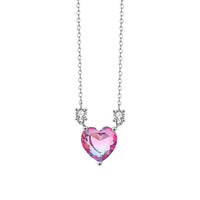
The piece they're describing → Heart Pendant Necklace for Women — 18K Gold Plated, Classic Heart Charm, Hypoallergenic
Personalize Yours


