


- Cartier is known for bold, architectural motifs — the Love bracelet, Trinity ring, Panthère de Cartier, and Juste un Clou — in solid 18K gold, generally starting around $1,200–$2,000 for entry rings and $7,000+ for the Love bracelet.
- Tiffany & Co is known for romantic, classically American design — the Tiffany Setting engagement ring, Return to Tiffany heart tag, Elsa Peretti Open Heart, and Tiffany T — with entry sterling silver pieces starting well under $500 before climbing to Cartier-comparable prices in gold and diamonds.
- Both are genuine luxury houses with real heritage (Cartier since 1847, Tiffany since 1837) and solid precious-metal construction — the difference is design philosophy, not quality.
- Cartier reads bolder and more geometric; Tiffany reads softer and more sentimental. Most people are drawn to one aesthetic more than the other.
- If you love the look of either house but can't or don't want to spend four to six figures, the honest path is a plated, inspired-by piece — this guide closes with what that looks like.
"Cartier vs Tiffany" is one of the most searched luxury jewelry comparisons for a simple reason: they're the two houses most people can actually name, and their aesthetics genuinely don't overlap much once you look closely. Cartier built its reputation on bold, sculptural, almost architectural pieces meant to be noticed. Tiffany built its on romance, craftsmanship, and an unmistakable place in American pop culture. Both are real luxury houses with more than 175 years of history, solid precious-metal construction, and price tags that put most pieces out of reach for casual buyers. This guide compares what each brand is actually known for, how their pricing stacks up, and which aesthetic tends to suit different people and occasions — then closes with an honest look at how to get either look without the five-figure commitment.
What Cartier Is Known For
Cartier is known for bold, geometric design signatures — the screw motif of the Love bracelet, the three-band Trinity ring, and the spotted Panthère silhouette — built almost exclusively in solid gold. Founded in Paris in 1847 by Louis-François Cartier, the house earned the nickname "jeweler of kings, king of jewelers," a phrase widely attributed to England's King Edward VII around 1904, after Cartier supplied crowns and tiaras to European royal courts. That royal-supplier heritage still shapes the brand's identity: Cartier pieces tend to read as confident, sculptural statements rather than delicate accessories.
- Love bracelet (1969). Designed by Aldo Cipullo, the Love bracelet locks onto the wrist with actual screws, traditionally fastened by a partner using a small screwdriver that comes with the piece — a design detail that turned a bracelet into a symbol of a specific kind of commitment.
- Trinity ring (1924). Louis Cartier's three interlocking bands in yellow, white, and rose gold are one of the most imitated ring silhouettes in jewelry, precisely because the concept — three tones, one continuous band — is so simple and so recognizable.
- Panthère de Cartier. The panther has appeared across Cartier's catalog since the early 20th century, championed by Jeanne Toussaint, Cartier's creative director from the 1930s onward, and remains the house's most storied and most collected motif today.
- Juste un Clou (1971). A nail bent into a bracelet or ring — deliberately industrial-looking jewelry that leans into Cartier's willingness to make a statement piece out of an ordinary object.
Cartier has been part of the Swiss luxury group Richemont since the late 1980s, which has kept production tightly controlled and pricing consistently at the higher end of the fine jewelry market.
What Tiffany & Co Is Known For
Tiffany & Co is known for romantic, classically American design — the six-prong Tiffany Setting engagement ring, the Return to Tiffany heart tag, and the instantly recognizable Tiffany Blue Box — built with a design philosophy that leans sentimental rather than architectural. Founded in New York in 1837 by Charles Lewis Tiffany, the brand's identity is inseparable from American pop culture, most famously through "Breakfast at Tiffany's," in a way Cartier's European royal heritage doesn't quite parallel.
- The Tiffany Setting (1886). Charles Lewis Tiffany introduced the six-prong solitaire setting that lifts a diamond above the band to catch more light — a design so influential it's now the default template most engagement ring solitaires still follow, regardless of brand.
- Return to Tiffany (1969). The oval heart tag on a chain, engraved "Please Return to Tiffany & Co. New York," is arguably the brand's most recognized entry-level piece and a big part of why Tiffany has a lower accessible starting price than Cartier.
- Elsa Peretti Open Heart (1974). Designed by Elsa Peretti, this minimalist open-outline heart became one of the best-selling silhouettes in the brand's history and defined a whole category of soft, sentimental Tiffany pieces.
- Tiffany T (2014) and HardWear. More recent lines aimed at a modern, less overtly sentimental customer — Tiffany T uses a bold bar/T motif, while HardWear (originally from the 1980s, relaunched in 2017) borrows industrial chain-link forms, showing the brand does have a bolder register when it wants one.
Tiffany & Co was acquired by LVMH in January 2021 in a deal reported at roughly $15.8 billion, one of the largest luxury acquisitions on record, and has since leaned further into high-jewelry positioning alongside its classic accessible lines.
Price Tier Comparison: Cartier vs Tiffany
Cartier and Tiffany overlap heavily at the top of their ranges but differ meaningfully at the entry point — Tiffany's sterling silver pieces give it a lower accessible starting price than Cartier, which works almost exclusively in solid gold. Treat the figures below as general, approximate ranges rather than exact current pricing — both brands adjust prices regularly, and specific stone quality, size, and metal choice move the number significantly. Always check each brand's current site for an exact quote before assuming either range.
| Category | Cartier (approx. range) | Tiffany & Co (approx. range) |
|---|---|---|
| Entry-level accessible piece | ~$1,200–$2,000 (Trinity ring, thin Love ring) | ~$150–$400 (Return to Tiffany silver tag bracelet/necklace) |
| Signature bracelet | ~$7,000–$9,000+ (Love bracelet, no diamonds) | ~$1,500–$3,000+ (HardWear link bracelet, silver to gold) |
| Signature pendant/small piece | ~$2,000–$4,000+ (small Panthère or Juste un Clou pieces) | ~$300–$1,500 (Elsa Peretti Open Heart, gold vs. silver) |
| Engagement/solitaire ring | Low thousands to well into six figures | Low thousands to well into six figures |
| High jewelry / pavé pieces | Five to six figures | Five to six figures |
The pattern holds across both houses: the more iconic and heavily diamond-set the piece, the closer Cartier and Tiffany converge in price. The real difference most shoppers feel is at the entry point — it's realistic to own a piece of "real Tiffany" in sterling silver for a few hundred dollars, while a comparably entry-level "real Cartier" piece in solid gold usually starts closer to $1,000–$2,000.
Design Philosophy: Bold and Architectural vs. Romantic and Classic
Cartier's design language is bold and geometric — screws, interlocking bands, animal motifs, a bent nail — pieces built to be noticed and often worn as a single statement rather than layered with other jewelry. Tiffany's design language is softer and more sentimental — hearts, delicate chains, the classic solitaire — pieces built to feel personal, often given as gifts marking a specific relationship or milestone rather than worn purely as fashion statements.
Neither approach is objectively "more luxurious." They're different design philosophies aimed at different moods: Cartier for someone who wants jewelry to look considered and architectural, Tiffany for someone who wants jewelry to feel meaningful and classic. A lot of people who search "Cartier vs Tiffany" are really asking which philosophy matches their own taste — and the honest answer is that it's worth handling both in person if you can, because photos tend to flatten exactly the textural and weight differences that make each house distinct.
Which to Choose for Different Occasions and Budgets
- Engagement ring: Both houses do this exceptionally well and at comparable price points once you're shopping diamonds — the decision comes down to whether you want Tiffany's classic six-prong solitaire silhouette or a Cartier setting with more sculptural detail in the band.
- Everyday stackable piece: Cartier's Trinity or Love ring and Tiffany's T ring both work here, but Cartier's pieces tend to sit slightly bolder and Tiffany's slightly thinner and quieter — a genuine texture difference worth trying on.
- Sentimental gift on a real budget: Tiffany has the edge with its sterling silver line — the Return to Tiffany tag or Elsa Peretti Open Heart are accessible entry points that still carry full Tiffany provenance, something Cartier doesn't really offer at that price.
- Statement piece for someone who already owns "the basics": Cartier's Panthère or Juste un Clou pieces are built to be a singular, noticed item, which fits a shopper looking for one bold piece rather than a full jewelry wardrobe.
- Neither budget fits right now: This is genuinely the most common position — both houses' entry points, even Tiffany's silver line, sit well above what most people spend on everyday jewelry. That's the gap the closing section of this guide addresses.
Material and Investment-Value Honesty
Both Cartier and Tiffany construct their fine jewelry from solid precious metals — Cartier almost exclusively in 18K gold, Tiffany in a mix of sterling silver (entry line) and 18K gold or platinum (fine jewelry line) — which is the core reason both hold real resale value. Solid gold and platinum pieces from either house typically retain meaningful resale value on the secondary market because the metal content alone has intrinsic worth, on top of brand demand; Cartier's Love bracelet and Trinity ring, along with Tiffany's engagement rings and Elsa Peretti designs, are among the most consistently resold pieces from either brand for exactly this reason.
This is the honest dividing line between authentic luxury jewelry and any affordable "inspired by" alternative, AJLuxe's included: solid gold or platinum carries real, lasting resale value, while gold-plated pieces on a base like sterling silver do not, beyond scrap silver worth. That's not a criticism of plated jewelry — it's simply a different product category, bought to wear and enjoy rather than to hold as an asset. If you're deciding between the two houses purely as an investment, both are reasonable choices at the solid-metal tier; if you're deciding because you like the aesthetic and don't need the resale value, that changes the calculation entirely, which is exactly where an affordable alternative becomes the more rational option.

Is Cartier More Prestigious Than Tiffany?
Cartier is generally considered slightly more prestigious in the traditional fine-jewelry world, largely because of its unbroken royal-supplier history and its position within the Richemont luxury group, which also owns Van Cleef & Arpels and Piaget. Tiffany's prestige comes from a different place — near-universal cultural recognition in the United States, a design legacy that quite literally shaped how engagement rings look today, and, since 2021, the backing of LVMH. In practical terms, both are considered top-tier luxury jewelry houses by the industry and by resale markets; "more prestigious" tends to depend on whether you weigh European jewelry-house pedigree (Cartier's strength) or cultural ubiquity and design influence (Tiffany's strength) more heavily.
Frequently Asked Questions
Is Cartier more prestigious than Tiffany?
Cartier is generally seen as slightly more prestigious within traditional fine jewelry circles, thanks to its royal-supplier heritage dating to the early 1900s and its place in the Richemont luxury group alongside Van Cleef & Arpels. Tiffany counters with near-universal cultural recognition and a design legacy — the Tiffany Setting — that shaped how modern engagement rings look. Both are considered top-tier luxury houses; which one reads as "more prestigious" often comes down to whether European jewelry-house pedigree or cultural ubiquity matters more to you.
Is Tiffany still considered a luxury brand?
Yes. Tiffany & Co remains a genuine luxury jewelry house, now under LVMH ownership since a roughly $15.8 billion acquisition completed in January 2021, and continues to produce solid gold, platinum, and diamond fine jewelry at price points comparable to Cartier at the top of its range. Its sterling silver entry line brings the accessible starting price down, but that line is still authentic Tiffany, not a lower-quality sub-brand.
Is Cartier really worth the money?
For buyers who want solid 18K gold construction, a genuine design pedigree dating to 1847, and pieces that reliably hold resale value, most industry and resale-market data support Cartier's pricing as reflecting real material and craftsmanship value, not just brand markup. Whether it's "worth it" for any individual buyer depends on whether the aesthetic and the investment argument matter to that person — for someone who just wants the visual style without the resale consideration, Cartier's price tag is a harder case to justify.
Which luxury jewelry brand is best?
There's no objectively "best" between Cartier and Tiffany — both are legitimate, long-established luxury houses with solid precious-metal construction and strong resale markets. Cartier tends to suit shoppers drawn to bold, architectural design; Tiffany tends to suit shoppers drawn to romantic, classic Americana design. The better question is which aesthetic matches your own taste, since quality is comparable at equivalent price tiers for both brands.
What is Cartier best known for?
Cartier is best known for the Love bracelet (1969), the three-band Trinity ring (1924), the Panthère de Cartier collection, and the Juste un Clou nail bracelet — all built in solid 18K gold with a bold, geometric design signature and a royal-supplier heritage dating to the early 1900s.
What is Tiffany & Co best known for?
Tiffany & Co is best known for the Tiffany Setting engagement ring (1886), the Return to Tiffany heart tag, the Elsa Peretti Open Heart pendant, and the Tiffany Blue Box — a design identity built around romantic, classically American motifs and a strong cultural association with "Breakfast at Tiffany's."
Which is more affordable, Cartier or Tiffany?
Tiffany is more affordable at the entry point because of its sterling silver line, with pieces like the Return to Tiffany tag starting well under $500, while Cartier works almost exclusively in solid gold with entry pieces generally starting around $1,200–$2,000. At the top of each range — engagement rings and high jewelry — the two brands converge to comparable pricing.
Is there a more affordable way to get the Cartier or Tiffany look?
Yes — gold-plated jewelry in 925 sterling silver, like AJLuxe's minimalist pieces, can capture the clean, wearable versions of both aesthetics (a simple gold band for Cartier's understated pieces, a delicate pendant for Tiffany's sentimental styling) at a fraction of the price, without claiming to be either brand. It's a genuinely different product category from solid-gold fine jewelry, not a substitute for the investment value either house offers.
The Affordable Way to Get Either Aesthetic
Most people searching "Cartier vs Tiffany" aren't actually choosing between a $7,000 Love bracelet and a $2,000 Tiffany solitaire this week — they're trying to understand which aesthetic they're drawn to before deciding how, or whether, to save toward it. That's a completely reasonable way to shop, and it's worth being honest about the alternative in the meantime: nothing sold outside Cartier or Tiffany is "a Cartier" or "a Tiffany," and nothing in 925 sterling silver with gold plating replaces solid 18K gold construction or the resale value either house offers. What an affordable alternative can honestly do is let you wear a similar clean, minimalist silhouette day to day while you decide.
AJLuxe's Minimalist Gold Ring is a fair example of that middle ground — a simple, thin gold band in 925 sterling silver with 18K gold plating, the kind of clean, unadorned shape that reads closer to Cartier's understated Trinity or Love ring silhouette on some days and closer to Tiffany's quiet, stackable T ring on others, depending on how it's styled. It isn't trying to replicate either brand's specific design, hallmark, or motif — it's simply a well-made, hypoallergenic everyday piece in the same general design language, priced under $50 instead of four figures. For someone still deciding which luxury aesthetic they actually prefer, that's a genuinely useful way to live with the general look before committing to either house.
Final Thoughts
Cartier and Tiffany earn their reputations for different reasons — Cartier through bold, architectural design and an unbroken royal-supplier heritage since 1847, Tiffany through romantic, culturally iconic design and a legacy, dating to 1886, that still shapes how engagement rings are built today. Neither is "better" in any absolute sense; they're different design philosophies at comparable price tiers once you're shopping their signature pieces, and both hold real resale value because both are built in solid precious metals. If your budget realistically points you toward an affordable alternative for now, the honest move is choosing a simple, well-made piece that fits the aesthetic you're drawn to — not one pretending to be either brand — and revisiting the real thing later if it still matters to you.
Browse AJLuxe's ring collection for minimalist, stackable, and everyday styles, or explore the pick above as a starting point.
Shop This Guide
The Minimalist Gold Ring — a thin, clean gold band in 925 sterling silver with 18K gold plating, an easy everyday piece in the same understated design language as both houses' quieter pieces.
Shop the Minimalist Gold RingWritten by the AJLuxe Team. Last updated: August 2026. This guide is independent and not affiliated with, endorsed by, or sponsored by Cartier or Tiffany & Co. Brand history and heritage details are drawn from each house's own published history and widely reported industry coverage.
All third-party trademarks, brand names and product names are the property of their respective owners. AJLuxe is not affiliated with, endorsed by, sponsored by, or otherwise connected to any third-party brand referenced in this article. Brand names are used solely for accurate comparative reference, and material descriptions reflect each brand's own published product specifications at the time of writing.
You Might Also Like
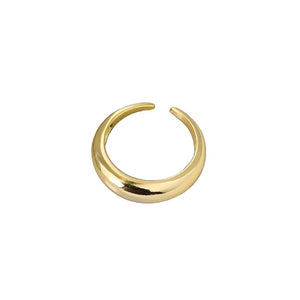
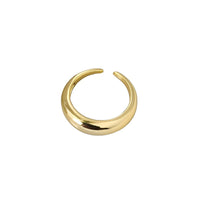
The piece they're describing → Minimalist Gold Ring for Women — 925 Sterling Silver, 18K Gold Plated, Thin Band
Personalize Yours


