


Quick answer: The best gold plated rings use a thick 18K gold layer (2.5 microns or more) bonded to a 925 sterling silver base rather than brass. That combination resists tarnish, is hypoallergenic, and rarely discolors skin — look for stated micron thickness and a sterling or surgical-steel core before buying.
Gold plated rings deliver the warm look of solid gold at a fraction of the price — but "gold plated" covers everything from a durable 18K layer over sterling silver to a micro-thin wash over cheap brass that turns your finger green in a week. This guide breaks down what actually separates a good plated ring from a bad one, how to judge quality before you buy, and our top picks for 2026.
What are the best gold plated rings? The best gold plated rings use a thick 18K gold layer (2.5 microns or more) bonded to a 925 sterling silver base rather than brass. This combination resists tarnish, is hypoallergenic, and rarely discolors skin. Look for stated micron thickness, a sterling or surgical-steel core, and a tarnish-resistant finish.
TL;DR
- Base metal matters more than the gold. 18K plating over 925 sterling silver lasts far longer and is kinder to skin than the same plating over brass.
- Thickness is measured in microns. Anything under 0.5 microns is "flash" plating that wears fast; 2.5 microns or thicker is what quality brands use.
- Green finger = base metal, not gold. Copper and nickel in cheap brass react with skin and moisture. A sterling base almost never does this.
- Plated rings usually cannot be resized. Cutting and soldering strips the plating. Buy your size right, or choose an adjustable open-band design.
- Care extends life. Keep them dry, take them off for showers and workouts, and store them separately.
- Our top everyday pick: an 18K gold plated ring on a real 925 sterling base with a tarnish-resistant CZ finish.

What "gold plated" actually means
Gold plating is a thin layer of gold electrochemically bonded to a base metal. The karat number (10K, 14K, 18K) tells you the purity of the gold in that outer layer — not how much gold there is. An 18K plated ring has a purer, richer gold color than a 14K plated one, but both can be paper-thin if the maker cut corners on thickness.
That is the trap in most "best gold plated rings" lists: they compare colors and prices while ignoring the two variables that decide whether a ring lasts a decade or a week — the base metal underneath and the plating thickness in microns. We put both front and center.
Karat is color; microns are durability
Think of it as two separate dials. Karat sets the shade and warmth of the gold tone. Microns set how long that tone survives daily friction. A 24K flash plating looks gorgeous for a month and then rubs off at the knuckle; a 2.5-micron 18K layer keeps its color through years of normal wear. Reputable makers state both. If a listing tells you the karat but hides the thickness, assume it is thin. The same karat-versus-microns logic applies across every plated category — see our companion guide to the best gold-plated earrings for how it plays out in a different jewelry type.
Gold plated vs. the alternatives
Before you decide a plated ring is right for you, it helps to see where it sits against vermeil, gold-filled, and solid gold. Each is a different balance of price, longevity, and gold content.
| Type | Gold layer | Base metal | Typical lifespan | Relative price |
|---|---|---|---|---|
| Standard gold plated | 0.5–1 micron | Brass or copper | Months to ~1 year | $ |
| Quality gold plated (ours) | 18K, thickness not certified | 925 sterling silver | 2–5+ years with care | $$ |
| Gold vermeil | 2.5 microns minimum (regulated) | 925 sterling silver (required) | 3–5+ years | $$ |
| Gold filled | 5% of total weight, mechanically bonded | Brass core | 10–30 years | $$$ |
| Solid gold | Solid throughout | None (alloyed gold) | Lifetime | $$$$ |
The nuance worth knowing: gold vermeil is simply a legally-defined subset of gold plating — plating that meets a minimum 2.5-micron thickness of at least 10K gold over sterling silver. So a well-made 18K-over-925 plated ring is essentially vermeil quality. For a deeper look, see our guides on gold vermeil vs. gold plated and gold plated vs. solid gold. If you want a gold-tone finish that holds up to daily water exposure even better than plating, see our guide to the best PVD jewelry.
Competitor gap: will a gold plated ring turn your finger green?
Most listicles either dodge this question or flatly promise "no." The honest answer is: it depends entirely on the base metal, and any plated ring can eventually do it once the gold wears through.
Green skin is a copper reaction. When plating wears thin enough for skin, sweat, lotion, and water to reach a brass or copper base, copper salts form and transfer a greenish tint to your finger. It is harmless and washes off — but it is a reliable sign the plating has worn or was thin to begin with.
Here is what actually reduces the risk, in order of impact:
- Buy a sterling silver base. Sterling is 92.5% silver with a small copper content, but far less reactive than solid brass. A 925 base is the single biggest factor in avoiding discoloration.
- Demand real thickness. A 2.5-micron layer takes years to wear through at the contact points; a 0.5-micron flash can breach in weeks.
- Keep it dry. Moisture accelerates the reaction. Removing rings before hand-washing, swimming, and workouts dramatically slows wear.
- Watch for nickel if you have sensitive skin. Some cheap bases contain nickel, a common allergen. Sterling-based plated rings are almost always nickel-free and hypoallergenic.
Water is the other half of the equation — chlorine, salt, and even soap film degrade plating over time. Our companion guide on whether you can shower with gold plated jewelry walks through exactly what happens to the layer with repeated water exposure.
Competitor gap: can you resize a gold plated ring?
This is the question almost no "top picks" article answers, and it causes the most buyer regret. The short answer: plated rings generally cannot be resized the way solid gold rings can.
Resizing means cutting the band and soldering in or removing metal. On a plated ring, the heat of soldering burns off the gold layer at the joint, and the freshly cut/soldered section exposes bare base metal. A jeweler can sometimes do a rough resize and re-plate the whole ring, but that costs nearly as much as buying a new one — and re-plating rarely matches the original finish.
What to do instead:
- Measure carefully before buying. Use a proper ring sizer, and measure at the end of the day when fingers are slightly larger.
- Choose an adjustable or open-band design if you are between sizes or buying a gift. An open cuff-style band flexes across a range of sizes without any cutting.
- Use plastic ring sizers (the little clear coils) for a permanent ring that runs slightly large — this avoids any metalwork.
Our top pick below is deliberately an adjustable open band for exactly this reason: it sidesteps the resizing problem entirely.

How to judge a gold plated ring before you buy
Run any candidate through this five-point checklist. If a listing can't answer three or more of these, treat the price as the only thing you actually know about it.
- What is the base metal? You want "925 sterling silver" or "surgical stainless steel." "Brass," "alloy," or an unstated base is a downgrade.
- What is the plating thickness in microns? Aim for 2.5 microns (vermeil-grade). No number stated usually means thin.
- What karat is the plating? 18K gives the richest color; 14K is slightly more muted but still warm.
- Is it hypoallergenic / nickel-free? Important if your skin reacts to costume jewelry.
- Is it tarnish-resistant? A quality anti-tarnish finish (often an e-coat or rhodium flash under the gold) keeps the shine longer.
For a full breakdown of whether thinner plating is ever worth it, our is 14K gold plated jewelry worth it guide compares value across karats and thicknesses.
Gold plated or silver? Choosing your everyday tone
Before you commit to a gold tone, it's worth deciding whether gold or silver actually suits your daily wear. Gold plated rings deliver warmth and read as "fine jewelry" at a glance, but they carry the wear-through and resizing caveats above. A solid sterling silver ring, by contrast, is the same metal all the way through — it can be polished, resized, and worn in water without a plating layer to protect. The trade-off is the cooler tone and the periodic tarnish that silver develops.
If you love the gold look but wear rings hard, a thick 18K-over-925 plated piece is the best of both worlds: sterling durability underneath, gold color on top. Our sterling silver vs. gold plated comparison breaks down the same decision for necklaces, and the logic carries directly over to rings — base metal quality is what separates a piece that lasts from one that doesn't.
Best gold plated ring styles for 2026
Stacking rings
The dominant trend: two or three thin plated bands worn together, mixing plain, twisted, and CZ-set styles. Because each band is inexpensive, you can build a custom stack without the cost of solid gold. Look for consistent 18K plating across the set so the tones match.
Statement and cocktail rings
A single bold plated ring with a large CZ or colored stone gives high-impact sparkle for very little money — ideal for occasions where you don't want to risk fine jewelry. See our full guide to the best cocktail rings for more on choosing a statement stone and setting.
Signet and plain bands
For a deeper dive into styles, engraving, and sizing, see our best signet rings for women guide.
Minimalist plated signets and domed bands are the workhorses of a plated collection. Their flat, wide surfaces show wear a little faster than thin bands, so thickness matters most here. For a full breakdown of this style, see our guide to the best signet rings for women.
Adjustable open bands
The smartest choice for gifting or uncertain sizing, since they never need resizing. This is the category our top pick lives in. The same logic drives adjustable proposal rings — see our guide to the best CZ engagement rings for more on affordable, adjustable options for surprise proposals.
How to care for gold plated rings
Plating is a surface, so care is about protecting that surface from friction, moisture, and chemicals.
- Take them off for water and workouts. Showers, dishes, swimming, and sweaty gym sessions are the fastest way to wear plating.
- Apply lotion, perfume, and sunscreen first, then put rings on once your skin is dry. Chemicals in cosmetics attack the finish.
- Clean gently. Wipe with a soft, dry or barely-damp microfiber cloth. Skip ultrasonic cleaners, jewelry dips, and abrasive polishes — they strip gold.
- Store separately. Keep each ring in its own soft pouch or a lined box so harder pieces don't scratch the plating. An anti-tarnish strip helps.
- Rotate your rings. Wearing the same plated ring every single day wears it faster than rotating a few.
According to jewelry industry education from Jewelers of America, keeping plated and costume pieces away from moisture and chemical exposure is the single most effective way to extend their finish — a rule that applies directly to gold plated rings.
Our top gold plated ring picks
Every pick below shares the same non-negotiables: a genuine 925 sterling silver base, 18K plating, and a tarnish-resistant, hypoallergenic finish.
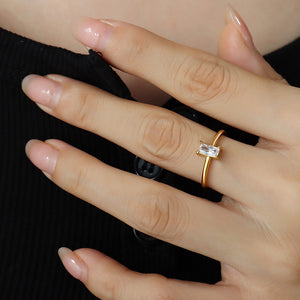
- Best overall / everyday: our 18K Gold Plated Statement Ring — a true sized ring (US 6, 7 or 8) in genuine 18K gold plating with a tarnish-resistant baguette-cut CZ, flush-set rather than glued or pronged.
- Best for stacking: a dainty gold plated stacking set with matched 18K tones across each band.
- Best statement: a CZ cocktail style for high sparkle at a low price.
Shop This Guide
Our 18K Gold Plated Statement Ring is built exactly to the standard in this guide: a genuine 925 sterling silver base, a rich 18K gold plating, and a tarnish-resistant, hypoallergenic CZ finish. Best of all it's an adjustable open band, so it fits a range of sizes and never needs resizing.
Shop the 18K Gold Plated Statement RingRelated reading: Gold dipped vs gold plated.
Related reading: 18k saudi gold plated meaning.
Related reading: Best gold plated necklaces.
Related reading: Does gold plated jewelry turn skin green.
Related reading: Will gold plated jewelry fade.
Frequently asked questions
Are gold plated rings worth buying?
Yes, if you buy quality. A gold plated ring with an 18K layer over a 925 sterling silver base gives you the look of solid gold for a fraction of the price, lasts several years with care, and is hypoallergenic. Thin plating over brass is not worth it — it wears out and can discolor skin quickly.
What is the highest quality gold plating?
The highest practical quality is thick 18K plating, at least 2.5 microns, bonded to a 925 sterling silver base. This meets or exceeds the definition of gold vermeil. Higher karats like 24K are softer and wear faster, so 18K is the sweet spot for durability and color.
How long does gold plating last on rings?
A quality 2.5-micron 18K plating over sterling silver lasts roughly two to five years or more with proper care. Thin flash plating, under 0.5 microns, over brass may only last a few months of daily wear. Removing the ring for water, exercise, and cleaning greatly extends its life.
Do gold plated rings turn your finger green?
They can, but only once the plating wears through to a reactive base metal like brass or copper. A ring with a 925 sterling silver base and thick 18K plating rarely causes green skin. Keeping the ring dry and off during workouts slows the wear that leads to discoloration.
Can you resize a gold plated ring?
Generally no. Cutting and soldering a plated band burns off the gold at the joint and exposes bare base metal. A jeweler can sometimes resize and re-plate the entire ring, but the cost approaches buying a new one. It is better to measure carefully or choose an adjustable open-band design.
Can you shower or swim with gold plated rings?
You should avoid it. Water, soap, chlorine, and salt all degrade the plating over time and speed up wear. Occasional splashes are fine on a quality piece, but routine showering, swimming, and dishwashing will noticeably shorten the life of the gold layer.
Is gold plated the same as gold vermeil?
Vermeil is a regulated type of gold plating. To be called vermeil, plating must be at least 2.5 microns thick, at least 10 karat gold, and applied over a sterling silver base. All vermeil is gold plated, but not all gold plated jewelry meets the vermeil standard.
What base metal is best for a gold plated ring?
925 sterling silver is the best common base for a gold plated ring. It is hypoallergenic, resists tarnish, and rarely discolors skin. Surgical stainless steel is another durable, skin-safe option. Brass and unspecified alloys are the lowest tier and most likely to react with skin.
How can you tell if a gold plated ring is good quality?
Check the stated base metal, the plating thickness in microns, and the gold karat. Quality pieces list a 925 sterling or steel base, roughly 2.5 microns of plating, 14K or 18K gold, and a tarnish-resistant, nickel-free finish. Missing specs usually signal thin, low-cost plating.
How do you clean a gold plated ring?
Wipe it gently with a soft, dry or barely damp microfiber cloth. Do not use ultrasonic cleaners, chemical dips, or abrasive polishes, since they strip the gold layer. Store the ring separately in a soft pouch and keep it away from lotions and perfume to preserve the finish.
Are gold plated rings hypoallergenic?
They can be. A gold plated ring on a 925 sterling silver or surgical stainless steel base is typically nickel-free and hypoallergenic. Rings plated over cheap brass may contain nickel and trigger reactions, so the base metal is what determines whether a plated ring is skin-safe.
Final thoughts
The best gold plated rings aren't defined by the prettiest photo or the lowest price — they're defined by two specs most listings hide: a sterling silver base and real plating thickness. Get those right and a plated ring gives you years of solid-gold looks for a small fraction of the cost. Get them wrong and you're back to a green finger and worn spots within a season. Buy the base and the microns, buy your size right the first time (or go adjustable), and care for the surface, and a gold plated ring earns its place in everyday rotation.
Written by the AJLuxe Team. Last updated: July 2026.
Alle Marken, Markennamen und Produktnamen Dritter sind Eigentum ihrer jeweiligen Inhaber. AJLuxe steht in keiner Verbindung zu den in diesem Artikel genannten Marken Dritter und wird von diesen weder unterstützt noch gesponsert. Markennamen werden ausschließlich zur sachlichen vergleichenden Bezugnahme verwendet; Materialangaben entsprechen den eigenen veröffentlichten Produktangaben der jeweiligen Marke zum Zeitpunkt der Erstellung.
You Might Also Like

The piece they're describing → Zarte Stapelringe für Damen – 18K vergoldet, schmaler Ringsatz, minimalistisch
Personalize Yours


