


The short answer
Two things separate gold plated earrings that last for years from ones that fade in a month: plating thickness (measured in microns — 2.5 microns of 18K gold is the everyday-durable benchmark, versus the sub-0.5-micron "flash plating" on cheap earrings) and the base metal underneath (a real 925 sterling silver base stays hypoallergenic and will not turn skin green, while a brass or zinc-alloy base often contains nickel and corrodes through the plating). Get those two right, pick a style you'll wear, and follow a few simple care rules, and a $25 pair of gold plated earrings can outlast jewelry costing five times as much.
Search "best gold plated earrings" and you'll find dozens of roundups that just list pretty pictures and prices — and skip the two questions that actually decide whether the earrings still look gold in six months. This guide fixes that. Gold plated earrings are the smartest value in jewelry when they're built correctly: a thin but real layer of gold bonded over a sturdier, cheaper base metal, giving you the exact warm gold look of solid gold at a fraction of the cost. The catch is that "gold plated" describes a huge quality range, from throwaway costume pieces to earrings that hold up to daily wear for years. We'll show you exactly what to look for.
Specifically, we'll cover the two things nearly every "best gold plated earrings" list leaves out: how many microns of gold plating you actually need (and why the number is almost never printed on the packaging), and whether gold plated earrings tarnish or turn your ears green — the single biggest fear shoppers have, and one most product pages quietly avoid answering. Then we'll break down the best styles, the care that doubles a plating's life, and specific AJLuxe picks so you can buy with confidence.

What "gold plated" actually means
Gold plating is a microscopically thin layer of real gold electroplated onto the surface of a base metal. The gold is genuine — an 18K plated earring really does have an 18-karat gold surface — but it's measured in microns (thousandths of a millimeter), not in the solid weight you'd get from a solid-gold piece. Underneath sits a different, less expensive metal that gives the earring its structure. That layered construction is what makes the look affordable, and it's also why the quality of both the gold layer and the base metal matters so much.
It helps to know where plating sits among the other "gold" terms you'll see. Plated is the thinnest gold layer; gold vermeil is a thicker plating (at least 2.5 microns) specifically over a sterling silver base; gold-filled bonds a much thicker gold layer mechanically; and solid gold is gold all the way through. For a full breakdown of how these compare on durability and price, see our guide to gold plated vs. solid gold and whether 14K gold plated jewelry is worth it. The short version: plated earrings give you 90% of the look for a small fraction of the price, and if they're built on the right base with enough plating, they hold up beautifully. Shopping the same plated finish in rings? See our guide to the best gold-plated rings.
The number that matters most: plating thickness in microns
This is the first thing almost every roundup skips. The difference between gold plated earrings that last for years and ones that fade in weeks is the thickness of the gold layer, measured in microns. A micron is one thousandth of a millimeter. Cheap costume earrings use "flash plating" of around 0.5 microns or less — enough to look gold on the shelf, not enough to survive a few weeks of wear. Quality everyday earrings use 2.5 microns of gold or more, the same benchmark that defines true gold vermeil.
| Plating thickness | Common name | Expected lifespan | Best for |
|---|---|---|---|
| Under 0.5 microns | Flash / gold tone | Weeks | One-off costume looks only |
| 0.5–1 micron | Standard gold plated | A few months | Occasional wear |
| 2.5 microns | Gold vermeil grade | Two to three years+ | Everyday wear |
| 3 microns and up | Heavy gold plated | Several years | Daily-wear staples |
The frustrating part: most sellers never print the micron count. When a listing doesn't state it, two clues stand in for it. First, the base metal — reputable brands that plate over 925 sterling silver almost always use a vermeil-grade layer, because it makes no sense to put flash plating on a genuine silver base. Second, the karat and the language: "18K gold plated over 925 sterling silver" signals a quality piece, while "gold tone" or "gold color" with no karat and no base metal named is a red flag. When in doubt, ask the seller directly for the micron thickness; a quality brand will know it.
Why the base metal matters more than the gold
Here's the competitor gap that causes the most regret: shoppers obsess over the gold and ignore what's underneath — but the base metal is what determines whether earrings turn your ears green, irritate sensitive skin, or corrode through the plating from the inside. Gold plating is only a surface. Once it wears thin at a contact point, your skin touches the base metal, and everything depends on what that metal is.
- 925 sterling silver base (best): Hypoallergenic, nickel-free, and it does not react with skin to cause green marks. As the plating thins, you're touching silver, not a reactive alloy. This is the base you want for earrings, which sit in a pierced hole against sensitive skin all day.
- Brass or bronze base (common, riskier): Brass contains copper, which reacts with skin oils and moisture to form the green copper compounds that stain skin. Many brass-based earrings also contain nickel, the most common metal allergen.
- Zinc alloy / "base metal" (cheapest, worst): Generic pot-metal alloys are unpredictable, frequently contain nickel, and corrode fastest. This is what most sub-$10 earrings use.
For pierced earrings specifically, this is not a small detail — the post sits inside your body. That's why we recommend a genuine 925 sterling silver base for anyone with even mildly sensitive ears. Our deeper dive into whether gold earrings are hypoallergenic explains exactly which metals trigger reactions and how to read a listing for nickel content. The rule of thumb: if a gold plated earring listing doesn't name its base metal, assume it's the cheapest option and shop elsewhere.
Do gold plated earrings tarnish or turn your ears green?
This is the question thin competitor posts dodge, so let's answer it plainly. Real gold does not tarnish, and it does not turn skin green. So when gold plated earrings tarnish or leave a green mark, it is never the gold itself — it's the base metal reacting after the thin gold layer has worn away or was too thin to begin with.
That reframes the whole problem. You avoid tarnish and green marks the same way: by buying earrings with a thick enough plating (2.5 microns or more) over a non-reactive base (925 sterling silver), so your skin never actually reaches a reactive metal. Flash-plated earrings on a brass base turn green quickly because the microscopic gold layer wears through in days and exposes copper. Vermeil-grade plating on sterling silver can go years without any discoloration, and even when the plating eventually thins, the silver underneath does not stain skin.
Moisture accelerates the process, which is why water exposure is the top care question. Sweat, chlorine, salt water, and even some skincare can wear plating faster and reach the base metal sooner. We cover the full picture in what actually happens when you shower with gold plated jewelry — the short version is that you can get a pair wet occasionally without disaster, but daily showering, swimming, and sweating in them will visibly shorten the plating's life. If daily water exposure is non-negotiable for you, PVD-coated jewelry offers a genuinely waterproof gold-tone alternative — see our guide to the best PVD jewelry.

Best gold plated earring styles: studs vs. huggies vs. hoops
Style affects durability more than most people expect, because different styles rub and flex in different ways. Here's how the three everyday gold plated earring styles compare for real-world wear.
| Style | Plating wear | Best for | Notes |
|---|---|---|---|
| Studs | Slowest — little movement | Sleep-in, everyday, sensitive ears | The most durable plated style; the post barely rubs. Zircon or CZ studs read like diamond studs at a tiny cost. |
| Huggie hoops | Low — snug, minimal swing | All-day wear, stacking, versatility | Small hoops that hug the lobe. The best balance of style and durability; a thin profile means the plating flexes little. |
| Larger hoops | Higher — more swing and hand contact | Statement looks, going out | More surface to catch on hair and clothing; choose a hinged, secure closure and a thicker plating. |
For a first pair or a daily staple, huggie hoops and studs are the safest buys — they wear slowly and go with everything. If you're specifically after studs, our gold stud earrings guide breaks down settings, stone options, and how to judge stud quality. For the full picture on choosing gold earrings by style and skin sensitivity, see our complete gold earrings buying guide. For sparkle beyond metal, our guide to the best crystal earrings covers gemstone and CZ studs at every budget, and for a delicate drop style, see our guide to the best threader earrings. Save the big statement hoops for a piece you'll wear less often, and prioritize thicker plating there since they take more abuse.
How to make gold plated earrings last longer
Care is the free lever that can double a plating's lifespan. Because the gold layer is thin, the goal is simple: keep it away from the things that wear it off — friction, moisture, and chemicals.
- Put them on last, take them off first. After lotion, perfume, sunscreen, and hairspray — those chemicals are hard on plating. Remove earrings before washing your face at night.
- Keep them dry. Take earrings off before showering, swimming, and workouts. Wipe them with a soft dry cloth after wear to remove skin oils and sweat.
- Store them separately. A soft pouch or a lined box, away from other jewelry, prevents the tiny scratches that thin the plating. An anti-tarnish strip helps if the base is silver.
- Clean gently. Only a soft, dry or barely damp cloth. Never use jewelry dips, polishing cloths meant for solid gold, ultrasonic cleaners, or abrasives — they strip plating fast.
- Rotate your pairs. Wearing the same earrings every single day wears one spot repeatedly. Rotating a couple of pairs spreads the wear and extends the life of each.
Shop This Guide
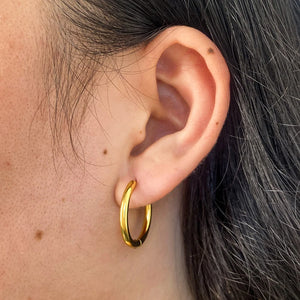
Our Small Gold Huggie Hoop Earrings tick every box in this guide: a genuine 2.5mm 18K gold plated finish in three sizes (15mm/17mm/21mm), with a secure hinged snap closure — a durable, wear-everywhere gold plated style for daily use.
Shop the Gold Huggie Hoop EarringsHow to choose: a quick decision path
- Demand a named base metal. Buy only earrings that state a 925 sterling silver base, especially for pierced posts against sensitive skin. No base metal named = walk away.
- Look for real karat + plating language. "18K gold plated over 925 sterling silver" is a quality signal; "gold tone" or "gold color" is not.
- Aim for 2.5 microns or more. That's the everyday-durable benchmark. If it isn't listed, a sterling base is your best proxy for it.
- Match the style to your wear. Studs and huggie hoops for daily, durable, sensitive-ear-friendly wear; larger hoops for occasional statement looks with thicker plating.
- Commit to basic care. Off before water, on after products, stored dry and separate — the difference between one year and several.
Written by the AJLuxe Team. Last updated: July 2026. According to Jewelers of America, understanding how gold jewelry is constructed — including plating and base metals — is a core part of buying quality that lasts, guidance that applies directly to gold plated earrings, where the base metal and plating thickness determine both durability and skin comfort.
Related reading: Gold dipped vs gold plated.
Related reading: Best gold plated necklaces.
Related reading: Does gold plated jewelry turn skin green.
Related reading: Will gold plated jewelry fade.
Frequently Asked Questions
Are gold plated earrings worth buying?
Yes, gold plated earrings are worth buying when they're built correctly — a thick 18K gold plating of at least 2.5 microns over a genuine 925 sterling silver base. That combination gives you the exact look of solid gold for a small fraction of the price and can last for years of everyday wear. Cheap flash-plated earrings on a brass base are not worth it, because the plating wears off in weeks.
Do gold plated earrings turn your ears green?
Real gold never turns skin green, so gold plated earrings only cause green marks when the thin gold layer wears through and exposes a reactive base metal like brass or copper alloy. Earrings plated over a 925 sterling silver base do not turn ears green, because silver does not react with skin the way copper does. Choosing a sterling base is the reliable way to avoid green marks.
Do gold plated earrings tarnish?
The gold surface itself does not tarnish, but gold plated earrings can appear to tarnish or dull once the plating wears thin and the base metal beneath begins to react. Thicker plating of 2.5 microns or more over a sterling silver base resists this for years. Keeping earrings dry, away from perfume and lotion, and stored separately slows plating wear significantly.
What is the highest quality gold plating?
The highest quality everyday gold plating is a heavy layer of 2.5 to 3 microns or more of 18K gold applied over a solid 925 sterling silver base — the standard that also defines gold vermeil. Higher karat gives a richer color, thicker plating lasts longer, and a sterling base keeps the piece hypoallergenic. Flash plating under half a micron on a brass or zinc base is the lowest quality.
How many microns of gold plating do I need?
For everyday earrings, aim for at least 2.5 microns of gold plating, which is the vermeil-grade benchmark for durability and can last two to three years or more with care. Occasional-wear pieces can get by with about one micron, while anything under half a micron is flash plating that wears off within weeks. Since sellers rarely print the number, a genuine sterling silver base is a good proxy for a quality plating.
Are gold plated earrings good for sensitive ears?
Gold plated earrings are good for sensitive ears only when they're plated over a hypoallergenic, nickel-free base such as 925 sterling silver. The plated gold surface is skin-friendly, but pierced posts eventually contact the base metal as the plating thins, so a reactive brass or nickel-containing base can still cause irritation. For sensitive ears, always confirm a sterling silver, nickel-free base.
How long do gold plated earrings last?
Lifespan depends almost entirely on plating thickness and care. Flash-plated earrings fade in weeks, standard plating lasts a few months, and vermeil-grade plating of 2.5 microns or more over sterling silver lasts two to three years or longer. Removing them before water, keeping them away from chemicals, and storing them dry and separately can extend that life considerably.
Can you shower or swim in gold plated earrings?
It's best not to. Water, especially chlorinated pool water, salt water, and sweat, wears gold plating faster and reaches the base metal sooner, which shortens the earrings' life and can lead to discoloration. An occasional splash won't ruin a quality pair, but daily showering, swimming, and working out in them will visibly wear the plating over time.
What is the difference between gold plated and gold vermeil earrings?
Gold vermeil is a specific, higher grade of gold plating: it must use at least 2.5 microns of gold over a solid sterling silver base. Standard gold plated has no minimum thickness and can be applied over any base metal, including brass or zinc. So all vermeil is plated, but not all plating is vermeil — vermeil guarantees both a thick gold layer and a quality base.
Which style of gold plated earring is most durable?
Studs are the most durable gold plated style because they barely move and the post experiences little friction, so the plating wears slowly. Huggie hoops are a close second, since their snug fit means minimal swinging and contact. Larger hoops wear faster because they swing, catch on hair and clothing, and are handled more, so choose thicker plating for those.
Can gold plated earrings be re-plated?
Yes, most gold plated earrings can be professionally re-plated once the gold layer wears thin, which restores the original color for a modest fee. This is most worthwhile on pieces with a good sterling silver base, since the base itself remains valuable and hypoallergenic. On low-quality brass or zinc-alloy pieces, re-plating is usually not worth the cost.
How can you tell if gold plated earrings are good quality?
Check three things: the listing should name a genuine 925 sterling silver base, state a real karat like 18K gold plated rather than vague terms like gold tone, and ideally specify a plating thickness of 2.5 microns or more. A quality seller can tell you the base metal and micron count on request. Missing base-metal information almost always signals a low-quality piece.
Alle Marken, Markennamen und Produktnamen Dritter sind Eigentum ihrer jeweiligen Inhaber. AJLuxe steht in keiner Verbindung zu den in diesem Artikel genannten Marken Dritter und wird von diesen weder unterstützt noch gesponsert. Markennamen werden ausschließlich zur sachlichen vergleichenden Bezugnahme verwendet; Materialangaben entsprechen den eigenen veröffentlichten Produktangaben der jeweiligen Marke zum Zeitpunkt der Erstellung.
You Might Also Like

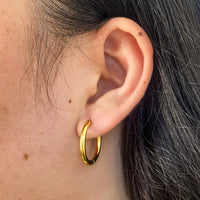
The piece they're describing → Kleine goldene Huggie-Creolen für Damen – 2,5 mm, 18 Karat vergoldet, 925 Sterling Silber
Personalize Yours


