


- White gold is real gold — pure gold is naturally yellow, so jewelers alloy it with palladium, nickel, or silver to create a lighter, whiter metal.
- Almost all white gold jewelry is finished with rhodium plating, a thin layer of a bright white metal that makes the piece look crisper and more silver-like.
- Real white gold is stamped with a karat hallmark (10K, 14K, or 18K); "white gold plated" and silver-tone costume pieces are not, and usually say "GP," "plated," or nothing at all.
- White gold can look yellowish underneath once rhodium plating wears off — that's normal and fixable with re-plating, not a sign of fake gold.
- Nickel-alloyed white gold can trigger allergic reactions; palladium-alloyed white gold is the hypoallergenic option if you have sensitive skin.
- AJLuxe's jewelry is genuine rhodium-plated 925 sterling silver, not solid white gold — an honest, hypoallergenic, budget-friendly alternative for the same bright white-metal look.
If you've searched is white gold real gold, the short answer is yes — it's just not gold in its natural state. Pure 24K gold is a warm yellow metal, so to get the cool, silvery-white look so many engagement rings, wedding bands, and everyday pieces are known for, jewelers melt gold together with white metals like palladium, nickel, or silver. The result is a genuine gold alloy, karat-stamped just like yellow gold, that's then almost always topped with a thin rhodium plating for extra shine. The confusion usually comes from three very different products getting lumped together under "white" jewelry: real white gold, white-gold-plated base metal, and silver-tone costume jewelry that contains no gold whatsoever. This guide breaks down exactly what makes white gold "white," why rhodium plating matters so much, how to tell the three apart, and how a rhodium-plated 925 sterling silver piece — like the ones AJLuxe makes — compares honestly to the real thing.
What Makes Gold "White"? Alloy Composition Explained
Gold in its pure, 24-karat form is a soft, warm yellow metal — far too soft for everyday jewelry and nowhere near white. "White gold" gets its name and color from alloying: mixing pure gold with other metals to change both its color and its hardness. The two most common alloying partners are:
- Palladium — a naturally white, hypoallergenic metal from the platinum family. Palladium-alloyed white gold tends to cost more but is the safer choice for people with metal sensitivities.
- Nickel — a cheaper whitening metal that produces a very white, hard alloy, but is a common allergen and is restricted or labeled in some countries (notably the EU) because of skin-reaction risk.
Manufacturers also often blend in small amounts of silver, zinc, or copper alongside palladium or nickel to fine-tune hardness, workability, and cost. The karat number (10K, 14K, 18K) tells you what percentage of the alloy is pure gold — the rest is the white-metal mix. Even at its whitest, though, a raw gold-palladium or gold-nickel alloy still carries a faint warm or grayish tint straight out of the alloy — it's not the bright, icy white most people picture when they think "white gold." That finishing touch comes from rhodium plating, covered next.
Rhodium Plating Explained — Why Almost All White Gold Is Plated
Rhodium is a rare, extremely hard, brilliant white metal in the platinum family. Because raw white gold alloy isn't perfectly white on its own, nearly every piece of white gold jewelry — engagement rings, wedding bands, everyday earrings and necklaces — gets electroplated with a microscopically thin layer of rhodium after it's cast and polished. This does two things: it gives the piece that bright, reflective, almost silver-mirror finish people associate with "white gold," and it adds a layer of extra scratch resistance and tarnish protection on top of the gold underneath.
The catch is that rhodium plating is thin — typically measured in microns — and it wears down with friction over months or years of daily wear, especially on rings that get knocked around constantly. When it wears through, the white gold alloy underneath shows its natural, slightly warmer or yellowish tone. That's not a sign the piece is fake; it's simply the rhodium layer thinning out, and it's fixed with a routine re-plating service at most jewelers. This is one of the most misunderstood parts of white gold ownership, and it's the reason "does white gold turn yellow" is one of the most common follow-up questions people ask once they understand the alloy itself.

How to Tell Real White Gold From White-Gold-Plated or Silver-Tone Jewelry
This is where most of the confusion in "is white gold real gold" searches actually lives — people aren't usually comparing white gold to yellow gold, they're trying to tell three very different products apart:
- Solid white gold — a genuine gold alloy (10K/14K/18K) that happens to be white-colored, always karat-hallmarked, rhodium-plated on top.
- White-gold-plated (or "GP") jewelry — a base metal (often brass or stainless steel) with a thin layer of actual white gold electroplated on the surface. It contains real gold, but only a microscopic amount on the outside — the core has no gold value at all.
- Silver-tone or "white metal" costume jewelry — no gold whatsoever. This is typically stainless steel, brass, zinc alloy, or genuine sterling silver marketed generically as "silver-tone," and it's not gold in any form, plated or solid.
A few practical checks help separate the three:
- Look for a karat hallmark. Genuine solid white gold is stamped "10K," "14K," or "18K" (sometimes with numeric equivalents like 417, 585, or 750). No karat stamp at all is a strong signal you're looking at plated or silver-tone jewelry, not solid gold.
- Check for "GP," "GF," or "plated" markings. White-gold-plated pieces are often (though not always) marked "GP" (gold plated) or similar — a legal requirement in many markets once the gold layer drops below a certain thickness.
- Consider the price relative to karat gold market rates. Solid white gold tracks the price of gold itself; if a "14K white gold" piece is priced far below what 14K gold should cost for its weight, it's worth double-checking the listing and hallmark.
- Ask for documentation or get it tested. A reputable jeweler can acid-test or use an electronic gold tester to confirm karat purity in minutes if you're unsure about a piece you already own.
Karat Purity — 10K vs 14K vs 18K White Gold
Karat purity works the same way in white gold as it does in yellow gold — it measures how much of the alloy is pure gold by weight, out of 24 parts:
| Karat | Gold Content | Durability | Typical Use |
|---|---|---|---|
| 10K white gold | 41.7% gold | Hardest — more alloy metal, most scratch-resistant | Everyday rings, budget-friendly fine jewelry |
| 14K white gold | 58.3% gold | Strong balance of durability and gold content | Most common choice for engagement rings and daily-wear jewelry |
| 18K white gold | 75% gold | Softer, shows the alloy's natural tone faster as rhodium wears | Fine jewelry, higher-end pieces prioritizing gold purity |
Higher karat white gold has more actual gold in it, but that also means less of the hard whitening alloy — so 18K white gold tends to show its underlying warmer tone faster as the rhodium plating wears thin, compared to a 10K or 14K piece with a higher proportion of white alloy metal. Neither is "more real" than the other; the karat number just tells you the gold-to-alloy ratio, not whether the piece is genuine.
Durability and Re-Plating Maintenance
Solid white gold is a durable, long-term investment piece, but it does require occasional upkeep:
- Rhodium plating typically lasts 1-2 years under normal daily wear before it visibly thins, faster on rings and bracelets that see more friction than earrings or necklaces.
- Re-plating is routine, not a repair. Most jewelers offer rhodium re-plating as a standard service, usually running $50-$150 depending on the piece and how much prep and polishing it needs first.
- The gold underneath doesn't wear away. Only the thin rhodium layer thins out — the actual gold alloy structure of the ring or pendant stays intact indefinitely with normal care.
- Higher-karat white gold shows wear sooner. Because 18K white gold has less hardening alloy than 10K or 14K, its underlying warmer tone tends to peek through faster once the rhodium starts thinning.
This ongoing plating maintenance is one of the real, honest trade-offs of owning solid white gold — it's not a one-and-done purchase the way many people assume.

Honest Comparison: AJLuxe's Rhodium-Plated 925 Sterling Silver vs Solid White Gold
To be upfront: AJLuxe doesn't sell solid white gold. Our jewelry is genuine 925 sterling silver, rhodium-plated for a bright, naturally white finish that's visually very close to white gold — but it's a different metal with a different composition, price point, and set of trade-offs. Here's the honest comparison:
| Property | Solid White Gold (10K-18K) | AJLuxe Rhodium-Plated 925 Sterling Silver |
|---|---|---|
| Contains gold | Yes — 41.7% to 75% by weight | No — 92.5% pure silver base |
| Typical price | $400-$2,000+ depending on karat and design | $20-$70 |
| Finish | Rhodium-plated over gold alloy | Rhodium-plated over sterling silver |
| Visual look | Bright white, near-identical to sterling once both are rhodium-plated | Bright white, near-identical to white gold once both are rhodium-plated |
| Hypoallergenic | Only if palladium-alloyed; nickel-alloyed pieces can trigger reactions | Yes — nickel-free 925 silver plus rhodium barrier layer |
| Maintenance | Rhodium re-plating every 1-2 years | Rhodium re-plating eventually needed; lower cost to redo |
| Resale / heirloom value | Yes — tracks gold market value | No meaningful resale value |
The honest takeaway: AJLuxe's rhodium-plated 925 sterling silver is not a substitute for solid white gold if you want an investment-grade piece with gold content and resale value — for that, real 14K or 18K white gold is the right call. But if what you actually want is the bright white-metal look for a fraction of the price, without worrying about nickel sensitivity, sterling silver is a genuinely good, transparent alternative — not a knockoff pretending to be something it isn't.
Who Should Choose Solid White Gold vs a Sterling Silver Alternative
Choose solid white gold if you:
- Want a piece that holds real gold value and can be resold, insured, or passed down.
- Are buying an engagement ring, wedding band, or milestone gift meant to last generations.
- Don't mind budgeting for occasional rhodium re-plating as routine maintenance.
A rhodium-plated sterling silver alternative fits better if you:
- Love the bright white-metal look but don't need investment-grade gold content.
- Have a nickel allergy and want a straightforward hypoallergenic option without researching alloy composition.
- Want to build a versatile everyday collection — stacking rings, hoops, layered necklaces — at a price where trying new styles doesn't feel risky.
Frequently Asked Questions
Is white gold actually real gold or just a gold-colored alloy?
It's real gold. White gold is pure gold (measured in karats) alloyed with white metals like palladium, nickel, or silver to lighten its natural yellow color. The karat stamp — 10K, 14K, or 18K — reflects genuine gold content, just like on yellow gold.
What metals are mixed with gold to create white gold?
Most commonly palladium or nickel, sometimes with added silver, zinc, or copper to adjust hardness and workability. Palladium alloys cost more and are hypoallergenic; nickel alloys are cheaper but can trigger skin reactions in sensitive people.
Why is rhodium plating applied to white gold?
Because raw white gold alloy isn't perfectly white on its own — it carries a faint warm or gray tint. Rhodium, a bright white metal in the platinum family, is electroplated on top to give white gold jewelry its signature crisp, reflective finish and extra scratch resistance.
How can you tell if jewelry is real white gold versus white-gold-plated?
Check for a karat hallmark (10K, 14K, 18K). Solid white gold is always stamped with a karat number; white-gold-plated pieces are typically marked "GP" or "plated" and have only a microscopic gold layer over a base metal core. When in doubt, a jeweler can test it in minutes.
What's the difference between real white gold and silver-tone jewelry?
Silver-tone jewelry contains no gold at all — it's usually stainless steel, brass, or sterling silver marketed generically as "silver." Real white gold always contains actual gold by weight, confirmed by a karat stamp that silver-tone pieces simply don't have.
How do you check the karat purity hallmark on white gold?
Look for a small stamp on the inside of a ring band or the clasp of a necklace reading "10K," "14K," "18K," or numeric equivalents like 417, 585, or 750 (representing the percentage of pure gold). No stamp usually means it isn't solid gold.
Is 14K white gold the same gold content as 14K yellow gold?
Yes. The karat number measures gold purity regardless of color — 14K means 58.3% pure gold either way. The only difference is which metals make up the remaining alloy: white-toning metals like palladium or nickel for white gold, versus copper and silver for yellow gold.
How durable is white gold for daily wear compared to silver or platinum?
White gold, especially in 10K or 14K, is harder and more scratch-resistant than sterling silver, though softer than platinum. The main durability consideration isn't the gold itself but the rhodium plating on top, which wears thinner with friction over time regardless of the metal underneath.
Does white gold turn yellow over time?
The gold itself doesn't change color, but as the rhodium plating on top wears thin from daily wear, the naturally warmer or grayish tone of the white gold alloy underneath becomes visible. It's a normal, expected part of owning white gold, not a sign of a defect or fake piece.
Are nickel allergies a concern with white gold?
Yes, for nickel-alloyed white gold. Nickel is a common skin allergen, and some countries restrict or require disclosure of nickel content in jewelry for this reason. Palladium-alloyed white gold avoids this risk and is the better choice for anyone with known metal sensitivities.
Is palladium-alloyed white gold better for people with nickel sensitivities?
Yes. Palladium is hypoallergenic and doesn't carry the skin-reaction risk that nickel does, though palladium-alloyed white gold typically costs more. If you have a known nickel allergy, ask specifically whether a white gold piece is palladium- or nickel-alloyed before buying.
How often does white gold need to be re-plated to maintain its white shine?
Roughly every 1-2 years for pieces in regular contact with friction, like rings and bracelets; earrings and necklaces can often go longer. Re-plating is a routine jewelry-store service, not a sign something has gone wrong with the piece.
Keep Reading
- Does White Gold Turn Yellow? Why It Happens and How to Fix It
- White Gold vs Platinum: Which Should You Choose?
- Sterling Silver vs Stainless Steel Jewelry: Which Is Better?
- 18KGP Meaning: What "18K Gold Plated" Means — And Is It Worth It?
- Does Gold Plated Jewelry Tarnish?
Shop This Guide
AJLuxe doesn't sell solid white gold — we build with genuine rhodium-plated 925 sterling silver instead, delivering the same bright white-metal look with hypoallergenic, nickel-free comfort at a fraction of the price.
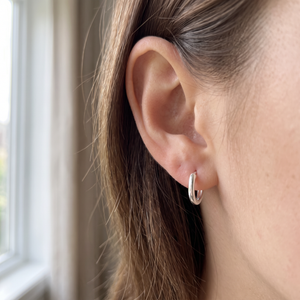
Shop the Rhodium-Plated CZ Studs Shop the Silver Huggie EarringsFinal Thoughts
White gold is real gold — genuinely karat-stamped, genuinely valuable, and genuinely a different metal from the white-gold-plated and silver-tone jewelry it often gets confused with. What makes it look "white" is a combination of alloying (palladium or nickel mixed with pure gold) and a rhodium-plated finish that needs occasional maintenance as it wears. If you want the investment value and heirloom weight of real gold, solid white gold is worth the price and the upkeep. If you love the bright white-metal look but want a hypoallergenic, budget-friendly way to wear it every day, AJLuxe's rhodium-plated 925 sterling silver gives you that same finish honestly, without pretending to be something it isn't.
More Gold & Metal Guides
Alle Marken, Markennamen und Produktnamen Dritter sind Eigentum ihrer jeweiligen Inhaber. AJLuxe steht in keiner Verbindung zu den in diesem Artikel genannten Marken Dritter und wird von diesen weder unterstützt noch gesponsert. Markennamen werden ausschließlich zur sachlichen vergleichenden Bezugnahme verwendet; Materialangaben entsprechen den eigenen veröffentlichten Produktangaben der jeweiligen Marke zum Zeitpunkt der Erstellung.
You Might Also Like
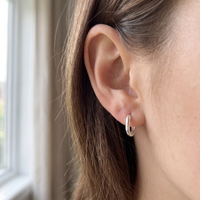
The piece they're describing → Silberne Huggie-Ohrringe für Damen — 925er Sterlingsilber, hypoallergen, minimalistisch
Personalize Yours


