


Quick answer: Yes, yellow gold is real gold — it's actually the truest, most natural color gold takes, since pure gold is naturally warm yellow. What varies is purity: 24K is 99.9% pure gold, 18K is 75%, 14K is 58.3%, and 10K is 41.7%, with the rest made up of alloys like silver, copper, and zinc that give the metal strength for everyday wear. Pure 24K gold is too soft for most jewelry, which is why 14K and 18K yellow gold are the most common choices for rings, necklaces, and earrings.
TL;DR
- Yellow gold is real gold — it's the color pure gold naturally is, before any alloying happens.
- Karat tells you purity, not authenticity: 24K (99.9%), 22K (91.7%), 18K (75%), 14K (58.3%), 10K (41.7%).
- Pure 24K gold is too soft and easily dented for daily jewelry, so it's alloyed with silver, copper, and zinc to add durability while keeping the warm yellow tone.
- Hallmark stamps (999, 916, 750, 585, 417) tell you what the maker claims the karat is — look for one, but pair it with other checks.
- Yellow gold, vermeil, gold-filled, and gold-plated are all genuinely different constructions — none of them are "fake," but they hold very different amounts of actual gold.
- AJLuxe's yellow gold pieces are 18K gold plated over 925 sterling silver — a real gold surface at an accessible price, honestly labeled as plated rather than solid.
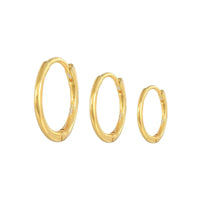
Love the warm look of yellow gold without the solid-gold price tag? Our Gold Hoop Earrings — 925 Sterling Silver, 18K Gold Plated give you a genuine gold surface, clearly labeled as plated, at a fraction of the cost of solid yellow gold.
You're eyeing a pair of yellow gold earrings, or you just found a "gold" ring in a drawer, and the question keeps nagging: is yellow gold real gold? The short answer is yes — yellow is actually the natural, unaltered color of pure gold, unlike white gold (which is alloyed and rhodium-plated to look silvery) or rose gold (which gets its pink tone from added copper). But "real gold" isn't a yes-or-no label. It's a spectrum of purity, measured in karats, and knowing where a piece falls on that scale is what actually tells you what you're buying.
The Karat Purity Scale Explained: 24K, 22K, 18K, 14K, and 10K
Karat (K) measures how much of a piece's metal content is pure gold, out of 24 total parts. Higher karat means more gold and a richer, warmer yellow color; lower karat means more alloy metal mixed in, which lightens the color slightly and adds strength. Here's how the common karats break down:
| Karat | Gold Content | Common Hallmark | Typical Use |
|---|---|---|---|
| 24K | 99.9% pure gold | 999 or 9999 | Bullion, coins, some Asian bridal jewelry — too soft for daily-wear rings |
| 22K | 91.7% pure gold | 916 or 917 | Traditional/ceremonial jewelry, still quite soft |
| 18K | 75% pure gold | 750 | Fine jewelry — rich color, noticeably more durable than 22K/24K |
| 14K | 58.3% pure gold | 585 or 583 | The most common karat for everyday US fine jewelry — durability and color balance |
| 10K | 41.7% pure gold | 417 | Budget fine jewelry, lightest yellow tone, most scratch-resistant of the "real gold" karats |
Every karat on this table is real gold. There's no cutoff where it stops "counting" — 10K is still legally and technically real gold in the US (the minimum karat that can be marketed as gold), it just has less of it. What changes as karat drops is color intensity (slightly paler yellow), price, and durability (more alloy generally means more scratch resistance).

Why Pure Gold Needs Alloying for Jewelry Durability
Gold in its 24K form is remarkably soft — soft enough that you can dent a pure gold ring with a fingernail if you press hard enough, and daily friction from clasps, desks, and doorknobs will visibly scratch and misshape it over time. That softness is exactly why jewelers rarely sell 24K rings or bracelets meant for daily wear.
To make gold durable enough for jewelry, metalsmiths alloy it with other metals — typically silver, copper, and zinc for yellow gold. These alloys don't change gold's fundamental identity; they're blended in a controlled ratio to:
- Increase hardness so the metal resists bending, scratching, and denting during normal wear.
- Preserve the warm yellow tone — silver and copper in the right proportions keep the color close to pure gold's natural warmth (this is different from white gold, which uses palladium, nickel, or manganese specifically to neutralize the yellow into a silvery-white).
- Lower the cost per piece, since less pure gold by weight is needed to make a ring or necklace of the same size.
This is also why 14K yellow gold is the sweet spot for most everyday jewelry in the US: enough gold to keep the warm color and resale value, enough alloy to survive years of wear without warping.
How to Test and Verify Real Yellow Gold
If you're trying to confirm whether a piece of yellow gold jewelry is genuine (and at what karat), a few methods work at home, though only professional testing gives a truly definitive answer:
- Check for a hallmark stamp. Look inside a ring band or near a clasp for a number like 750, 585, or 417 (or letters like 18K, 14K, 10K). This tells you what the maker claims the gold content is — a starting point, not proof.
- Try the magnet test. Real gold, at any karat, is not magnetic. If a piece is strongly attracted to a magnet, it isn't solid gold. This test can disprove gold but can't fully prove it, since many fake-gold alloys (like brass) aren't magnetic either.
- Do a careful acid test. Jewelers use a touchstone and nitric acid to check how gold reacts at different karat concentrations — pure, high-karat gold resists all but the strongest acids, while lower-karat or fake pieces react more visibly. This is best left to a professional, since it can mark the metal.
- Get a professional XRF scan. This is the gold standard (literally) for verification — a jeweler's X-ray fluorescence scanner reads the exact metal composition in seconds without damaging the piece, typically for $10–$30.
According to GIA's guidance on touchstone testing, the purity of a gold alloy can be assessed by how it reacts to acids of different strengths, since higher-karat gold resists everything but the strongest solutions — which is part of why professional testing remains more reliable than any single at-home method.
Yellow Gold vs. Plated, Vermeil, and Filled: What's the Difference?
"Real gold" gets confusing fast because several honest, common constructions all involve genuine gold — just in very different amounts:
- Solid yellow gold — gold alloy all the way through the piece, at whatever karat is stamped (24K, 18K, 14K, 10K). This is what people usually mean by "solid gold."
- Gold vermeil — a thicker layer of real gold (US standard: at least 2.5 microns, minimum 10K) electroplated over a sterling silver (925) base. Vermeil must legally use sterling silver underneath, which is part of why it typically costs more than standard gold plating.
- Gold-filled — a much thicker mechanically bonded layer of gold (at least 1/20th of the total weight) over a base metal core, offering more longevity than plating without solid gold's price.
- Gold-plated — a thin layer of real gold (often 0.5–2.5 microns) electroplated over a base metal or sterling silver. It's genuinely gold on the surface, just not gold all the way through, and it will eventually show wear where the plating is thinnest.
None of these are "fake gold" when honestly labeled — they're different manufacturing methods with different gold content, price points, and lifespans. The dishonesty only happens when a plated piece is marketed as solid.

AJLuxe's Yellow Gold: 18K Gold-Plated Over 925 Sterling Silver
At AJLuxe, our yellow gold pieces — like our Gold Hoop Earrings — are built with 18K gold plating over a 925 sterling silver base, not solid gold. We're upfront about that because it's the honest way to think about affordable yellow gold jewelry:
- The outer layer is genuine 18K gold, so the color, shine, and initial feel closely match solid gold.
- The sterling silver base (rather than a cheaper brass or copper base) means better tarnish resistance and a nicer weight than bargain-bin plated jewelry.
- The price is a fraction of solid 14K or 18K gold, because you're paying for a gold surface, not gold all the way through.
- Like all plated jewelry, the gold layer will wear thinner over years of daily contact — expect a long, good-looking run with proper care, not a lifetime guarantee the way solid gold offers.
If you want gold that never needs replating and holds resale value, solid 14K or 18K yellow gold is the right call. If you want the yellow gold look at a price that lets you actually wear it every day without anxiety, 18K-gold-plated-over-925-silver is an honest, well-made alternative — as long as you know that's what you're buying.
Frequently Asked Questions
Is yellow gold considered real gold?
Yes. Yellow is the natural, unaltered color of pure gold. Any karat from 10K to 24K is legitimately real gold — the karat number just tells you how much of the metal is pure gold versus alloy.
What karat is the purest yellow gold: 24K, 22K, 18K, 14K, or 10K?
24K is the purest at 99.9% gold. Purity decreases as the karat number drops: 22K is 91.7%, 18K is 75%, 14K is 58.3%, and 10K is 41.7%.
Is 24K yellow gold real or just an alloy?
24K is essentially pure gold (99.9%+), not an alloy. It's the closest thing to gold in its natural, unmixed state, which is also why it's so soft compared to lower karats.
What does 22K yellow gold mean in terms of purity?
22K gold is 91.7% pure gold, with the remaining 8.3% made up of alloy metals like silver or copper. It's common in traditional and bridal jewelry in many cultures, though it's still relatively soft.
Is 18K yellow gold better than 14K for durability and color?
14K is generally more durable day-to-day since it has a higher proportion of alloy metal, while 18K has a richer, warmer color due to its higher gold content. Neither is objectively "better" — it's a tradeoff between color depth and scratch resistance.
What are the differences between 14K and 10K yellow gold?
14K (58.3% gold) has a warmer, richer yellow tone and more resale value; 10K (41.7% gold) is the hardest and most affordable of the common "real gold" karats, with a noticeably paler color.
How can I tell if my yellow gold is real or gold-plated?
Check for a hallmark stamp first (750, 585, 417 for solid gold), then look for wear patterns — plated pieces often show a different-colored base metal at high-friction points like ring edges or earring posts after enough wear. A jeweler's XRF scan gives a definitive answer.
What is yellow vermeil and how does it differ from solid yellow gold?
Vermeil is a thicker layer of real gold (at least 2.5 microns, minimum 10K) plated over sterling silver, not gold all the way through. Solid yellow gold is gold alloy throughout the entire piece.
Is gold-filled yellow gold the same as solid gold?
No. Gold-filled jewelry has a much thicker bonded layer of gold than plating (by regulation, at least 1/20th of total weight) over a base metal core, but it's still not solid gold all the way through.
How do I test yellow gold jewelry for authenticity at home?
Start with the hallmark stamp, then try a magnet test (real gold isn't magnetic, though this only rules out some fakes). For a conclusive answer on karat and authenticity, a jeweler's acid test or XRF scan is required.
What hallmark numbers indicate real yellow gold (e.g., 375, 585, 750)?
These are parts-per-thousand purity stamps: 375 = 9K (uncommon in the US), 417 = 10K, 585 = 14K, 750 = 18K, and 999 = 24K.
Does the magnet test reliably confirm if yellow gold is real?
Not fully. It can disprove gold (if a piece is strongly magnetic, it isn't solid gold), but it can't confirm authenticity on its own, since common fake-gold alloys like brass aren't magnetic either.
How does the acid test work for determining yellow gold purity?
A jeweler makes a small scratch mark on a touchstone with the metal, then applies acids of increasing strength. Higher-karat gold resists more acid concentrations before reacting, which helps narrow down the approximate karat.
Can I use vinegar to test if my yellow gold jewelry is real?
You can, though it's a rough indicator at best — real gold shows no reaction to white vinegar after several minutes, while base metals may darken or fizz slightly. It's not as reliable as a professional test and can be inconclusive on plated pieces.
What should I look for to spot fake or plated yellow gold jewelry?
Watch for missing or inconsistent hallmark stamps, a price far below current gold value for the claimed karat, uneven color or a different metal showing through at edges and high-wear points, and skin discoloration after extended wear.
Final Thoughts
Yellow gold is real gold in every sense — it's the color pure gold naturally takes, and every common karat from 10K to 24K is genuinely gold, just in different concentrations. The real question when you're buying isn't "is this real gold" but "how much gold, and in what form" — solid, vermeil, filled, or plated. Each has an honest place in a jewelry collection depending on your budget and how you plan to wear the piece.
If you're drawn to yellow gold's warm, classic look but want an accessible entry point, our 18K-gold-plated-over-925-silver pieces give you a real gold surface without the solid-gold price tag — just with the honest expectation that plating wears over time rather than lasting forever.
Shop This Guide
Related reading: Is 18K Gold-Plated Jewelry Worth It? · Does Gold-Plated Jewelry Tarnish? · How to Tell If Gold Is Real at Home · 10K vs 14K vs 18K Gold · Gold-Plated vs. Solid Gold
External source: GIA — Touchstone Method for Testing Purity in Karat Gold.
More Gold & Metal Guides
Alle Marken, Markennamen und Produktnamen Dritter sind Eigentum ihrer jeweiligen Inhaber. AJLuxe steht in keiner Verbindung zu den in diesem Artikel genannten Marken Dritter und wird von diesen weder unterstützt noch gesponsert. Markennamen werden ausschließlich zur sachlichen vergleichenden Bezugnahme verwendet; Materialangaben entsprechen den eigenen veröffentlichten Produktangaben der jeweiligen Marke zum Zeitpunkt der Erstellung.
You Might Also Like
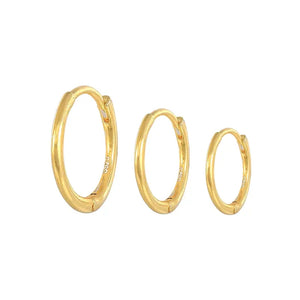
The piece they're describing → Damen-Creolen aus dünnem Gold – Sterlingsilber 925, 18 Karat vergoldet, minimalistisch
Personalize Yours


