


- Citrine is quartz, Mohs 7 — durable enough for an everyday ring, unlike soft birthstones like opal or pearl.
- Common settings: solitaire (classic), halo (more sparkle, more protection), bezel (best for daily wear), and cocktail (large stone, statement piece).
- Most commercial citrine is heat-treated amethyst — natural, untreated citrine is rarer and priced higher.
- Yellow and rose gold flatter citrine's warm tone most; white metals mute it.
- Price runs roughly $2–$15/carat for typical jewelry-grade stones, climbing past $50/carat for fine natural "Madeira" color.
- Clean with mild soap and a soft cloth; skip harsh brushing on any dyed or coated stone.
Citrine's warm, sunny color and low price make it one of the most popular colored stones for a ring — it's November's birthstone, it photographs beautifully next to gold, and it costs a fraction of what a comparably sized sapphire or yellow diamond runs. But "citrine jewelry rings" as a search covers a lot of ground: engagement-style solitaires, cocktail rings built around a large citrine, delicate stacking bands, and vintage-inspired halos. This guide walks through the settings that actually suit citrine, how to judge quality before you buy, whether it holds up to daily wear, and what a citrine ring should reasonably cost.
If you're more interested in citrine's meaning and metaphysical associations than its ring-buying mechanics, our citrine meaning guide covers that in depth. This piece stays focused on the shopping side: styles, durability, and how to evaluate a piece before you buy it.
Citrine Ring Styles and Settings
The right setting for a citrine ring depends on how often you plan to wear it and how much protection the stone needs, since citrine's Mohs-7 hardness is good but not diamond-level durable. A solitaire setting — a single citrine held by prongs — is the most classic choice and shows off the stone's color and clarity with nothing competing for attention. A halo setting surrounds the center citrine with a ring of smaller accent stones (usually white CZ or diamond), which adds sparkle and also gives the citrine a bit more physical protection since the halo stones sit slightly proud of the center stone's girdle. A bezel setting wraps a metal rim fully around the stone's edge, which is the most protective option for a citrine you'll wear every single day — it's the setting jewelers most often recommend when durability is the priority over maximum light exposure to the stone. A cocktail ring uses a larger citrine, often 5 carats or more, as a deliberate statement piece — because citrine is inexpensive relative to its size, it's one of the few colored stones where a bold, large-carat cocktail ring stays affordable.

How to Choose a Citrine Ring: Color, Cut, Clarity, Carat
Judge a citrine ring the same way you'd judge any colored gemstone — on color, cut, clarity, and carat weight, in roughly that order of importance for citrine specifically. Color matters most: citrine ranges from pale lemon-yellow through golden-orange to the deep orange-red "Madeira" citrine, and more saturated color generally commands a higher price, with even color across the stone (no visible zoning or patchiness) considered higher quality. Cut affects how lively the stone looks — watch for "windowing" (a washed-out, see-through center) or heavy "extinction" (dark patches where the cut isn't returning light), and look for a stone where any extinction covers well under a quarter of the visible surface. Clarity should be eye-clean, meaning no visible inclusions or cloudiness at a normal viewing distance — citrine is typically eye-clean far more often than emerald or ruby, which is part of why it's an easy stone to buy confidently. Carat weight scales close to linearly in price for citrine (a 2-carat stone costs roughly double a comparable 1-carat stone), unlike diamonds where price jumps disproportionately at larger sizes — which is exactly why citrine cocktail rings can go big without going expensive.
Is Citrine Durable Enough for Everyday Ring Wear?
Yes — citrine's Mohs hardness of 7 makes it suitable for a ring worn daily, the same durability tier as amethyst and garnet. Citrine is a variety of quartz, and per the Gemological Institute of America (GIA), quartz's 7-on-10 hardness and good toughness make it appropriate for all jewelry types, including rings that take daily knocks a necklace or earring never does. For comparison, topaz (November's other birthstone) sits at 8, sapphire and ruby at 9, and diamond at 10 — all somewhat tougher — while opal and pearl, common birthstones for other months, sit well below 7 and are genuinely riskier as everyday rings. A citrine ring in a protective bezel setting can reasonably be worn every day for years with normal care; a citrine in an exposed prong solitaire is still fine for daily wear, just with slightly more risk of a chipped edge from a hard knock over time.
| Setting | Protection level | Best for |
|---|---|---|
| Solitaire | Moderate — stone edges exposed | Classic look, showing off color and clarity |
| Halo | Moderate-high — accent stones buffer knocks | Extra sparkle, vintage-inspired styling |
| Bezel | Highest — metal rim fully encloses the edge | Daily wear, active lifestyles |
| Cocktail | Varies by design — usually a raised setting | Statement piece, occasional wear |
Best Metal for a Citrine Ring
Yellow gold is the most classic pairing for citrine because warm gold tones amplify the stone's golden-yellow to orange color rather than competing with it — the same principle that makes yellow gold the standard pairing for ruby and garnet. Rose gold is a close second and flatters citrine's warmer, more orange shades particularly well. White metals (white gold, rhodium-plated silver, platinum) aren't wrong, but they cool down citrine's warm color and mute some of what makes the stone pop in person — if you love a citrine's saturated color, a warm-toned metal setting will show it off better than a white one.
How Much Does a Citrine Ring Cost?
Citrine is one of the most budget-friendly colored gemstones, which is a large part of its appeal for a ring. Per gemstone pricing guides, typical jewelry-ready citrine runs roughly $2–$15 per carat, with well-cut faceted stones in the $8–$25 range and fine natural "Madeira" color climbing to $20–$140+ per carat for the best material — a small fraction of what a comparably sized sapphire, ruby, or yellow diamond would cost. That price gap is exactly why citrine works so well for a large statement ring: you can go bigger on carat weight without the price scaling the way it would with a precious gemstone, which is also why citrine is a popular "practice" stone for a first colored-gemstone ring purchase.
Caring for a Citrine Ring
Clean a citrine ring with mild soap, lukewarm water, and a soft cloth or soft-bristled brush, and it will keep its color and shine for years. Citrine handles an ultrasonic or steam cleaner reasonably well when the stone is untreated and unfractured, but if you're not certain how your specific stone was treated, a gentle hand-clean is the safer default — avoid abrasive scrubbing on any dyed or coated citrine, since some budget stones are surface-treated rather than naturally colored all the way through. For the full at-home cleaning routine and what to avoid, see our dedicated citrine care and water-safety guide.
Not sure a citrine ring is the right fit yet, or want to compare it against a similarly priced yellow stone first? Our citrine vs. yellow sapphire comparison breaks down the price and durability trade-off in more detail, and our best birthstone rings guide covers how citrine stacks up against every other month's stone for everyday ring wear.
Love Citrine but Want It in Necklace Form?
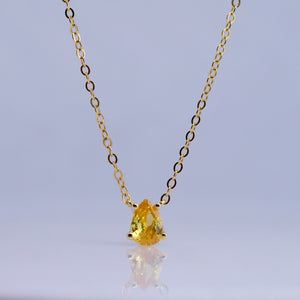
AJLuxe doesn't currently carry a citrine ring, but we do carry a genuine citrine piece: our Citrine Pendant Necklace ($34.99) — a real yellow citrine teardrop set in 18K gold plated over 925 sterling silver, hypoallergenic and gift-ready. If you're set on a citrine ring specifically, the styles and buying advice above still apply wherever you end up shopping.
Shop the Citrine Pendant NecklaceWritten by the AJLuxe Team. Last updated: August 2026. Hardness and durability guidance per the GIA (Gemological Institute of America) and the International Gem Society.
Frequently Asked Questions
Which finger should you wear a citrine ring on?
There's no jewelry rule that dictates a specific finger for citrine — any finger works stylistically, and it comes down to comfort and how you want to layer it with other rings. In crystal-healing tradition, some wear citrine on the ring finger of the dominant hand for its association with the solar plexus, but that's a folklore convention, not a styling requirement.
Is real citrine expensive?
Natural, untreated citrine is rarer and pricier than the heat-treated amethyst sold as "citrine" in most jewelry, but even natural citrine stays inexpensive relative to precious colored gemstones. Fine natural "Madeira" citrine can run $20–$140+ per carat, while most commercial citrine jewelry uses heat-treated stones priced closer to $2–$15 per carat.
How can I tell if a citrine ring uses real citrine?
Genuine citrine (whether natural or heat-treated amethyst) is a form of quartz and will scratch glass but not a hardened steel file, consistent with its Mohs-7 hardness — a reputable jeweler or an independent gem lab can confirm this along with the stone's refractive index. If a "citrine" ring is priced far below typical per-carat ranges for its size, or the color looks unnaturally uniform and glassy, it may be dyed quartz or glass rather than citrine.
What are the different types of citrine used in jewelry?
Jewelry citrine is generally grouped by color: pale lemon-yellow, golden-yellow, honey, and the deepest, most valuable "Madeira" citrine with its reddish-orange tone. Most citrine on the market today is heat-treated amethyst or smoky quartz rather than naturally occurring citrine, which is completely standard in the trade and not something to be concerned about — natural, untreated citrine is simply the rarer and pricier tier.
Is citrine better with gold or silver settings?
Gold — specifically yellow or rose gold — generally suits citrine best because warm-toned metal amplifies the stone's golden-to-orange color rather than cooling it down. Sterling silver or white gold isn't wrong, but it mutes citrine's warmth more than a gold setting does, so if the color is what drew you to the stone, a warm metal will show it off better.
Is citrine durable enough for an engagement ring?
Citrine can work for an engagement ring worn daily, since its Mohs-7 hardness clears the bar generally recommended for everyday rings, but it's softer than diamond, sapphire, or ruby, which are the more traditional engagement-ring stones for exactly that reason. Choosing a protective setting like a bezel, and being mindful around heavy manual work or workouts, keeps a citrine engagement ring looking good for the long run.
What color of citrine is most valuable?
Deep, saturated "Madeira" citrine — a reddish-orange color reminiscent of the fortified wine it's named for — is the most valuable and expensive citrine color. Pale lemon-yellow citrine, the most common and widely available shade, sits at the lower end of the price range.
Can a citrine ring go in water?
Brief water contact is generally fine for a genuine, untreated citrine given its Mohs-7 hardness, but prolonged soaking, very hot water, and sudden temperature changes are worth avoiding, and any dyed or fracture-filled stone should be treated more cautiously. See our full citrine water-safety guide for the complete rundown.
You Might Also Like
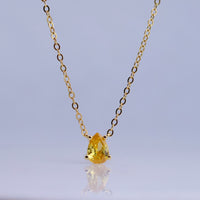
The piece they're describing → Citrin-Anhänger-Halskette für Damen – gelber Citrin-Tropfen, 925er Sterlingsilber
Personalize Yours


