


Knowing how to buy sapphire can save you hundreds of dollars and guarantee you get what you're actually paying for. Sapphire is one of the world's most popular colored gemstones, ranking Mohs 9 on the hardness scale — second only to diamond — which makes it a brilliant choice for everyday jewelry. But the market ranges from $20 per carat for pale commercial stones to $50,000+ per carat for unheated Kashmir pieces, so what you don't know really can hurt you. This guide breaks down every factor that affects sapphire quality and price, the questions you need to ask any seller, and the red flags to watch for online.
How Sapphire Quality Is Graded
Sapphire doesn't have a universal grading system the way diamonds do, but gemologists assess four main factors:
Color
Color accounts for roughly 50–70% of a sapphire's value. Gemologists break it down into three components:
- Hue — the dominant color. Blue sapphires range from violetish-blue to greenish-blue. Pure blue or violetish-blue commands the highest prices.
- Tone — how light or dark the stone appears on a scale of 0 (colorless) to 10 (black). Medium to medium-dark tones (around 5–7) are ideal. Stones above 8 look inky; below 4 look watery.
- Saturation — the intensity of the color. "Vivid" saturation is the goal. Grayish or brownish modifiers reduce saturation and drop value significantly.
The most coveted shade is "cornflower blue" — a pure, vivid blue without gray modifiers. Kashmir "velvety blue" sits even higher due to microscopic inclusions that diffuse light beautifully. GIA's sapphire quality factor guide explains these distinctions in detail.
Clarity
Blue sapphires almost always contain inclusions — that's normal and expected. Unlike diamonds, sapphires are graded as "Type II" stones, meaning inclusions are tolerable as long as they don't break the surface or threaten durability. Eye-clean sapphires under 2 carats are common; eye-clean stones above 3 carats become significantly rarer and more expensive. Needle-like rutile inclusions can actually create a "silk" effect that enhances value in Kashmir stones.
Cut
Cut doesn't just affect beauty — it affects apparent color. A well-cut sapphire returns light evenly across the face and maximizes color. A poorly cut stone shows windowing (a colorless or washed-out center visible when you look straight through the gem) or extinction (dark patches where light is absorbed, not reflected). Most sapphires are cut in ovals, cushions, or rounds. Calibrated sizes (standard mm dimensions) cost slightly more to cut but make setting much easier and cheaper.
Carat Weight
Sapphire price per carat jumps sharply at weight thresholds: 1 ct, 2 ct, 3 ct, and 5 ct. A 1.9 ct stone and a 2.1 ct stone of equal quality can differ 30–40% in price per carat simply because of where they land. Most commercial blue sapphires weigh under 5 carats; anything over 10 carats in fine quality is rare.
Origin
Where a sapphire forms affects both chemistry and collectibility. Kashmir, Burma (Myanmar), and Ceylon (Sri Lanka) origins add a premium for documented, fine-quality stones. Madagascar and Tanzania produce excellent quality at lower prices. Origin certification from a reputable lab like GIA or AGL adds verifiable value but costs $150–$400 extra.
Sapphire Grades and Price Guide
Here's how the market breaks down across quality tiers:
| Grade | Color Description | Price Range per Carat | What to Expect | Best For |
|---|---|---|---|---|
| Commercial | Pale, grayish, or heavily included blue | $20–$80 | Visible inclusions, washed-out color, may have windowing | Fashion jewelry, children's gifts |
| Good | Medium blue, slight gray modifier | $80–$300 | Eye-clean or near-eye-clean, decent saturation | Silver jewelry, everyday pendants |
| Fine | Rich blue to violetish-blue, eye-clean | $300–$1,200 | Strong saturation, well-cut, typically heated | Engagement rings, fine pendants |
| Exceptional | Cornflower to vivid blue, unheated or lightly heated | $1,200–$8,000+ | Lab-certified, origin-documented, top saturation | Investment pieces, heirloom jewelry |
| Kashmir / Top Burma | Velvety cornflower blue, unheated, origin-certified | $5,000–$50,000+ | Auction-grade, major lab report mandatory | Collectors, serious investors |
Common Sapphire Treatments
Most sapphires on the market have been treated. That's not inherently bad — but you need to know what treatment was applied and how it affects value.
Heat Treatment
Over 90% of commercial sapphires are heat-treated to improve color and reduce the appearance of inclusions. Heat treatment is widely accepted in the trade, fully disclosed on reputable certificates, and doesn't drastically reduce value for most stones. For fine or exceptional quality sapphires, "no evidence of heat" (NEH) certification from GIA or AGL adds a 30–80% premium.
Beryllium (Be) Diffusion
Beryllium diffusion drives chromophore elements deep into the stone to produce vivid orange or yellow colors. It can also lighten blue sapphires. Beryllium-diffused stones are worth significantly less than natural-color stones — often 70–90% less — and the treatment is difficult to detect without advanced testing. Always get a lab report for any stone with suspiciously vivid color at a low price.
Lattice Diffusion (Surface Diffusion)
Titanium or beryllium is diffused only into the surface layer of the stone. Lattice-diffused sapphires look stunning but the color lives in a thin surface skin — re-cutting or deep scratching can expose the pale interior. GIA reports explicitly disclose this treatment. Avoid unpapered stones with "too good to be true" blue intensity for the price.
Glass Filling / Fracture Filling
Lead glass or resin is injected into fractures to improve clarity. This treatment is unstable — exposure to heat, acid cleaners, or ultrasonic cleaning can damage the filling and destroy the stone. Glass-filled sapphires sell for a fraction of the price but should be sold as such. Watch for suspiciously clear stones at rock-bottom prices.
What to Ask
Ask every seller: "Does this stone have a lab report? Is it heated or unheated? Has it undergone any surface or fracture treatments?" A reputable seller gives direct answers. Evasion is a red flag.
Top Sapphire Origins and What They Mean
Origin drives prestige and collectibility at the top end of the market:
- Kashmir (India) — The holy grail. Kashmir sapphires show a distinctive velvety appearance caused by microscopic silk inclusions. The mines largely stopped producing in the 1880s, making certified Kashmir stones extraordinarily rare. Price premium: 200–500% over equivalent non-origin stones.
- Burma (Myanmar) — Renowned for deep, vivid "royal blue" sapphires. Burmese stones rival Kashmir in prestige. Demand a major lab origin report — many "Burma" claims are unverified. Price premium: 100–300%.
- Ceylon (Sri Lanka) — Sri Lanka produces the widest variety of sapphire colors, including the famous "Ceylon blue" and padparadscha. Quality ranges enormously. Ceylon origin adds 30–80% premium at fine grades.
- Madagascar — The most important sapphire source today by volume. Madagascar produces stones comparable in quality to Ceylon at lower prices due to newer origin prestige. Excellent value for fine-quality buyers.
- Montana (USA) — Montana sapphires come in a distinctive blue-green to teal range. They're entirely natural (no heat treatment needed), fully traceable, and beloved by buyers who prioritize ethical sourcing. Prices: $200–$800/ct for quality stones.
- Tanzania — Tunduru and Umba River produce vivid multi-color sapphires. Less premium origin but consistent quality at accessible prices.
5 Questions to Ask Before Buying Sapphire
-
Does this stone come with a gemological lab report?
Expected answer: Yes — from GIA, AGL, Gübelin, or SSEF. Suspicious answer: "We have our own in-house certificate" or "It doesn't need a certificate." Any fine sapphire over $500 should have third-party verification. -
Is this stone heated or unheated?
Expected answer: A direct disclosure — "heat-treated" or "no evidence of heat per [lab name]." Suspicious answer: "Natural sapphire" without specifying treatment status. "Natural" only means Earth-grown; it says nothing about treatment. -
What is the declared origin, and is it lab-certified?
Expected answer: A specific country with a lab report to back it. Suspicious answer: "We believe it's from Sri Lanka" with no documentation. Origin adds value only when verifiable. -
Can I return or exchange this stone within 30 days?
Expected answer: Yes, with a clear return policy. Suspicious answer: "All sales final" or vague return terms. No reputable gemstone dealer sells without a return window. -
What treatments, if any, beyond heat have been applied?
Expected answer: "None beyond standard heat treatment" with lab report confirmation. Suspicious answer: Hesitation, deflection, or claims that "all sapphires are treated this way."
Online Sapphire Red Flags
Buying sapphire online is safe — when you know what to watch for. Here are 6 specific warning signs:
- Unusually vivid color for the price. A "vivid cornflower blue" 2 ct sapphire listed at $95 is either glass-filled, synthetic, or misrepresented. Fine blue sapphires start at $300/ct — not $47.50/ct total.
- No third-party lab report for stones over $300. Stock photos plus an in-house "authenticity card" prove nothing. Demand a GIA, AGL, or Gübelin report number you can verify online.
- "100% natural sapphire" without treatment disclosure. This phrase is marketing, not a gemological statement. Natural means nothing without "heated" or "unheated."
- Photos that don't match described color. If the listing says "blue" but photos show purple, teal, or gray depending on the angle, you're seeing pleochroism — the stone will appear in multiple colors in real life. This isn't fraud, but it's not what most buyers expect.
- No physical address or gemologist contact. Reputable dealers have verifiable business addresses, gemologist credentials (GIA Graduate Gemologist), and phone numbers. Anonymous Etsy or eBay shops without credentials should require extra scrutiny.
- Prices that don't match origin claims. "Unheated Kashmir sapphire 3ct — $450" is impossible. Verified unheated Kashmir stones sell for tens of thousands per carat at auction. Any "too good to be true" origin claim without lab documentation is false.
Best Sapphire Jewelry Styles
Sapphire's Mohs 9 hardness makes it one of the most versatile gemstones for any jewelry type:
Pendants and Necklaces
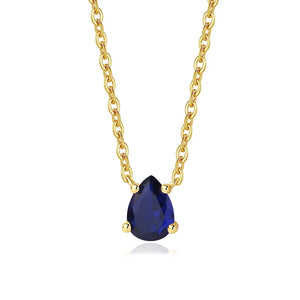
A sapphire pendant is the most accessible entry point. A 0.5–1.5 ct blue sapphire set in sterling silver costs $80–$400 and wears beautifully every day. Teardrop and oval cuts maximize visual size per carat. Our sapphire water drop pendant necklace uses a faceted blue sapphire in 925 sterling silver — it's September's birthstone in its most wearable form. For more September birthstone ideas, see our sapphire meaning guide and the full September birthstone jewelry collection.
Rings
Sapphire engagement rings have surged in popularity — Princess Diana's 12 ct Ceylon sapphire ring (now Kate Middleton's) made this pairing iconic. For daily-wear rings, choose stones above Mohs 8 (sapphire qualifies at 9) and avoid prong settings that catch on fabric. Bezel and channel settings offer more protection for active wearers.
Earrings
Sapphire stud earrings in 5–7 mm sizes strike the best balance of visibility and affordability. Calibrated round sapphires in this size range run $40–$200 per stone in fine commercial grade. Pair with sterling silver posts for hypoallergenic comfort. For inspiration, browse our birthstone jewelry guide for sapphire earring ideas by budget.
How to Care for Sapphire Jewelry
Sapphire is one of the easiest gemstones to care for, but a few rules keep it looking its best:
- Cleaning: Use warm water, mild dish soap, and a soft toothbrush. Scrub gently around the setting to remove skin oils and lotion buildup. Rinse thoroughly and dry with a lint-free cloth. Safe to clean weekly.
- Ultrasonic cleaners: Generally safe for untreated or heat-treated sapphires. Never use on fracture-filled or glass-filled stones — the vibration can shatter the filling material.
- Steam cleaners: Safe for untreated and heat-treated sapphires. Avoid on filled stones for the same reason.
- What to avoid: Keep sapphire away from harsh chemicals (bleach, acetone, chlorine). Remove rings before swimming in chlorinated pools. Avoid abrasive cleaners that can scratch the metal setting.
- Storage: Store separately from diamonds — despite sapphire's hardness, diamond (Mohs 10) can scratch the facets. Use a fabric-lined box or individual pouches.
Sapphire ranks Mohs 9 on the hardness scale, making it one of the most durable gemstones available for everyday jewelry. Fine blue sapphires run $300–$1,200 per carat; the most important quality indicator is color saturation — aim for vivid blue without gray or brown modifiers. Over 90% of commercial sapphires are heat-treated, which is industry-standard and fully disclosed on reputable lab reports; unheated stones command a 30–80% premium at fine grades. Clean sapphire jewelry weekly with warm soapy water and a soft brush, and store it separately from diamonds to prevent facet scratching.
Related reading: Amethyst buying guide.
Related reading: Smoky quartz buying guide.
Related reading: Ruby buying guide.
Related reading: Red garnet buying guide.
Related reading: Aquamarine buying guide.
Related reading: Emerald buying guide.
Related reading: Jewelry gift for grandmother.
Related reading: Retirement gift jewelry.
Related reading: Memorial remembrance jewelry.
Frequently Asked Questions
How much does a real sapphire cost?
Real sapphire costs anywhere from $20 to $50,000+ per carat depending on quality. Commercial-grade sapphires with pale color and visible inclusions sell for $20–$80/ct; fine quality eye-clean blue sapphires with strong saturation run $300–$1,200/ct; unheated Kashmir sapphires at top quality have sold for over $50,000/ct at major auction houses. For most jewelry buyers, a fine 1 ct sapphire in a sterling silver pendant costs $150–$500 finished.
What should I look for when buying a sapphire?
Prioritize color above all other factors — look for vivid blue saturation without gray or brown modifiers. After color, check clarity (eye-clean is standard for fine quality), cut quality (no windowing or extinction), and treatment status (heat-treated is fine; ask for documentation). For stones over $500, require a third-party lab report from GIA, AGL, or Gübelin. Match the stone's size and grade to your budget rather than stretching for a poorly colored large stone.
How much should I pay for a sapphire?
Budget buyers should expect $80–$300 per carat for good-quality heat-treated blue sapphires suitable for pendants and earrings. Mid-range buyers get fine quality at $300–$1,200/ct. For investment-grade unheated stones with origin certification, plan for $1,200–$8,000/ct. The sweet spot for most jewelry buyers is $150–$400 for a finished piece with a 0.5–1 ct fine-quality sapphire in sterling silver or gold-filled settings.
Is heat-treated sapphire worth buying?
Yes — heat-treated sapphires are worth buying and represent the vast majority of sapphires sold worldwide. Heat treatment is a permanent, stable process that improves color and clarity without affecting durability. It's fully disclosed on reputable certificates and accepted by all major gemological labs. The price difference between heated and unheated fine sapphires is significant (30–80% premium for NEH stones), but heated stones offer excellent value and beauty at accessible prices.
How do I know if a sapphire is real?
The most reliable way to verify a real sapphire is a third-party gemological lab report (GIA, AGL, or Gübelin) that confirms the stone is natural corundum — the mineral species that includes sapphires and rubies. At home, check hardness (Mohs 9 — a sapphire won't scratch with a steel knife) and look for slight pleochroism (color shift from different angles). Synthetic sapphires are chemically identical to natural ones but cost a fraction of the price; only a lab report or advanced testing can reliably distinguish them.
What color sapphire is the most valuable?
Vivid blue — specifically "cornflower blue" or "Kashmir blue" — is the most valuable sapphire color. The ideal is a pure, vivid blue without any gray or brown modifier, in a medium to medium-dark tone (roughly 5–7 on a 10-point scale). Padparadscha sapphire (a rare pink-orange) commands extraordinary premiums in fine quality. Yellow, orange, and pink sapphires are valuable but generally sell below equivalent-quality blue stones.
What is the difference between heated and unheated sapphire?
Unheated sapphires are found in the ground with their natural color intact — no heat has been applied to alter their appearance. Heated sapphires have been exposed to temperatures of 1,600–1,800°C to dissolve inclusions and improve color. Both are "real" and "natural" — the difference is treatment status. Unheated sapphires at fine grades command 30–80% premiums due to rarity; for commercial and good grades, the price difference is less pronounced. Always confirm treatment status with a reputable lab report.
Can I buy sapphire online safely?
Yes, you can buy sapphire safely online when you follow the right steps. Require a third-party lab report for any stone over $300; verify the report number directly on the lab's website before purchasing. Buy from sellers with clear return policies (30 days minimum), physical business addresses, and gemologist credentials. Avoid listings with vague treatment disclosures, suspiciously vivid color at low prices, or "in-house certificates" instead of major lab reports.
What is a Kashmir sapphire and why is it so expensive?
Kashmir sapphires come from the Zanskar Range in northern India, where a brief but extraordinary mining period in the 1880s–1920s produced stones with a uniquely velvety, blue appearance caused by microscopic silk inclusions. The Kashmir mines have been largely depleted since the early 20th century, making certified Kashmir sapphires extraordinarily rare. The combination of exceptional color quality and extreme scarcity drives prices to $5,000–$50,000+ per carat at fine grades — up to 5× the price of comparable non-Kashmir stones.
What is the best cut for a sapphire?
Oval and cushion cuts are the most popular for sapphire because they preserve the most carat weight from rough while maximizing color display. Round brilliant cuts work well but require more rough material to produce. Avoid deeply cut stones (depth ratios over 75%) — they appear smaller face-up and often show extinction. The best sapphire cut shows even color across the table with no visible windowing when you hold it face-up under neutral light. Don't compromise on cut quality; a well-cut fine sapphire outperforms a poorly cut exceptional stone every time.
Is sapphire a good gemstone for an engagement ring?
Sapphire is one of the best gemstones for engagement rings. At Mohs 9, it's hard enough for everyday wear without special care — only moissanite (9.25) and diamond (10) are harder. Its color stability is excellent under normal light conditions, it doesn't cleave like some softer stones, and it comes in a variety of colors to suit personal taste. Princess Diana's Ceylon sapphire ring — now worn by Princess Kate — is the most famous example. Set in white gold, platinum, or sterling silver for the most complementary metal backdrop.
What is the difference between a lab-created and natural sapphire?
Natural sapphires form over millions of years in the Earth's crust; lab-created (synthetic) sapphires are grown in controlled conditions over days or weeks using methods like the Verneuil flame fusion or hydrothermal process. Both are chemically and physically identical — Al₂O₃ (aluminum oxide) with trace chromophore elements. The key difference is rarity and origin: natural sapphires command premium prices because they're irreplaceable geological products. Lab sapphires cost 90–95% less and are the right choice when aesthetics matter more than natural origin. Always disclose which type you're buying or selling.
Shop Sapphire Jewelry at AJLuxe
Our sapphire water drop pendant necklace in 925 sterling silver uses ethically sourced stones. Browse all sapphire birthstone jewelry — hypoallergenic, gift-ready, 30-day returns.
Final Thoughts
Comparing sapphire to other diamond alternatives before you buy? See our full moissanite vs. white sapphire comparison for a side-by-side on brilliance, hardness, and price.
Learning how to buy sapphire comes down to asking the right questions and not skipping the lab report step. Color is king — prioritize vivid blue saturation over carat size. Treatment disclosure is non-negotiable — heated sapphires offer outstanding value; undisclosed treated stones are a rip-off. And for anything over $500, insist on a third-party certificate you can verify independently.
Sapphire's Mohs 9 hardness means it'll outlast almost any other gemstone choice for daily wear. Whether you're shopping for a pendant, an engagement ring, or a birthstone gift for September, the principles here apply at every price point. Take your time, ask direct questions, and don't let urgency pressure you into skipping documentation.
Toutes les marques, noms de marque et noms de produits tiers sont la propriété de leurs détenteurs respectifs. AJLuxe n’est affilié à aucune marque tierce citée dans cet article, ni approuvé ou sponsorisé par celle-ci. Les noms de marque sont utilisés uniquement à des fins de comparaison factuelle, et les descriptions de matériaux reflètent les spécifications produit publiées par chaque marque au moment de la rédaction.
You Might Also Like

The piece they're describing → Collier pendentif saphir pour femme — Saphir bleu en forme de goutte, Argent sterling 925
Personalize Yours


