


Quick Answer
Yes, most stainless steel jewelry is hypoallergenic — but only the surgical-grade 316L kind. 316L still contains 10–14% nickel, but it's molecularly locked inside a passive chromium-oxide layer, so it doesn't leach onto skin the way brass or lower-grade steel does. It's a genuinely good option for sensitive skin. Nickel-free 925 sterling silver is an equally safe, more elegant alternative if you want a guarantee rather than a "generally safe" answer.
TL;DR
- 316L surgical steel is hypoallergenic for most people — nickel is bound in the alloy, not released onto skin
- Not all "stainless steel" is equal — 304 steel and unmarked "steel" jewelry contain more free nickel and cause more reactions
- Extreme nickel allergies (5–10% of allergy sufferers) can still react even to 316L, especially in fresh piercings
- Sterling silver (925) is nickel-free by definition — no nickel content at all, not just "low release"
- Stainless steel resists tarnish better; sterling silver is easier to clean, resize, and repair, and reads as finer jewelry
- Plated steel or plated brass is the real risk — the coating wears through and exposes the base metal underneath
You're standing in front of a jewelry display, or scrolling a product page at midnight, and the label says "stainless steel — hypoallergenic." You've had reactions before. Is it actually true, or is it marketing?
The honest answer: is stainless steel jewelry hypoallergenic? Mostly, yes — if it's genuine 316L surgical-grade steel. But "hypoallergenic" doesn't mean zero nickel, and there's a meaningful gap between what dermatologists mean by the term and what a jewelry tag implies. This guide covers exactly what's in stainless steel, who it's safe for, who should still be cautious, and how it stacks up against sterling silver and gold plating for sensitive skin.
Is Stainless Steel Jewelry Hypoallergenic?
Yes, most stainless steel jewelry is hypoallergenic — but only genuine 316L surgical-grade steel. It still contains 10–14% nickel, yet that nickel is locked inside a passive chromium-oxide layer, so it doesn't leach onto skin the way brass or lower-grade 304 steel does. Roughly 5–10% of people with confirmed nickel allergies can still react, especially in fresh piercings — for those cases, nickel-free 925 sterling silver is the safer guarantee.
In This Guide
- What "Hypoallergenic" Actually Means
- What's Actually in Stainless Steel Jewelry
- 316L vs 304 Steel — Why the Grade Matters
- The Nickel Paradox: Content vs Release
- Who Should Still Be Cautious
- Stainless Steel vs Sterling Silver vs Gold Plated
- The Plated Steel and Plated Brass Trap
- Signs of a Metal Reaction — and What to Do
- Why Sterling Silver Is Still Worth Considering
- How to Check What You're Actually Buying
- Frequently Asked Questions
- Final Thoughts
What "Hypoallergenic" Actually Means in Jewelry
"Hypoallergenic" has no legal or regulatory definition in the US jewelry market. Any brand can print it on a tag. What it's supposed to mean — the dermatological sense — is that a material is less likely than average to trigger an allergic reaction, not that it's impossible to react to.
The most common trigger by far is nickel. According to the American Academy of Dermatology, nickel is one of the leading causes of allergic contact dermatitis, and it's estimated to affect somewhere between 10% and 20% of the population, with women affected at roughly triple the rate of men due to more frequent ear piercing and jewelry contact. Cobalt and chromium are the next most common culprits, often appearing alongside nickel in white metal alloys and some steels.
So when a listing says stainless steel jewelry is "hypoallergenic," it's making a claim about statistical likelihood, not a guarantee. That distinction matters more than most product pages let on.
What's Actually in Stainless Steel Jewelry
Stainless steel isn't one material — it's a family of iron-based alloys defined by chromium content (at least 10.5%, which is what makes it "stainless" and corrosion-resistant). Beyond chromium, most jewelry-grade stainless steel also contains nickel, added to improve ductility, shine, and corrosion resistance.
The two grades you'll see most often in jewelry are:
- 316L ("surgical steel" or "surgical-grade steel"): Contains roughly 10–14% nickel and 16–18% chromium, plus molybdenum for extra corrosion resistance. This is the grade used in medical implants and the vast majority of quality body jewelry.
- 304 steel: A more common, less expensive grade used in everything from kitchenware to costume jewelry. Contains a similar or slightly higher nickel percentage but lacks molybdenum, and — critically — is far less consistently manufactured for skin contact, meaning nickel release can be higher and less predictable.
Both contain nickel. The reason 316L is considered hypoallergenic isn't that the nickel is absent — it's that the way the alloy is structured keeps that nickel locked in place.
316L vs 304 Steel — Why the Grade Matters
This is the single biggest gap in most articles on this topic: they treat "stainless steel" as one material, when the grade is what actually determines whether a piece is safe for sensitive skin.
| Grade | Nickel Content | Common Use | Allergy Risk |
|---|---|---|---|
| 316L surgical steel | ~10–14%, tightly bound | Medical implants, quality earrings, fine jewelry | Low for most people |
| 304 steel | Similar or higher, less controlled release | Fashion jewelry, kitchenware, unmarked "steel" pieces | Moderate — inconsistent |
| Unspecified "stainless steel" | Unknown | Budget/no-name jewelry with no grade disclosed | Unpredictable — assume risk |
If a listing simply says "stainless steel" with no grade specified, that's a signal to ask before you buy — the same way you'd want to know whether "gold plated" means over sterling silver or over brass.
Shop Hypoallergenic Sterling Silver
If you'd rather not think about nickel percentages at all, 925 sterling silver contains zero nickel by definition — a straightforward alternative to grade-checking steel.
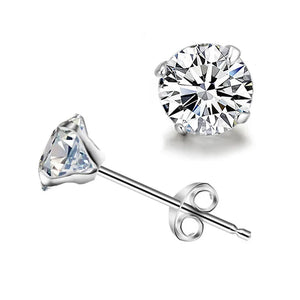
Shop Sterling Silver CZ Studs →The Nickel Paradox: Content vs Release
This is the part most people find counterintuitive: a metal can contain nickel and still be considered hypoallergenic, because what triggers a reaction isn't the presence of nickel in the alloy — it's how much of it actually migrates onto your skin.
In 316L steel, chromium reacts with oxygen to form a thin, stable passive oxide layer on the surface. That layer acts as a physical barrier, keeping the nickel bound within the metal's crystal structure instead of leaching out through sweat or friction. It's the same principle that makes 316L safe for surgical implants that sit inside the body for years.
The European Union formalized this distinction in the EU Nickel Directive (EN 1811), which limits nickel release — not nickel content — to 0.2 micrograms per square centimeter per week for items in prolonged skin contact, like earring posts. Quality 316L jewelry is manufactured to meet or beat this standard. That's the real basis for calling it hypoallergenic: not "no nickel," but "nickel that stays put."
Sweat, skin acidity, and mechanical friction can still degrade that oxide layer over time, especially at points of constant contact — the back of an earring post, the inside of a ring band. That's why even good-quality steel can occasionally cause a reaction after months or years of wear that it didn't cause initially.
Who Should Still Be Cautious With Stainless Steel
316L is genuinely safe for the large majority of people with mild-to-moderate nickel sensitivity. But it isn't safe for everyone, and being upfront about that is more useful than blanket reassurance. You should be more cautious with stainless steel — even 316L — if:
- You have a confirmed, severe nickel allergy (diagnosed via dermatologist patch testing). Roughly 5–10% of people with nickel sensitivity react to nickel even at very low release rates, including from 316L.
- You're dealing with a fresh piercing. Broken or healing skin is far more reactive than intact skin, and even trace nickel exposure can slow healing or trigger inflammation. Piercing professionals generally recommend implant-grade titanium or niobium for initial piercings, not steel.
- You sweat heavily or exercise in your jewelry. Prolonged moisture exposure accelerates the breakdown of the passive oxide layer, increasing nickel release over time.
- The piece doesn't disclose its grade. If you can't confirm it's 316L specifically, treat it the way you'd treat unmarked "gold plated" — assume the less favorable option until proven otherwise.
If you fall into any of these categories, nickel-free metals — sterling silver, titanium, or niobium — remove the guesswork entirely instead of relying on "generally low release."
Stainless Steel vs Sterling Silver vs Gold Plated — Full Comparison
Here's how the three most common "hypoallergenic" claims in jewelry actually compare, side by side:
| Factor | 316L Stainless Steel | 925 Sterling Silver | Gold Plated (over brass) |
|---|---|---|---|
| Nickel content | 10–14%, tightly bound | 0% — nickel-free by definition | Often present in the brass base |
| Allergy risk | Low for most; moderate for severe allergies | Very low — no nickel to release | Rises as plating wears through |
| Cost (earrings) | $10–$40 | $20–$60 | $10–$30 |
| Tarnish resistance | Excellent — chromium layer resists corrosion | Good — tarnishes gently, cleans easily | Poor — plating wears in 6–18 months |
| Weight | Heavier, denser feel | Lighter, more traditional "fine jewelry" feel | Light — reflects the brass base |
| Resizing / repair | Difficult — most jewelers can't resize steel | Easy — standard jeweler service | Difficult, and replating needed after resize |
The practical takeaway: stainless steel and sterling silver are both legitimately good choices for sensitive skin, for different reasons — steel because the nickel stays locked in, silver because there's no nickel to begin with. Gold plated over brass is the one to watch, because the safety of the piece depends entirely on the thickness of a coating that thins with wear.
The Plated Steel and Plated Brass Trap
This is a gap almost every competitor article skips, because it's not really about stainless steel at all — it's about what stainless steel gets confused with. A meaningful share of "hypoallergenic stainless steel" jewelry sold online isn't solid steel. It's a thin gold or rose-gold PVD coating over a steel or brass base, and the base metal matters as much as — or more than — the coating.
PVD (physical vapor deposition) coating over genuine 316L steel is fine: the base underneath is still nickel-safe even if the coating scratches off. But PVD or standard electroplating over brass is a different story — brass frequently contains nickel, and once the thin coating wears through (which happens faster at friction points like earring posts and ring bands), the base metal is what's touching your skin.
The problem is that from the outside, gold-toned "stainless steel" jewelry and gold-plated brass jewelry can look identical. The only way to know the difference is to check what the listing specifically discloses about the base metal — "gold-tone stainless steel" and "gold plated" are not interchangeable claims, even though they're often displayed the same way in search results.
Signs of a Metal Reaction — and What to Do
Contact dermatitis from jewelry typically shows up within 12 to 72 hours of wear, most often at the exact point of contact — the earlobe, the underside of a ring, the back of a clasp. Common signs include:
- Itching or a burning sensation localized to the contact point
- Redness or pink/reddish-brown discoloration
- Small raised bumps, or in more severe cases, blistering
- Dry, flaking skin that persists even after the jewelry is removed
- Swelling around a piercing site (more urgent — especially in new piercings)
If you notice any of these: remove the jewelry immediately, avoid scratching, and clean the area gently with mild soap and water. A cool compress can ease itching. Most mild reactions resolve within a few days once the trigger is removed. If symptoms are severe, spreading, or not improving after several days, see a dermatologist — they can run a patch test to identify exactly which metal (nickel, cobalt, or chromium) is causing the reaction, which is genuinely useful information for every future purchase.
Why Sterling Silver Is Still Worth Considering
None of this is an argument against stainless steel — 316L is a legitimately well-engineered, dermatologist-recognized material, and it's not fair to competitor brands to pretend otherwise. But there's a real case for 925 sterling silver as an equally safe, often more versatile alternative, and it comes down to certainty rather than probability.
Sterling silver is 92.5% pure silver alloyed with 7.5% other metals — almost always copper, not nickel. There's no nickel in the alloy to begin with, so there's no leaching threshold to stay under, no passive oxide layer that needs to hold up over years of wear, and no dependency on manufacturing quality controlling nickel release. It's a nickel-free guarantee rather than a low-release estimate.
Sterling silver also resizes, replates, and repairs the way fine jewelry is expected to — something steel generally can't do once it's shaped, since most jewelers don't have the equipment to resize hardened steel. And for anyone who wants their sensitive-skin-safe jewelry to actually look like fine jewelry rather than read as "industrial" or "sporty," sterling silver's softer shine and traditional finish is simply a different aesthetic lane than brushed steel.
Genuinely nickel-free sterling silver — like AJLuxe's 925 sterling silver CZ stud earrings — gives you the same peace of mind as surgical steel, with a different look and feel. Neither choice is wrong; it's a matter of which trade-offs matter to you.
How to Check What You're Actually Buying
Before buying "hypoallergenic" stainless steel jewelry — or any hypoallergenic claim — verify these four things:
- Ask for the specific grade. "316L" or "surgical steel" is the standard to look for. "Stainless steel" alone, with no grade specified, could be a lower grade with less predictable nickel release.
- Check for EU Nickel Directive (EN 1811) compliance. Brands that sell into Europe must meet this release-rate standard, which is a stronger, testable claim than an unqualified "hypoallergenic" label.
- Ask whether it's plated or solid. "Gold-tone stainless steel" and "gold plated stainless steel" both imply a coating over a base — confirm the base metal explicitly rather than assuming.
- If you have a documented nickel allergy, ask for nickel-free options outright. Reputable sellers of both steel and silver jewelry should be able to answer this directly, without vague reassurance.

Prefer a Guaranteed Nickel-Free Option?
AJLuxe's 925 sterling silver CZ stud earrings are nickel-free by composition — no grade-checking required, hypoallergenic for sensitive ears, and finished in 18K gold plating or rhodium.
Shop Sterling Silver CZ Studs →According to Finematter's guide to jewelry metal identification, hallmark stamps remain the most reliable way to confirm what a piece is actually made of — "925" for sterling silver, or specific alloy markings for steel grades — rather than relying on marketing language alone. The Gemological Institute of America similarly recommends checking hallmarks and asking sellers directly about base metal composition before buying, especially for pieces marketed toward sensitive skin.

If you're also weighing titanium against stainless steel specifically, see our titanium vs stainless steel earrings comparison for a full hypoallergenic, weight, and price breakdown. For the bigger-picture verdict on durability, cost, and whether it holds up long-term, see Is Stainless Steel Jewelry Good Quality? Honest 2026 Review.
Keep Reading
Related reading: Is Surgical Steel Hypoallergenic? The Honest Answer (2026).
Frequently Asked Questions
Is stainless steel jewelry hypoallergenic?
Genuine 316L surgical-grade stainless steel is hypoallergenic for most people. It contains 10–14% nickel, but the nickel is bound within the alloy's passive chromium-oxide layer and doesn't readily release onto skin. Lower grades like 304, or unmarked "stainless steel," don't offer the same guarantee.
Does stainless steel jewelry contain nickel?
Yes. Most jewelry-grade stainless steel, including 316L surgical steel, contains nickel — typically 10 to 14% by weight. What makes 316L hypoallergenic isn't the absence of nickel, it's that the nickel stays locked within the metal's structure instead of leaching onto skin under normal wear.
Can stainless steel jewelry still cause an allergic reaction?
Yes, in a minority of cases. Roughly 5–10% of people with confirmed nickel allergies react even to low-release materials like 316L, especially with prolonged contact, heavy sweating, or fresh piercings. If you've had a documented severe nickel allergy, sterling silver or titanium offer a stronger guarantee.
What's the difference between 316L and 304 stainless steel for jewelry?
316L ("surgical steel") contains molybdenum for extra corrosion resistance and is manufactured to a higher, more consistent standard for skin contact — it's the grade used in medical implants. 304 steel is more common in mass-market and fashion jewelry, has similar or higher nickel content, and offers less predictable nickel release, making it a less reliable choice for sensitive skin.
Does stainless steel jewelry turn your skin green?
Generally no. The chromium oxide layer that makes stainless steel corrosion-resistant also prevents the copper-oxidation reaction that turns skin green (that reaction is specific to copper and brass). If steel jewelry is turning your skin colors, it may not be genuine stainless steel, or a coating has worn through to a different base metal.
Does stainless steel jewelry tarnish or rust?
Properly made 316L stainless steel does not rust and is highly resistant to tarnish under normal wear, thanks to its protective chromium oxide layer. Extended exposure to chlorine, saltwater, or harsh chemicals can dull the finish over time, but a simple wash with warm water and mild soap typically restores it.
Is stainless steel or sterling silver better for sensitive skin?
Both are considered safe for the majority of people with sensitive skin. Stainless steel (316L) works because its nickel content is locked in and doesn't release; sterling silver works because it's nickel-free by composition, with no leaching threshold to rely on. For documented severe nickel allergies, sterling silver's nickel-free guarantee is generally the safer bet.
Is surgical steel safe for new piercings?
Most piercing professionals recommend implant-grade titanium or niobium for new and healing piercings rather than surgical steel, because broken skin is more reactive and 316L still contains some nickel. Once a piercing is fully healed, 316L stainless steel is generally considered safe for most people.
Is gold-plated stainless steel jewelry hypoallergenic?
It depends on what's underneath the coating. Gold or rose-gold PVD coating over genuine 316L steel stays hypoallergenic even as the coating wears, because the base metal is still nickel-safe. The same coating over a brass base is not — brass frequently contains nickel, and reactions can develop once the thin coating wears through.
How do I know if my stainless steel jewelry is actually 316L?
Check the product listing or hallmark for an explicit "316L" or "surgical steel" designation — reputable sellers disclose this because it's a meaningful quality marker. If a listing only says "stainless steel" with no grade specified, or if there's no hallmark at all, treat it as unverified and ask the seller directly before assuming it's hypoallergenic.
Final Thoughts: Is Stainless Steel Jewelry Hypoallergenic?
Yes, with a real and specific caveat: it depends on the grade. Genuine 316L surgical stainless steel is a legitimately good, dermatologist-recognized choice for sensitive skin, and there's no need to avoid it if it's worked for you before. The nickel it contains is engineered to stay locked away from your skin, and for the large majority of wearers, that engineering holds up.
Where the caveats live: lower grades sold under the generic "stainless steel" label, plated pieces where the base metal isn't disclosed, and the minority of people with severe, patch-test-confirmed nickel allergies who need a harder guarantee than "low release." For all three of those situations, nickel-free 925 sterling silver removes the uncertainty entirely — it's not a compromise material, it's simply a different, equally valid way to solve the same problem.
If you're shopping for hypoallergenic jewelry and want a metal with zero nickel content rather than a well-managed low-release rate, AJLuxe's 925 sterling silver CZ stud earrings are a straightforward, nickel-free place to start — finished in 18K gold plating or rhodium, and built for daily wear on sensitive ears.
Shop our CZ Stud Earrings — 925 Sterling Silver, Hypoallergenic (from $22.99) — nickel-free by composition, available in five sizes, and built for everyday wear on sensitive skin.
Written by the AJLuxe team — specialists in personalized sterling silver jewelry. Last updated: July 2026.
Toutes les marques, noms de marque et noms de produits tiers sont la propriété de leurs détenteurs respectifs. AJLuxe n’est affilié à aucune marque tierce citée dans cet article, ni approuvé ou sponsorisé par celle-ci. Les noms de marque sont utilisés uniquement à des fins de comparaison factuelle, et les descriptions de matériaux reflètent les spécifications produit publiées par chaque marque au moment de la rédaction.
You Might Also Like
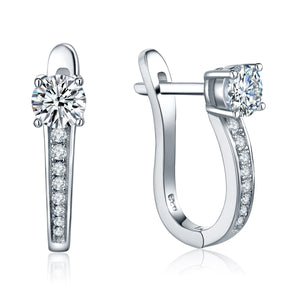

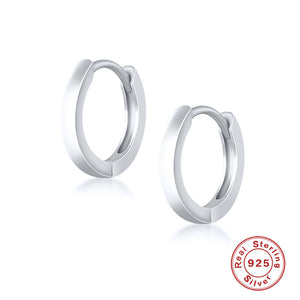
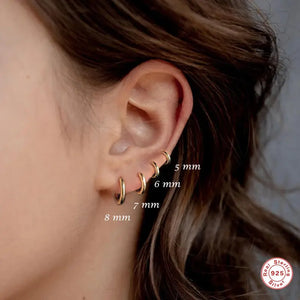
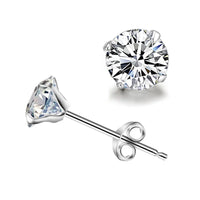
The piece they're describing → Puces d'oreilles en oxyde de zirconium pour femme — Argent sterling 925, oxyde de zirconium, hypoallergéniques
Personalize Yours


